Key Moments
Health & Longevity: A Conversation with Peter Attia (Episode #328)
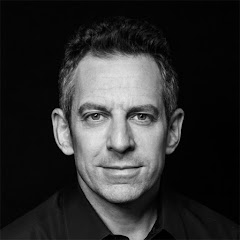 Sam Harris
Key Moments
Peter Attia discusses "Outlive" and achieving healthspan, emphasizing diet, exercise, and proactive health.
Key Insights
Healthspan, the quality of life, is more crucial than mere lifespan.
Focusing on healthspan typically yields lifespan benefits.
Genetics play a role in longevity, but delaying disease onset is key.
Nutrition basics: excessive or insufficient intake is harmful, essential nutrients are vital.
Protein intake becomes increasingly important with age to maintain muscle mass.
Caloric restriction and time-restricted eating can aid weight management but may not offer benefits beyond calorie deficit.
DEFINING LONGEVITY: HEALTHSPAN VERSUS LIFESPAN
The conversation begins by distinguishing between lifespan (simply living longer) and healthspan (living with quality of life). While the medical system often prioritizes lifespan, Attia argues that healthspan is the more desirable goal. He posits that relentlessly focusing on healthspan often leads to the benefits of extended lifespan, whereas the reverse is not always true. This distinction is crucial for understanding the overall approach to longevity.
LESSONS FROM CENTENARIANS AND GENETIC INFLUENCE
Attia discusses research on centenarians, noting that their longevity is largely attributed to genetics rather than a remarkably healthy lifestyle, as they often exhibit behaviors like smoking or poor eating habits. The key insight from centenarians is that their predisposition is for a delay in disease onset, not an inherent resilience once a disease is contracted, highlighting the importance of early prevention.
THE CRITICAL ROLE OF PRIMORDIAL PREVENTION
Attia emphasizes the need for 'primordial prevention,' which means intervening much earlier than traditional 'primary prevention' to mitigate the risk of age-related diseases like cardiovascular disease. This disease process begins in childhood, and by the time symptoms appear in middle age, significant damage has often occurred. Therefore, proactive measures must start as soon as possible to positively influence the long-term trajectory of health.
NUTRITIONAL FOUNDATIONS: WHAT WE KNOW FOR SURE
Regarding nutrition, Attia states that certainty is limited. However, he asserts with high confidence that both excessive and insufficient caloric intake are chronically and acutely harmful, respectively. Essential amino acids, fatty acids, vitamins, and minerals are vital for life, and certain substances are acutely toxic. Beyond these fundamentals, the specifics of optimal human diets remain subject to considerable debate and individual variability.
MACRONUTRIENTS AND INDIVIDUAL TOLERANCE
Attia breaks down macronutrient considerations by prioritizing protein, especially for individuals over 50, recommending significantly higher intake than the standard RDA to combat sarcopenia. Carbohydrate tolerance is presented as a key personal metric, emphasizing the detrimental long-term effects of chronic hyperglycemia. Fat intake then fills the remaining caloric needs, with satiety serving as a natural regulator for most healthy individuals.
THE COMPLEXITY OF OBESITY AND DIETARY STRATEGIES
The causes of obesity are multifactorial, with theories ranging from reduced nutrient density in food to increased palatability and hormonal influences. Attia suggests that multiple factors likely contribute, varying by individual. While extreme diets like the carnivore diet can lead to weight loss, he attributes this primarily to reduced caloric intake rather than unique metabolic properties, underscoring the fundamental principle of energy balance.
PROTEIN INTAKE AND MUSCLE MASS MAINTENANCE
Maintaining muscle mass through adequate protein intake and resistance training is paramount, particularly as people age due to 'anabolic resistance.' Sarcopenia, the loss of muscle mass, significantly increases mortality and decreases healthspan. Attia notes that while vegetarian and vegan diets can provide sufficient protein, it often requires more deliberate effort compared to diets including animal products.
FASTING, TIME-RESTRICTED EATING, AND CALORIC REDUCTION
Attia's view on fasting and time-restricted eating (TRE) has evolved. Initially believing TRE offered benefits beyond caloric restriction, recent studies suggest that most advantages stem from the resulting calorie deficit. Importantly, some research indicates that overly strict TRE may hinder sufficient protein intake, potentially leading to disproportionate muscle loss alongside weight reduction.
ALCOHOL'S RISK-REWARD PROFILE
Alcohol is discussed as a caloric-dense fourth macronutrient. Attia acknowledges potential conflicting research, some possibly industry-influenced, but leans towards a conservative view. Personally, he continues to consume alcohol but with a careful consideration of the risks. He highlights that alcohol can significantly lower inhibitions around food, contributing to overconsumption and impacting metabolic health negatively.
EVOLUTIONARY LIMITATIONS AND MODERN HEALTH
Attia agrees that human evolution has not equipped us to optimize for healthspan and longevity past reproductive age. Genes that provided survival advantages in ancestral environments, like those associated with increased clotting or cholesterol handling (e.g., APOE4), can be detrimental in modern times. This gap means that achieving extreme longevity requires modern scientific principles, not just adherence to ancestral diets or lifestyles.
Mentioned in This Episode
●Supplements
●Software & Apps
●Organizations
●Books
●Drugs & Medications
●Studies Cited
●Concepts
●People Referenced
Common Questions
Lifespan refers to the total duration of a person's life, while healthspan focuses on the quality of life, characterized by physical and cognitive vitality and the absence of debilitating diseases.
Topics
Mentioned in this video
A type of lipoprotein associated with cardiovascular disease risk, discussed in the context of evolutionary advantage and modern disadvantage.
The age-related loss of muscle mass, strength, and function, discussed as a significant problem in the elderly.
The state of consuming fewer calories than the body expends, leading to weight loss.
A gene associated with Alzheimer's disease risk, with the E4 isoform discussed as having potential evolutionary benefits in a world with prevalent infections.
A genetic disorder causing unusually high cholesterol levels, leading to early heart attacks, used as an example of early prevention success.
A medical test used to diagnose and monitor diabetes by measuring average blood glucose levels over the past 2-3 months.
A gene associated with Lp(a) phenotype, which can be disadvantageous today but may have offered evolutionary advantages.
Metabolic byproducts of fat breakdown, which can be used as energy, particularly during fasting.
The human species, used as a reference point for evolutionary history regarding food scarcity and energy storage.
The storage form of glucose in the body, primarily in muscles and liver, providing a short-term energy reserve.
A physiological state, particularly in older adults, where muscle tissue is less responsive to stimuli promoting muscle protein synthesis.
A specific allele of the APOE gene, strongly associated with increased risk of Alzheimer's disease.
A metabolic pathway that generates glucose from non-carbohydrate sources, such as amino acids from muscle breakdown, during fasting or starvation.
Institution where Peter Attia trained as a Surgical Oncology fellow.
Peter Attia's medical organization focused on longevity and prevention.
Institution where Peter Attia trained in general surgery.
Institution where Peter Attia received his medical degree.
National Institutes of Health, where Peter Attia trained as a Surgical Oncology fellow.
Researcher at Albert Einstein College of Medicine studying centenarians and exceptional longevity.
A researcher at Harvard who studied prolonged fasting in the 1960s.
Researcher at Boston University studying centenarians and exceptional longevity.
Doctor, founder of Early Medical, and host of The Drive podcast. Author of the book 'Outlive: The Science and Art of Longevity'.
Host of the Making Sense podcast and the interviewer in this conversation.
More from Sam Harris
View all 292 summaries 34 min
Is Effective Altruism Blind to the Biggest Problems? – Sam Harris & Will MacAskill
 21 min
What Is Technology Doing to Us?
 42 min
Is the Iran War Already Failing?
 90 min
FULL EPISODE: The Politics of Pragmatism and the Future of California (Ep. 464)
Found this useful? Build your knowledge library
Get AI-powered summaries of any YouTube video, podcast, or article in seconds. Save them to your personal pods and access them anytime.
Get Started Free