Key Moments
COVID-19: Current state of affairs, Omicron, and a search for the end game | Peter Attia, M.D.
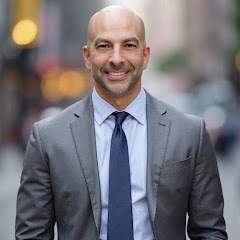 Peter Attia MD
Key Moments
A deep dive into Omicron, vaccine efficacy, natural immunity, and COVID-19 policy failures.
Key Insights
Omicron is a more transmissible but milder variant, exhibiting reduced lung cell infection and shorter hospital stays.
The ongoing fixation on antibody titers overlooks crucial T-cell immunity, leading to an endless booster chase and misinterpretation of vaccine effectiveness.
Natural immunity, supported by numerous studies, provides substantial protection against severe disease, but its recognition is politically suppressed.
Current COVID-19 policies often disregard scientific nuance, leading to ineffective mandates, economic disruption, and severe societal costs, particularly for children.
The blending of science and advocacy by public health officials has eroded public trust, hindering effective communication and long-term pandemic management.
Innovative therapeutics, including new antivirals and improved hospital care, significantly reduce COVID-19 morbidity and mortality, shifting the risk calculus.
OMICRON: A MILDER, MORE TRANSMISSIBLE VARIANT
The discussion begins with an update on the Omicron variant, recorded on December 27, 2021. Dr. Marty Makary presents laboratory data confirming Omicron's reduced efficiency in replicating in lung cells (about 90% less than previous strains). This aligns with epidemiological data from South Africa, showing a shorter average hospital stay (2.5 days vs. 8 days for Delta) and fewer severe cases. Omicron's symptoms largely manifest as upper respiratory issues, suggesting it behaves more like a common cold, potentially becoming the fifth seasonal coronavirus.
THE EVOLUTIONARY PATH OF THE VIRUS
From an evolutionary perspective, Omicron represents a highly successful virus due to its increased transmissibility and decreased lethality. Unlike SARS-1, which was less successful as it killed its hosts more readily, Omicron spreads widely without severe outcomes for most. This shift aligns with the natural evolution of viruses, which tend to become more contagious and less pathogenic over time to ensure their survival. This mildness could be considered 'nature's vaccine,' particularly for populations with limited access to traditional vaccines.
UNDERVALUED CELLULAR IMMUNITY
A critical issue highlighted is the overemphasis on measuring circulating antibodies as the sole indicator of immune strength. This narrow focus overlooks memory B-cells and T-cell immunity, which are vital for long-term protection against severe disease. Public health messaging often champions high antibody levels, creating an expectation that vaccines are failing when these levels wane or when breakthrough infections occur. The lack of readily available tests for T-cell immunity or neutralizing antibodies means decisions are made with incomplete data, driving an unsustainable booster strategy chasing fleeting antibody titers.
THE POLICY QUANDARY AND THE ABSENCE OF AN END GAME
A central frustration is the lack of a clear 'end game' from public health officials regarding COVID-19. Policies like mask mandates and temperature checks persist without a defined exit strategy, leading to public confusion and a sense of perpetual restrictions. The hosts argue that society doesn't impose such measures for seasonal flu, despite its potential to overwhelm hospitals. The continued focus on case numbers rather than severe outcomes (hospitalizations, deaths) perpetuates a state of fear and tribal division, hindering discussions about holistic public health and economic well-being.
SCIENTIFIC PROGRESS VERSUS POLICY LAG
Despite the rapid scientific advancements—multiple effective vaccines, a better understanding of transmission, and new therapeutics like fluvoxamine, budesonide, and novel antivirals (Paxlovid, molnupiravir)—policy adoption has been slow. Many effective treatments are not widely integrated into common practice, reflecting a systemic failure in healthcare. The scientific process, while messy and evolving, has delivered numerous tools. However, a 'groupthink' mentality within public health has often ignored or suppressed evidence for these therapeutics, contributing to ongoing morbidity and mortality.
SCIENCE VS. ADVOCACY: EROSION OF TRUST
A significant problem identified is the blurring of lines between science and advocacy. Science is described as messy, uncertain, probabilistic, and constantly evolving. Advocates, conversely, often communicate with certainty, which can be reassuring but ultimately damaging when information changes. Public health figures, acting as advocates, have suppressed dissenting scientific opinions or calls for nuanced policy discussions, leading to a profound erosion of public trust. This 'Pyrrhic victory' for science, while saving lives, has undermined future public health efforts by making people skeptical of institutional guidance.
NATURAL IMMUNITY: A TABOO SUBJECT
Natural immunity is discussed as a heavily politicized but scientifically robust phenomenon. Numerous studies, including a large Israeli population study, demonstrate that naturally acquired immunity offers strong protection against reinfection and severe disease, often superior to vaccine-induced immunity at certain points. Despite this evidence, public health officials in the U.S. have largely ignored or downplayed natural immunity, maintaining a singular message of universal vaccination. This stance has led to punitive policies, like job loss for individuals with documented prior infection, further alienating a segment of the population.
VACCINE RISKS: MYOCARDITIS AND AGE STRATIFICATION
The conversation also addresses vaccine risks, particularly myocarditis, and the perceived double standards in official responses. While vaccine risks are generally rare, the discussion contrasts the immediate suspension of the J&J vaccine (due to a rare blood clot risk) with the hesitant acknowledgment of myocarditis risks associated with mRNA vaccines, particularly in young males. European authorities have, in some cases, restricted Moderna for younger individuals due to higher myocarditis rates. The risk-benefit analysis for vaccinating healthy children, given their extremely low risk of severe COVID-19 and the potential for myocarditis, is highlighted as a nuanced discussion often stifled by public health mandates.
THE TOLL ON CHILDREN AND SOCIETY
The long-term consequences of pandemic responses, especially on children, are a major concern. Studies indicate significant reductions in cognitive performance among children born during the pandemic and a surge in mental health crises among youth. Policies like school closures, mask mandates, and vaccine requirements for young people—who are at very low risk for severe COVID-19—are seen as disproportionately harmful. The 'culture of safetyism' and overprotectiveness imposed on children is fostering fragility and may have enduring negative impacts on their development and trust in institutions.
QUESTIONING WIDESPREAD TESTING AND ITS UTILITY
The utility of widespread COVID-19 testing, particularly for asymptomatic individuals, is questioned. Unlike other respiratory illnesses, COVID-19 infection rates are meticulously tracked and publicized, creating unnecessary anxiety and policy focus. The hosts argue that testing should only occur if the results change patient management. For young, healthy individuals, a positive test often leads to unnecessary stress, quarantine, and potential for false positives without clear medical benefit. Meanwhile, mass testing places an unsustainable burden on healthcare systems and distracts from focusing resources on truly vulnerable populations.
CHALLENGING GROUPTHINK AND POLITICAL TRIBALISM
The panel attributes many policy missteps to groupthink and political tribalism. Decisions are often made by a small, non-diverse group of politically appointed individuals who prioritize a single narrative. Any dissenting opinion, even if scientifically supported, is often suppressed or ridiculed. This creates an 'us vs. them' mentality, where the rational 'alt-middle' is sidelined. The example of the NIH's response to the Great Barrington Declaration and the funding of gain-of-function research highlights how scientific integrity can be compromised by political agendas and a desire to maintain a consistent, albeit sometimes factually challenged, narrative.
THE PARADOX OF POWER AND TRUST
The discussion delves into the paradox of power and trust. Public officials, driven by a desire to stay in power, often adopt short-sighted policies that further erode long-term trust. The lack of humility and unwillingness to admit mistakes, even in the face of new evidence, is destructive. Historically, doctors who admit errors build trust, while those who deny and posture face repercussions. This dynamic is magnified on a societal level, where political leaders face immense pressure but fail to adapt or transparently communicate evolving scientific understanding, leading to public disillusionment.
VOICES OF REASON AND THE PATH FORWARD
Identifying voices of reason is critical. Dr. Monica Gandhi (UCSF) and Dr. Amesh Adalja (Johns Hopkins) are cited for their pragmatism, data-driven insights, and focus on moving past fear. Martin Kulldorff (Harvard/Brownstone Institute) is also praised for his work on natural immunity. The consensus is to avoid politically appointed physicians or those with strong social media biases. The path forward requires individuals to be critical thinkers, hold strong convictions loosely, and demand a return to common sense and evidence-based policies, recognizing that the pandemic's 'end game' must involve living with the virus endemically, not eradicating it.
PERSONAL RESPONSIBILITY AND MENTAL WELL-BEING
The conversation concludes with emphasis on personal responsibility and mental well-being. The hosts acknowledge their own struggles with tribalism and anger fueled by social media, advocating for self-awareness and conscious disengagement from polarizing platforms. They stress the importance of focusing on internal states rather than projecting frustrations onto the world. Ultimately, parents are urged to advocate for logical policies in schools, question universal mandates, and engage in nuanced discussions with pediatricians regarding their children's health, demanding clear endpoints for restrictions.
Mentioned in This Episode
●Supplements
●Software & Apps
●Companies
●Organizations
●Books
●Drugs & Medications
●Concepts
●People Referenced
Common Questions
Omicron is significantly less efficient at infecting lung cells (about 90% less) compared to Delta and prior strains, leading to milder symptoms primarily affecting the upper respiratory tract. Epidemiological data from South Africa also shows shorter hospital stays and less strain on healthcare resources.
Topics
Mentioned in this video
Former Director of NIH, criticized for email suggesting a 'devastating takedown' of the Great Barrington Declaration and for denying NIH funding of gain-of-function research in Wuhan lab.
An EP/Cardiologist on Twitter, praised for his rational work in the COVID-19 space.
One of the scientists behind the Great Barrington Declaration, mentioned to be a Nobel Prize winner at Stanford.
Podcast host, mentioned for his popularity in espousing a 'synthesis rationalist position' and for a particular insight about mind-reading software eliminating racism.
UCSf Stanford-trained internist, founder of Turntable Health, host of Z-Dog MD podcast, and co-host of VPZD Show.
A vaccinologist mentioned by Zubin Damania as someone whose perspective on vaccine spectrum is valued.
An Indian sage whose teaching about 'minding the reformer itself' (looking inward for change) is shared.
A previous guest on Peter Attia's podcast and co-host of VPZD Show with Zubin Damania, referenced for his insights on COVID-19.
Director of NIAID, highly visible public health advocate during the pandemic, criticized for blurring the line between science and advocacy, and for statements on natural immunity and gain-of-function research.
Known vaccinologist from Harvard, allegedly dismissed from a CDC committee for having a different idea regarding vaccine hesitancy, also summarized 141 studies on natural immunity.
Mentioned as having a podcast with Peter Attia on B-cell versus T-cell immunity.
From Johns Hopkins, identified as an expert who has been consistently correct in his predictions and insights during the pandemic.
Johns Hopkins professor and public health researcher, served on the faculty for 16 years, served in leadership at WHO, member of the National Academy of Medicine, editor-in-chief of MedPage Today, and writes for major newspapers.
UCSF infectious disease doctor praised as a voice of reason, calm, smart, and a pragmatist obsessed with getting people back to living.
From Yale, recognized as rational and having written extensively with a heterodox, big-picture view on the pandemic's harms and benefits.
An mRNA vaccine discussed for its benefits and risks, particularly concerning myocarditis in young people and its efficacy against COVID-19 variants.
An mRNA vaccine discussed for its benefits and risks, particularly concerning a higher incidence of myocarditis in young people compared to the Pfizer vaccine.
A steroid that has greatly improved mortality in hospitalized COVID-19 patients.
A steroid inhaler that markedly reduces hospitalization for COVID-19.
A Merck drug (RNA replicating blockade) discussed for its promise in treating COVID-19.
Monoclonal antibodies that were effective against the original COVID-19 strain and reasonably effective against Delta variant.
A type of vaccine that uses messenger RNA to trigger an immune response, with Pfizer and Moderna being specific examples discussed.
An existing drug discussed as reducing COVID-19 mortality by 91%.
Monoclonal antibodies by GSK, effective for the Delta variant but challenged by rapid sequencing for new variants.
An organization that has documented 141 studies on natural immunity, and where Martin Kulldorff is now affiliated.
A medical journal cited for a study from Israel on myocarditis rates after a second vaccine dose and for data on boosters in young people.
Newspaper for which Marty Makary writes.
Conducted a study of hospital workers, finding no reinfections and no added immune protection from vaccines for those with natural immunity.
U.S. public health agency, criticized for putting out flawed studies on natural immunity and for its policy recommendations on boosters for young people.
Conducted a study involving bone marrow biopsies on T-cells, concluding that immunity from COVID is likely lifelong.
FDA's external expert advisors who voted against boosters for everyone over 18, but were later circumvented by the FDA's internal decision to authorize boosters for young people.
Research institution where Marty Makary is a professor, and from which a study on T-cell immunity against Omicron was published.
Site of a study specifically looking at long-term B-cell and T-cell immunity to COVID-19.
A medical journal from which a study on viral shedding in vaccinated vs. unvaccinated individuals was cited.
The original SARS virus, compared to COVID-19 (SARS-CoV-2) in terms of transmissibility and lethality, and how public health measures worked effectively against it.
A previous, more virulent SARS-CoV-2 variant, used as a comparison point for Omicron's mildness.
The original SARS-CoV-2 strain, referred to as 'OG' and compared to later variants.
The controversial theory about the origin of SARS-CoV-2, which Google initially suppressed searches for and which NIH officials vociferously denied supporting through gain-of-function research.
Newspaper for which Marty Makary writes.
Newspaper for which Marty Makary writes.
An excellent podcast co-hosted by Zubin Damania with Vinay Prasad.
The second largest trade publication in medicine, where Marty Makary serves as editor-in-chief.
A very popular podcast hosted by Zubin Damania.
Discussed as being correlated with severity of illness in hospitalized COVID-19 patients in a German study, but with weak evidence for supplemental Vitamin D improving outcomes.
A new Pfizer drug (protease inhibitor) that showed remarkable efficacy in clinical trials, cutting COVID-19 deaths to zero in treatment arms.
A politicized drug mentioned for its potential to cause harm in COVID-19 patients, as shown in a meta-analysis by Ioannidis.
More from Peter Attia MD
View all 333 summaries 135 min
381‒Alzheimer’s disease in women: how hormonal transitions impact the brain, new therapies, & more
 9 min
9 minIs Industrial Processing the Real Problem With Seed Oils? | Layne Norton, Ph.D.
 13 min
Cooking with Lard vs Seed Oils | Layne Norton, Ph.D.
 146 min
380 ‒ The seed oil debate: are they uniquely harmful relative to other dietary fats?
Found this useful? Build your knowledge library
Get AI-powered summaries of any YouTube video, podcast, or article in seconds. Save them to your personal pods and access them anytime.
Get Started Free