Key Moments
The Extreme Crisis of Young Women - Freya India
 Modern Wisdom
Key Moments
Young women are increasingly unhappy and pessimistic despite societal gains, driven by a lack of genuine connection and the commodification of their lives by social media and a flawed mental health industry.
Key Insights
Young women report being less happy, ambitious, excited, and fulfilled, and more pessimistic about their future compared to young men.
The mental health industry and social media platforms exploit young women's vulnerabilities by offering simulated connections and encouraging self-diagnosis, leading to increased distress.
A significant number of teenage girls (31% in 2021) use social media for over 5 hours daily, with liberal teen girls being particularly high users.
Young women are experiencing a 'sex recession' despite hypersexualized messaging, with podcast hosts and influencers promoting terrifying and objectifying views of sex.
38% of UK children aged 5-7 are on social media, and a quarter of 5-7 year olds have smartphones, exposing them to adult content and trends at a young age.
Young women are increasingly moving towards the radical left politically, with social justice culture and algorithms drawing them towards extreme viewpoints.
The paradox of rising unhappiness among young women
Despite unprecedented freedom and opportunity, young women are reporting lower levels of happiness, ambition, and fulfillment, expressing increased pessimism about their futures. This phenomenon is a core concern for author and journalist Freya India, who has dedicated years to researching and writing about the mental health and cultural trends affecting young women. The disparity between objective life improvements and subjective well-being suggests a deeper societal issue at play, one that traditional societal narratives have failed to address or even acknowledge.
Social media as a poor substitute for genuine connection
India argues that the erosion of traditional anchors like family, community, and religious affiliation has left young women particularly susceptible to the allure of social media. These platforms offer 'substitutes and simulations' of real connection, playing on personality traits and vices. Liberal young women, often raised in households with fewer structured beliefs, are observed to be more addicted to social media, with around 31% using it for over five hours a day, a significantly higher rate than other groups. This reliance on digital interaction, while seemingly fulfilling a need for belonging, ultimately exacerbates feelings of isolation and dissatisfaction due to its superficial nature.
Commodification of self: Women as products, not people
A central theme in India's analysis is the concept of women becoming 'products rather than people.' The prevailing cultural message encourages young women to optimize themselves for the market, prioritizing self-optimization over experiencing genuine human connection or building a family. Having children, for instance, is increasingly viewed as a risk to one's 'product' status – a potential detriment to physical appearance and an unpredictable, time-consuming endeavor that detracts from personal branding. This perspective explains the aversion to motherhood and the pressure to remain single and self-actualized, prioritizing a curated online persona over deeper, more vulnerable life experiences.
The mental health industry's role in exacerbating distress
While not dismissing the existence of genuine distress, India critiques the mental health industry's role in encouraging rumination and self-diagnosis. She observes that young women may be experiencing real distress from societal pressures, but the industry often frames these reactions as disorders, leading to over-medicalization. This is exemplified by statistics showing high rates of suicidal ideation among teenage girls, which India suggests are a response to overwhelming distress, not necessarily an inherent disorder. The industry's focus on inwardness and labeling can be counterproductive, as young women are encouraged to see their human reactions to a difficult world as personal failings, rather than as valid responses to their environment.
The 'sex recession' and terrifying messaging around intimacy
Paradoxically, despite hypersexualized messaging and content prevalent on platforms like 'Call Her Daddy' and Teen Vogue, statistics suggest that young people are having less sex. India attributes this to the terrifying and objectifying nature of the discourse surrounding sex. Influencers and podcasts often promote a view of sex that is transactional, scary, and focused on male performance, leading to unrealistic expectations and fear. This messaging, coupled with exposure to pornographic content before forming genuine relationships, creates a significant barrier to healthy intimacy, reinforcing the idea that vulnerability and connection are dangerous.
Political polarization and algorithmic rabbit holes
The New Statesman noted a significant political shift among young women, who have 'lurched dramatically to the left,' widening the political gender gap. India attributes this partly to social media algorithms that can drag users toward extreme viewpoints. Progressive politics, with its emphasis on compassion and empathy, can tap into certain traits and vices in young women, such as indirect aggression and cancel culture. This is compounded by online echo chambers where specific political ideologies are reinforced, leading to polarized views and negative perceptions of opposing genders. Critics often interpret women's negative views of men as a reaction to real issues, while India argues that online radicalization plays a significant role in generalizing negative experiences.
The commodification of appearance and the 'arms race' of beauty trends
Social media platforms have fueled an 'arms race' in beauty standards, pushing influencers to extreme measures to capture attention. Trends have shifted from simple makeup tutorials to vlogs that normalize procedures like Brazilian butt lifts and promote anti-aging routines for increasingly younger ages. Apps like Facetune, allowing users to digitally alter their appearance, contribute to body dissatisfaction and a fear of aging, even before puberty. This constant pressure to present a perfected, filtered self creates a disconnect between reality and online personas, leading to difficulties in self-acceptance and an aversion to natural appearance.
The performance of vulnerability and the commodification of emotional lives
Initially, influencers sharing personal struggles like anxiety seemed like a healthy form of vulnerability. However, India observes this opening up has become incentivized and commodified. The market rewards intimate revelations, leading to a performance of vulnerability where 'messy depression lives' are streamed online. This trend, encouraged by social media platforms themselves, encourages young people to share their deepest emotions and struggles to an audience, turning personal experiences into content. This constant public performance of emotion, coupled with the permanence of online data, can lead to rigid self-labeling, making it difficult for individuals to evolve beyond their documented struggles.
Mentioned in This Episode
●Supplements
●Software & Apps
●Companies
●Organizations
●Books
●Concepts
●People Referenced
Teenage Social Media and Gaming Habits
Data extracted from this episode
| Demographic | Social Media Usage (5+ hrs/day) | Play Video Games (%) | Daily Gamers (%) | Daily Playtime (avg) | Preferred Game Types |
|---|---|---|---|---|---|
| Liberal Teen Girls | 31% | N/A | N/A | N/A | N/A |
| Boys (Teens) | N/A | 99% | 39% | 1.5 - 2.5 hours | First-person shooters, sports, action combat, strategy, competitive multiplayer |
| Girls (Teens) | N/A | 93% | 22% | 0.5 - 1.5 hours | Social sandbox (Roblox, Minecraft), simulation (Sims, Animal Crossing), Candy Crush, puzzle, 'cozy games' |
Reddit Relationship Advice Trends (15 Years)
Data extracted from this episode
| Advice Type | Trend |
|---|---|
| End relationship or cut contact | Increased from 30% to 50% |
| Communicate | Dropped by approximately 25% |
| Give space and time | Dropped significantly |
| Seek therapy and counseling | Ticked up slightly |
| Set and respect boundaries | N/A (weaponizing therapy language) |
| Compromise | Dropped by approximately 50% |
Common Questions
Freya India's book is largely criticized by liberal women on Goodreads. Many reviewers express disappointment, claiming the book, despite its anti-capitalist Marxist appearance, contains unexpected viewpoints on the mental health industry and cultural trends like family breakdown, contrasting with their expectations.
Topics
Mentioned in this video
A social cataloging website for books, where Freya India's book received many one-star reviews from liberal women.
An AI chatbot mentioned for its training data, which heavily relies on Reddit, questioning why it doesn't give 'break up' advice despite Reddit's trend toward it.
A pornography website mentioned in the context of age verification, and how young people are accidentally exposed to explicit content outside of it.
A science-backed training application that guides users through sets, reps, and weight, adjusting weekly based on progress to optimize muscle gain.
A popular photo editing app used by girls to manipulate their appearance (e.g., Slim jaws, enlarge eyes) before posting on Instagram, contributing to body dysmorphia.
A decentralized social network mentioned as a potentially 'socialist of a capitalist company' alternative for those who critique other platforms.
Co-author with Freya India on an article in Quillette, mentioned during the discussion.
A journalist and author whose anecdote about being a 'white conservative' and therefore an 'honorary straight guy' is used to illustrate dismissive privilege.
A British-American documentary filmmaker and broadcaster, whose work is referenced to describe the type of content found in the manosphere.
A British trauma-informed holistic therapist with a podcast called Higher Love, criticized for injecting 'female coded language' into global conflicts instead of focusing on local issues.
Former Prime Minister of Australia, who, along with a person behind an under-16 social media ban, was at a dinner the host attended, sparking discussion about similar bans in the UK.
The current leader of the Labour Party and Leader of the Opposition in the UK, mentioned as wanting to double down on age verification, further concerning Freya.
Actress who spoke on a podcast about the pressure on young women to settle down, which Freya India views differently.
Host of the 'Call Her Daddy' podcast, whose explicit and generalized advice on sex contributed to negative perceptions of relationships among young women.
A convicted sex offender, whose name is used in an analogy about extreme, virally shared stories on the internet, which misrepresent reality.
A British columnist and author who, like Louise Perry, has observed how the internet's structure encourages indirect aggression over physical confrontation.
A film director whose complex movie plots are used as an analogy to describe the muddled and non-committal 'situationships' young women face.
A psychoanalyst and parent guidance expert, whose opinion on 50/50 custody being detrimental for babies is referenced by the host.
An American professor of marketing and entrepreneur, whose 'unsubscribe' movement is mentioned, contrasting the hypocrisy of anti-capitalist views with engagement on certain platforms.
Owner of X (formerly Twitter), whose wealth and politics are cited as reasons why left-leaning individuals should hypothetically boycott the platform, but often don't.
A British comedy duo, whose sketch about Nazis asking 'Are we the baddies?' is referenced to capture the feeling of self-doubt when one's beliefs conflict with online consensus.
A character from The Handmaid's Tale, whose name is used by critics to label Freya India's views on women's roles as aligned with a dystopian, anti-women's rights agenda.
Model and actress who posted the controversial 'silence is consent' tagline on Instagram, which Freya critiques as a problematic message.
A British journalist and author who has written about how the internet forecloses physical aggression, leading to more indirect, 'catty' behavior online.
A philosopher and author, whose video suggesting that extensive therapy language can hide real relationship problems is referenced.
A Canadian clinical psychologist and public intellectual, whose idea about the left going 'too far' is implicitly referenced when discussing how to identify extreme left-wing ideologies.
An online magazine that publishes articles on science, culture, and politics, where Freya India and William Costello wrote an article.
A nonpartisan fact tank mentioned for a survey showing 12th-grade girls are less likely to desire marriage or children than young men.
A British daily newspaper, which criticized Freya India's book as a 'grift' and questioned her genuine empathy.
A British political and cultural weekly magazine, which published an article about 'angry young women' that reached similar conclusions to Freya's book but was celebrated.
The standard classification of mental disorders used by mental health professionals, which young women use to self-diagnose, but whose labels are debated as being influenced by 'rich white men'.
A newsletter platform where Freya India writes, criticized for its content by some who disagree with her views.
A social media platform identified as a primary tool for young women to market, document, and perform their lives, significantly impacting their self-perception.
A video-sharing platform where young women plan life events like baby showers and birth preparations, and where influencers simulate friendships.
A company that produces smart covers for mattresses (Pod 5) and temperature-regulating bedding to improve sleep quality, featured as an ad read.
A social media platform known for filters like the 'dog ear filter' that subtly alter appearance, contributing to body dissatisfaction and dysmorphia among young girls.
A social news aggregation, content rating, and discussion website, where young girls ruminate obsessively over body image and mental health diagnoses.
A social media platform mentioned as explicitly pushing users to 'open up' and 'share their story,' which Freya argues was more about data collection than genuine connection.
A company that offers a hypertrophy app built by scientists to maximize muscle gain, providing training programs and technique videos.
An online therapy company criticized for marketing itself as a replacement for traditional social support and parental guidance, fostering dependence on experts.
A company that produces supplements, specifically 'Fiber Plus', which is highlighted for improving gut health, nutrient absorption, energy stability, and recovery.
A streaming service potentially included in Scott Galloway's 'unsubscribe' movement, representing a large company that some left-leaning individuals might avoid.
A feminist ideology that encourages women to focus on career and independence, which the guest critiques for promoting risk aversion and making relationships difficult.
A phenomenon where people desire cosmetic surgery to look like filtered versions of themselves on social media apps like Snapchat.
A popular podcast for women, which pushed hookup culture and terrifying messaging around sex, contributing to the 'sex recession'.
A British satirical black comedy film about a group of homegrown terrorists, whose scene about avoiding CCTV is referenced to describe girls covering their faces in photos.
A podcast hosted by Megan Cooper, discussing violence against women, hyper-masculinity, and manufactured male victimhood, used as an example of performative empathy.
Eminem's debut extended play, referenced in the context of explicit content warnings on music, humorously comparing it to the need for disclaimers on Freya's 'conservative' blog.
A hit single by Eminem, also referenced in the context of explicit content warnings, humorously implying Freya's blog needs a similar 'health warning'.
A geographic region in the Middle East, mentioned by Megan Cooper as a location of conflict that triggers her 'feminine wound'.
The capital city of Lebanon, mentioned by Megan Cooper as a location of conflict that triggers her 'feminine wound'.
A country in the Middle East, mentioned by Megan Cooper as a location of conflict that triggers her 'feminine wound'.
A country in Africa, mentioned by Megan Cooper as a location of conflict that triggers her 'feminine wound', contrasted with less engagement on local issues.
More from Chris Williamson
View all 36 summaries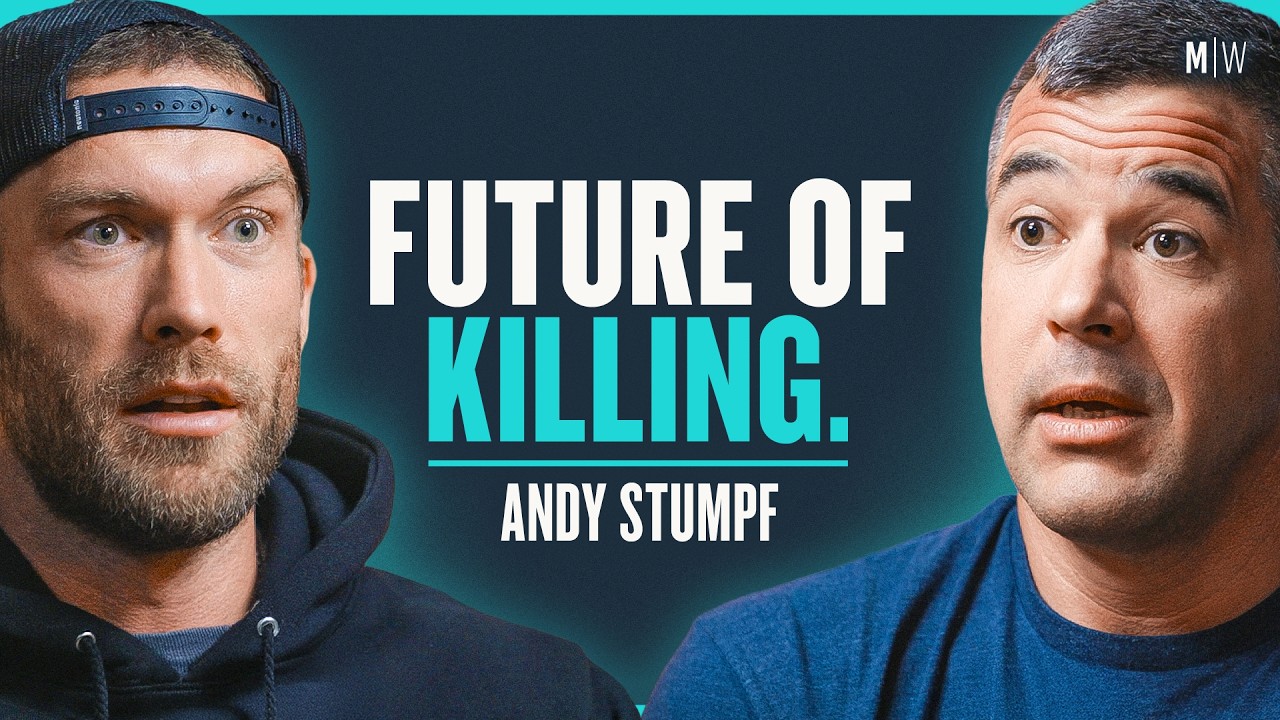 125 min
No One is Ready for This Coming War - Navy SEAL Andy Stumpf
 117 min
How to Steal Thoughts Out of Anyone’s Head - Oz Pearlman
 126 min
A Shocking Turn in the War on Men - Richard Reeves
 38 min
Tour Diary: Australia, Beers & Chris Hemsworth.
Found this useful? Build your knowledge library
Get AI-powered summaries of any YouTube video, podcast, or article in seconds. Save them to your personal pods and access them anytime.
Get Started Free