Key Moments
#60 – Annie Duke: How to improve decision making, learning, & apply ‘backcasting’ for future success
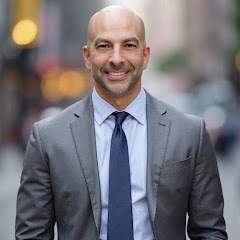 Peter Attia MD
Key Moments
Annie Duke explains poker as a model for real-world decisions, emphasizing probabilities, skill, and backcasting.
Key Insights
Poker serves as an ideal model for real-world decision-making due to its blend of incomplete information, skill, and luck.
Humans are not naturally wired for probabilistic thinking, often misinterpreting outcomes and failing to learn from all scenarios.
The 'decision matrix' — evaluating decisions based on both process and outcome — is crucial for comprehensive learning, regardless of winning or losing.
Applying 'backcasting' or 'pre-mortems' helps identify potential obstacles and opportunities, including the role of luck, in achieving future goals.
The 'fixed vs. variable ratio reinforcement schedule' explains why people persist in activities with intermittent rewards, even when facing losses.
To improve decision-making, it's vital to embrace all four quadrants of the decision matrix, including good decisions with good outcomes and bad decisions with good outcomes.
POKER AS A MODEL FOR LIFE'S UNCERTAINTIES
Annie Duke, a former professional poker player and decision strategist, argues that poker is an exceptional model system for real-world decision-making. Unlike chess, which offers perfect information and no luck, poker blends incomplete information with significant elements of both skill and chance. This dynamic mirrors life and professions like medicine, where outcomes are rarely deterministic, and perfect knowledge is unattainable. Understanding how to navigate this blend of skill and luck, and differentiate between good decisions and good outcomes, is fundamental to improving one's decision-making process.
THE HUMAN STRUGGLE WITH PROBABILISTIC THINKING
Humans are generally not innately wired to think probabilistically. Our brains often seek simplifying heuristics, leading to biases like 'resulting,' where we judge the quality of a decision based solely on its outcome. This tendency makes it difficult to assess true probabilities and accept that different outcomes can arise from the same initial conditions. Even those with strong analytical backgrounds fall prey to this, as demonstrated by the '95% confidence interval' game, highlighting our natural inclination to be overconfident and misjudge the range of possibilities. Cultivating probabilistic thinking helps align our mental models with the stochastic nature of reality.
THE BIASES OF REINFORCEMENT AND SELF-DECEPTION
The 'variable ratio reinforcement schedule', seen in slot machines, explains why humans persist in activities with intermittent rewards. The unpredictability of wins, coupled with the human tendency for post-hoc rationalization of losses, creates a potent recipe for self-deception in skill-based, luck-influenced games like poker. Players often incorrectly attribute wins to skill and losses to bad luck, preventing genuine learning. This psychological bias makes it challenging to objectively evaluate one's performance and adjust strategies, particularly in fields where the feedback loop is long and the influence of luck is substantial.
ADVANTAGE OF THE DECISION MATRIX: BEYOND RESULTS-DRIVEN THINKING
To overcome these biases, Duke advocates for a 'decision matrix' that separates decision quality from outcome quality. This 2x2 matrix (good/bad decision vs. good/bad outcome) highlights that a good decision can lead to a bad outcome and vice-versa. While it's natural to analyze bad outcomes, the critical and often overlooked quadrant is the 'good outcome from a bad decision.' Failing to examine these 'lucky wins' means missing valuable learning opportunities and potentially reinforcing flawed strategies. True learning comes from examining all four quadrants with equanimity.
THE PERILS OF 'RESULTING' AND STATUS QUO BIAS
The 'resulting' heuristic, where we judge decision quality by outcome, strongly influences organizational behavior. If an unexpected, non-status-quo decision leads to a bad outcome, the decision-maker is often condemned (the 'idiot quadrant'). Conversely, a status-quo decision with a bad outcome is often seen as 'unlucky' and excused. This fear-driven dynamic encourages groupthink, risk aversion, and a preference for 'omission over commission,' hindering innovation and critical examination. Leaders inadvertently propagate this by focusing solely on negative outcomes, failing to equally investigate unexpected positive results, which could reveal undervalued strategies.
EXAMINING ALL FOUR QUADRANTS FOR HOLISTIC LEARNING
Duke proposes a four-level hierarchy for thinking about decisions. Level 1 involves attributing wins to skill and losses to luck, with little deep reflection. Level 2 starts taking responsibility for losses and examining 'bad decision, bad outcome' scenarios. Level 3 expands this to all four quadrants, trying to understand skill and luck's roles universally. The highest level, Level 4, is achieved when one goes beyond merely identifying 'good decision, good outcome' to ask if there could have been an even better decision, even if it risks re-evaluating a 'win' as a suboptimal choice. This willingness to challenge one's own successful assumptions is crucial for continuous improvement.
THE POWER OF BACKCASTING AND PRE-MORTEMS
Backcasting (or reverse engineering) involves envisioning a future desired state and then working backward to identify the steps and probabilities required to get there. Its complement, the 'pre-mortem,' involves imagining failure and working backward to identify its causes. These techniques are powerful because they naturally reveal the role of luck — both good and bad — that might not be apparent in forward-looking forecasts. By integrating luck into the planning process, individuals and organizations can better prepare for uncertainties, hedge against risks, and make more robust strategic decisions, rather than reacting haphazardly to unforeseen circumstances.
STRATEGIC PLANNING WITH LUCK IN MIND
When applying backcasting and pre-mortems, the focus shifts beyond just controllable actions to include intervening factors of chance. For example, when aiming for a healthy century, one might identify 'breaking a hip' as a potential failure point. This then prompts questions about mitigating luck, such as improving bone density or finding hedges (e.g., specific exercises, fall prevention). Preparing for these 'luck' scenarios in advance, with a calm, rational mindset, allows for proactive responses rather than reactive panic. This comprehensive approach results in a more robust and resilient strategic plan, accounting for both skill-driven efforts and external stochastic influences.
FOSTERING HIGH-LEVEL THINKING IN ORGANIZATIONS
True high-level decision-making thrives in environments where skin is in the game, there's a significant blend of luck and skill, and feedback loops are short. Industries like high-frequency trading exemplify this, pushing individuals towards rigorous self-assessment. To cultivate this in any organization, leadership must move beyond a fear-driven culture where bad outcomes are punished. Instead, they should encourage exploring all outcomes, including unexpectedly good ones, for learning. Propagating a mindset that welcomes challenging assumptions and embraces the probabilistic nature of the world fosters innovation and long-term success, even in the face of uncertainty.
Mentioned in This Episode
●Software & Apps
●Companies
●Organizations
●Books
●Concepts
●People Referenced
Common Questions
Annie Duke's book 'Thinking in Bets' focuses on making smarter decisions, especially when you don't have all the facts, drawing parallels from poker to real-world decision-making. Peter Attia found it highly impactful for improving decision processes.
Topics
Mentioned in this video
A highly regarded poker player, described as one of the greatest poker minds ever, known for his ability to make others happy around him.
A highly successful professional poker player with multiple World Series of Poker bracelets, mentioned as a mentor and an example of high-level poker thinking.
Author who writes about 'centers of excellence' and how they produce greatness, compared to the poker environment Annie Duke's brother was in.
New England Patriots cornerback who intercepted the pass in the crucial Super Bowl play.
An academic and expert in sports analytics, cited for his observations on Bill Belichick's evolution in decision-making.
The actor who played the lead in 'The Cincinnati Kid'.
Author of 'Superforecasting', whose confidence interval game is used to illustrate challenges in probabilistic thinking.
Founding father of Bridgewater Associates and advocate for 'Ray Rock' (Risk-Adjusted Return on Capital), highlighting the importance of risk consideration in investment.
Highly successful Olympic swimmer, used as an example of achieving 'unconsciously competent' skill level.
A poker player mentioned as part of the group at the Mayfair Club.
A notable poker player who was part of the group Annie Duke's brother played poker with at the Mayfair Club, a Main Event champion.
Running back for the Seahawks, whose potential handoff was foregone in the controversial Super Bowl play, central to the discussion of 'resulting' bias.
Host of The Drive podcast, focused on optimizing performance, health, longevity, and critical thinking.
Supreme Commander of the Allied Expeditionary Force in Europe during World War II, who commanded the D-Day invasion, mentioned in the context of decision-making under uncertainty.
Data journalist for FiveThirtyEight, whose analysis of the Pete Carroll decision is recommended for further reading.
A poker player and bracelet holder who was part of the Mayfair Club group.
Actor who played a memorable character in the film 'Rounders'.
Guest on the podcast, author of 'Thinking in Bets', former professional poker player, and expert on decision-making.
Quarterback for the Seahawks during the discussed Super Bowl game against the Patriots, involved in the controversial pass play decision.
Author of 'The Success Equation', whose work focuses on understanding the interplay of luck and skill.
Russian physiologist known for his work in classical conditioning, related to the discussion of Skinner boxes and reinforcement schedules, but not explicitly named.
American psychologist, behaviorist, author, inventor, and social philosopher whose work on operant conditioning is referenced through the mention of 'Skinner boxes' for studying reinforcement schedules.
Former general manager of the Philadelphia 76ers, known for his 'Trust the Process' strategy, an aspiration for process-oriented thinking.
Legendary NFL coach, admired for his discipline and single-minded focus on winning, and his eventual adoption of analytics in decision-making after early success.
NFL coach, discussed in relation to the controversial Super Bowl call where a pass play was chosen over a run, illustrating 'resulting' bias.
A valuable book by Michael Mauboussin on the influence of luck and skill in various aspects of life, recommended for further understanding.
A book by Michael Lewis about analytical approaches in baseball, used as an analogy for the role of analytics in modern poker.
A book by Philip Tetlock about improving forecasting accuracy, highly recommended on the topic of probabilistic thinking.
An analysis into a project that has just concluded in order to determine what went right or wrong.
A website focusing on opinion poll analysis, politics, economics, and sports blogging. Benjamin Morris' analysis on the Super Bowl play is mentioned.
A strategy for anticipating and mitigating project failures by imagining that a project has failed and then working backward to determine potential causes.
A well-known New York City poker club where Annie Duke's brother and other future professional poker players honed their skills.
NFL team frequently mentioned in discussions about Peter Attia's sports fandom, Super Bowl outcomes, and coach Bill Belichick's decision-making.
The university where Annie Duke's brother studied and where she later attended, a key starting point for her poker career.
The university where Annie Duke studied cognitive psychology.
An independent agency of the U.S. government that supports fundamental research and education in all the non-medical fields of science and engineering, which awarded Annie Duke a fellowship.
A tool discussed for evaluating decisions after the fact, considering both the decision-making process and the outcome.
The scientific study of mental processes such as 'attention, language use, memory, perception, problem-solving, and thinking', which Annie Duke studied at the University of Pennsylvania.
A variant of poker where players receive two private cards and share five community cards to make the best five-card hand, the game predominantly played by professionals today.
A cognitive bias that describes why, for individuals, the pain of losing is psychologically more powerful than the pleasure of gaining, especially in decision-making.
A planning method that starts by defining a desired future and then works backward to identify policies and programs that will connect that future to the present, as a contrasting method to forecasting.
A nematode worm often used as a model organism in biological research due to its simplicity and ease of study, compared to poker as a model system for decision-making.
More from Peter Attia MD
View all 333 summaries 135 min
381‒Alzheimer’s disease in women: how hormonal transitions impact the brain, new therapies, & more
 9 min
9 minIs Industrial Processing the Real Problem With Seed Oils? | Layne Norton, Ph.D.
 13 min
Cooking with Lard vs Seed Oils | Layne Norton, Ph.D.
 146 min
380 ‒ The seed oil debate: are they uniquely harmful relative to other dietary fats?
Found this useful? Build your knowledge library
Get AI-powered summaries of any YouTube video, podcast, or article in seconds. Save them to your personal pods and access them anytime.
Get Started Free