Key Moments
177 - The development of cancer immunotherapy and its promise for treating advanced cancers
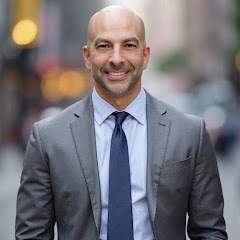 Peter Attia MD
Key Moments
Pioneer oncologist Steve Rosenberg on the journey of cancer immunotherapy, from early observations to CAR T-cells and targeted therapies.
Key Insights
Early observations of spontaneous cancer remission fueled the quest to harness the immune system for cancer treatment.
The development of cancer immunotherapy has been a long journey, marked by early challenges and significant breakthroughs like Interleukin-2 and CAR T-cells.
Cancer cells possess unique properties like uncontrolled growth and metastasis, driven by accumulated mutations in DNA.
While chemotherapy and radiation are crucial, immunotherapy offers a highly selective approach to targeting cancer cells.
CAR T-cell therapy has shown remarkable success in treating certain blood cancers by engineering T-cells to recognize unique cancer markers.
The future of cancer immunotherapy likely lies in personalized treatments targeting individual neoantigens arising from gene mutations, especially in solid tumors.
EARLY INSPIRATION AND JOURNEY THROUGH MEDICAL EDUCATION
Dr. Steve Rosenberg's path to cancer research was shaped by a profound childhood reaction to the horrors of the Holocaust, instilling a deep desire to alleviate suffering. This led him to pursue medicine with a focus on research. His academic career began with a six-year combined bachelor's and MD program at Johns Hopkins, where he also pursued a PhD in biophysics. This broad scientific foundation, including physical chemistry and quantum mechanics, was intended to equip him to tackle any scientific problem, a foreshadowing of his later interdisciplinary approach to cancer.
OBSERVATIONS THAT IGNITED IMMUNOTHERAPY RESEARCH
Two pivotal patient cases early in Dr. Rosenberg's career profoundly influenced his thinking. The first involved a patient with gastric cancer and widespread metastases who experienced spontaneous remission without treatment, suggesting the body's own mechanisms could fight cancer. The second case highlighted how immunosuppression, in the context of a kidney transplant recipient who developed widespread renal cell cancer from a donor kidney, allowed the cancer to spread, implying the immune system was crucial in controlling it. These observations planted the seed for exploring immunotherapy.
THE CHALLENGES AND PROGRESS OF EARLY IMMUNOTHERAPY
In the late 1970s, understanding of the human immune system's role in fighting cancer was nascent. Dr. Rosenberg faced significant challenges, including the inability to maintain lymphocytes alive outside the body. His early attempts involved implanting human tumors into mini-pigs and using the draining lymph node lymphocytes, which proved ineffective. The discovery of Interleukin-2 (IL-2) in 1976 was a critical turning point, providing a means to grow lymphocytes in vitro and stimulating them in vivo, laying the groundwork for his later clinical trials.
BREAKTHROUGHS WITH INTERLEUKIN-2 AND TUMOR-INFILTRATING LYMPHOCYTES
After years of research and nearly 70 patients treated without significant response, a breakthrough occurred in 1984 when Dr. Rosenberg successfully used IL-2 to induce a durable regression in a patient with metastatic melanoma. This marked the first reproducible instance of a deliberate immunologic maneuver causing cancer regression. Further work with tumor-infiltrating lymphocytes (TILs), T-cells extracted from tumors, demonstrated even higher response rates in melanoma and kidney cancer patients, although durability remained a challenge.
THE REVOLUTION OF CAR T-CELLS AND GENE THERAPY
The development of Chimeric Antigen Receptor (CAR) T-cells represented another major leap. By genetically modifying a patient's T-cells to express antibody-like receptors, these engineered cells could target specific surface molecules on cancer cells, such as CD19 on B-cell lymphomas and leukemias. This approach, initially met with skepticism regarding commercial viability, led to the development of the first FDA-approved cell and gene therapy, offering durable remissions for patients with aggressive blood cancers, even though it also eliminated normal B-cells.
TARGETING TUMOR MUTATIONS AND THE FUTURE FRONTIER
Understanding that cancers arise from accumulated mutations, especially in solid tumors, has opened new avenues. Melanoma and lung cancer, with their high mutation rates, often respond better to immunotherapies like checkpoint inhibitors because these mutations can generate unique antigens recognized by T-cells. The current frontier involves developing highly individualized therapies, potentially using genetically engineered T-cells or vaccines that target these patient-specific neoantigens, offering hope for treating even the most challenging solid organ cancers.
THE IMPORTANCE OF CONTINUOUS EFFORT AND COLLABORATION
Dr. Rosenberg emphasizes the crucial role of perseverance and collaboration in scientific advancement. He highlights the importance of open sharing of data and reagents, advocating against the secrecy often imposed by intellectual property concerns, as the primary goal should be to save lives. He also stresses the necessity of staying connected to the clinic and the patient experience, even in failure, as it fuels the motivation to continue seeking better treatments for devastating diseases.
Mentioned in This Episode
●Companies
●Organizations
●Books
●Drugs & Medications
●Concepts
●People Referenced
Common Questions
Dr. Rosenberg's fascination with medicine and cancer began around age five or six, deeply influenced by the horrors of the Holocaust and his parents receiving postcards detailing relatives' deaths in concentration camps. This trauma fueled a spiritual desire to alleviate suffering through medical research, leading him to keep scrapbooks on medicine and science.
Topics
Mentioned in this video
The chief of surgery at Johns Hopkins when Dr. Rosenberg was there, described as a brilliant and respected figure, though the medical school environment was not always nurturing.
A good friend of Dr. Rosenberg at NIH who developed a mini-pig colony, used in early experiments for implanting human tumors and harvesting reactive lymphocytes.
Mentioned as part of the team, along with Georges Köhler, who discovered monoclonal antibodies.
A scientist at The Weizmann Institute credited, along with Zelig Eshhar, with creating chimeric T-cells.
A scientist at NIH who collaborated with Dr. Rosenberg on early gene therapy efforts, specifically developing methods to introduce genes into human cells to replace adenosine deaminase deficiencies.
The chief of surgery at Brigham Hospital during Dr. Rosenberg's residency, highly respected for his intelligence and unique perspectives, and supportive of Dr. Rosenberg's unconventional PhD path.
The chief of surgery at NIH whose retirement opened the position for Dr. Rosenberg in 1974.
Former director of the NCI; Dr. Rosenberg was on the short list to replace him after DeVita left to become Chief at Memorial Sloan Kettering.
Mentioned as part of the team, along with César Milstein, who discovered monoclonal antibodies.
Invited by Dr. Rosenberg to work in his lab after creating the concept of chimeric T-cells; spent three years there establishing CAR T-cell research.
Cited as an example of a patient with germ cell tumors (testicular cancer) who had metastatic disease (brain and lung) but was cured with platinum-derived chemotherapy.
A researcher at the University of Pennsylvania who used CD19 CAR T-cells to treat leukemia patients, corroborating the work done by Dr. Rosenberg's lab for lymphoma.
The First Lady who was initially upset by Dr. Rosenberg's direct use of the word 'cancer' to describe President Reagan's condition during a press conference.
Received the Nobel Prize for his work on checkpoint inhibitors (CTLA-4 and PD-1), which unleash the immune system.
The host of the podcast, who trained with Dr. Rosenberg and expresses profound gratitude for his mentorship and impact, recalling a photo they took 16 years prior.
Dr. Rosenberg's wife, who provided immense support for his demanding career, handling daily burdens and enabling his intense commitment to research.
President Reagan's Chief of Staff who convinced Nancy Reagan to allow Dr. Rosenberg to speak truthfully about the president's cancer diagnosis.
A scientist at NIH who collaborated with Dr. Rosenberg on early gene therapy efforts, specifically developing methods to introduce genes into human cells to replace adenosine deaminase deficiencies.
The then-President of the United States on whom Dr. Rosenberg operated for colon cancer in 1985.
Dr. Rosenberg quoted Lincoln saying, 'Success consists of moving from failure to failure without loss of enthusiasm,' relating it to his perseverance in cancer research.
Mentioned as being on the short list for Chief of Surgery at Johns Hopkins along with Dr. Rosenberg.
A T-cell growth factor discovered in 1976 that enabled the manipulation of lymphocytes outside the body. Administered in the mid-80s, it caused complete durable regressions in widely metastatic melanoma and renal cancer patients.
The most frequently prescribed oncology drug, which impacts blood vessels in tumors and can prolong survival in colorectal cancer by about 4.5 months when combined with other regimens.
A chemotherapy drug capable of curing choriocarcinoma, even when the lung is 90% replaced by tumor.
A chemotherapy drug mentioned as an example of extremely expensive treatments that prolong life by only a few weeks (e.g., six weeks in pancreatic cancer) with severe toxicity.
Pharmaceutical company that also developed CAR T-cell therapy for leukemia patients almost simultaneously with Kite Pharma's lymphoma work.
The pharmaceutical company that acquired Kite Pharma for $11.9 billion in 2017, making anti-CD19 CAR T-cell therapy widely available.
A biotech company co-founded by Dr. Rosenberg's former fellow Ari Belldegrun to commercialize CAR T-cell therapy, eventually sold to Gilead for $11.9 billion.
Dr. Rosenberg pursued his PhD in biophysics at Harvard, seeking a broad scientific background to tackle any problem.
Dr. Rosenberg was invited to consider the chief of surgery position at Johns Hopkins but declined, choosing to stay at NIH.
The hospital where President Reagan's surgery took place, which has modules set aside for treating high government officials.
Dr. Rosenberg attended Johns Hopkins for a combined bachelor's and MD degree, finding it a nurturing environment that fostered his interest in creating the medicine of tomorrow.
Dr. Rosenberg was appointed Chief of Surgery at the NCI in 1974, a position he has held for over 46 years, valuing its resources and mandate to advance medicine.
Franny Moore offered Dr. Rosenberg a position as head of surgery at the newly built Dana-Farber institution, but he ultimately chose NCI.
Dr. Rosenberg published a paper in this journal about tracking genetically modified lymphocytes using a bacterial marker gene.
Where Vince DeVita went after resigning as director of the NCI, tempting Dr. Rosenberg to consider the NCI Director role.
A government committee that reviewed and ultimately approved Dr. Rosenberg's proposal to introduce a marker gene into human lymphocytes, a landmark decision for human gene therapy.
An inhibitory molecule on the surface of lymphocytes; targeting it with antibodies (checkpoint inhibitors) removes brakes on the immune system, allowing T-cells to react more aggressively.
Human Leukocyte Antigen molecules are transplantation molecules on the surface of cells; for a mutation derived peptide to be recognized by the immune system, it must fit onto the patient's specific HLA molecule.
Dr. Rosenberg chose to pursue a PhD in biophysics at Harvard to gain a broad and formal scientific education, enabling him to understand diverse scientific areas.
A molecule on B lymphocytes that is also expressed by lymphomas and leukemias. It serves as the target for anti-CD19 CAR T-cells, leading to the destruction of both normal B cells and cancer cells.
A type of gene therapy where T-cells are engineered with a Chimeric Antigen Receptor (CAR) to recognize specific antigens on cancer cells. It was developed in Dr. Rosenberg's lab and became the first FDA-approved cell and gene therapy.
A molecule on T-cell surfaces that acts as an inhibitory brake on immune reactions; targeting it with antibodies (checkpoint inhibitors) can unleash the T-cell activity against cancer.
More from Peter Attia MD
View all 333 summaries 135 min
381‒Alzheimer’s disease in women: how hormonal transitions impact the brain, new therapies, & more
 9 min
9 minIs Industrial Processing the Real Problem With Seed Oils? | Layne Norton, Ph.D.
 13 min
Cooking with Lard vs Seed Oils | Layne Norton, Ph.D.
 146 min
380 ‒ The seed oil debate: are they uniquely harmful relative to other dietary fats?
Found this useful? Build your knowledge library
Get AI-powered summaries of any YouTube video, podcast, or article in seconds. Save them to your personal pods and access them anytime.
Get Started Free