Key Moments
#162 - Sarah Hallberg, D.O., M.S.: Treating metabolic disease, & a personal journey through cancer
 Peter Attia MD
Want to know something specific about what's covered?
We've already dissected every moment. Ask and we will deliver (with timestamps).
Key Moments
Dr. Sarah Hallberg discusses metabolic disease, cancer, and advocating for health equity.
Key Insights
Carbohydrate restriction offers a powerful therapeutic approach for type 2 diabetes and metabolic syndrome.
Palmitoleic acid (16:1) may serve as an early biomarker for metabolic dysfunction, preceding blood sugar changes.
Obesity can be a result, not a cause, of metabolic disease, highlighting the need for compassionate care.
Sarah Hallberg's personal journey with stage IV lung cancer underscores the importance of aggressive treatment and patient advocacy.
Health disparities are significant in both metabolic disease and cancer treatment, necessitating a focus on health equity.
The medical system often fails patients when cancer recurs, demanding greater advocacy and more efficient re-treatment pathways.
THE PHYSIOLOGICAL ROLE OF DIETARY FAT
Dr. Sarah Hallberg emphasizes the critical role of dietary intake, particularly carbohydrates and fats, in influencing fatty acid distribution and metabolic health. She challenges the simplistic 'you are what you eat' adage, especially concerning saturated fats. Hallberg highlights how carbohydrate restriction can improve cardiovascular risk biomarkers and even reverse type 2 diabetes, underscoring the complexity of fatty acid metabolism that often goes undiscussed due to its confusing nature.
APhysician's JOURNEY: FROM OBESITY CARE TO METABOLIC BREAKTHROUGH
Hallberg shares her personal and professional evolution, moving from traditional low-fat, low-calorie dietary advice to embracing carbohydrate restriction. Frustrated by the lack of progress in primary care, she pivoted to leading an obesity program. There, she discovered the profound impact of carbohydrate restriction on reversing type 2 diabetes, a discovery that challenged decades of her prior medical training and ignited a passion for research and evidence-based metabolic interventions.
THE PREVALENCE OF METABOLIC DYSFUNCTION
The conversation delves into the alarming prevalence of metabolic diseases in the U.S., with over 50% of adults having diabetes or pre-diabetes. Furthermore, 88% of American adults are not in optimal metabolic health, as indicated by criteria for metabolic syndrome. Hallberg stresses that 'normal' blood sugar does not equate to health and that pre-diabetes signifies significant underlying issues that have been progressing for years, impacting microvascular health even before formal diagnosis.
PALMITOLEIC ACID AS AN EARLY BIOMARKER
Hallberg introduces palmitoleic acid (16:1) as a potentially crucial biomarker for early metabolic dysfunction. Its production, facilitated by the enzyme SCD-1, increases with carbohydrate consumption above an individual's tolerance threshold. Elevated palmitoleic acid levels, often correlating with higher triglycerides, may indicate impending insulin resistance and metabolic issues even when fasting glucose remains normal, suggesting it could serve as an early warning sign for intervention.
NAVIGATING A STAGE IV LUNG CANCER DIAGNOSIS
Hallberg recounts her unexpected diagnosis of stage IV lung cancer, despite being a healthy non-smoker. The experience marked a profound personal shift, forcing her to confront mortality, grief, and the aggressive realities of cancer treatment. She initially grappled with the diagnosis, contemplating physician-assisted suicide, but ultimately chose to fight, driven by her role as a mother and her desire to live for her children.
THE FIGHT FOR EQUAL ACCESS AND HEALTH EQUITY
Hallberg's cancer journey has amplified her commitment to health equity. She highlights the significant disparities in healthcare access and outcomes, particularly for cancer patients and those with chronic diseases. Her personal experience with advanced cancer treatment, including delays in care and high out-of-pocket costs, underscores the systemic challenges faced by many, motivating her to advocate for improved access and more equitable treatment pathways for all.
ADVOCACY, RESILIENCE, AND CONTINUED FIGHT
Despite enduring multiple treatments, including chemotherapy, radiation, and targeted therapies, Hallberg maintains a resolute spirit. She emphasizes the importance of proactive advocacy, seeking aggressive treatment, and managing her condition rather than passively waiting for progression. Her journey has reshaped her perspective, not by discovering a new purpose, but by deepening her commitment to her existing values and advocating for both metabolic health and cancer patient rights.
Mentioned in This Episode
●Software & Apps
●Companies
●Organizations
●Books
●Drugs & Medications
●Studies Cited
●Concepts
●People Referenced
Impact of Diet on Fatty Acid Levels (Volk Study)
Data extracted from this episode
| Dietary Saturated Fat Intake (g/day) | Carbohydrate Intake (g/day) | Serum Saturated Fatty Acids (16:0) - Change Trend | Palmitoleic Acid (16:1) - Change Trend |
|---|---|---|---|
| 84 (High) | <50 (Very Low) | Stable/Slight Decrease | Significant Decrease |
| 32 (Low) | 346 (High) | Trend to Higher | Significant Increase |
Dietary Intervention Effects on Triglycerides and Fatty Acids (Volek Study)
Data extracted from this episode
| Diet Group | Calories/Day (approx.) | Dietary Saturated Fat (g) | Baseline Triglycerides (mg/dL) | Change in Triglycerides (%) | Change in Total Saturated Fatty Acids (relative %) | Change in Palmitoleic Acid (16:1) (relative %) |
|---|---|---|---|---|---|---|
| Very Low Carbohydrate | 1500 | 36 | 211 | -50% | -12% | Significant Decrease |
| Low Fat | 1500 | 12 | 187 | -20% | -5% | Significant Increase |
Common Questions
Understanding this relationship is crucial because it counters the common belief of 'you are what you eat,' especially regarding saturated fat. In the context of carbohydrate restriction, dietary saturated fat intake does not directly correlate with serum saturated fat levels, and it helps decrease cardiovascular and diabetes risk biomarkers by reversing related metabolic dysregulations.
Topics
Mentioned in this video
Dr. Hallberg initiated an unfunded pilot study with researchers from Purdue University's nutrition program to examine metabolic and financial improvements.
An association where Dr. Hallberg presented findings from her pilot study, a precursor to her TED Talk.
A conference where Dr. Hallberg met Dr. Stephen Phinney, leading to the funding of larger clinical trials.
An organization that selected Dr. Hallberg as an Aspen Health Innovator Fellow, an honor that influenced her decision to continue her work despite her cancer diagnosis.
Mentioned as having published a story about non-smoking lung cancer, highlighting its growing prevalence and impact.
The institution where Dr. Hallberg was asked to start an obesity program, leading to her discovery of carbohydrate restriction.
Dr. Hallberg discusses the traditional approaches to diabetes management promoted at ADA meetings versus her own experiences with carbohydrate restriction.
A researcher cited for her feeding study on metabolic syndrome patients, which monitored fatty acid changes across different carbohydrate intake phases.
Along with Stephen Phinney, he co-authored an important book on metabolic health that deeply resonated with Dr. Hallberg and Peter Attia.
Mentioned as one of the pioneers in carbohydrate restriction research, alongside Drs. Phinney and Volek.
A researcher whose lectures on carbohydrate restriction significantly influenced Dr. Hallberg's approach to obesity and diabetes.
Referenced as a guest on a previous podcast episode who elegantly explained the long time course of insulin resistance.
A specific genetic mutation found in Dr. Hallberg's non-small cell lung cancer, for which targeted therapies exist.
A monounsaturated fatty acid that the discussion highlights as a more important health predictor than often appreciated, correlating with insulin resistance markers.
The study of how genes affect a person's response to drugs, which identified Dr. Hallberg's genetic mutation explaining her adverse reaction to Gemzar.
Discussed as a marker in a Netherlands study correlating palmitoleic acid levels at age 50 with CRP levels at age 70, indicating its predictive power for future health problems.
An enzyme that converts saturated fatty acids like palmitic acid into palmitoleic acid, with increased activity being an independent marker for triglyceridemia and abdominal adiposity.
Another anti-estrogen therapy medication Dr. Hallberg was prescribed, placing her into early menopause as part of her treatment strategy.
A newer generation TKI that Dr. Hallberg was switched to after the initial TKI failed, used to treat her EGFR-mutated lung cancer.
A chemotherapy drug that caused severe, life-threatening complications for Dr. Hallberg due to a genetic mutation preventing its breakdown.
Primarily a breast cancer medication used to target one of Dr. Hallberg's specific secondary mutations.
A class of targeted therapy medications used to treat EGFR-driven cancers, effective but with a limited duration before resistance develops.
More from Peter Attia MD
View all 338 summaries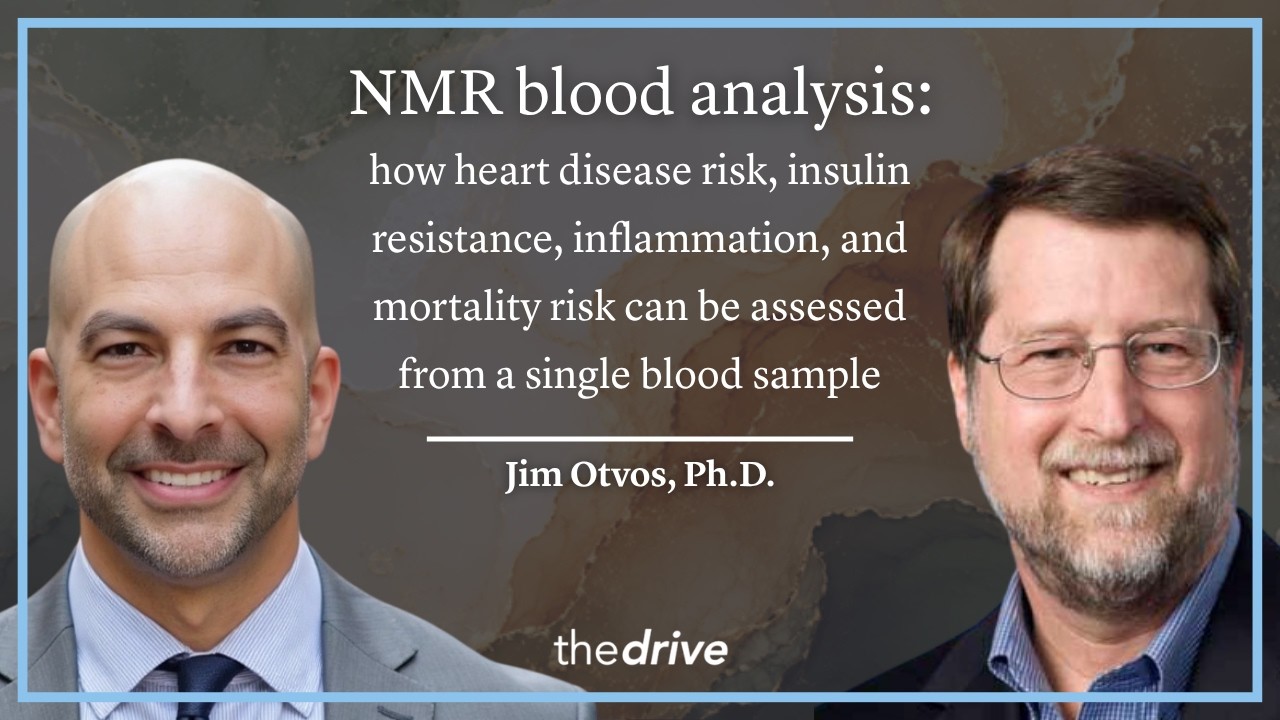 148 min
402 ‒ NMR blood analysis: how mortality risk and more can be assessed from a single blood sample
 118 min
Building strength and muscle mass: optimize training & nutrition for longevity (AMA #71 rebroadcast)
 121 min
397 - Endometriosis and adenomyosis: diagnosis, fertility, reproductive aging, & emerging treatments
 51 min
396 – Breast cancer screening: understanding risk, deciding when to start, and more
Ask anything from this episode.
Save it, chat with it, and connect it to Claude or ChatGPT. Get cited answers from the actual content — and build your own knowledge base of every podcast and video you care about.
Get Started Free