Key Moments
#115–David Watkins, PhD: Immunology, monoclonal antibodies, & vaccine strategies for COVID-19
 Peter Attia MD
Key Moments
Immunology explained: innate vs. adaptive, B/T cells, antibodies, and vaccine strategies for COVID-19.
Key Insights
The adaptive immune system, with its T and B cells, evolved before amphibians and is the basis for vaccination.
Antibodies are proteins that bind to antigens; neutralizing antibodies are crucial as they block viral entry into cells.
Standard antibody tests (IgG, IgM) measure total antibodies, not necessarily neutralizing ones, highlighting variability in immune response.
Cytotoxic T cells (CD8 T cells) are vital for destroying virus-infected cells, acting as a critical defense mechanism.
While vaccines aim for durable immunity, challenges like viral mutation (e.g., HIV, Hepatitis C) necessitate diverse approaches, including drugs and monoclonal antibodies.
Monoclonal antibodies, cloned from elite responders, offer a promising strategy for both preventing and treating infections, particularly for high-risk individuals.
THE EVOLUTION OF IMMUNE DEFENSE
The human immune system is broadly divided into innate and adaptive responses. The innate system provides immediate, non-specific defense, while the adaptive system, characterized by T and B cells, offers a highly specific and memory-driven defense. This adaptive immunity, which evolved well before amphibians, is the cornerstone of vaccination, a public health measure that has saved countless lives.
THE MECHANISMS OF ADAPTIVE IMMUNITY
The adaptive immune system has two primary arms: cellular and humoral. The humoral response, mediated by B cells, involves the production of antibodies. When a virus enters the body, B cells recognize viral antigens and undergo a process of affinity maturation, replicating and mutating to produce antibodies that bind tightly to the virus. These antibodies can neutralize the virus by preventing it from infecting host cells.
UNDERSTANDING ANTIBODIES AND NEUTRALIZATION
Antigens are essentially pieces of a virus that trigger an immune response. Antibodies are proteins produced by B cells that bind to these antigens. Not all antibodies are equally effective; neutralizing antibodies are critical because they bind to specific regions of a virus (like the spike protein of SARS-CoV-2) that are essential for cell entry, thereby blocking infection. Standard antibody tests often measure total antibody levels (IgG, IgM) but do not distinguish between neutralizing and non-neutralizing antibodies.
THE ROLE OF T CELLS AND CYTOTOXIC KILLERS
Complementing the humoral response are T cells, particularly cytotoxic T lymphocytes (CTLs or CD8 T cells). These cells are responsible for identifying and destroying infected host cells, effectively shutting down 'virus factories' before they can release more viral particles. CD8 T cells recognize viral fragments presented on the surface of infected cells via MHC molecules, providing a crucial mechanism for clearing infections, especially those like HIV where the virus hides within cells.
CHALLENGES IN VIRAL IMMUNITY AND VACCINE DEVELOPMENT
Viruses like HIV and Hepatitis C present significant challenges due to their high mutation rates and ability to evade immune responses. Developing effective vaccines against such viruses is difficult because they can rapidly evolve escape mechanisms. While traditional vaccines rely on eliciting strong neutralizing antibody responses, the complexity of some viruses necessitates exploring alternative or complementary strategies.
MONOCLONAL ANTIBODIES: A PROMISING THERAPEUTIC AVENUE
Monoclonal antibodies, which are laboratory-produced antibodies cloned from the B cells of elite responders, offer a powerful therapeutic tool. These antibodies can be engineered to provide specific and potent neutralization of viruses. They can be used for both prevention and treatment, providing a direct infusion of immune protection. This approach is particularly promising for high-risk populations or when vaccine-induced immunity might be less robust, such as in the elderly.
VACCINE STRATEGIES FOR CORONAVIRUS
Current efforts for a coronavirus vaccine are exploring various strategies, including mRNA, DNA, and spike protein-based vaccines, moving beyond traditional inactivated or attenuated virus approaches. The goal is not necessarily sterilizing immunity but rather reducing viral load, preventing severe disease, and decreasing transmission. The effectiveness of these vaccines will ultimately be determined by their ability to induce durable neutralizing antibody responses in humans.
LEARNING FROM PAST PANDEMICS
The lessons learned from past viral epidemics like HIV and Zika are invaluable. The development of highly active antiretroviral therapy (HAART) transformed HIV from a uniformly fatal disease into a chronic manageable condition. Similarly, the development of curative drugs for Hepatitis C, despite the lack of a vaccine, highlights the power of pharmaceutical innovation. These experiences inform our approach to the current coronavirus pandemic, emphasizing the need for diverse strategies and a rapid scientific response.
THE FUTURE OF INFECTIOUS DISEASE INTERVENTION
The scientific community is employing a 'try everything' approach to combat infectious diseases. This includes not only traditional vaccine development but also the exploration of therapeutic drugs and monoclonal antibodies. The goal is to create a combination of interventions that can effectively control viral spread and mitigate disease severity. The development of monoclonal antibodies, cloned from individuals with exceptional immune responses, represents a new frontier in preventing and treating infectious diseases.
Mentioned in This Episode
●Products
●Companies
●Organizations
●Books
●Drugs & Medications
●Concepts
●People Referenced
Common Questions
The immune system is divided into two primary branches: the innate immune system, which provides immediate, non-specific defense, and the adaptive immune system, which offers a targeted, memory-based response. The adaptive system further bifurcates into cellular (T-cells) and humoral (B-cells) responses.
Topics
Mentioned in this video
Professor of pathology at George Washington University Medical School, previously at the University of Miami, with expertise in immunology, particularly SIV and HIV.
A PhD biochemist at Emory University who discovered several drugs, including the first two drugs that later cured Hepatitis C.
An individual working at Harvard's primate center in the early days of the HIV epidemic who isolated the first simian immunodeficiency virus.
A colleague based in Fiocruz, Rio, who collaborated with Dr. Watkins on a study of the 17D yellow fever vaccine's immune response.
A pioneer researcher at Scripps who was instrumental in developing techniques to isolate and clone broadly neutralizing antibodies against HIV.
An academy which Dr. Watkins was elected a fellow of.
The institution where Dennis Burton works, contributing to research on broadly neutralizing antibodies.
Mentioned for their approach to a COVID-19 vaccine, using a chimpanzee adenovirus to express the spike protein.
The institution where Dr. David Watkins recently relocated as a professor of pathology.
A medical journal that published a paper on cancer treatment using antibodies to reactivate T-cells, leading to tumor eradication.
The institution where Raymond Schinazi worked when he discovered key drugs for HIV and Hepatitis C.
Where Dr. Watkins previously worked for 10 years, serving as vice chair of research in pathology.
A university where a study on coronavirus neutralizing antibodies was conducted, observing significant variability in human responses.
A research institution in Rio where Myrna Bonaldo, a collaborator of Dr. Watkins, is based.
A country in South America that Dr. Watkins has fallen in love with and where he studies many tropical diseases.
Mentioned as one of the companies involved in the development of COVID-19 vaccines, likely focusing on newer approaches like mRNA.
Mentioned as a company involved in COVID-19 vaccine development, likely using mRNA technology.
A game-changing drug development in the mid-90s that transformed HIV from a uniformly fatal disease into a chronic manageable condition.
A drug used in Pre-exposure prophylaxis (PrEP) to prevent HIV infection.
A virus for which simple injections of monoclonal antibodies after infection significantly dropped the death rate.
A tropical disease virus that Dr. Watkins studies.
A tropical disease virus that Dr. Watkins studied, particularly its impact on pregnant women and the use of monoclonal antibodies for prevention.
One of the earliest repurposed drugs used against HIV, which initially reduced viral loads but was eventually escaped by the virus.
Mentioned as an example of a live attenuated virus vaccine, similar in concept to the yellow fever vaccine.
A virus that replicates to enormous levels with high variability, for which a vaccine is difficult but has been cured by newly developed drugs.
A strategy where individuals take a daily drug like Truvada to prevent HIV infection, which has been groundbreaking in curbing new infections.
More from Peter Attia MD
View all 333 summaries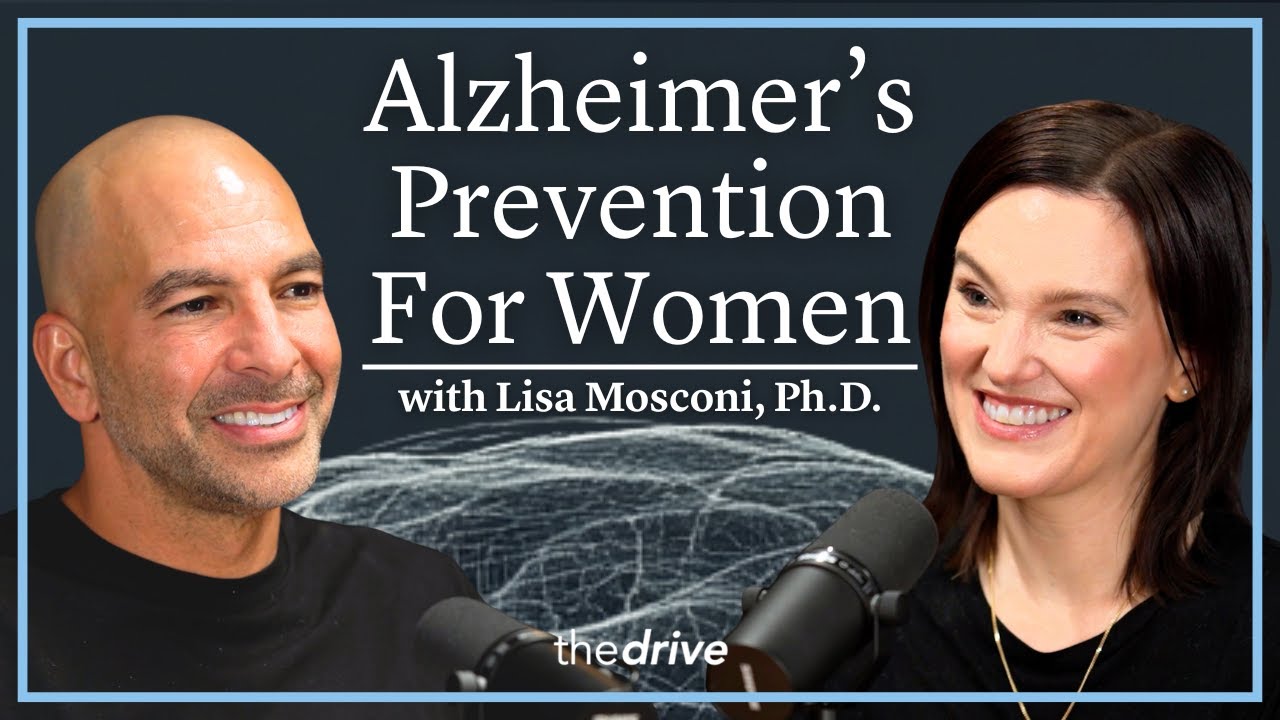 135 min
381‒Alzheimer’s disease in women: how hormonal transitions impact the brain, new therapies, & more
 9 min
9 minIs Industrial Processing the Real Problem With Seed Oils? | Layne Norton, Ph.D.
 13 min
Cooking with Lard vs Seed Oils | Layne Norton, Ph.D.
 146 min
380 ‒ The seed oil debate: are they uniquely harmful relative to other dietary fats?
Found this useful? Build your knowledge library
Get AI-powered summaries of any YouTube video, podcast, or article in seconds. Save them to your personal pods and access them anytime.
Get Started Free