Key Moments
#01 – Tim Ferriss: depression, psychedelics, and emotional resilience
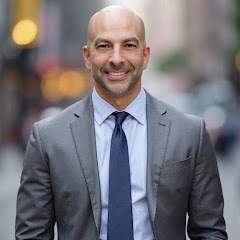 Peter Attia MD
Key Moments
Tim Ferriss and Peter Attia discuss psychedelics, mental health, and personal resilience.
Key Insights
Psychedelics show promise in treating addiction, depression, and PTSD, though research is ongoing and risks exist.
Mental health, particularly male depression, is a significant societal issue often hidden and requiring open discussion.
Mindfulness meditation and other non-psychedelic practices can develop self-awareness and emotional resilience.
Personal resilience is built through consistent practices like exercise, fasting, meditation, and social connection.
The stigma around psychedelics is slowly decreasing due to scientific research and personal testimonials.
Funding scientific research into understudied compounds and therapies is crucial for advancing mental health treatment.
THE ORIGINS OF HOPE: PERSONAL TRAUMA and MENTAL HEALTH STRUGGLES
Tim Ferriss and Peter Attia open by reflecting on their personal struggles with depression and the societal tendency to view happiness as secondary to productivity. Ferriss recounts a near-suicidal experience in college, highlighting how a simple postcard from his mother inadvertently saved his life. Attia shares a similar childhood sentiment, feeling happiness was not an attainable option and that striving for it would diminish his drive. Both emphasize the common, yet often silent, battles with mental health, particularly noting the societal tendency for men to internalize these struggles. They underscore the importance of acknowledging these shared experiences to combat feelings of isolation.
THE POWER OF PSYCHEDELICS: EXPLORING THERAPEUTIC POTENTIAL
The conversation delves into the therapeutic potential of psychedelics, with both hosts sharing personal experiences and insights. Ferriss recounts his early, haphazard use of psilocybin which provided profound 'reboots' from anxiety and depression, eventually leading to controlled experiences. Attia shares his transformative experience with ayahuasca, describing it as equivalent to years of therapy. They acknowledge the risks and the illegality of these substances in the U.S. but highlight the growing scientific interest and research, particularly from institutions like Johns Hopkins and NYU, exploring their efficacy in treating addiction, depression, and PTSD.
BEYOND THE STAGE: CULTIVATING SELF-AWARENESS AND RESILIENCE
Beyond psychedelics, the discussion emphasizes developing internal resilience through practices like mindfulness meditation. Ferriss advocates for 'non-reactivity training,' explaining that the goal isn't to eliminate thoughts but to recognize them and return focus. Attia notes the importance of finding a meditation guide or app that resonates personally. They discuss how these practices, akin to 'emotional non-reactivity conditioning,' help create a buffer against life's challenges, allowing for more considered responses rather than reflexive reactions. This is likened to gaining a 'witness perspective' on one's own life.
FROM SELF-LOATHING TO SELF-COMPASSION: REWRITING INTERNAL NARRATIVES
A significant theme is the shift from harsh self-criticism to self-compassion. Both hosts admit to years of intense inner dialogue characterized by self-loathing. Attia's analogy of treating oneself as one would treat a child becomes a pivotal point, highlighting the detrimental effects of constant self-criticism. The idea is that our internal narratives shape our reality; by recontextualizing past traumas and learning to offer ourselves the same care we would offer loved ones, we can foster profound and lasting changes. This internal shift is seen as fundamental to overall well-being.
SCIENTIFIC ADVANCEMENT AND PHILANTHROPIC LEVERAGE
The conversation pivots to the critical role of scientific research and funding in advancing mental health treatments. Ferriss announces a significant personal commitment of over a million dollars towards research, particularly in psilocybin and MDMA. He draws a parallel to Catherine McCormack's historical funding of the birth control pill, illustrating how focused, strategic philanthropic investment can create monumental change. They discuss the regulatory hurdles and the deliberate pathways being pursued, such as therapeutic designations for MDMA and psilocybin, to bring these potentially life-changing compounds into mainstream medical practice.
DURABLE EFFECTS AND PRACTICAL APPLICATION FOR WELLBEING
The discussion concludes with practical takeaways for listeners, focusing on enduring practices that foster mental and physical well-being. Ferriss outlines his 'top five' reliable practices: regular hip-hinging movements (like deadlifts), periodic fasting and ketosis, daily meditation, consistent group meals, and acts of kindness or Metta (loving-kindness) meditation. These practices, rather than quick fixes, are presented as tools for building long-term resilience, self-acceptance, and a more fulfilling life, underscoring that durable change often stems from consistent, albeit simple, daily efforts.
Mentioned in This Episode
●Software & Apps
●Companies
●Organizations
●Books
●Drugs & Medications
●Concepts
●People Referenced
Tim Ferriss's 5 Pillars for Emotional Resilience and Performance
Practical takeaways from this episode
Do This
Avoid This
Common Questions
Peter's motivation stems from experiencing profound conversations with smart individuals and wanting to share these insights in their natural state with a broader audience, ensuring important information is captured and disseminated.
Topics
Mentioned in this video
A meditation app recommended for its 'Ten and Ten' program for beginners.
An online education platform, co-founded by Chase Jarvis.
A meditation practice focusing on developing compassion, recommended by Tim Ferriss for improving one's emotional state.
Awarded The Tim Ferriss Show as 'best of iTunes' for three years running.
Sam Harris's meditation app, highly recommended for its guided mindfulness meditations.
A meditation app mentioned for its background nature sounds and female guided meditations.
Tara Brach's book, which had a huge impact on Tim Ferriss and is recommended for emotional patterns.
A book by Terrence Real about male depression, recommended by Esther Perel, which became Peter Attia's most gifted book.
Peter Attia's previously most-gifted book, on the psychology of cognitive dissonance.
One of Tim Ferriss's five number one New York Times and Wall Street Journal bestsellers.
A meditation app mentioned as an alternative to Sam Harris's 'Waking Up' app, and features Jeff Warren as a guide.
Michael Pollan's book on psychedelics, highly recommended for its clear explanation of scientific research and historical context.
One of Tim Ferriss's five number one New York Times and Wall Street Journal bestsellers, also referred to by an inside joke as 'biggest tools'.
One of Tim Ferriss's five number one New York Times and Wall Street Journal bestsellers, also led to Tim Ferriss's burnout period.
One of Tim Ferriss's five number one New York Times and Wall Street Journal bestsellers.
A book Peter Attia read that distinguishes between 'altered states' and 'altered traits' in meditation.
One of Tim Ferriss's five number one New York Times and Wall Street Journal bestsellers.
One of the companies Tim Ferriss was an early-stage tech investor and advisor in.
Cited as naming Tim Ferriss one of their most innovative businesspeople.
One of the companies Tim Ferriss was an early-stage tech investor and advisor in.
One of the companies Tim Ferriss was an early-stage tech investor and advisor in.
One of the companies Tim Ferriss was an early-stage tech investor and advisor in.
One of the companies Tim Ferriss was an early-stage tech investor and advisor in.
A mutual friend who made Peter Attia realize the importance of self-treatment towards others.
A meditation guide on Dan Harris's '10% Happier' app, whose explanations resonated with Peter Attia.
Host of the '10% Happier' app.
Guest on Tim Ferriss's podcast, discussed psychedelics and their clinical results.
Famous photographer and CEO of CreativeLive, who also recommended meditation to Tim Ferriss.
Relationship therapist who introduced Peter Attia to Terrence Real's book.
Author of 'How to Change Your Mind,' whose work on psychedelics profoundly influenced Peter Attia and Tim Ferriss.
Guest and host of 'The Tim Ferriss Show,' author of bestsellers, early-stage tech investor, and a close friend of Peter Attia, who discusses his personal journey with depression and psychedelics.
Researcher and author whose work was explored by Tim Ferriss as he diversified his interests from tech investing to mental health.
Creator of the 'Waking Up' app, whose guided meditations are highly recommended for developing meta-awareness.
Author of 'I Don't Want to Talk About It,' a book on male depression.
Referenced for a quote on the Golden Rule: 'do unto yourself as you would do unto others.'
Guest on Tim Ferriss's podcast, discussed psychedelics and their clinical results.
A performance coach who taught Tim Ferriss about the importance of inner voice and self-talk.
Ethnobotanist who coined the term 'heroic dose' for 5 grams of psilocybin mushrooms.
Early engineer at Google who created the 'Search Inside Yourself' class, recommending loving-kindness meditation.
A close friend of Tim Ferriss and a chess prodigy, best known as the basis for 'Searching for Bobby Fischer.'
Author referenced for his eloquent talk 'This Is Water,' which aligns with the psychedelic experience of seeing the world from outside oneself.
Legendary music producer and friend who recommended meditation to Tim Ferriss.
Meditation teacher and author of 'Radical Acceptance,' whose work Tim Ferriss explored during his mental health journey.
Meditation teacher and author whose work Tim Ferriss explored during his mental health journey, and whose guided meditations on loving-kindness are recommended.
Cited as describing Tim Ferriss as 'a cross between Jack Welch and a Buddhist monk.'
A leading institution conducting research on psychedelics, particularly psilocybin for end-of-life anxiety and treatment-resistant depression.
Another institution conducting research on psychedelics, specifically psilocybin.
The metabolic state of burning fat for fuel, recommended by Tim Ferriss through periodic fasting.
A mantra-based meditation practice, which Tim Ferriss found effective for kickstarting his meditation journey.
A class at Google created by Chade-Meng Tan, teaching emotional intelligence and mindfulness.
The cellular process of recycling old and damaged cell parts, induced by fasting.
A psychological theory of human motivation, referenced by Tim Ferriss to explain his shift in priorities from basic needs to self-acceptance.
A collection of brain regions active during self-referential thought, deactivated by psychedelics and meditation, allowing for a 'witness perspective'.
A psychedelic brew discussed for its potential therapeutic uses, currently Schedule I in the US.
A psychedelic compound discussed for its potential therapeutic uses, currently Schedule I in the US.
A psychedelic compound discussed for its potential therapeutic uses, currently Schedule I in the US.
A plant-derived compound, discussed for its potential to treat opiate addiction by fundamentally rewiring the brain.
More from Peter Attia MD
View all 333 summaries 135 min
381‒Alzheimer’s disease in women: how hormonal transitions impact the brain, new therapies, & more
 9 min
9 minIs Industrial Processing the Real Problem With Seed Oils? | Layne Norton, Ph.D.
 13 min
Cooking with Lard vs Seed Oils | Layne Norton, Ph.D.
 146 min
380 ‒ The seed oil debate: are they uniquely harmful relative to other dietary fats?
Found this useful? Build your knowledge library
Get AI-powered summaries of any YouTube video, podcast, or article in seconds. Save them to your personal pods and access them anytime.
Get Started Free