Key Moments
Understanding & Healing the Mind | Dr. Karl Deisseroth
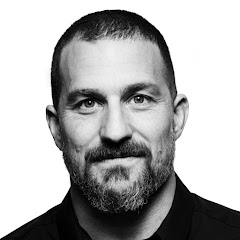 Andrew Huberman
Key Moments
Dr. Karl Deisseroth discusses psychiatric science, optogenetics, and his book 'Projections'.
Key Insights
Distinguishing between neurology and psychiatry highlights the challenges due to the lack of objective diagnostic tools in psychiatry.
Optogenetics, using light to control neurons, offers precise methods for understanding and potentially treating brain disorders.
Current psychiatric treatments, like CBT and medications, are effective for many but have limitations, motivating the search for more specific interventions.
Technology development, including AAV gene vectors and advanced scanning, is crucial for precise neural circuit manipulation.
Psychedelic medicine holds potential for treating conditions like depression and trauma but requires rigorous scientific study.
Understanding subjective experience, emotions, and consciousness remains a central challenge and a driving force for research.
NEUROLOGY VS. PSYCHIATRY: THE CHALLENGE OF WORDS
Dr. Deisseroth begins by clarifying the distinction between neurology and psychiatry. While neurologists deal with measurable physical conditions like strokes, psychiatrists grapple with disorders diagnosed primarily through verbal reports and symptom scales, lacking objective biomarkers. This reliance on words makes psychiatry more mysterious, emphasizing the need for better objective measures to understand and treat mental health conditions.
OPTOGENETICS: LIGHTING THE WAY TO NEURAL CONTROL
A significant focus of the discussion is optogenetics, a technology pioneered by Dr. Deisseroth's lab. This technique uses light-sensitive proteins from algae (channelrhodopsins) introduced into neurons to precisely control neuronal activity with light. It's a transformative approach, offering an alternative to drugs, which often have side effects or are ineffective. Optogenetics allows for real-time manipulation of neural circuits, aiding in understanding healthy brain function and disorders.
ADVANCES IN THERAPEUTICS: FROM CORTICAL IMPULSES TO THERAPY
The conversation touches upon current psychiatric treatments, acknowledging the effectiveness of therapies like Cognitive Behavioral Therapy (CBT) for conditions such as panic disorder and medications for schizophrenia. However, limitations in understanding and specificity remain. Treatments like electroconvulsive therapy (ECT), while effective for severe depression, lack precision. This highlights the ongoing need for deeper causal understanding to develop more targeted and effective treatments.
ENGINEERING THE BRAIN: GENE THERAPY AND LIGHT DELIVERY
Dr. Deisseroth elaborates on the technological advancements enabling neural manipulation. Safe and tolerated gene delivery mechanisms, primarily adeno-associated viruses (AAVs), can introduce light-sensitive genes into specific neurons. Coupled with novel light delivery systems, this technology allows for precise control of neural circuits. This opens doors for direct applications in treating conditions, moving beyond electrical stimulation's 'test pilot' approach.
MIND AND BODY: THE VAGUS NERVE AND INTERNAL STATES
The discussion explores the vagus nerve's role in connecting the brain to bodily functions and its potential for therapeutic intervention. Electrical vagus nerve stimulation (VNS) is FDA-approved for depression, but its effects are modest and non-specific in many patients. The ideal scenario, facilitated by precise techniques like optogenetics, would involve targeting specific neuronal pathways to alleviate symptoms without affecting surrounding tissues, leading to more effective and personalized treatments.
EXPLORING CONSCIOUSNESS AND SUBJECTIVE EXPERIENCE
Dr. Deisseroth delves into the complexities of subjective experience, emotions, and consciousness, referencing his book 'Projections.' He highlights the difficulty in quantifying feelings and understanding internal states, even in oneself. This pursuit to bridge the gap between subjective experience and objective neural processes drives research into areas like dissociation, where mice and human studies are revealing circuit-level mechanisms, underscoring the power of basic science in understanding complex psychiatric phenomena.
PSYCHEDELIC MEDICINE: POTENTIAL AND PERIL
The potential of psychedelic compounds like LSD and psilocybin for treating mental health disorders is examined. While these agents can profoundly alter perception and offer therapeutic benefits, they also carry risks of inducing psychiatric illness. Research is focused on understanding how these drugs work at a neural level, with the goal of developing safer, more targeted interventions by understanding how they might increase connectivity and alter hypothesis generation in the brain.
MDMA AND TRAUMA: LEARNING THROUGH ALTERED STATES
MDMA, distinct from LSD and psilocybin, is discussed for its potential in treating PTSD. Its ability to significantly increase dopamine and serotonin levels, leading to profound emotional experiences, is believed to facilitate learning and new behavioral models. The acute experience on MDMA can teach individuals about the possibility of connection and openness, which can then be integrated into their lives post-treatment.
BRAIN-MACHINE INTERFACES: THE FUTURE OF NEURAL INTERVENTION
Brain-machine interfaces (BMIs) are presented as a promising frontier, complementing optogenetics and other research tools. While invasive, BMIs, including deep brain stimulation (DBS), are already improving outcomes for conditions like OCD. Future BMIs, especially closed-loop systems, offer the potential to detect pathological neural patterns and intervene precisely, further refining our ability to treat neurological and psychiatric disorders based on a growing causal understanding.
ADHD AND ATTENTION: CHALLENGES IN FOCUS AND FUNCTION
Attention-Deficit/Hyperactivity Disorder (ADHD) is addressed, noting the debate around diagnoses and treatments. The key diagnostic criterion is pervasive disruption in social or occupational functioning. While lifestyle factors like excessive phone use might mimic ADHD symptoms, they don't typically meet diagnostic thresholds. Research into quantitative EEG-based diagnoses for ADHD shows promise, offering a path toward more objective assessment.
Balancing Act: A SCIENTIST, CLINICIAN, AND FAMILY MAN
Dr. Deisseroth shares insights into managing an demanding schedule as a clinician, lab director, and family man. He emphasizes the importance of carving out dedicated time for thinking and writing, even if those times are unconventional. Rigor in protecting these blocks of time is crucial. He also reflects on the transition from physical laboratory work to managing a lab primarily through words, highlighting the adaptable nature of scientific pursuit.
CLARITY AND THE BRAIN'S INNER ARCHITECTURE
The development of 'Clarity,' a hydrogel tissue chemistry technique, is highlighted. This method renders tissues, like the brain, transparent by preserving molecules in place and removing lipids and other light-scattering components. Clarity allows researchers to visualize neural circuitry with unprecedented detail, aiding in understanding brain structure and function, and complementing the insights gained from optogenetics by providing a clearer view of the physical substrates.
TRANSLATIONAL RESEARCH: FROM ANIMAL MODELS TO HUMAN CURES
The validity of using animal models, particularly mice, for studying human brain function and disorders is affirmed. Despite significant evolutionary differences, animal models have been instrumental in understanding complex phenomena like dissociation. By combining mouse research with human clinical data, such as from epilepsy patients, researchers can identify conserved neural circuits and gain causal insights applicable to human treatment, demonstrating the power of interspecies research.
OPTIMISM FOR THE FUTURE OF MENTAL HEALTH
Dr. Deisseroth expresses optimism for the future of psychiatry and neuroscience. He believes that by combining rigorous scientific understanding, innovative technologies like optogenetics, and thoughtful therapeutic development, significant strides can be made in alleviating suffering. His book 'Projections' aims to convey this hope, bridging complex science with accessibility for a broad audience, emphasizing the beautiful trajectory of progress in understanding and treating the mind.
Mentioned in This Episode
●Supplements
●Products
●Software & Apps
●Companies
●Organizations
●Books
●Drugs & Medications
●Concepts
●People Referenced
Common Questions
Neurology deals with disorders where physical issues in the brain can be measured and seen, like strokes or seizures. Psychiatry focuses on disorders where no physical problem is visibly measurable, relying on words and symptom scales for diagnosis, like depression or schizophrenia.
Topics
Mentioned in this video
Host of the Huberman Lab podcast and Professor of Neurobiology and Ophthalmology at Stanford School of Medicine.
A botanist from St. Petersburg in the 1850s-1860s who observed algae moving towards or away from light, which laid groundwork for understanding light-driven cellular behavior.
Medical doctor, psychiatrist, and research scientist at Stanford School of Medicine, and a pioneer in optogenetics and CLARITY technology. He is also the guest on this podcast episode.
Colleague of Dr. Deisseroth in Switzerland who successfully applied channelrhodopsins to human eyes, enabling a blind person to see. Co-published seminal work on human retina with Deisseroth.
A neurologist and author whose autobiography is highly recommended. Mentioned in the context of doctors experimenting with drugs to understand patient experiences.
Proteins derived from algae that can be introduced into nervous systems to control neuron activity with light. Their development by Deisseroth's lab has been transformative for neuroscience and potential psychiatric treatment.
A neurosurgical procedure involving the implantation of electrodes within certain brain areas, which can help people with psychiatric disorders like OCD.
A biological technique that involves the use of light to control cells in living tissue, typically neurons, that have been genetically modified to express light-sensitive ion channels. Pioneered by Dr. Deisseroth's lab.
A symptom of depression characterized as the loss of pleasure or motivation in life, which optogenetics is helping to understand at a circuit level.
A form of talk therapy described as extremely effective for conditions like panic disorder, helping patients identify and derail panic attacks.
An extremely effective treatment for severe depression, especially treatment-resistant cases, despite its non-specific nature (causing a brain-wide seizure).
A clump of neurons related to the vagus nerve that could potentially be targeted with precise genetic injections for therapeutic purposes.
An FDA-approved depression treatment that involves electrically stimulating the vagus nerve. While effective for some, its population-level effect sizes are small due to non-specificity and side effects.
A common psychological state experienced by trauma survivors, borderline personality disorder, and PTSD patients, characterized by a separation of the sense of self from the body.
A psychedelic compound that alters reality and the experience of reality, triggering serotonin receptor mechanisms, discussed for its potential and perils in psychiatric treatment.
A psychedelic compound that alters reality and the experience of reality, triggering serotonin receptor mechanisms, discussed for its potential and perils in psychiatric treatment.
A stimulant medication commonly used to treat ADHD.
An antipsychotic medication noted as highly effective for schizophrenia, especially when other treatments fail, but with significant side effects due to its non-specific receptor binding.
A unique compound that increases brain dopamine and serotonin, showing emerging data for potential use in treating trauma and PTSD, enabling a sense of extreme connectedness.
A dissociative drug, mentioned alongside ketamine for its ability to cause dissociative states.
A psychiatric drug that was serendipitously identified for its therapeutic effects, a classic example of drug discovery in psychiatry.
A dissociative drug that can cause dissociative states, used in studies to understand the circuit basis of dissociation.
An all-in-one vitamin, mineral, and probiotic drink that supports a healthy gut microbiome, mood, metabolism, immune function, and endocrine system.
A neurotechnology company founded by Elon Musk, aiming to develop implantable brain-machine interfaces. Mentioned in the context of brain-machine interface discussion.
A company making high-quality performance eyeglasses and sunglasses founded by Stanford swimmers, praised for their optical clarity and lightweight design.
A personalized nutrition platform that analyzes blood and DNA data to help individuals understand their bodies and achieve health goals, providing actionable directives.
Safe and well-tolerated gene delivery mechanisms, engineered from common cold viruses, used to deliver channelrhodopsin genes into specific neurons.
A technology developed in Dr. Deisseroth's lab that transforms tissue into a transparent form by building a hydrogel scaffold within cells, anchoring molecules, and removing fats, allowing for deep visualization of brain structure.
A developmental disorder characterized by challenges with social skills, repetitive behaviors, speech, and nonverbal communication. Discussed in the context of diagnostic challenges and potential treatments.
A neurological disorder often comorbid with severe depression, linked to the loss of dopamine neurons in the midbrain. Treated collaboratively by neurologists and psychiatrists.
A mental health disorder characterized by unstable moods, behavior, and relationships, where dissociation is a common experience.
A severe mental disorder in which people interpret reality abnormally, characterized by hallucinations and paranoia, and discussed in terms of diagnostic challenges and treatment.
A mental health condition triggered by a terrifying event, either experiencing it or witnessing it, where MDMA is showing emerging data for its potential treatment.
A chronic condition that includes attention difficulty, hyperactivity, and impulsiveness, listed as a disorder Dr. Deisseroth sees in his clinical practice.
A nervous system disorder characterized by unwanted, intrusive thoughts and repetitive behaviors, mentioned as one of the conditions Dr. Deisseroth treats.
More from Andrew Huberman
View all 369 summaries 141 min
Cultivating Awe & Emotional Connection in Daily Life | Dr. Dacher Keltner
 35 min
Essentials: How to Build Strength, Muscle Size & Endurance | Dr. Andy Galpin
 132 min
How Hormones Shape Sexual Orientation & Behavior | Dr. Marc Breedlove
 34 min
Using Salt to Optimize Mental & Physical Performance | Huberman Lab Essentials
Found this useful? Build your knowledge library
Get AI-powered summaries of any YouTube video, podcast, or article in seconds. Save them to your personal pods and access them anytime.
Get Started Free