Key Moments
Tim Ferriss — My Healing Journey After Childhood Abuse
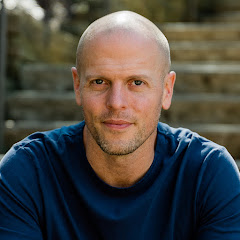 Tim Ferriss
Key Moments
Tim Ferriss shares his journey healing from childhood sexual abuse, finding tools and hope.
Key Insights
Childhood sexual abuse is common and devastating, affecting millions, with profound long-term impacts.
Healing from trauma is a personal journey with no single prescribed path, often involving a combination of therapies and self-discovery.
Trauma can manifest in various behaviors, including dissociation, hypervigilance, and emotional dysregulation, but these can be addressed.
Tools such as talk therapy, psychedelic-assisted therapy, somatic experiencing, and mindfulness practices can be effective in processing trauma.
The "safety net" of trusted friends, therapists, or support systems is crucial when engaging in deep trauma work.
Reframing suffering as a way to connect with humanity, rather than isolating oneself, can lead to purpose and healing.
It is possible to find significant light, joy, and purpose even after experiencing profound childhood trauma.
BREAKING THE SILENCE: THE DECISION TO SHARE
Tim Ferriss introduces this episode as the most important and transformative of his life, one he had never publicly shared before. He explains that the decision to record and potentially release this conversation stems from a desire to leave a record and inspire others, especially after realizing that delaying this disclosure, perhaps until after his parents passed, would be too burdensome. The conversation is framed as a "two-for-one deal" with his friend Debbie Millman, who has also experienced similar trauma and taken a different healing path.
THE TRAUMA REVEALED AND COPING MECHANISMS
Ferriss discloses that he was systematically sexually abused from ages two to four by a babysitter's son. He describes how this trauma, which he had no conscious memory of until his mid-30s, manifested in his life through dissociation, amnesia during stressful events, and a pervasive sense of being broken. Early memories resurfaced through ayahuasca, and the full re-traumatization occurred during a silent meditation retreat, leading to intense psychological distress and a feeling of nearing a psychotic break.
THE PATH TO HEALING: TOOLS AND SUPPORT
Following his intense experience, Ferriss sought help and was introduced to resources like Peter Levine's "Waking the Tiger" and Bessel van der Kolk's "The Body Keeps the Score." These resources helped him understand that many of his challenging behaviors were downstream effects of trauma. His healing journey has involved various modalities, including Internal Family Systems (IFS), somamatic experiencing, Hakomi therapy, Imago therapy, and Nonviolent Communication. He emphasizes the critical role of a "safety net," citing his reliance on Jack Kornfield during a moment of crisis.
DEBBIE MILLMAN'S PARALLEL JOURNEY AND INSIGHTS
Debbie Millman shares her own experiences with childhood sexual abuse, beginning at age nine by her stepfather, and later by another partner of her mother. She discusses the pervasive shame associated with sexual abuse, especially for boys, and how societal conditioning often blames victims. Millman's initial coping mechanisms involved trying to outrun her trauma, which proved impossible. Her significant healing journey began after the death of a friend, leading to decades of intensive talk therapy, which she describes as an investment in life rather than an expense.
THE ROLE OF MEDICATION AND PSYCHOLOGICAL WELL-BEING
Both Ferriss and Millman touch upon the use of medication in managing mental health struggles. Ferriss discusses the effectiveness and potential dangers of SSRIs and mentions ketamine as an acute treatment for suicidal ideation. Millman relays her experience with antidepressants, noting that they don't create happiness but provide a sense of a bottom to despair, allowing for further therapeutic work. They both stress the importance of medical supervision when using pharmaceuticals.
EMBRACING VULNERABILITY AND FINDING PURPOSE
Ferriss and Millman explore the concept of "radical acceptance" and the courage to feel. They discuss how childhood adaptive responses, while essential for survival, can become maladaptive later in life. Ferriss shares a practice of comforting his younger self, and Millman discusses how integrating her past allows her to live a more integrated life, driven by passion rather than trauma responses. They both highlight that healing isn't about eliminating suffering but finding a purpose that makes suffering feel less consuming.
FORGIVENESS, RAGE, AND CONNECTING THROUGH SUFFERING
The conversation delves into the complex emotions of anger, rage, and forgiveness. They discuss how rage can be a default response to perceived betrayal and the difficulty of forgiving perpetrators. Millman shares a vivid account of confronting her stepfather, which brought little personal relief. Ferriss redefines forgiveness as letting go of hatred, emphasizing its corrosive nature. They also touch on the prevalence of trauma, especially among men, and the need for language that destigmatizes these experiences and encourages connection rather than isolation.
TAKING ACTION: RESOURCES AND THE MESSAGE OF HOPE
Both speakers offer practical recommendations, including books like "The Body Keeps the Score" and "The Drama of the Gifted Child," and organizations like MAPS.org. They emphasize that while tools like psychedelics and intensive therapy can be powerful, having a support system is crucial. Their core message is one of profound hope: listeners are not alone, it is never hopeless, and effective tools for healing exist, empowering individuals to rewrite their internal narratives and find meaning.
Mentioned in This Episode
●Software & Apps
●Organizations
●Books
●Drugs & Medications
●Concepts
●People Referenced
Common Questions
Tim Ferriss reveals that he was routinely sexually abused between the ages of two and four by the son of a babysitter. This experience significantly shaped his life and led to many long-term coping mechanisms.
Topics
Mentioned in this video
Educational institution where Debbie Millman is Chair of the Masters in Branding program.
Educational and research institution where psilocybin is being studied for various conditions.
Lists Ketamine as one of its most essential medicines.
Cultural institution where Debbie Millman watched 'Einstein on the Beach' and was triggered into a period of intense weeping and self-reflection.
An organization conducting Phase 3 trials for MDMA-assisted psychotherapy for PTSD, highly recommended as a resource for those interested in psychedelic science.
University where psilocybin is being studied for various conditions.
Has given MDMA breakthrough therapy designation for its use in assisted psychotherapy for PTSD.
A form of 'parts work' therapy conceived by Richard C. Schwartz, which views the mind as discrete sub-personalities, enabling conversation with different emotional parts of oneself for healing.
A retreat-based personal development process mentioned as a potential intense immersive experience for trauma healing, requiring a safety net.
A specific Enneagram type that Tim Ferriss identified with, which captures his hyper-vigilance and fear-based orientation.
A therapy approach that Tim Ferriss found very helpful for learning to feel again after a lifetime of numbing and dissociation.
A type of breathwork that can be helpful for exploring non-ordinary reality and difficult memories without chemical agents.
A training method involving tracking heart rate and respiration using feedback devices, found surprisingly effective by Tim Ferriss for down-regulating physiology and changing psychology, and managing hyper-reactivity to stress.
A 10-day silent retreat that Tim Ferriss attended, during which he experienced a re-traumatization and psychotic break, bringing back vivid memories of abuse.
A couples therapy approach that has been very helpful for Tim Ferriss in explaining the impact of silence and self-censorship in relationships, emphasizing the need to speak truth.
A personality typing system, despite Tim Ferriss's initial skepticism, has been an incredible complement to his HRV training for understanding his hyper-vigilance and fear-based orientation.
A type of talk therapy that Tim Ferriss is still a fan of for trauma healing.
A type of therapy Debbie Millman engaged in, starting with a 5-day analysis, after initial years of less rigorous therapy.
A communication method that Tim Ferriss found helpful, particularly in avoiding self-censorship and speaking truth.
A movie with Sharon Stone and Sylvester Stallone, referenced by Debbie Millman to illustrate the immediate, but ultimately superficial, feeling of 'better' after enacting vengeance.
A short story written by Debbie Millman describing her confrontation with one of her perpetrators.
Tim Ferriss mentions his Ted Talk where he discussed his recovery from near-suicide, though omitting the detail of his planned suicide.
A documentary that shows before-and-after transformations possible with complex PTSD, relevant to psychedelic therapies.
Podcast hosted by Debbie Millman, noted as one of the world's longest-running podcasts.
TV show mentioned by Debbie Millman in the context of fantasies about vengeance for trauma.
A performance Debbie Millman watched at the Brooklyn Academy of Music that triggered a significant emotional breakdown, leading her to seek therapy.
Lead facilitator at a Vipassana silent retreat, clinical psychologist, and mindfulness practitioner who provided critical support and resources to Tim Ferriss during a traumatic experience.
Discussed the concept of 'the drama of the gifted child' in one of Tim Ferriss's podcasts.
Author of 'The Complete Enneagram,' whose work helped Tim Ferriss understand his personality type.
Author of 'The Body of the World' and 'The Apology,' whose books have been extraordinarily helpful to Debbie Millman in understanding trauma.
Actor in 'The Specialist' referenced by Debbie Millman.
An incredible practitioner of parts work, who has done significant work with MAPS in MDMA-assisted psychotherapy.
Psychologist whose quote on finding purpose in suffering resonated with Tim Ferriss, helping him to endure challenges.
Author of 'Know My Name,' whose story of integrating trauma has given Debbie Millman courage and hope.
Friend of Tim Ferriss who shared the philosophy that 'the obstacles are the path,' providing a reframing for challenges in life.
An experienced psychotherapist who offered Tim Ferriss a new perspective on suicidal ideation, viewing it as a desire to destroy the ego rather than the physical body.
Friend of Tim Ferriss who describes how being constantly at a 'simmering six' of sympathetic nervous system activation (fight or flight) leads to exhaustion.
Friend of Tim Ferriss who has suffered trauma and created a 'quick start guide to healing trauma' blog post with effective resources.
Podcast guest with whom Tim Ferriss had a conversation, featuring discussions on psychedelic experiences.
Author of 'The Courage to Heal,' a book on trauma healing that Debbie Millman found helpful, despite potential problematic issues.
Actress in 'The Specialist' referenced by Debbie Millman.
An incredible practitioner of parts work, who has done significant work with MAPS in MDMA-assisted psychotherapy.
Author of 'The Body Keeps the Score,' whose work is highly recommended for understanding the physical impact of trauma and is a significant resource for both speakers.
A podcast guest and part of The Conscious Leadership Group, who provided advice on utilizing lenses like the Enneagram for pragmatic self-understanding and finding 'clean-burning anger'.
A well-known mindfulness teacher and author of 'Radical Acceptance,' whose insights on what one is unwilling to feel deeply resonated with Tim Ferriss.
Referenced by Tim Ferriss as an example of someone with perfect self-awareness, stating he is not at that level yet.
Guest and friend of Tim Ferriss, host of Design Matters, and Chair of the Masters in Branding program at the School of Visual Arts. She has experienced similar trauma and joins Tim to share her healing journey.
The creator of Internal Family Systems (IFS) therapy.
An 'empathogen' compound that elicits openness, compassion, and decreased fear response, currently in Phase 3 trials for MDMA-assisted psychotherapy for PTSD, showing success in long-unresponsive cases.
A dissociative anesthetic mentioned as a very effective acute treatment for stopping loops of suicidal ideation, available intravenously or intramuscularly in clinics, and on the WHO essential medicines list.
Psychedelic plant combination that Tim Ferriss used, which led to crystal clear memories of his childhood sexual abuse flooding back.
An antidepressant mentioned as working well for some people, but which caused Debbie Millman to feel like she 'was going to die' and might have a psychotic break, leading her to stop taking it.
An antidepressant Debbie Millman started taking in 1991, which helped take the edge off despair but inexplicably stopped working for her in 2003.
An antidepressant Debbie Millman was prescribed after Prozac stopped working, which worked much quicker, impacting her brain within three days, and which she continues to take.
Cited as a compound used in assisted psychotherapy by Stanislav Grof.
The psychoactive component in psychedelic mushrooms, which Tim Ferriss used in increasing dosages during his Vipassana retreat, intensifying the experience of recalling trauma. It is also being studied for various conditions including treatment-resistant depression and addictions.
A book by Bessel van der Kolk, recommended by Jack Kornfield for understanding how trauma affects the body.
A book that Tim Ferriss found helpful, relating to the 'drama of the sensitive child' and discussed with Gabor Maté, which helped reframe a personal understanding of sensitivity.
A book by Ellen Bass, which Debbie Millman found enormously helpful but also mentions potentially problematic issues with it, possibly related to discussions on trans experiences.
A book by Beatrice Chestnut on the Enneagram, which helped Tim Ferriss understand his self-preservation six type, capturing his hyper-vigilance and fear-based orientation.
A book by Eve Ensler that Debbie Millman found extraordinarily helpful in her healing journey.
A book by Eve Ensler that Debbie Millman found extraordinarily helpful in her healing journey.
A book by Peter Levine, recommended by Jack Kornfield for understanding and processing trauma, particularly related to somatic experiencing.
A book by Tara Brach that had a profound impact on Tim Ferriss, particularly its exploration of confronting what one is unwilling to feel.
Chanel Miller's book, which Debbie Millman found extraordinarily helpful for finding courage, hope, and a sense of mutuality in dealing with trauma.
More from Tim Ferriss
View all 690 summaries 184 min
Daredevil Michelle Khare — How to Become a YouTube Superstar
 81 min
Q&A with Tim — The Upcoming AI Tsunami and Building Offline Advantage
 91 min
The Random Show, Couch Edition! — Supplements, Breathing and Balance Training, and Much More!
 76 min
How to Quiet the Ruminative Mind and Avoid The Traps of Self-Help — Tim Ferriss
Found this useful? Build your knowledge library
Get AI-powered summaries of any YouTube video, podcast, or article in seconds. Save them to your personal pods and access them anytime.
Get Started Free