Key Moments
The Future of Psychedelic Medicine: A Conversation with Jeannie Fontana and Robin Carhart-Harris
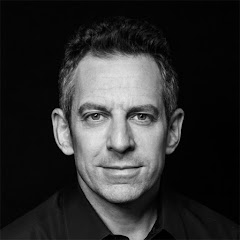 Sam Harris
Want to know something specific about what's covered?
We've already dissected every moment. Ask and we will deliver (with timestamps).
Key Moments
California's TREAT initiative seeks $5B for psychedelic medicine research and access, needing 1M signatures.
Key Insights
California's TREAT initiative aims to fund research and access to psychedelic-assisted therapies for mental health.
The initiative requires 1 million signatures from registered California voters to qualify for the ballot.
Psychedelic research has shown significant promise for treating conditions like PTSD, depression, and addiction.
MDMA therapy for PTSD is nearing FDA approval, with psilocybin therapy for depression also in late-stage trials.
The TREAT initiative emphasizes a comprehensive approach including research, education, access, and ethical administration.
Diverse coalitions, including unions, veterans, and first responders, are supporting the TREAT initiative.
Understanding the distinct pharmacological profiles and safety considerations of different psychedelic compounds is crucial.
Future research may explore novel psychedelic compounds and optimize therapeutic models beyond the drug itself.
The initiative aims to integrate spiritual and ceremonial aspects of psychedelic use into safe, evidence-based therapeutic models.
California's success with the TREAT initiative could influence federal policy and psychedelic medicine adoption nationwide.
INTRODUCTION TO THE TREAT INITIATIVE
The conversation introduces the TREAT California initiative, a citizen-led ballot proposal seeking to allocate $5 billion for research, education, access, and therapies involving psychedelic medicines. Dr. Jeannie Fontana explains that the immediate goal is to collect one million signatures from registered California voters to get the initiative on the ballot. The website, treatcalifornia.org, serves as a hub for information and resources for signature collection and donations, emphasizing that widespread support is crucial for the initiative's success and the advancement of psychedelic-assisted therapies.
LEGISLATIVE AND RESEARCH BACKGROUNDS
Dr. Jeannie Fontana, an MD/PhD, shares her extensive background in healthcare and policy, including her pivotal role in increasing federal funding for ALS research and establishing California's $8.5 billion stem cell granting agency. Robin Carhart-Harris, a leading psychedelic researcher, founded the first psychedelic research center at Imperial College London and is now a professor at UCSF. His work, focusing on neuroimaging and clinical trials with compounds like psilocybin and MDMA, has significantly contributed to understanding their therapeutic potential, positioning him as a key figure in the growing field of psychedelic medicine.
THE VISION FOR TREAT CALIFORNIA
Jeannie Fontana articulates the TREAT initiative's vision: to provide safe, responsible, and ethical access to psychedelic medicines for mental health treatment. This involves rigorous large-scale clinical trials to establish safety and efficacy, long-term outcome tracking, and preparation of patients for the therapeutic process. A core component is ensuring equitable access, particularly for underserved communities, preventing these powerful treatments from being exclusive to the wealthy. preparation, integration of insights, and access all form pillars of the initiative's approach.
CALL TO ACTION AND FUNDRAISING EFFORTS
The TREAT California campaign requires one million signatures by the end of 2024 to qualify for the ballot. The initiative needs substantial funding, estimated around $30 million, to conduct this signature-gathering process. Donations, even small ones, are crucial for covering campaign costs. Support is not limited to California residents; anyone can donate to help advance this cause, with the understanding that successful implementation in California could pave the way for national adoption through FDA approval.
ADDRESSING PSYCHEDELIC DICHOTOMIES THROUGH RESEARCH
Fontana addresses common dichotomies in the psychedelic space: decriminalization versus research, and medical versus spiritual models. While personally supporting decriminalization of psychedelics and cannabis, the TREAT initiative focuses on a regulated, research-driven medical model. This approach aims to mitigate risks associated with unsupervised use, drawing lessons from the countercultural era. The initiative seeks to bridge these divides by rigorously studying the safety and efficacy of psychedelics, ensuring a controlled and ethical rollout.
THE COALITION BUILDING FOR TREAT
A key strength of the TREAT initiative is its broad coalition. Fontana highlights support from labor unions (like firefighters and postal workers), the veteran community (addressing PTSD), the LGBTQ+ community, and university students. This diverse backing signifies that psychedelic therapy is viewed as a universal solution to widespread suffering, transcending political and social divides. The involvement of former military leaders and union advisors lends credibility and reach to the campaign.
OVERVIEW OF PSYCHEDELIC COMPOUNDS AND RESEARCH FRONTS
Robin Carhart-Harris discusses the current state of psychedelic research, noting MDMA therapy for PTSD is closest to FDA approval, with two positive Phase 3 trials completed. Psilocybin therapy for treatment-resistant depression is also in Phase 3 trials, with potential approval around 2026. Other compounds like ketamine, LSD, DMT, mescaline, cannabis, and ibogaine are also under investigation for various mental health conditions, though some, like ketamine, have different pharmacological profiles and potential risks such as addiction or toxicity.
SAFETY AND TOXICITY PROFILES OF PSYCHEDELICS
Carhart-Harris differentiates the safety profiles of various psychedelics. While classic psychedelics like psilocybin generally have a wide therapeutic index and low physiological toxicity, MDMA carries risks of neurotoxicity at high doses, and ketamine can have significant bladder toxicity and addictive potential. Ibogaine also raises cardiovascular safety concerns. Fontana emphasizes the need for comprehensive safety data, especially for novel compounds and diverse patient populations, to inform responsible therapeutic use.
ADVANCEMENTS IN NEUROSCIENCE AND BRAIN IMAGING
Research using neuroimaging techniques like fMRI reveals that classic psychedelics cause a breakdown in the integrity of brain networks, particularly high-level transmodal networks. Simultaneously, these networks increase communication with each other, leading to a desegregation effect. This is theorized to be linked to subjective experiences like ego dissolution. Fontana relates this to personal experience, feeling increased access to previously siloed cognitive functions after therapeutic use.
THE POTENTIAL FOR NOVEL COMPOUNDS AND THERAPEUTIC MODELS
The exploration of new psychedelic compounds is ongoing, with potential for creating drugs with improved efficacy and reduced side effects. The field is also moving beyond a purely drug-centric approach to explore combination therapies, emphasizing the integration of therapy, set, and setting. Fontana highlights the potential benefits of studying ceremonial and group settings, alongside individual therapy, to broaden access and enhance healing outcomes, drawing parallels to ancient healing practices.
MICRODOSING RESEARCH AND ITS COMPLEXITIES
The research on microdosing, or taking sub-perceptual doses of psychedelics, is still developing. Early studies, including one led by Balasz Szigeti, suggest that perceived benefits might be largely attributable to the placebo effect. The practical and ethical challenges of conducting rigorous microdosing studies—owing to dosing regimens and the need for lab-based administration—mean that definitive evidence for its efficacy is still emerging.
INTEGRATING SPIRITUALITY AND SECULAR LANGUAGE
Sam Harris discusses the overlap between psychedelic experiences, spiritual or mystical states, and organized religion. He advocates for a 21st-century, non-denominational framework for discussing these profound experiences, moving beyond the limitations of traditional religious doctrines. The TREAT initiative's broad appeal, even to conservative Christians, demonstrates a shared human desire for alleviating suffering, suggesting a potential for a new, secular language to understand and integrate these experiences.
THE FUTURE OF PSYCHEDELIC THERAPY AND PERSONAL GROWTH
The conversation concludes by emphasizing that psychedelic-assisted therapies offer a powerful means for personal growth and healing that was previously only accessible through intensive practices like silent retreats. The TREAT initiative represents a significant step towards making these profound insights and healing modalities available to a wider population, fostering compassion, self-agency, and a deeper connection with others. The timing, they feel, is right for society to embrace this new approach to mental well-being.
Mentioned in This Episode
●Software & Apps
●Companies
●Organizations
●Books
●Drugs & Medications
●Concepts
●People Referenced
Common Questions
The TREAT California initiative is a citizen-led ballot measure aiming to secure $5 billion in funding for research and equitable access to mental health treatments using psychedelic medicines. Its core goal is to transform mental healthcare delivery in California by ensuring these promising medicines are available to all in a responsible, safe, and ethical manner.
Topics
Mentioned in this video
MD, PhD, and a leader in healthcare, instrumental in ALS research funding and a founding Trustee of the California Institute of Regenerative Medicine. She is now focused on the TREAT California initiative.
Professor David Nutt, former 'So-Cal drugs czar' in the UK and chief scientific advisor to the UK government on drug policy, whose unit Robin Carhart-Harris joined for his PhD research.
Founder of MAPS, who sponsored phase three trials for MDMA therapy for PTSD.
Classically speculated on DMT as an endogenous neurotransmitter in his book, The Spirit Molecule.
A rogue chemist who privately experimented with and cataloged hundreds of different compounds, including his meticulous notes on side effects, now preserved in the 'Shulgin library'.
Swiss psychiatrist who spoke of 'cosmos in the chaos', referenced by Robin Carhart-Harris in relation to the hidden order amidst the disorder experienced during psychedelic states.
Founder of the Center for Psychedelic Research at Imperial College London, now a distinguished professor at UCSF. Led neuroimaging studies with various psychedelics and clinical trials for psilocybin therapy.
Former US President who placed a moratorium on federal funding for embryonic stem cell research, which spurred a citizen-driven ballot initiative in California to create CIRM.
Visionary philanthropist of the Beckley Foundation who provided a significant opportunity for Robin Carhart-Harris to conduct brain imaging work.
Co-founder of Apple Inc., attributed his LSD use to helping him build the iPhone, highlighting the role of early psychedelic experiences in innovation.
Former president of the AFL-CIO unions, whose senior advisor (Ramon) is now Jeannie Fontana's campaign manager, helping build a broad coalition for TREAT.
A researcher at Stanford University conducting observational work and brain imaging with Ibogaine.
A Princeton and Yale educated philosopher who befriended the rogue chemist Sasha Shulgin and documented his compound experiments.
A friend and colleague of Sam Harris, who recently discussed the Hierarchical Predictive Processing Model on Sam's podcast.
A researcher known for focusing on the betterment of well people through psychedelics, and whom Sam Harris has spoken with on previous podcasts.
Led a self-blinded citizen science study on microdosing, which suggested that many reported positive effects could be explained by the placebo effect.
Author of The Immortality Key, which discusses ancient rites and the use of medicines by priestesses.
A citizen-led ballot initiative in California, co-founded by Jeannie Fontana, aiming to provide $5 billion for research and affordable access to mental health treatments using psychedelic medicines.
A large federation of unions representing workers, whose leaders are supporting the TREAT California initiative due to its potential to address mental health issues among their members.
Where Nolan Williams is conducting research on Ibogaine.
A stem cell granting agency founded by Jeannie Fontana, which received $8.5 billion in funding, achieved FDA approvals, launched clinical trials, and created jobs and revenue for California.
A philanthropic organization, founded by Amanda Feilding, that helped fund Robin Carhart-Harris's early brain imaging studies.
The agency responsible for approving medicines, currently reviewing MDMA therapy for PTSD and expected to approve it next year, and psilocybin therapy for depression around 2026.
The first union to endorse the TREAT California legislation, demonstrating early ground-level support from essential workers.
A non-profit organization that conducted extensive clinical trials, particularly with MDMA for PTSD among veterans, which inspired Jeannie Fontana's initial involvement in the psychedelic space.
Mentioned as an agency that TREAT California intends to work with for approval of psychedelic medicines, alongside the FDA.
The Los Angeles and San Diego chapters of this union also supported the TREAT California initiative, representing more ground-level support.
A collection containing approximately 200 compounds created and meticulously documented by Sasha Shulgin, with ongoing efforts to preserve them and bring them to the world of research.
A classic psychedelic compound used in neuroimaging studies and clinical trials, with high potency and a risk of overdose at high doses.
A compound used in neuroimaging studies and clinical trials, furthest along in federal approval for PTSD therapy. Distinct from other amphetamines due to its potent serotonin release.
An Amazonian brew whose main psychedelic component is DMT.
A compound with promising naturalistic work in veterans for mental illness, addictions, PTSD, and brain injury issues, though it carries cardio toxicity questions.
A classic psychedelic being studied for treatment-resistant depression; identified as having a very large therapeutic index and a deeper, more enduring therapeutic action than ketamine.
An existing medicine used for depression, described as a rapid-acting antidepressant but with different properties than classic psychedelics, including potential bladder toxicity and addictive properties.
A psychedelic compound that Journey Collab is researching for addiction treatment.
A hypothesis introduced by Robin Carhart-Harris suggesting that psychedelics cause a 'degradation' or 'breaking down' of established brain organization, leading to a more flexible state.
A dominant brain network found to have its integrity break down under psilocybin, correlating with ego dissolution; initially a key finding in fmri studies, now understood to be part of a broader network disintegration.
Stimulation of this receptor by certain drugs can cause valvulopathy, a problem that could potentially be reduced in new drug development.
A compelling model in cognitive neuroscience suggesting the brain experiences the world through generative models with dominant top-down information flow, which psychedelics impact by 'dialing down' predictive models.
Periods early in life where the brain is hyperplastic and receptive to learning, which psychedelics are proposed to reopen, creating windows of plasticity.
A book by Rick Strassman that speculates on DMT as an endogenous neurotransmitter and its role in altered states of consciousness.
A book by Brian Muraresku, giving a brilliant recounting of the Mysteries of Eleusis and the role of women priestesses in serving ancient medicines.
More from Sam Harris
View all 310 summaries 38 min
The Second Plane, 25 Years Later
 27 min
Is the Far Left Hijacking the Democratic Party?
 27 min
How Trump Became Immune to Scandal
 48 min
When Should You Trust Your Intuition?
Ask anything from this episode.
Save it, chat with it, and connect it to Claude or ChatGPT. Get cited answers from the actual content — and build your own knowledge base of every podcast and video you care about.
Get Started Free