Key Moments
The Coddling of the American Mind and How to Become Intellectually Antifragile — Jonathan Haidt
 Tim Ferriss
Key Moments
Jonathan Haidt discusses intellectual antifragility, the decline of teen mental health, and the polarization of society.
Key Insights
Challenging assumptions and considering opposing viewpoints fosters intellectual antifragility.
Social media's design, particularly features like the 'like' button, has contributed to societal polarization and dysfunction.
The decline in teen mental health is linked to increased smartphone use during early puberty and a lack of independence.
Universities, unlike businesses, are detached from reality, making them more susceptible to 'structural stupidity' and ideological extremism.
To counter societal division, focus on building understanding and fostering intellectual humility rather than aggressive confrontation.
Active participation in community and shared rituals, not just belief, contributes to happiness.
Fostering free-range childhoods and encouraging risk-taking is crucial for developing resilience in children.
THE POWER OF INTELLECTUAL CONTRARIANISM
Jonathan Haidt emphasizes the 'perverse' intellectual habit of questioning assertions by trying the opposite, a method inspired by his mentor Richard Shweder. This approach isn't about being contrarian for its own sake, but about genuine intellectual curiosity. By habitually questioning dominant views and assumptions, individuals can uncover new insights and develop intellectual antifragility, enabling them to think independently and avoid becoming mere 'hacks' aligned with groupthink.
MORAL PLURALISM AND CULTURAL UNDERSTANDING
Haidt advocates for moral pluralism, suggesting that morality is not a single, universal truth but exists in multiple forms emergent from human nature and societal interaction. He distinguishes this from moral relativism, arguing that while cultural practices vary, there are universal ethical concerns. This perspective encourages understanding different moral frameworks without necessarily endorsing all practices, emphasizing the need for critical evaluation based on human well-being.
THE ROLE OF PSYCHEDELICS AND TRANSFORMATIONAL EXPERIENCES
Haidt recounts a pivotal LSD experience in 1993, which, combined with reading Buddhist and Hindu texts, profoundly shifted his worldview. This experience, likened to stepping 'out of the Matrix,' dissolved pettiness and fostered a sense of independent inquiry. He posits that this altered state, occurring during a critical developmental window, allowed for a radical reorientation of his thinking and research, particularly in understanding different political and cultural perspectives.
THE DECLINE OF SOCIAL COHESION AND THE RISE OF SOCIAL MEDIA
The conversation delves into the 'fall of the Tower of Babel,' attributing societal polarization and dysfunction to the evolution of social media. Features like the 'like' and 'retweet' buttons, introduced around 2009, shifted platforms from connection tools to performance arenas. This incentivized viral outrage and public shaming, creating a chaotic 'complex dynamical system' where shared understanding and reasoned discourse are overwhelmed by constant conflict and division.
STRUCTURAL STUPIDITY IN ACADEMIA AND THE CAVES OF LEADERSHIP
Haidt identifies 'structural stupidity' as a key factor in the capitulation of academic and epistemic institutions to ideological pressure. In morally homogeneous environments, leaders, often liberal older white individuals, are vulnerable to student-led 'darts' – accusations without liability. This leads to quick firings without due process, reinforcing a culture where challenging ideas is risky and courage is discouraged, creating institutions divorced from reality and reasoned debate.
BUSINESS REALITY VERSUS ACADEMIC DETACHMENT
Unlike universities, businesses operate under the pressure of making money and satisfying customers, which acts as a check on ideological extremism. Haidt notes that many CEOs, disliking 'woke' culture, are pushing back, leading to a pendulum swing towards 'mission-focused' principles. Universities, with their massive endowments and inelastic demand, lack this real-world accountability, making them more susceptible to ideological capture.
RETHINKING EDUCATION: THE UNIVERSITY OF AUSTIN AND HETERODOX ACADEMY
Haidt discusses new initiatives like the University of Austin, which aims to offer an alternative to traditional higher education by focusing on classics, practical application, and a lower price point. He also highlights Heterodox Academy, an organization promoting viewpoint diversity and intellectual humility within existing institutions. These efforts seek to restore the core values of universities—the pursuit of truth and the cultivation of critical thinking.
THE CRISIS OF GEN Z AND THE IMPORTANCE OF FREE-RANGE CHILDHOODS
A significant portion of the discussion addresses the severe decline in Gen Z's mental health, linked to early exposure to smartphones and social media during critical developmental periods. Haidt stresses the importance of 'free-range' childhoods, where children practice independence and risk assessment. Overprotection, though well-intentioned, deprives them of essential life skills, increasing anxiety and depression, and hindering their ability to navigate the world effectively.
INTELLECTUAL ANTI-FRAGILITY AND PRACTICAL WISDOM
Developing intellectual antifragility involves actively seeking diverse perspectives and embracing constructive criticism. Haidt recommends resources like constructive dialogue.org and subscribing to publications across the political spectrum. He also advocates for practices rooted in Stoicism and Buddhism, such as daily reflection and mindfulness, to cultivate equanimity and emotional resilience in the face of life's challenges and societal upheaval.
THE WISDOM OF BUDDHISM AND STOICISM FOR MODERN LIFE
Haidt draws on ancient wisdom traditions like Buddhism and Stoicism to offer practical guidance for navigating a complex world. These philosophies emphasize understanding the limits of control, questioning one's own perceptions, and practicing compassion. By engaging with texts like Marcus Aurelius's 'Meditations' and Epictetus's works, individuals can develop the psychological resilience needed to maintain well-being amidst adversity.
THE RELATIONSHIP BETWEEN RELIGION, COMMUNITY, AND HAPPINESS
Research consistently shows that religious individuals tend to be happier, not necessarily due to belief, but due to active participation in a community. Sociologist Émile Durkheim's work highlights how social bonds and a sense of belonging are crucial for well-being, reducing feelings of isolation and meaninglessness. Secular individuals can cultivate similar benefits by prioritizing community engagement and shared rituals.
THE VALUE OF TOUGH COACHING AND UNLOCKING POTENTIAL
Haidt critiques the decline of 'tough' coaching, arguing that challenging standards and pushing individuals beyond their perceived limits is essential for growth. Inspired by his wrestling coach, he posits that great teachers help students realize untapped potential. This contrasts with overprotective approaches that stifle resilience, emphasizing that adversity, when surmounted, builds true strength and character, rather than making individuals weaker.
Mentioned in This Episode
●Products
●Software & Apps
●Companies
●Organizations
●Books
●Drugs & Medications
●Concepts
●People Referenced
Cultivating Intellectual Anti-fragility and Well-being
Practical takeaways from this episode
Do This
Avoid This
Common Questions
Richard Shweder is a cultural anthropologist at the University of Chicago and a major mentor for Jonathan Haidt. Shweder's iconoclastic motto, 'If someone asserts it, try denying it,' encouraged Haidt to question dominant views and think independently, profoundly shaping his intellectual approach to morality and culture.
Topics
Mentioned in this video
One of Jonathan Haidt's books, exploring ancient wisdom and its psychological claims.
A work by John Stuart Mill, particularly Chapter Two, which is considered a foundational text for understanding viewpoint diversity and freedom of thought. An edited version is available from Heterodox Academy.
A book by Lenore Skenazy advocating for less supervised childhoods, which influenced Haidt's parenting decisions.
A book by Sam Harris arguing that moral truths are like truths of chemistry, a point of intellectual disagreement with Jonathan Haidt.
An ancient Hindu scripture that Jonathan Haidt was reading during his transformative year, specifically noting a scene where Krishna gives Arjuna a 'third eye' to see the world as it truly is.
A book written by A.J. Jacobs, described as fantastic by Tim Ferriss.
A book by Sebastian Junger highly recommended by Tim Ferriss that underscores the fragility of isolation and the fetishization of comfort.
One of two forthcoming books by Jonathan Haidt, addressing political dysfunction and the inability to find common ground in a social media-driven world.
A collection of sayings of the Buddha, cited by Jonathan Haidt for its wisdom on resolving quarrels by remembering the transient nature of life.
A New York Times bestseller by Jonathan Haidt, which drew heavily on the ideas of Rick Shweder, Emile Durkheim, and Charles Darwin.
One of the upcoming books by Jonathan Haidt, focusing on the collapse of teen mental health due to social media and overprotection.
A book by Barbara Ehrenreich, cited by Haidt for its observation of universal patterns of collective joy across human cultures.
A book by Johann Hari, recommended by Jonathan Haidt for regaining control over attention and increasing IQ.
A New York Times bestseller co-authored by Jonathan Haidt and Greg Lukianoff, which discusses the decline of teen mental health and rise of political dysfunction.
One of Joseph Campbell's books, from which Haidt derived a comforting quote about participating joyfully in the sorrows of the world.
A work by Marcus Aurelius, recommended by Haidt, particularly the Gregory Hayes translation, for its Stoic wisdom on managing feelings and life's uncontrollability.
Author of 'Stolen Focus,' whose work Haidt recommends for increasing attention and intelligence.
A researcher whose work on generational differences (specifically Gen Z) Jonathan Haidt draws upon and expands.
An author and neuroscientist with whom Jonathan Haidt had a public intellectual feud, later resolved into friendship, over the nature of moral truth. Harris advocates for a scientific, objective basis for morality.
A French sociologist whose ideas on the binding power of rituals and community were transformative for Jonathan Haidt, especially in understanding religion and suicide rates.
A writer and friend of Tim Ferriss, described as humorous, who explained his Jewish identity metaphorically as 'to Jewish what Olive Garden is to Italian.'
A biologist and evolutionary theorist, mentioned as collaborating with Haidt on arguing for the nuanced effects of religion, contrasting with the new atheists.
A psychoanalyst quoted by Haidt as saying 'love and work' are the keys to happiness. His 'release valve' theory of aggression is mentioned as being untrue.
A law professor at Georgetown who coined the name 'Heterodox Academy' for the organization promoting viewpoint diversity.
Co-creator of the 'Perspectives' program at Constructive Dialogue, who previously worked with Jonathan Haidt at Heterodox Academy.
Author of 'Dancing in the Streets,' mentioned for her insights on human nature and collective joy.
An author mentioned by Haidt; while he personally enjoys Vonnegut more, he acknowledges Shakespeare's greater genius as an anthropocentric truth.
An author known for his work on psychedelics, mentioned by Haidt, implying Pollan's views on psychedelic experiences align with Haidt's own.
A cultural anthropologist at the University of Chicago and a key mentor for Jonathan Haidt, known for his iconoclastic thinking and challenging conventional views on morality and culture.
A key figure whose ideas on evolution were transformative for Jonathan Haidt's thinking, particularly informing 'The Righteous Mind.'
A researcher known for developing a program that analyzes word use, which Haidt used to analyze Sam Harris's writings for 'certainty' words during their intellectual feud.
The individual whose death in the summer of 2020 led to intensified political activism and a reorientation of many corporations towards social causes.
The president of the University of Austin and former president of St. John's College, leading the initiative to create a new model for higher education.
Translator of Marcus Aurelius's 'Meditations,' whose translation Jonathan Haidt considers the best.
Social psychologist at NYU Stern School of Business, author of 'The Happiness Hypothesis,' 'The Righteous Mind,' and 'The Coddling of the American Mind.' His research focuses on morality, culture, politics, and the impact of social media on teen mental health and political dysfunction.
President of the Foundation for Individual Rights and Expression (FIRE, formerly FIRE and Education) and co-author of 'The Coddling of the American Mind.' He collaborated with Haidt on understanding cognitive distortions on campus.
A Roman emperor and Stoic philosopher whose 'Meditations' Haidt rereads for wisdom and equanimity.
A conservative radio host whose writings Jonathan Haidt analyzed for 'certainty' words in comparison to Sam Harris.
A Yale professor whose wife wrote a thoughtful letter about Halloween costumes, leading to student protests and demands for his apology and firing.
The current president of Heterodox Academy, an organization dedicated to promoting viewpoint diversity in higher education.
A brilliant artist who beautifully illustrated the shortened version of John Stuart Mill's 'On Liberty' for Heterodox Academy.
Author of 'Free-Range Kids' and friend of Jonathan Haidt, who influenced his parenting choices to allow his children more independence.
Tentatively mentioned by Tim Ferriss as the author of an essay about social pressures, but Tim corrected himself, unsure if it was the right author.
A philosopher from whom Jonathan Haidt draws the concept of 'anthropocentric truth,' meaning truths true because of the creatures humans are.
The dictator of Romania from 1965 to 1989. Haidt describes visiting Romania in 1987 under his rule and being angered by the suffering.
Co-founder of Y Combinator, mentioned by Tim Ferriss for his tweet/essay about the danger of applying too many labels to oneself.
A conservative political commentator whose writings Jonathan Haidt analyzed for 'certainty' words in comparison to Sam Harris.
U.S. President used as an example to illustrate the change in Facebook's comment section design before and after 2014, showing how discussions became more combative.
The former president of the University of Chicago, credited by Haidt for personally pushing back against 'woke' trends and demands, thereby preserving the university's intellectual integrity.
Tim Ferriss's wrestling coach who had a profoundly positive impact on his life and the lives of other athletes he coached by being extremely tough, setting high standards, and seeing untapped potential.
The president of Yale University who, in response to student demands during the Halloween incident, 'gave the students everything they demanded' he could, setting a precedent for leadership caving to mob pressure.
CEO of Coinbase, cited as an example of a leader who successfully set a 'mission-focused' stance for his company, pushing back against internal pressures to engage in broader social activism.
Mentioned as an individual with whom Tim Ferriss had a conversation, for which he had prepared by reading about the University of Austin.
The 'patron saint of viewpoint diversity,' whose work 'On Liberty' is foundational to the ideas promoted by Heterodox Academy. Haidt refers to him as a key thinker.
A black blues musician who developed a friendship with a Ku Klux Klan member, leading the member to leave the KKK. He is an inspiring example of defusing anger and understanding others.
Author of 'Tribe,' recommended by Tim Ferriss.
The generation born in 1996 and later, distinct from Millennials, experiencing a mental health crisis attributed to vast overprotection and ubiquitous smartphone/social media use during early puberty.
A Roman Stoic philosopher and dramatist whose writings Jonathan Haidt is currently reviewing for insights.
A professor and mythologist whose quote, 'Participate joyfully in the sorrows of the world,' brings comfort to Jonathan Haidt amidst societal chaos, emphasizing choosing joy despite adversity.
An online resource co-created by Jonathan Haidt and Caroline Mehl, featuring the 'Perspectives' program, designed to teach moral psychology, open-mindedness, and effective engagement in difficult discussions.
The institution where Jonathan Haidt received his PhD in 1992.
An academy into which Jonathan Haidt was inducted in 2019.
A fellowship at the Aspen Institute that Tim Ferriss was part of, where he read extensively about morality and social pressures.
A media organization where similar dynamics of mob attack, lack of due process, and leadership caving occurred, as exemplified by the firing of James Bennett.
An organization founded by Jonathan Haidt to promote Viewpoint Diversity, intellectual humility, and generosity in academia, countering political orthodoxy and 'structural stupidity.'
Where Richard Shweder taught and Jonathan Haidt spent two years as a postdoc. Highlighted for its strong intellectual identity and leadership that resisted 'woke' trends in academia.
An organization whose president, Greg Lukianoff, approached Jonathan Haidt to discuss concerning trends in student behavior on college campuses.
A professional organization where an editor was targeted by a 'mob' and leadership caved, mirroring the trend observed in other institutions.
A non-profit foundation started by Jonathan Haidt and Lenore Skenazy to encourage free-range parenting and child independence.
A recent article Jonathan Haidt wrote titled 'Structural Stupidity,' discussing how smart people can make bad decisions in morally homogeneous environments due to lack of challenge.
The institution hosting the Henry Crown Fellowship mentioned by Tim Ferriss.
A social movement referenced in the context of many businesses releasing statements in support during the summer of George Floyd's death.
The institution where Pano Kanelos, president of the University of Austin, previously served as president.
A new university founded with the mission to rethink higher education, focusing on classics, practical education, and lower costs, serving as a model for disruption and innovation in a flawed system.
The society at whose annual conference Jonathan Haidt gave a talk in 2011 on the problem of lacking conservative viewpoints in social psychology.
Where Jonathan Haidt spent three months in 1993, a pivotal year that shaped his understanding of morality, religion, and culture.
A city in the state of Odisha, India, where Jonathan Haidt worked with Richard Shweder.
Where Tim Ferriss lived as an exchange student at ages 15-16, an experience that profoundly changed his perspective on social conventions and self-assumptions.
A term used by Haidt to clarify he is a 'Jew who doesn't believe in God' rather than identifying as an atheist, differentiating from the new atheist movement.
A park in New York City where Jonathan Haidt and his wife allowed their children to play independently as part of their free-range parenting approach.
A spiritual tradition that influenced Jonathan Haidt's thinking, particularly during his time in India, through texts like the Bhagavad Gita.
Jonathan Haidt's major work in psychology, which posits that moral judgments are based on a few innate, universal psychological systems (taste buds of the moral sense).
A therapeutic approach that Greg Lukianoff used to treat his depression, leading him to identify similar 'cognitive distortions' in student behavior that Haidt later explored.
An ancient wisdom tradition that Jonathan Haidt incorporates into his daily routine, emphasizing morning and evening reflections for setting priorities and managing emotions in an uncontrollable world.
A philosophical tradition that Haidt admires for its wisdom, particularly a quote he uses in his books about overcoming the 'mind's worst disease' of picking and choosing, advocating for demoralization.
A combative intellectual movement focused on the critique of religion, which Jonathan Haidt did not wish to be part of due to his respect for religion's nuanced effects.
A spiritual tradition that influenced Jonathan Haidt's thinking, particularly during his time in India, emphasizing tolerance and moving beyond anger and moralism.
The concept of thriving and getting stronger from stressors, advocated by Nassim Nicholas Taleb; it's a key theme in Haidt's work, particularly regarding intellectual development and childhood.
A company whose CEO, Brian Armstrong, took a 'mission-focused' stance, indicating that the company would not be responsible for every social cause, allowing him to navigate internal pressures effectively.
Startup accelerator co-founded by Paul Graham, mentioned in context of his philosophical views on labels.
A social media platform that, after introducing the 'Like' button in 2009 and threaded comments in 2014, fundamentally changed the nature of online interaction, contributing to increased political polarization and 'structural stupidity.'
A social media platform, access to which during early puberty is linked to negative mental health outcomes for Gen Z, particularly girls.
A social media platform that contributed to the 'phase change' in online discourse after introducing the 'Retweet' button, facilitating virality and performance-based interaction over genuine connection.
A progressive company that adopted a mission-focused stance similar to Coinbase, indicating that employees unable to work on certain projects should consider other employment, signifying a shift in corporate resistance to 'woke' pressures.
A conservative magazine that Jonathan Haidt subscribed to while writing 'The Righteous Mind' to understand different perspectives and make his own thinking smarter.
A platform where Jonathan Haidt plans to start blogging, called 'After Babel,' to share his ideas and course materials.
A film mentioned by Tim Ferriss as a comparison for the type of boarding school he attended.
A multiplayer video game that Jonathan Haidt initially banned for his son but later allowed, recognizing its potential for social interaction among boys, despite addiction risks.
A newspaper Jonathan Haidt subscribed to in order to gain diverse viewpoints when researching his book, appreciating its smart center-right intellectual content.
More from Tim Ferriss
View all 689 summaries 81 min
Q&A with Tim — The Upcoming AI Tsunami and Building Offline Advantage
 91 min
The Random Show, Couch Edition! — Supplements, Breathing and Balance Training, and Much More!
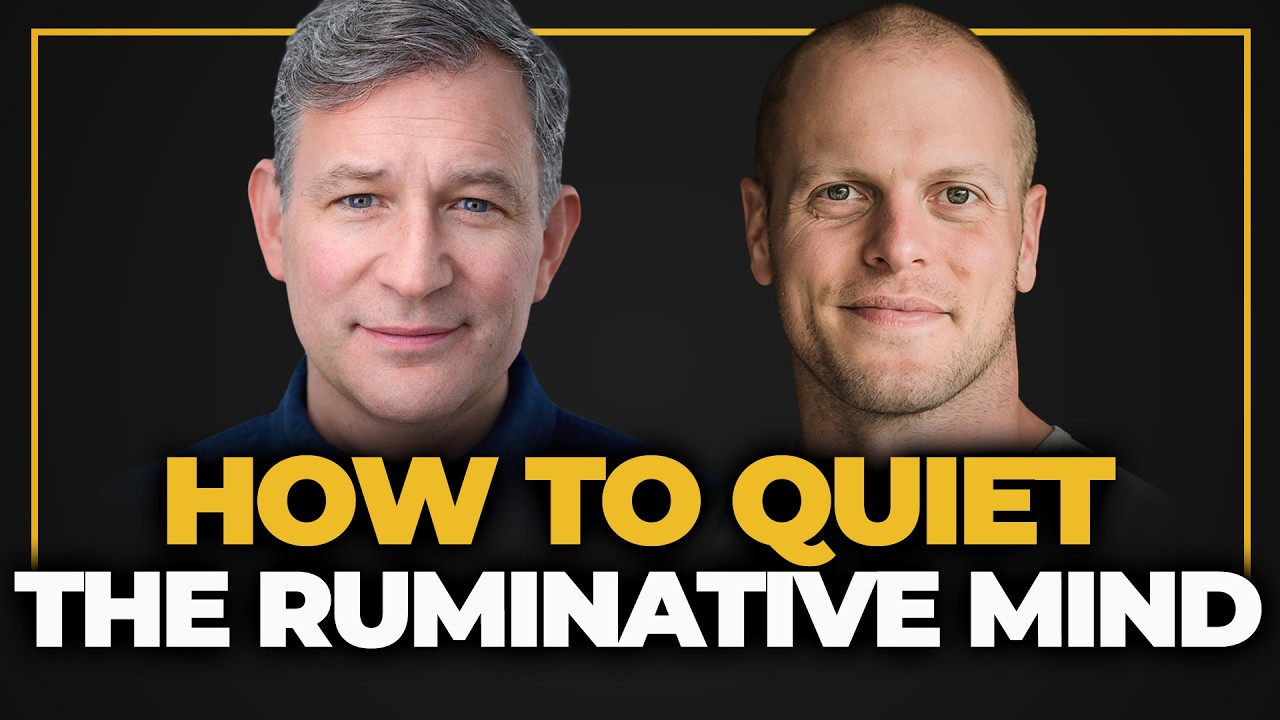 76 min
How to Quiet the Ruminative Mind and Avoid The Traps of Self-Help — Tim Ferriss
 86 min
NYT Bestselling Author on Writing 200+ Children's Books — Tish Rabe
Found this useful? Build your knowledge library
Get AI-powered summaries of any YouTube video, podcast, or article in seconds. Save them to your personal pods and access them anytime.
Get Started Free