Key Moments
Steven Pressfield - The Artist’s Journey, Wisdom In Little Successes, & More | The Tim Ferriss Show
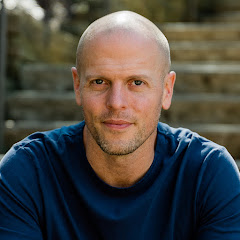 Tim Ferriss
Key Moments
Steven Pressfield on overcoming resistance, finding your artistic calling, and the journey beyond ego.
Key Insights
The "artist's journey" begins after the "hero's journey," shifting focus from identity to contribution.
Resistance, a force of self-sabotage, often stems from the ego's fear of losing control to the deeper 'Self'.
Developing consistent work habits and embracing 'little successes' builds momentum against resistance.
Shadow careers are risk-averse pursuits adjacent to one's true calling, often driven by fear.
The concept of 'yetzer hara' in Jewish mysticism mirrors the universal force of resistance.
Embrace bold ideas and trust the muse; writing fiction can be a powerful way to explore the subconscious.
FROM FAILURE TO FORMATION ON THE ROAD
Steven Pressfield shares his early struggles, including a period of extreme poverty living in a derelict house for $15 a month, highlighting a profound experience with a feral cat that symbolized self-sufficiency and autonomy. This dark period in North Carolina, marked by job loss and personal shame, led him to a halfway house. He reflects on the surprisingly intelligent and insightful individuals he met there, theorizing that their inability to conform stemmed not from 'craziness' but from a clear-eyed perception of societal artifice.
THE WISDOM OF THE TRACTOR-TRAILER DRIVER
Pressfield identifies driving tractor-trailers as a formative experience that fostered professionalism and self-reliance. The critical need to deliver loads on time, coupled with mentorship from dispatcher Hugh Reeves, taught him accountability and the importance of treating his work seriously, despite his internal struggles with self-sabotage. This period reinforced his ability to 'get it together' under pressure, building a crucial foundation for future endeavors.
THE LONG ROAD TO PUBLICATION AND THE ADVERTISING LESSON
After 30 years of persistent effort, Pressfield achieved 'overnight success' with his first novel at age 53. His early career included stints in advertising, which, despite his disdain for the practice, impart crucial lessons. He learned the fundamental principle that 'nobody wants to read your shit,' compelling him to make his work as compelling and empathetic as possible. This experience honed his ability to condense ideas powerfully, a skill vital for any writer.
THE HERO'S JOURNEY VERSUS THE ARTIST'S JOURNEY
Pressfield distinguishes between the 'hero's journey,' focused on self-discovery and establishing identity, and the 'artist's journey,' which begins after the hero's journey is complete. The hero's journey, in the Jungian sense, leads one to understand 'who we really are.' The artist's journey, conversely, is about discerning and delivering one's unique gift to the world, filling the 'vessel' of life with meaningful contribution.
CONFRONTING RESISTANCE AND THE EGO'S GRIP
Resistance, personified as 'Resistance with a capital R,' is depicted as the primary force of self-sabotage, manifesting as procrastination, fear, or perfectionism. Pressfield posits that this force is the ego's defense mechanism, threatened when the individual begins to identify with the deeper 'Self' – the source of intuition, inspiration, and the muse. The ego's goal is to maintain control by convincing us that this deeper, more authentic path is false.
SHADOW CAREERS AND THE 'YETZER HARA'
Shadow careers are identified as risk-averse, adjacent pursuits adopted out of fear of pursuing one's true calling. Examples include entertainment lawyers who secretly desire to be filmmakers or assistants who aspire to their boss's creative roles. This concept aligns with the Jewish mystical idea of 'yetzer hara,' or 'a turning toward evil,' which represents a universal force that hinders spiritual growth and the realization of one's potential.
THE POWER OF ROUTINE AND 'LITTLE SUCCESSES'
Pressfield advocates for establishing routines and accumulating 'little successes' to build momentum and overcome resistance. This approach, shared by his friend Randall Wallace and author Twyla Tharp, involves creating a series of small accomplishments throughout the day—from attending the gym to completing simple tasks—to generate enough forward motion and self-confidence to tackle significant creative work effectively.
THE ART OF SELF-EDITING AND THE STORY GRID
Pressfield's editor, Sean Coyne, developed the 'Story Grid,' a comprehensive framework for understanding narrative structure. Pressfield emphasizes the importance of integrating an editor's mindset into the writing process, which involves analyzing story elements, identifying thematic coherence, and ensuring obligatory scenes are present within a chosen genre. This self-editing skill allows writers to refine their work, often through multiple drafts, leading to more robust and compelling narratives.
EMBRACING THE MUSES AND WRITING FICTION BOLDLY
When encouraging Tim Ferriss to write fiction, Pressfield advises 'going big'—choosing substantial projects that are intentionally terrifying, as this signals a commitment that the muse appreciates. He suggests not to start small but to tackle significant ideas, trusting intuition and the process of discovery. The goal is to write for oneself, embracing brave creative choices, and allowing the work to become a practice of accessing a deeper dimension.
FEAR SETTING AND THE LONG GAME OF LIFE
Pressfield champions 'fear setting,' a Stoic practice of contemplating worst-case scenarios to mitigate their power. By writing down potential failures and how to address them, one can reduce anxiety and overcome the fear of action. He also offers a life-affirming perspective: 'Life is long.' This message encourages patience and self-kindness, reassuring individuals that there is ample time to find their calling and achieve their goals, rather than succumbing to the pressure of immediate success.
Mentioned in This Episode
●Supplements
●Products
●Software & Apps
●Companies
●Organizations
●Books
●Drugs & Medications
●Concepts
●People Referenced
Common Questions
Steven Pressfield experienced 30 years of 'abject failure' before publishing his first novel. His journey involved various blue-collar jobs, a period in a halfway house, and working in advertising and as a screenwriter. He was driven by a deep internal calling and overcoming self-sabotage, eventually finding a literary agent after writing several unpublished novels.
Topics
Mentioned in this video
Author, whose approach to writing was mentioned.
Character from the film Rocky, used as an example of 'refusal of the call'.
Author, whose book 'On Writing' was mentioned.
Steven Pressfield's first editor for 'Gates of Fire' and partner in Black Irish Books, known for his 'Story Grid' concept of editing.
Thriller writer and former Navy SEAL, mentioned as someone who always knew he wanted to be a writer.
Psychiatrist who defined the 'self' (with a capital S) as encompassing the deep unconscious, collective unconscious, and archetypes, contrasting it with the ego.
Friend of Steven Pressfield, a lawyer who wrote a large Tolkien-esque novel by writing 500 words a day.
Actor who played a character in 'Alien' famous for the chest-bursting scene.
Author, whose approach to writing was mentioned.
Author and marketer, who suggests that resistance comes from the 'lizard brain' (amygdala).
Podcaster and athlete, mentioned as a former entertainment lawyer who pursued a different calling.
Author, former Marine, Duke University graduate, known for identifying "Resistance" in his book 'The War of Art', and historical fiction.
Franciscan monk and deep thinker who divides life into two halves: finding identity and then filling that identity.
Steven Pressfield's entertainment lawyer who referred him to a literary agent.
Friend of Steven Pressfield and screenwriter/director of 'Braveheart', who developed the concept of 'little successes'.
A trainer at Pro Camp Gold's Gym in Venice, with whom Steven Pressfield trained.
Steven Pressfield's agent who tragically died young, and who initially teamed Pressfield with Ron Shusett.
A monk from Self-Realization Fellowship, with whom Steven Pressfield had an email correspondence.
Stoic philosopher quoted for his observation: 'We suffer more in imagination than in reality.'
Character from Star Wars, who Princess Leia asks for help, part of 'the call' for Luke Skywalker.
Poet mentioned for her poem 'Wild Geese'.
A former Marine and dispatcher who became a mentor to Steven Pressfield, helping him overcome self-sabotage as a truck driver.
Mythologist known for popularizing the concept of the 'Hero's Journey'.
Literary agent at Sterling Lord who helped Steven Pressfield get 'The Legend of Bagger Vance' published.
Basketball player mentioned as an example of an athlete who builds momentum through routines before a game.
Writer and professor at Princeton University, mentioned for his disciplined writing routine.
Famous writer known for his quote about inspiration striking him every morning at 9:30 AM, emphasizing routine.
Steven Pressfield's first boss in advertising in New York, who quit to write a successful novel, inspiring Pressfield to pursue writing.
Character from Star Wars, used as an example of 'refusal of the call' in the hero's journey.
Character from the film Rocky, whose promoter calls Rocky to offer a championship fight.
Established screenwriter and producer, known for the first 'Alien' movie. He teamed up with Steven Pressfield as a 'producer-writer'.
A notable literary agent, whose agency represents Steven Pressfield.
Basketball player mentioned as an example of an athlete who builds momentum through routines before a game.
Basketball player known for his pre-game routine, demonstrating building 'little successes' and momentum.
Prolific writer mentioned for her discipline of writing for eight hours daily.
Free solo climber, reference to his discipline and skill in the context of writers like Joyce Carol Oates.
Choreographer and author of 'The Creative Habit', whose routine of 'little successes' is similar to Steven Pressfield's.
Rabbi who explained the concept of 'Yetzer hara' from Genesis and Kabbalistic thought.
Author of epic fantasy, mentioned in comparison to Mike McClelland's book 'The San C'.
Neurologist and founder of psychoanalysis, mentioned for discovering the unconscious.
Friend of Tim Ferriss and executive at Shopify, who interviewed Tim and read a passage from 'The 4-Hour Workweek'.
Indian yogi and guru who introduced Kriya Yoga to the West and founded Self-Realization Fellowship.
Friend of Steven Pressfield who shared the insight that 'life is long'.
Social media platform where Steven Pressfield can be found at @SPressfield.
E-commerce company where Harley Finkelstein is an executive.
An intelligent home gym and personal trainer offering 200 pounds of resistance, over 150 exercises, and AI-personalized workouts.
A small publishing company co-founded by Steven Pressfield and Shawn Coyne.
University from which Steven Pressfield graduated.
An iconic gym in Venice, California, where Steven Pressfield trained with TR Goodman.
The United States Naval Academy, where 'The Warrior Ethos' is required reading.
A worldwide spiritual organization founded by Paramahansa Yogananda, mentioned by Steven Pressfield as a spiritual lineage.
The United States Military Academy, where 'The Warrior Ethos' is required reading.
The United States Marine Corps, where 'The Warrior Ethos' is required reading.
University attended by Shawn Coyne, the editor and creator of 'The Story Grid'.
Steven Pressfield's non-fiction book that describes 'Resistance' as an internal force of self-sabotage, helping creatives overcome blocks.
Steven Pressfield's newest historical fiction novel, an epic saga about a reluctant hero of the Roman Empire and the rise of a new faith.
A book by Steven Pressfield from which a passage about shadow careers was read.
A book by Richard Rohr about the two halves of life, where the first half is about finding identity and the second about filling it.
A non-fiction book by Steven Pressfield, required reading at West Point, Annapolis, and in the Marine Corps.
A poem by Mary Oliver, quoted by Tim Ferriss for its message on self-acceptance and natural connection.
Steven Pressfield's first published novel, released when he was 53 or 54 after 30 years of effort.
A book by Steven Pressfield about writing, emphasizing the importance of making content compelling due to reader resistance, a lesson learned from advertising.
A book by Tim Ferriss, mentioned in reference to a billboard question Steven Pressfield previously answered.
A book by Twyla Tharp that describes her habits and routine, similar to Steven Pressfield's 'little successes' approach.
A non-fiction book by Stephen King about the craft of writing.
The first book of the Hebrew Bible and the Christian Old Testament, where the concept of 'Yetzer hara' originates.
A core text of Stoic philosophy.
A book by Shawn Coyne, highly recommended for integrating an editor's mindset into the writing process, and for understanding story principles.
Tim Ferriss's book, a passage from which was read by Harley Finkelstein in an interview.
An ancient Indian scripture where the story of Arjuna and Krishna illustrates the struggle between the ego (Bishma) and the journey of the self.
A novel whose author was mentioned as working in medicine and writing the book by waking up early.
A book by Steven Pressfield about the 1967 Arab-Israeli Six-Day War, for which he interviewed fighter pilots.
A very long, Tolkien-esque book by Mike McClelland, written through diligent daily effort.
Film written by Randall Wallace, who is a friend of Steven Pressfield and developed the 'little successes' theory.
Film series used to illustrate the 'refusal of the call' stage of the hero's journey with Luke Skywalker.
Documentary about Alex Honnold's free solo climb, used as a reference for extreme discipline.
Film used as an example of a character (Dorothy) receiving 'the call' to adventure.
An iconic film whose first installment was co-developed by Ron Shusett, featuring the memorable chest-bursting scene.
The podcast hosted by Tim Ferriss, focused on interviewing world-class performers.
Film used to illustrate 'refusal of the call' when Rocky Balboa is offered a fight with the champ.
A concept from Genesis and Kabbalistic thought, translated as 'a turning toward evil,' which Steven Pressfield equates to his concept of 'Resistance.'
A school of thought in Jewish mysticism, which discusses the concept of 'Yetzer hara' and dimensions of life.
An exercise developed by Tim Ferriss, based on the Stoic practice of 'premeditatio malorum', for confronting and mitigating worst-case scenarios.
Tim Ferriss's blog where a 10-page blog post about conservation and ethical choices in psychedelic compounds was published.
A version of LinkedIn for sales professionals, offering features like in-mail messages, lead recommendations, and unlimited searches.
Website where an interview with Steven Pressfield about his writing routine and 'little successes' approach was published.
Website for Shawn Coyne's 'Story Grid' concept, offering resources for editors and writers.
Location where Steven Pressfield lived in pine woods and encountered a feral cat during his challenging early years.
City where Steven Pressfield lived in a boarding house that also served as a halfway house.
The home of Odysseus, representing the return point in the hero's journey.
City where Steven Pressfield lives and where he had a ten-year career as a screenwriter.
Mentioned by fighter pilots as a potential location for a 'flame out' during a mission.
More from Tim Ferriss
View all 690 summaries 184 min
Daredevil Michelle Khare — How to Become a YouTube Superstar
 81 min
Q&A with Tim — The Upcoming AI Tsunami and Building Offline Advantage
 91 min
The Random Show, Couch Edition! — Supplements, Breathing and Balance Training, and Much More!
 76 min
How to Quiet the Ruminative Mind and Avoid The Traps of Self-Help — Tim Ferriss
Found this useful? Build your knowledge library
Get AI-powered summaries of any YouTube video, podcast, or article in seconds. Save them to your personal pods and access them anytime.
Get Started Free