Key Moments
Q&A with Tim — PR and Marketing Lessons, Time Dilation, Selling to the Affluent, and Much More
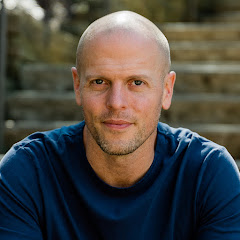 Tim Ferriss
Want to know something specific about what's covered?
We've already dissected every moment. Ask and we will deliver (with timestamps).
Key Moments
Tim Ferriss discusses PR, marketing, risk mitigation, information diets, time dilation, and launching businesses.
Key Insights
Mitigate risk in business by starting small and prototyping concepts before full investment (e.g., food trucks, pop-ups).
Gather genuine user feedback by observing people use a product rather than just asking for opinions; pay users for their time and honest feedback.
Identify neglected or nascent marketing channels for maximum impact, as seen with blogs for book launches in the early 2000s and podcasts later.
Adopt a 'low information diet' by limiting exposure to addictive technology and push notifications to improve focus and single-tasking ability.
Experimentation and deliberate design of experiences can create 'time dilation,' effectively expanding the perceived length of one's life.
For luxury products or services, focus on the story and the customer's ability to tell a compelling narrative rather than just the product's features.
STRATEGIES FOR LAUNCHING NEW VENTURES
Tim Ferriss emphasizes risk mitigation when launching new businesses, advocating for low-risk, capped-downside approaches. For a fast-casual restaurant, he suggests starting with a food truck or a pop-up in an existing restaurant to test the concept and gather feedback before investing in a full build-out. This iterative process allows for refinement of the menu and customer experience based on real-world input, rather than a significant upfront investment without validation.
GATHERING INITIAL TRACTION FOR TOOLS
When launching a new productivity tool, Ferriss advises against solely relying on traditional methods like sending free software to bloggers. Instead, he recommends observing users interact with the product to identify genuine problems and refine the user experience. Paying individuals to use the tool and provide feedback, even if free versions exist, can yield invaluable insights. Utilizing tools like Loom for screen recording feedback can capture the user's authentic journey.
IDENTIFYING EFFECTIVE MARKETING CHANNELS
Ferriss highlights the importance of finding neglected or emerging channels for marketing. He cites his own experiences, such as leveraging bloggers before they were mainstream for his first book and embracing podcasts for 'The 4-Hour Chef.' The strategy involves identifying platforms where influence is growing but not yet saturated, allowing for greater impact with less competition. Staying power on a chosen platform is crucial, aligning natural skills and enthusiasm with the chosen channel.
THE POWER OF THE LOW INFORMATION DIET
To combat the constant barrage of digital distractions, Ferriss champions a 'low information diet,' drawing a parallel to removing junk food from one's house. He explains that relying on willpower to resist addictive technologies is exhausting and often futile. By removing social media apps and turning off notifications, one conserves mental energy, enabling deeper focus and single-tasking. This practice, he argues, provides a significant competitive advantage in knowledge work.
ENHANCING LIFE THROUGH TIME DILATION
Experiencing profound time dilation in the mountains of New Mexico, Ferriss reflects on the concept of expanding life not just through lifespan but through experiential richness. He suggests deliberately designing experiences that create the feeling of extended time. This, he posits, could offer a greater benefit than merely extending biological years, allowing individuals to feel as though they have lived more within their existing lifespan by creating memories that feel much longer than their chronological duration.
LAUNCHING LUXURY BRANDS AND SERVICES
When considering a luxury business, such as high-end mugs, Ferriss advises setting the price first and then figuring out how to deliver extraordinary value to justify it. He recommends studying successful luxury brands and their PR strategies to understand what creates perceived value. Testing the market with a limited budget to gauge customer willingness to pay is crucial. The accompanying story and the narrative customers can tell about their purchase are often as important as the product itself.
MARKETING TO AFFLUENT CLIENTELE AND NON-PROFITS
For products or services targeting high-profile individuals or launching non-profits, Ferriss suggests borrowing principles from the for-profit sector, particularly studying luxury brands and their PR firms. He also advises creating a 'swipe file' of effective advertisements that convince you to spend. For non-profits, studying successful examples like Charity: Water and Donor is recommended, emphasizing that the core principles of marketing and customer acquisition remain similar across sectors.
PRIORITIZING PROJECTS AND DECISION-MAKING
Ferriss shares a simple yet powerful mental model for prioritizing tasks: identify which item, if completed, would make other tasks irrelevant or easier. If further clarity is needed, he suggests asking which item would leave him feeling proudest, or which option, even if it fails, offers the greatest success in terms of learning new skills, building relationships, or generating energy. This approach focuses on identifying the 'lead domino' that can create momentum.
OBSERVATIONS ON THE METAVERSE AND GARDENING
Regarding the metaverse, Ferriss expresses a conflicted view, acknowledging the human tendency towards centralized services for ease of decision-making, despite claims of valuing decentralization. He anticipates only a few dominant, compelling virtual spaces will emerge. On a lighter note, he shares his successful gardening season, attributing good yields to consistent sun exposure, a solar-powered fence, and a timed watering system, though noting kale remains a pest magnet.
ROUTINES FOR WELL-BEING AND PHYSICAL PREPARATION
Ferriss details his simple workout routine, involving twice-weekly full-body weight training, sled pushes, and kettlebell swings, often combined with jump rope to start the day. He practices intermittent fasting and uses sauna and cold showers regularly. For preparation before a three-day fast, he follows a sub-maintenance calorie ketogenic diet for two days prior, coupled with exercise to deplete glycogen stores. He also highlights the use of devices like the 'so right' and 'hip hook' for alleviating lower back pain and improving sleep.
LESSONS FROM MARKETING AND BUSINESS APPROACHES
Tim Ferriss underscores core marketing principles, referencing 'The 22 Immutable Laws of Marketing,' stressing the importance of leadership and perception. He advocates for being first rather than just better, and understanding how perceived value drives sales, especially in luxury markets. He also touches on the strategy of competing against incumbents by finding a unique angle or differentiating factor, referencing the Avis 'We Try Harder' campaign as an example. Building strong early traction within a niche demographic is key.
THE ROLE OF STORY AND EXPERIENTIAL LIFE
Ferriss believes that in a crowded market, the story behind a product or experience is critical, particularly for luxury items. He advocates for a life lived expansively, where deliberate experiences create 'time dilation,' making life feel richer and longer. This contrasts with simply extending biological lifespan, suggesting that the quality and perceived duration of experiences can be equally, if not more, valuable for overall life satisfaction.
Mentioned in This Episode
●Supplements
●Software & Apps
●Companies
●Organizations
●Books
●Drugs & Medications
●Concepts
●People Referenced
Marketing & Business Strategy Quick Reference
Practical takeaways from this episode
Do This
Avoid This
Common Questions
You can start with low-risk, capped-downside experiments such as operating a food truck to test the concept, or even having a pop-up in an existing restaurant during off-peak hours to gather feedback on your menu and experience before committing to a full build-out. Partnering with local organizations for revenue share in exchange for customer traffic can also mitigate risk and gather initial feedback. (0:68)
Topics
Mentioned in this video
An exercise the speaker does at least once a quarter to identify risk factors and strategize how to eliminate or mitigate them, which was also the topic of his TED Talk.
A concept described in The 4-Hour Workweek, which involves limiting exposure to push news and social media to improve focus and reduce mental exhaustion.
A chapter from the book '4000 Weeks' shared on the speaker's blog, offering perspective on time management and life.
A low-cost approach to prototyping a restaurant concept by temporarily renting infrastructure, successful in places like San Francisco.
An essay by Kevin Kelly (kk.org) recommending focusing on a small, dedicated audience to build a sustainable creative business.
A therapeutic framework founded by Richard Schwartz, helpful for creating awareness and calming reactivity towards one's inner parts.
The speaker was very active in helping Uber apply leverage for regulatory purposes, particularly in high-stakes situations like Washington D.C.
A newsletter platform, which the speaker views as a 'pull' way to get information, superior to uncontrolled online assault.
The media company where Matt Levine works.
A luxury brand that partnered with Yuga Labs to create customized CryptoPunks jewelry.
A car rental company whose 'We Try Harder' strategy against Hertz is recommended for studying how to outcompete established tech companies with similar products.
A platform where one can see the range of companies the speaker has worked with (angel.co/Tim).
The company that acquired TaskRabbit.
The speaker helped design the 'Build a Business competition' for Shopify, which was a high ROI and leverage for the company.
The world's largest real estate franchise by agent count, co-founded by Gary Keller.
An electrolyte brand the speaker uses to fill his water bottle during fasting, helping to prevent lower back pain and cholinergic response.
Another low-cost airline example mentioned for its interesting competitive approach.
An example of a company that took advantage of a 'tremendous window of opportunity' with humor in its advertising campaigns.
Richard Branson's airline that competed against British Airways, offering insights into strategic competition.
The company that owns CryptoPunks, which partnered with Tiffany for custom jewelry.
Launched publicly at the same South by Southwest event as 'The 4-Hour Workweek' in March 2007, serving as a broadcast capability for influencers.
An established car rental company that Avis competed against with its distinct marketing strategy.
A low-cost airline whose founder's biography/autobiography is recommended for studying how low-cost competitors enter an industry.
Another fascinating example of a low-cost carrier mentioned for its competitive strategies.
The airline Virgin competed against, offering an example of largely undifferentiated competition.
The coffee shop where the speaker gets his morning cold brew.
A company with a high-end premium product (AG1) and a very methodical, quantitative, and strategic approach to podcast advertising, serving as a case study.
Co-founder of Shopify, with whom the speaker helped design the 'Build a Business competition.'
Mentioned as an author of great books on deep learning and deep work.
An exceptionally successful inventor who licenses his ideas to other companies, author of 'One Simple Idea.'
Author of 'Built to Sell,' whose book helps business owners identify bottlenecks and prepare for selling their company.
Mentioned as having discussed the O2 breathing device with the speaker, advising not to overdo repetitions in the beginning.
Co-author of 'On Grief & Grieving.'
Co-author of 'On Grief & Grieving.'
Chairman of the Psychiatry department at Yale, pioneered research on ketamine's antidepressant effects. The speaker recommends listening to his episode for information on ketamine.
Friend of the speaker and founder of Digg.com; also collaborated on the speaker's first experimental NFT.
President of Shopify, with whom the speaker helped design the 'Build a Business competition.'
Mentioned for her advice to focus on 'just in time' information rather than 'just in case' information.
A hospice care physician and triple amputee, whose philosophical yet actionable interview with the speaker is recommended for caregivers.
A friend of the speaker and previous podcast guest, known for his unique insights.
Author of 'Selling to the Affluent.'
Author of 'Deluxe: How Luxury Lost Its Luster,' whose book provides insights into building durable luxury brands.
Previously discussed writing fiction with the speaker on his podcast.
Founder of Internal Family Systems (IFS), mentioned for his work on understanding and befriending different 'parts' of oneself.
Co-founder of Keller Williams and author of 'The ONE Thing,' whose method for prioritizing projects is a key mental model for the speaker.
An influential blogger at the time of 'The 4-Hour Workweek' launch.
Founder of TaskRabbit, who the speaker helped raise her first round of financing.
Author of 'Small Giants,' a book about companies that prioritize greatness over size.
A Bloomberg writer known for his prolific work and dense insights, whose newsletter the speaker would consider adding to his regular consumption.
Interviewee who discussed animal communication with the speaker, prompting his interest in the topic.
Author of 'The 80/20 Principle.'
Recommended for his fantastic self-inquiry questions, such as 'How am I complicit in creating the conditions I say I don't want?'
His interviews are highlighted as very powerful for developing awareness and calming reactivity.
A master dog trainer and multiple-time National Agility Champion, whose podcast episode is recommended for dog training advice.
Author of the '1,000 True Fans' essay, emphasizing the power of a dedicated audience.
An archer known for incredible longbow trick shots and author of 'Become the Arrow.'
Host of a popular podcast that the speaker would consider appearing on again for fun, recognizing his status as an 'undisputed king of all podcasts.'
Founder of Virgin Group, whose book 'Losing My Virginity' chronicles his strategies for competing against incumbents in various industries.
Author of 'Radical Acceptance,' recommended for tools to stay grounded and process emotions like anger and self-criticism.
A magazine that published a piece called 'The Invisible Selling Machine' detailing the speaker's involvement with Shopify's competition.
A piece in Fortune magazine about Shopify and the speaker's involvement in their 'Build a Business competition.'
A book by John Warrillow, recommended for identifying potential bottlenecks in a business and preparing it for sale.
The speaker's first book, for which he focused on neglected channels like blogs for its launch in 2007.
The speaker mentions launching this book by targeting Digg.com for its power as a taste-making service at the time.
A book by Stephen Key that is recommended for those considering licensing their ideas, even though Key primarily operates in the toy world.
A book by David Kessler and Elisabeth Kübler-Ross, recommended for preparation and consolation in situations of loss.
A book by Bo Burlingham, describing businesses that deliberately choose not to scale, which the speaker finds refreshing.
An out-of-print book that the speaker found helpful for bootstrapping his first company, offering ideas for low-cost startups.
The speaker's book that used podcasts as a nascent channel for its launch in 2012.
A book by Richard Koch, which explores how 80% of results often come from 20% of effort, applicable to various business aspects.
A book by Dana Thomas, which explores the ingredients for durable luxury brands by examining how some have compromised themselves.
An incredible book by Tara Brach, recommended as a tool for grounding and increasing self-love by befriending negative self-talk.
A book by Gary Keller that provides a framework for focusing on the most important single task to achieve extraordinary results, inspiring the speaker's project prioritization methods.
A foundational marketing book recommended for both for-profit and non-profit ventures, emphasizing principles of product positioning and leadership.
A book by Thomas Stanley, recommended for strategies on selling high-end products to wealthy clients.
Richard Branson's book, which had a huge impact on the speaker and details Branson's competitive strategies in the music and airline businesses.
A book by Byron Ferguson on traditional longbow archery, recommended for those interested in the sport.
An exceptional book that the speaker plans to reread, with one chapter 'Cosmic Insignificance Therapy' shared on his blog.
The speaker mentions his last TED Talk on fear-setting has about 10 million views.
An 11-minute YouTube video from Business Insider, recommended for insights into market implosions and what works in business.
A documentary about the Contemporary Art world, recommended for understanding what it takes to sell high-priced art and the importance of storytelling.
A screen capture tool the speaker uses for training employees and contractors, and suggests for recording user testing sessions.
An online archive (web.archive.org) that can be used to access past versions of web pages, like the Fortune article mentioned.
A service that provides user feedback and testing, although potentially out of budget for some startups.
A platform where one could find people to test a product.
A social news website founded by Kevin Rose, which was powerful for taste-making and launching products like The 4-Hour Body in the past.
Mentioned as a contemporary equivalent to Digg.com for taste-making and product launches.
An early-stage startup that the speaker helped its founder, Leah, raise her first round of financing; later sold to Ikea.
An outlet the speaker targeted during the initial launch of 'The 4-Hour Workweek' to reach a tech-savvy demographic.
A plastic device that applies pressure to the psoas muscle, used by the speaker to alleviate lower back pain and improve sleep.
A portable device that targets the psoas and iliacus muscles, used by the speaker to alleviate lower back pain and improve sleep, especially for travel.
A drug whose antidepressant effects were pioneered by Dr. John Crystal; recreational use is associated with bladder damage (ketamine bladder syndrome).
A compound used in hard ketone drinks as an alternative to ethanol-based alcoholic beverages, providing a slight buzz but potentially affecting sleep.
A resource recommended for finding literature and clinical trials on topics like ketamine bladder syndrome and adverse events.
The institution from which 'The Microdose' newsletter originates.
A non-profit highlighted for its effective promotional efforts.
A media company with a YouTube video series on business collapses, recommended for learning about principles of what works and doesn't work.
An outlet the speaker targeted during the initial launch of 'The 4-Hour Workweek' to reach a tech-savvy demographic.
An organization sponsored by the speaker's Sports Nutrition Company as a strategic brand awareness decision rather than for direct ROI.
A non-profit highlighted for its effective promotional efforts.
An outlet the speaker targeted during the initial launch of 'The 4-Hour Workweek' to reach a tech-savvy demographic.
More from Tim Ferriss
View all 703 summaries 70 min
Q&A with Tim — The Art of Male Friendship, Reinvention in The Age of AI, & More
 125 min
Dr. Andrew Huberman — Peptides, Performance, and Protocols
 112 min
The Random Show! Mortality, AI, Supplements, Rock Climbing, & More
 88 min
The Legendary Hollywood Power Broker — Guy Oseary on 36 Years of Managing Madonna, 26 IPOs, and More
Ask anything from this episode.
Save it, chat with it, and connect it to Claude or ChatGPT. Get cited answers from the actual content — and build your own knowledge base of every podcast and video you care about.
Get Started Free