Key Moments
Philip Goff: Consciousness, Panpsychism, and the Philosophy of Mind | Lex Fridman Podcast #261
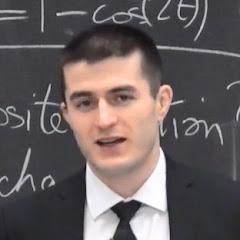 Lex Fridman
Key Moments
Panpsychism posits consciousness as fundamental, challenging materialistic science and offering a unified view of reality, impacting morality and our understanding of existence.
Key Insights
Panpsychism suggests consciousness is a fundamental and ubiquitous feature of all matter, forming the basic nature of reality.
The scientific method may need expansion to fully account for consciousness, which is privately observable and qualitative, not publicly observable and quantitative.
Materialism struggles to explain the qualitative aspects of consciousness, while dualism presents challenges in its separation from the physical.
Human uniqueness lies in self-reflection and response to reasons, not just consciousness, which is seen as continuous with the universe.
The concept of universal consciousness, experienced in mystical states, suggests interconnectedness and provides a potential basis for altruism.
The debate around expertise highlights the importance of humility and rigorous, open-minded inquiry, even for unconventional ideas like panpsychism.
Consciousness is proposed as the basis of moral value, raising complex ethical questions about artificial intelligence and animal rights.
While panpsychism doesn't inherently support life after death, it opens possibilities for absorption into a universal consciousness.
THE CHALLENGE OF CONSCIOUSNESS TO SCIENCE
Philip Goff argues that the standard scientific worldview, rooted in quantitative and publicly observable data, is fundamentally incompatible with consciousness. Unlike unobservable particles or forces, consciousness is directly, privately experienced. This qualitative, subjective nature of experience poses a significant challenge, suggesting that science may require an expanded framework to fully grasp consciousness. Goff contrasts this with the standard scientific approach, which focuses on explaining observable phenomena through unobservable entities, a method that struggles with the inherently private datum of consciousness.
PANPSYCHISM AS A FRAMEWORK FOR CONSCIOUSNESS
Goff champions panpsychism, the view that consciousness is a fundamental and ubiquitous feature of the physical world. This theory posits that fundamental constituents of reality, like particles, possess simple forms of experience. Complex human consciousness is then seen as arising from or being rooted in these basic conscious elements. This perspective offers a unified ontology, seeking to explain consciousness not by deriving it from non-conscious matter (as in materialism), but by understanding matter itself as fundamentally conscious.
CRITIQUE OF MATERIALISM AND DUALISM
Goff outlines the limitations of dominant views: materialism, which struggles to account for the subjective qualities of experience, and dualism, which posits a separation between the physical and the mental. He notes that while empirical evidence against dualism (like the absence of unexplained physical phenomena in the brain) is suggestive, our understanding of brain complexity is still too limited to definitively rule it out. Panpsychism, by contrast, offers a more parsimonious solution by suggesting a single, unified reality where consciousness is intrinsic to the physical, avoiding the need for separate substances or unexplained connections.
THE NATURE OF HUMAN CONSCIOUSNESS AND VALUE
Within a panpsychist framework, human consciousness is not uniquely special in kind but rather a highly evolved form within a conscious universe. Human distinctiveness lies in capacities like sophisticated self-reflection, planning, and responsiveness to reasons and abstract values. Goff distinguishes this from animal motivations, suggesting humans engage with normative considerations. This leads to a discussion on objective values, where Goff argues against a purely Humean view that values are merely subjective passions, proposing that some life goals and pursuits are objectively more worthwhile than others.
CONSCIOUSNESS, MORALITY, AND ETHICAL IMPLICATIONS
The capacity for consciousness is presented as the foundation of moral concern. If consciousness is widespread, it extends moral consideration beyond humans to other animals, and potentially even to plants, complicating ethical choices like diet. Conversely, the idea of 'philosophical zombies'—beings identical to humans but lacking consciousness—raises questions about moral rights. Goff suggests that consciousness is the basis for moral value, and mistaking a non-conscious entity for a conscious one, or vice versa, has significant ethical implications, particularly as artificial intelligence advances.
MYSTICAL EXPERIENCES AND UNIVERSAL CONSCIOUSNESS
Goff explores how panpsychism can align with mystical experiences, which often report apprehension of a universal or fundamental consciousness. Unlike materialism, which dismisses such experiences as delusion, panpsychism offers a framework where these experiences might reflect a deeper reality. This concept of universal consciousness, shared by all individuals, could provide a basis for altruism and a sense of interconnectedness, potentially even suggesting a form of impersonal 'life after death' through absorption into this universal consciousness.
EXPERTURE, RIGOR, AND THE ADVANCEMENT OF IDEAS
The conversation delves into the role and potential pitfalls of expertise, particularly in science and philosophy. While acknowledging the necessity of trusted sources and rigorous methodology—like peer review—both speakers emphasize the importance of humility and open-mindedness. They critique dogmatism and intellectual laziness, advocating for a willingness to engage with unconventional ideas and diverse perspectives, even if they challenge established paradigms or require a redefinition of scientific scope.
FREE WILL, DETERMINISM, AND EMPIRICAL QUESTIONS
The discussion extends to free will, with Goff suggesting agnosticism due to a lack of definitive evidence against it. He argues against the strict determinism/randomness binary, proposing that responsiveness to reasons is key to understanding free choice. Goff questions the interpretation of experiments like Libet's, suggesting they may not capture the complexity of reason-responsive decision-making. Ultimately, he sees the question of free will as an empirical one, contingent on our understanding of brain mechanics, potentially easier to resolve through engineering and neuroscience than consciousness itself.
ENGINEERING CONSCIOUSNESS AND FUTURE DIRECTIONS
The potential for engineering consciousness and intelligent systems is explored as a means to gain deeper insights. Goff considers whether artificial systems, even if they convincingly mimic conscious behavior, would truly possess consciousness, or if the underlying 'hardware'—the physical substrate—is essential. This ties back to the simulation argument and the idea of substrate independence. The pursuit of understanding consciousness is framed as an interdisciplinary endeavor, requiring collaboration between philosophers, neuroscientists, physicists, and engineers.
THE MEANING OF EXISTENCE AND THE HOPEFUL UNIVERSE
Goff concludes by reflecting on the meaning and value of existence. He posits that consciousness is the source of all that matters, and while our scientific understanding might feel alienating, panpsychism reconnects the objective facts of science with subjective human experience. He advocates for living with hope, choosing to believe in a potential purpose for existence, even without certainty. This hopeful orientation, he suggests, is a worthwhile and fulfilling way to navigate life, emphasizing that our current reality, despite its mysteries, holds inherent value.
Mentioned in This Episode
●Software & Apps
●Organizations
●Books
●Drugs & Medications
●Concepts
●People Referenced
Common Questions
Philip Goff disagrees with Elon Musk, believing consciousness pervades matter and is the ultimate nature of matter. He argues consciousness is not publicly observable and is qualitative rather than quantitative, requiring a more expansive scientific method to study it.
Topics
Mentioned in this video
A philosophical problem that challenges the traditional definition of knowledge as 'justified true belief' by providing counter-examples.
Mentioned as a mythical afterlife for warriors, used in an analogy to represent a greater joy or fulfillment beyond present suffering.
A theory of consciousness that proposes consciousness is found at the level of most integrated information, offering a mathematically precise definition and suggesting gradations of consciousness.
The idea, supported by some meditators, that there is a higher, impersonal form of consciousness at the root of all things, in which individual minds may be absorbed after death.
The current understanding of the Standard Model of particle physics combined with the weak limit of General Relativity, used by Sean Carroll to argue against the possibility of strongly emergent causal dynamics.
A hypothetical being that is physically and behaviorally identical to a human but lacks any conscious experience, used to explore the value and moral implications of consciousness.
Mentioned for purportedly dismissing the lab leak theory of COVID-19 without sufficient empathy or rigor, exemplifying a critique of scientific expertise.
A philosopher known for his nuanced discussions on the problems and positive functions of academic titles and hierarchies.
Host of a podcast on which Philip Goff recently appeared, where they discussed the distinction between correlation and explanation of consciousness.
A Russian investor and philosopher who co-founded the Moscow Center of Consciousness Studies and organized a yacht trip debate on consciousness and free will. He is a fan of Daniel Dennett and has met the Dalai Lama.
A rigorous philosopher who defends a panpsychist version of Daniel Dennett's multiple drafts model, suggesting all drafts could be conscious.
Philosopher associated with the concept of a 'philosophical zombie' and 'naturalistic dualism', who believes in psychophysical laws connecting consciousness to the physical world.
A computer scientist cited as a hero for his lifelong dedication to a single topic, finding beauty in solving puzzles regardless of external recognition.
A neuroscientist who tries to compare consciousness to life, a distinction Philip Goff highlights as fundamentally different in explanatory task.
An illusionist philosopher who has written a paper on how to think about morality if pain, as we normally think about it, does not exist.
Physicist and author whose book with Leonard Mlodinow famously declared philosophy dead, only to engage in 'pretty bad philosophy' later.
A highly influential philosopher from Durham University who developed an answer to the free will dilemma, suggesting free choice involves responsiveness to reasons, distinguishing it from random events.
Lex Fridman's previous podcast guest who disagreed that consciousness permeates all matter because it's untestable by the scientific method.
Philosopher whose concept of the 'causal skeleton of the world' inspired a panpsychist view where physics describes what matter does, but not what it is.
A quantum mechanics physicist and philosopher with whom Philip Goff has constructive disagreements, particularly on materialism, emergent consciousness, and mental causation.
Swiss psychiatrist and psychoanalyst whose quote about facing one's own soul and making the darkness conscious concludes the podcast.
Philosopher known for the view that 'reason is the slave of the passions,' implying that all motivations and life goals are equally valid and arise from desires.
A scientist who proposes morphic fields, suggesting metaphysical realities beyond scientifically understood ones that communicate collective phenomena.
Philip Goff's co-host on the Mind Chat podcast, a committed illusionist who argues that consciousness, as philosophers typically conceive it, does not exist.
A philosopher who argues that philosophical zombies should have equal rights, as consciousness itself does not matter for moral consideration.
Participated in a Clubhouse debate on panpsychism alongside Philip Goff, Sean Carroll, and Annika Harris.
Philosopher and author known for his strong views against the existence of free will, which Philip Goff disagrees with.
Sociologist mentioned in connection with the 'disenchantment of nature,' a concept that describes how modern scientific views remove mystery and meaning from the world.
A philosopher whose view of consciousness is that it's a side effect of complex brain computation, a 'multiple drafts model' where there is no objective fact about which draft is the correct conscious one.
An Australian analytic philosopher who rigorously defends a mystical conception of reality rooted in Advaita Vedanta mysticism, treating experienced meditators as expert testimony.
A physicist who supports the argument from cosmological fine-tuning to the multiverse, a topic Goff has critiqued philosophically.
A philosopher of science whose book 'How the Laws of Physics Lie' suggests that physicists may draw unwarranted generalizations from specific experimental circumstances.
Participated in a Clubhouse debate on panpsychism alongside Philip Goff, Sean Carroll, and Owen Fleming.
Philosopher and psychologist whose work, 'Varieties of Religious Experience,' includes a chapter on mystical experiences and whether it's rational to trust them.
A materialist philosopher who, along with others, pointed out that naturalistic dualists believe psychophysical laws can respect conservation of energy.
A 'very good substance dualist' at the University of Freiburg in Switzerland who was invited to Dmitry Volkov's yacht debate as an opposition to the Dennett camp.
Physicist and author co-wrote a book with Stephen Hawking that controversially states philosophy is dead while subsequently engaging in it poorly.
Philosopher who argued that dualism is inconsistent with conservation of energy, a point Philip Goff debated.
Mentioned as someone Dmitry Volkov met, highlighting efforts to connect Russian scientists with global figures for collaboration.
Neuroscientist known for experiments suggesting brain activity precedes conscious decisions, leading to debates about free will. Philip Goff argues these experiments focus on senseless actions rather than reasoned choices.
A UK-based think tank criticized for not declaring its funding sources while presenting itself as an economic expert.
Co-founded by Dmitry Volkov, this center is part of the philosophy department of Moscow State University and actively brings together philosophers and scientists to discuss consciousness.
A publication where Philip Goff authored a piece explaining his philosophical argument about fine-tuning and the multiverse to a general audience.
A TV series where humanoid creatures in a theme park gained consciousness and rebelled, suggesting emergent causal dynamics beyond programming.
Philip Goff's podcast, co-hosted with illusionist Keith Frankish, where they discuss consciousness from opposing viewpoints.
Science fiction series referenced with the character Commander Data to illustrate the concept of a silicon-based being that behaves human-like but may lack consciousness.
A documentary referenced to illustrate finding joy and meaning in the mastery of a simple task, like counting blades of grass.
Philip Goff's academic book, a more rigorously argued predecessor to Galileo's Error.
Philip Goff's accessible book explaining panpsychism and exploring meaning, free will, and mystical experiences in its final chapter.
More from Lex Fridman
View all 547 summaries 146 min
Jensen Huang: NVIDIA - The $4 Trillion Company & the AI Revolution | Lex Fridman Podcast #494
 311 min
Jeff Kaplan: World of Warcraft, Overwatch, Blizzard, and Future of Gaming | Lex Fridman Podcast #493
 154 min
Rick Beato: Greatest Guitarists of All Time, History & Future of Music | Lex Fridman Podcast #492
 23 min
Khabib vs Lex: Training with Khabib | FULL EXCLUSIVE FOOTAGE
Found this useful? Build your knowledge library
Get AI-powered summaries of any YouTube video, podcast, or article in seconds. Save them to your personal pods and access them anytime.
Get Started Free