Key Moments
Life, Death & the Neuroscience of Your Unique Experience | Dr. David Linden
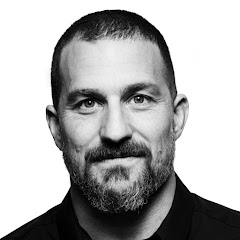 Andrew Huberman
Want to know something specific about what's covered?
We've already dissected every moment. Ask and we will deliver (with timestamps).
Key Moments
Neuroscience explores individuality, senses, mind-body, and mortality with Dr. David Linden.
Key Insights
Individual perception of senses like smell and vision varies significantly due to genetic and experiential factors.
Early life experiences, not just genetics, powerfully shape long-term physical and cognitive traits.
The cerebellum's primary function is prediction, extending beyond motor control to social cognition.
Nature vs. nurture is better understood as heritability interacting with experience, filtered by developmental randomness.
The mind-body connection is a biological reality, with direct pathways for mental states to influence bodily health and vice versa.
Facing mortality can profoundly alter one's perception of time, gratitude, and reinforce the brain's predictive nature.
THE NEUROSCIENCE OF UNIQUE SENSORY PERCEPTION
Dr. David Linden discusses the profound individual differences in how humans perceive the world, starting with the recent identification of neurons responsible for sexual sensation (Krauss corpuscles). He highlights how genetic variations, particularly in olfactory receptors, lead to vastly different experiences of smells, with examples like androstenone or even the smell of parmesan cheese being perceived as foul, pleasant, or undetectable by different individuals. This variability extends to vision, where chromatic aberration can cause people to see colors in different planes, and even to early life development, influencing acuity and susceptibility to conditions like myopia.
NATURE, NURTURE, AND DEVELOPMENTAL RANDOMNESS
Challenging the traditional 'nature versus nurture' dichotomy, Dr. Linden proposes understanding individuality as a product of heritability interacting with experience, all filtered through the randomness of development. He emphasizes that 'nurture' should encompass all life experiences from fetal development onwards. Examples like heat tolerance in Japanese soldiers and fur density in field mice illustrate how early-life experiences can irreversibly shape traits, and how most human characteristics, from height to intelligence, exist on a spectrum of heritability influenced by environmental factors and developmental stochasticity.
THE CEREBELLUM: MORE THAN JUST MOTOR CONTROL
Dr. Linden offers a simplified yet insightful view of the cerebellum, moving beyond its well-known roles in motor coordination and balance. He posits that the cerebellum's core function is prediction, constantly calculating the immediate future to guide behavior. This predictive capacity, initially crucial for physical actions like hitting a baseball, also extends to non-motor domains, influencing social interactions, planning, and decision-making. Damage to the cerebellum can impair this predictive ability, affecting not just clumsiness but also aspects of social cognition.
THE BIOLOGICAL BASIS OF MIND-BODY CONNECTION
The discussion delves into the intricate mind-body connection, reframing it as a bidirectional biological process rather than mystical pseudoscience. Signals from the body reach the brain via interoceptive neurons and hormonal/immune signaling molecules like cytokines. Conversely, the brain influences the body through neural pathways and released chemicals. Dr. Linden highlights the growing understanding of inflammation's role in psychiatric conditions like depression, suggesting it could impede neuroplasticity and require targeted anti-inflammatory treatments for specific patient subsets.
PSYCHEDELICS, NEUROPLASTICITY, AND INFLAMMATION
Exploring potential avenues for treating depression, the conversation touches upon the efficacy of psychedelics like psilocybin, noting their potential to promote neuroplasticity. This is contrasted with SSRIs, which show variable success rates. A key emerging hypothesis suggests that inflammation might act as a barrier to neuroplasticity, potentially explaining the differential responses to treatments. The discussion emphasizes that treating complex conditions like depression likely involves rewiring neural circuits, with inflammation being a critical factor to understand and mitigate for successful interventions.
FACING MORTALITY AND THE PERCEPTION OF TIME
Dr. Linden shares his personal journey after a life-altering cancer diagnosis, revealing a complex mix of anger and profound gratitude. He describes how this experience has slowed his perception of time, emphasizing the 'big things' – sentience, creativity, and love – over 'little things.' He reflects on the human inability to truly engage with one's own demise, linking it to the brain's inherent predictive functions and the prevalence of afterlife beliefs across cultures. This personal narrative underscores the science of perception and the biological underpinnings of fundamental human experiences like facing mortality.
UNIVERSAL ADVICE AND THE POWER OF CURIOSITY
In offering advice, Dr. Linden returns to the universally known but often unheeded message: appreciate what you have while you have it. He notes that for a specific subset of curious individuals, investigating their own mortality and medical situation through a scientific lens can be empowering. However, he stresses that this 'way of the nerd' is not for everyone, acknowledging that individual differences dictate the most beneficial approaches to life's challenges. His discussion highlights the importance of understanding biological mechanisms behind human experiences, from sensory perception to the profound impact of facing one's own mortality.
Mentioned in This Episode
●Supplements
●Companies
●Organizations
●Books
●Drugs & Medications
●Studies Cited
●Concepts
●People Referenced
Common Questions
Krauss corpuscles are specific nerve endings found in the genitals that act as mechanical sensors. Recent research in mice indicates activating these corpuscles can induce an erection in males, while inactivating them reduces sexual receptivity in females, confirming their role in conveying sexual sensation.
Topics
Mentioned in this video
Professor at Harvard University whose lab conducted groundbreaking research on Krauss corpuscles and sexual sensation in mice.
Researcher who conducted experiments demonstrating the power of suggestion and cultural context in odor perception, particularly with butyric and isovaleric acid.
A 19th-century colleague of Darwin who popularized the phrase 'nature versus nurture.'
A colleague of Andrew Huberman at Stanford who described the 'deletion test' for choosing research directions.
Host of the Huberman Lab podcast and professor of Neurobiology and Ophthalmology at Stanford School of Medicine.
Professor of Neuroscience at Johns Hopkins School of Medicine and guest on the podcast, author of five popular neuroscience books.
Researcher from Johns Hopkins University who studies psychedelics for the treatment of depression and their role in neuroplasticity.
A urologist and reproductive/sexual health expert who previously appeared on the podcast, noted for clarifying the analogous embryonic origins of the clitoris and penis.
Researcher who studies epigenetic transmission and the inheritance of acquired traits, distinguishing it from Lamarckian inheritance.
Researcher from UCSF who works on psychedelics for the treatment of depression.
Late postdoctoral advisor to Andrew Huberman who championed research into glial cells, emphasizing their importance in brain function.
Researcher at MIT who created a mouse model of the 'first-trimester influenza hypothesis,' demonstrating how viral mimicry in pregnant mice can lead to disordered cortical development in offspring via interlukin-17.
Physiologist and expert in exercise science, whose 'Galpin Equation' is mentioned as a formula for hydration.
An animal known to be born as identical quadruplets, serving as a model system for biologists to study stochastic differences in development.
Refers to how connections in the brain change in response to experience; Dr. Linden's lab has studied this extensively.
A phenomenon where during REM sleep, signals to muscles are blocked in the brain stem, but if a person wakes up during this period, they experience temporary paralysis and often vivid hallucinations.
Also known as the 'mini-brain,' it's responsible for motor behavior, balance, learning new motor behaviors, and timing; more recently understood to be involved in predicting the immediate future for guiding non-motor behaviors as well.
A gene responsible for determining wet or dry earwax type; it's an ion transporter expressed in many cells and a variant can also be associated with a slightly higher risk for breast cancer.
A formula used to estimate the heritability of a trait by comparing monozygotic and dizygotic twins.
An immune signaling molecule that, when surging in pregnant mice during a critical developmental period, passes through the placenta and causes disordered development of the cortex in the fetus, analogous to observations in some autistic people.
A cytokine that is massively elevated in the cerebral spinal fluid of MS patients, potentially causative for depression in these individuals.
Non-neuronal, motile cells in the brain that can prune synapses and are responsive to inflammatory signals, playing a key role in the link between inflammation and synaptic plasticity.
A signaling molecule secreted by neurons that innervate melanoma, which has receptors on immune cells and reduces their patrolling function, allowing tumors to grow and spread more readily.
A liver disease whose early pro-inflammatory cytokine treatments frequently caused depression in patients, highlighting a link between inflammation and mood.
A moderately rare form of cancer that typically affects joint linings, but in Dr. Linden's case, presented as a hard-to-diagnose mass near his heart, with very limited statistical prognosis information.
University where Irv Zucker is a scientist specializing in voles and circadian biology.
Semi-tropical southern part of Japan, associated with soldiers more tolerant to heat due to higher innervation of sweat glands.
Northern part of Japan, associated with soldiers less tolerant to heat due to lower innervation of sweat glands.
A psychedelic compound (still illegal, but decriminalized in places) undergoing clinical trials for depression, showing significant relief in 65-80% of people and is known to encourage neuroplasticity.
A secreted hormone mentioned for its highly variable perception in smell, ranging from undetectable to pleasant (grass-like) or foul (urine/sweat-like) depending on genetic variation.
Mentioned as another therapy used for depression, which also encourages neuroplasticity.
A class of antidepressant drugs that benefit only about a third of depressed people, with limited or no benefit for others, possibly due to depression being multiple biological disorders or inflammation acting as a barrier to their efficacy.
A genetic disease where the body cannot metabolize the amino acid phenylalanine; its effects are only manifested if foods rich in phenylalanine are consumed, illustrating gene-environment interaction.
A program that provides real-time feedback on how foods and behaviors affect blood glucose using a continuous glucose monitor, helping users optimize diet and energy levels.
Company founded by two All-American Stanford swimmers, known for high-quality eyeglasses and sunglasses designed with performance in mind to be lightweight and non-slip.
Academic institution where Lesley Voshal conducted odor tests.
Academic institution where Gloria Choi developed a mouse model for studying the effects of maternal immune activation on fetal brain development.
Mentioned as having an entire institute dedicated to complimentary health and medicine, exploring practices like yoga nidra and respiration.
Academic institution where Dr. David Linden is a professor of neuroscience.
Academic institution where David Ginty's group conducts neuroscience research.
A music conservatory at Johns Hopkins University, where a higher incidence of perfect pitch is found among trained musicians.
Academic institution where Robin Carhart-Harris conducts research on psychedelics.
More from Andrew Huberman
View all 396 summaries 149 min
How to Improve Your Memory & Cognitive Function at Any Age | Dr. Alan Castel
 32 min
The Science & Treatment of Obsessive Compulsive Disorder (OCD) | Huberman Lab Essentials
 159 min
Raising a Dog & Mastering Calm Assertive Energy | Cesar Millan
 37 min
Essentials: Tools for Hormone Optimization in Males | Dr. Kyle Gillett
Ask anything from this episode.
Save it, chat with it, and connect it to Claude or ChatGPT. Get cited answers from the actual content — and build your own knowledge base of every podcast and video you care about.
Get Started Free