Key Moments
Lance Armstrong: The rise, fall, and growth of a cycling legend | The Peter Attia Drive, Ep. 178
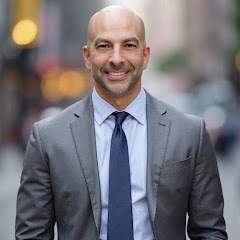 Peter Attia MD
Want to know something specific about what's covered?
We've already dissected every moment. Ask and we will deliver (with timestamps).
Key Moments
Lance Armstrong's career: cycling triumphs, doping, cancer battle, foundation, and public redemption.
Key Insights
Armstrong's early life was marked by his mother's determination and a strict stepfather, leading him to excel in endurance sports like swimming and triathlons.
He transitioned to professional cycling, driven by Olympic aspirations, and achieved early success, culminating in a World Championship win.
Armstrong candidly discusses his use of performance-enhancing drugs, the pervasive doping culture in cycling, and the shift to EPO.
His battle with testicular cancer, including its advanced stage and metastasis, was a pivotal, life-altering event that led to his founding of the Livestrong Foundation.
The comeback to cycling was fueled by a desire to prove himself and support his foundation, but also entangled with the complex reality of doping in the sport.
Armstrong reflects on his public downfall, his confession, and his ongoing journey of accountability, emphasizing lessons learned and the importance of family.
EARLY LIFE AND DIVERSE ATHLETIC PURSUITS
Lance Armstrong's upbringing in Plano, Texas, was shaped by his mother's resilience after his father's departure and the strict discipline of his stepfather, Terry Armstrong. This environment fostered a competitive spirit, leading Armstrong to excel in sports. Initially struggling with traditional team sports, he found his niche in endurance activities. His mother's encouragement steered him towards swimming at age 12, where his innate talent for endurance quickly became apparent. He also participated in track and cross-country, demonstrating early prowess in running.
TRANSITION TO PROFESSIONAL CYCLING AND EARLY TRIUMPHS
At 15, Armstrong turned professional in triathlon, a sport that combined his swimming and running abilities with cycling. Recognizing his exceptional talent on the bike, he transitioned to full-time professional cycling in the late 1980s, aspiring to compete in the Olympics. After competing in the 1992 Barcelona Olympics, he joined the Motorola team and continued to develop as a cyclist. The early 1990s saw him racing against legends like Miguel Indurain and establishing himself as a formidable competitor.
THE ERA OF DOPING AND RACIAL CHALLENGES
Armstrong openly addresses the pervasive culture of doping in professional cycling during his era. He details the transition from cortisone and testosterone to EPO, acknowledging its widespread use. The conversation touches on the lack of rigorous testing and the cat-and-mouse game between athletes and anti-doping agencies. Armstrong admits to using EPO and other performance-enhancing drugs, justifying it as a necessary response to the competition, while simultaneously highlighting the ethical compromises involved.
A LIFE-ALTERING CANCER DIAGNOSIS AND THE BIRTH OF LIVESTRONG
In 1996, Armstrong was diagnosed with advanced testicular cancer that had spread to his brain and lungs. This near-fatal experience profoundly impacted him, shifting his perspective on life and his priorities. After undergoing aggressive treatment, including chemotherapy and surgery, he harbored a newfound appreciation for life and a strong desire to help others facing similar battles. This led to the establishment of the Livestrong Foundation, initially focused on raising awareness for testicular cancer and later expanding its mission to support all cancer patients.
THE COMEBACK, SEVEN TOUR DE FRANCE VICTORIES (AND SUBSEQUENT FALL)
Following his recovery, Armstrong made a remarkable comeback to professional cycling, culminating in a record seven consecutive Tour de France victories from 1999 to 2005. These wins, however, were later tarnished by revelations of systematic doping within his U.S. Postal Service team. Armstrong discusses the immense pressure, the complex management of his doping regimen, and the increasing scrutiny he faced. He reflects on his aggressive defense of his reputation, his denial tactics, and the eventual unraveling of his career.
ACCOUNTABILITY, REDEMPTION, AND A NEW PATH FORWARD
After years of denial, Armstrong publicly admitted to doping in a 2013 interview with Oprah Winfrey. He discusses the process of coming to terms with his actions, the impact on his family and career, and his efforts to rebuild his life. Armstrong emphasizes the lessons learned from his downfall, the importance of accountability, and his commitment to a more transparent and healthier lifestyle. He actively engages in his podcast and other ventures, seeking to move forward while acknowledging the indelible mark of his past.
Mentioned in This Episode
●Products
●Companies
●Organizations
●Books
●Drugs & Medications
●People Referenced
Common Questions
Lance Armstrong's mother suggested he try swimming at age 12 to channel his high energy. He quickly excelled and eventually turned professional in triathlon at 15. Realizing the quickest path to the Olympics was through cycling, he transitioned to full-time cycling by 1991.
Topics
Mentioned in this video
Lance Armstrong's swim coach for the City of Plano Aquatics (COPS) team, described as a 'total hard ass' but an amazing and wonderful coach, who was very tough and structured.
A dominant cyclist who won three consecutive Tours before '93, later compared to Lance for his machine-like training ethic and ability to handle various race demands.
Lance's teammate who tragically died in the 1995 Tour de France after a crash, leading Lance to win a stage in his honor. Casartelli was an Olympic gold medalist who struggled to adjust to pro cycling.
Lance's greatest rival and a source of immense motivation, whom he considers a brother post-cycling. Ullrich faced significant personal struggles and was later helped by Lance to get sober.
Cyclist who suffered extreme bad luck in the 2003 Tour, hitting hot tar while going downhill at 40 mph, crashing and ending his career. Lance narrowly avoided the same fate.
Lance acknowledges the host's strong feelings about him and states there won't be any future dinners, distinguishing him from teammates who are still considered 'brothers'.
Lance chose to give his confession interview to her, viewing it as a way to control the narrative of his deposition, despite lawyers disliking the idea.
Lance's former 'soigneur' (assistant) in 1999, who later spoke out about doping. Lance admits he wrongfully went after her but has since reformed their friendship and wrote the foreword for her book.
Lance's stepfather, whom his mother married when Lance was three or four. Lance describes him as strict and implies he was a negative influence, noting his mother kicked him out when Lance was 15.
Mentioned as Lance Armstrong's other option for his confession interview, besides Oprah Winfrey.
A highly talented Belgian cyclist, regrettably 'hammered' by the press, who eventually died in Senegal, unable to cope with his downfall.
Was considered for the 9th spot on the Motorola team in 1995 but was ultimately passed over for Fabio Casartelli. He later became Lance's best lieutenant.
Mentioned as an example of a swimmer who grew up in age group swimming, the most serious category for young swimmers.
Lance Armstrong's high school track and cross country coach, described as a world-class 800-meter runner and awesome coach who would run with the team and drove a Porsche.
A top professional triathlete against whom Lance competed in his first pro race at age 15, riding with him for the entire bike leg.
Mentioned by Peter Attia as a top triathlete of the era, though Lance is not sure if he was at the specific race being discussed.
Lance agrees that Edgar Allan Poe is the greatest poet of the 19th century.
Lance definitively states that Alberto Contador is not the greatest cyclist of all time.
Lance Armstrong's birth father who left when Lance was two. Lance never saw him again and had no desire to reconnect, noting his inappropriate comments about Lance's mother after he won his first Tour.
His book was cited by the host as being 'too freaking believable' and a key factor in his realization about the widespread doping in cycling. Lance mentions Tyler also had a different version in his deposition.
A former rival and highly critical figure whom Lance reached out to apologize to, along with his wife Kathy. Their meeting went better than expected from Lance's perspective.
The journalist who co-authored 'LA Confidential,' a book that quoted Emma O'Reilly and exposed details about doping in cycling.
A close lieutenant of Jan Ullrich, later on Astana and RadioShack with Lance. He was one of the former champions who tried to reach out to Ullrich during his struggles.
A German cyclist mentioned in the context of the hypocrisy in the sport, as he is welcomed at the Tour while Jan Ullrich is not.
Lance's main trainer and doctor. He is described as incredibly smart and a 'physiologic wizard' who guided all of Lance's training and later advised on doping protocols, including being adamant about being clean during the comeback.
The co-author of Tyler Hamilton's book. Lance notes that in a deposition, Hamilton would blame Coyle for contradictory information, calling it a 'danism'.
Mentioned by Lance as another top triathlete who might have been at his first pro race.
A German cyclist mentioned as a competitor in the 1993 World Championship Road Race, part of the front group Lance was racing against.
Considered by Lance as the greatest cyclist of all time. His biography 'Half Man, Half Bike' is highly recommended by Peter Attia for understanding his unparalleled achievements.
A rival cyclist who Lance describes as having a huge talent and being a 'biggest athlete in Italy.' He tragically died in a hotel room, unable to handle the downfall from grace.
Mentioned in the context of a French TV program speculating about Lance using an engine in his bike, with the 'switch' theorized to be in his shorts.
The director general of the Tour de France who wrote an open letter telling Lance not to attempt a comeback in 2009, viewing him as a 'bridge to the past' for a sport trying to clean up.
Lance recalls first using the SRM power meter in 1998, a key tool for training and measuring performance though not typically used in races.
Lance responds no to a rapid-fire question asking if Campagnolo Super Record is better than Dura-Ace, indicating a preference for Dura-Ace.
Lance responds yes to a rapid-fire question asking if Dura-Ace is better than Campagnolo Super Record, indicating a preference.
The original aerobars used by Andrew MacNaughton, which helped him gain a significant advantage in a triathlon race Lance competed in.
A biography of Eddy Merckx, recommended by the host for anyone interested in cycling to understand Merckx's extraordinary career and achievements.
A book that quoted Emma O'Reilly and drew attention to doping in cycling, particularly regarding Lance Armstrong's team.
언급된 Plano의 빠르게 성장하는 지역인 Frisco에 처음 건설된 건물이 EDS의 글로벌 본부였다는 점, Ross Perot이 그곳에 건물을 짓는 것에 대해 사람들이 미쳤다고 생각했다는 점을 언급합니다.
Mike Sinyard of Specialized is mentioned as someone who would thank Lance for raising the profile of cycling, implying a positive impact on the industry despite the scandal.
Lance states that Pinarello is not the best bike on the market.
Lance's former sponsor. He acknowledges they had to drop him publicly but believes he helped turn them into a 'billion-dollar company'.
A mountain that Lance only rode once in 1990, mentioned in the context of his current cycling activities in Aspen.
Lance doubts he could still ride up Alpe d'Huez in under 45 minutes, reflecting on his past physical capabilities.
Referred to by Lance's former manager as a climb not to be 'gifted' in a race, highlighting its iconic status and symbolic importance in cycling.
Lance Armstrong discusses how Austin, a city he's lived in for 30 years, has drastically changed, particularly from a cyclist's perspective, noting its growth and increased traffic.
A mountain whose fastest time Lance doesn't remember, indicating his current disinterest in competitive metrics.
A northeast suburb of Dallas, Lance Armstrong's hometown, described as very flat and windy, and a community that has drastically changed since his childhood.
More from Peter Attia MD
View all 341 summaries 39 min
Metabolic liver health: how to assess risk, catch dysfunction early, and more (AMA 88 sneak peek)
 140 min
404 ‒ Mental health beyond neurotransmitters: hormones in psychiatry, psychedelic therapies, & more
 51 min
403 ‒ Peptides: separating scientific promise from marketing hype
 148 min
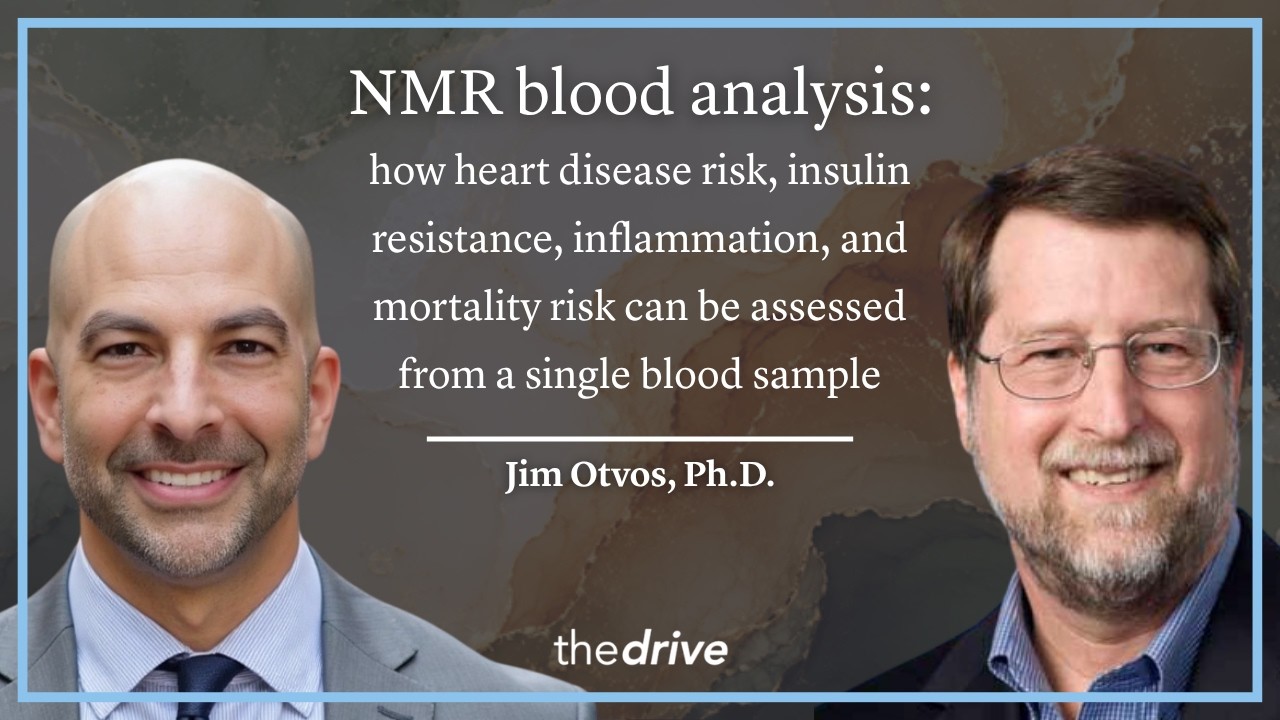
402 ‒ NMR blood analysis: how mortality risk and more can be assessed from a single blood sample
Ask anything from this episode.
Save it, chat with it, and connect it to Claude or ChatGPT. Get cited answers from the actual content — and build your own knowledge base of every podcast and video you care about.
Get Started Free