Key Moments
Insights from Dr. Andrew Huberman, Greg McKeown, Jocko Willink, Brené Brown, and Naval Ravikant
 Tim Ferriss
Key Moments
Compilation of insights on dopamine, essentialism, mindset, and wealth creation from leading thinkers.
Key Insights
Dopamine drives motivation and desire, not happiness, and its baseline drops after peaks of reward.
Essentialism emphasizes the disciplined pursuit of less to achieve focus and clarity.
The 'Good' mindset, by Jocko Willink, reframes challenges as opportunities for learning and growth.
True behavioral change stems from self-acceptance, not self-flagellation, allowing room for both striving and acceptance.
Wealth creation is achieved through ownership of equity and leveraging specific knowledge, not by renting out time.
Focusing on internal rewards from effort, rather than just end goals, cultivates a growth mindset and enhances productivity.
UNDERSTANDING DOPAMINE FOR MOTIVATION AND FOCUS
Dr. Andrew Huberman explains that dopamine is the chemical substrate for motivation, focus, and drive, often referred to as the 'molecule of more.' It controls desire and craving, pushing us towards goals. Contrary to popular belief, dopamine does not directly control happiness; instead, it governs our pursuit of what brings pleasure and sustenance. Understanding the dopamine system involves recognizing its baseline levels and peaks. Peaks occur during reward, but importantly, the baseline drops below its original level afterward, a phenomenon that can be likened to postpartum blues after significant achievements. This explains why even enjoyable activities can lose their edge with overuse.
THE ESSENTIALIST APPROACH: THE DISCIPLINED PURSUIT OF LESS
Greg McKeown introduces essentialism as the antidote to the 'undisciplined pursuit of more.' It's not about doing more, but about doing only the right things. The core principle is to identify the single priority (What's Important Now - WIN) and eliminate the non-essentials. McKeown highlights the paradox of success, where initial clarity leads to success, which then brings more opportunities, ultimately diffusing effort. Embracing trade-offs is crucial; like Southwest Airlines deliberately choosing specific flight routes and services. Creating an 'essential intent'—a clear verb, population, outcome, and date—helps navigate decisions and stops endless 'wordsmithing' in favor of substance.
CULTIVATING A GROWTH MINDSET THROUGH EFFORT-BASED REWARDS
Huberman further elaborates on leveraging the dopamine system by focusing on the rewards derived from the effort itself, rather than solely on the end goal. This contrasts with extrinsic reinforcement, where rewards can diminish intrinsic enjoyment. By consciously associating pleasure with the friction and challenge of hard work—true to the 'growth mindset'—individuals can access dopamine release during the activity. This approach not only makes the process more enjoyable and efficient by increasing energy and focus but also builds resilience, making it easier to engage in similar efforts in the future without relying on external motivators or stimulants.
THE POWER OF 'GOOD': EMBRACING CHALLENGES
Jocko Willink advocates for a simple yet powerful mindset: responding to adversity with the word 'Good.' This isn't about dismissing problems but about recognizing that every challenge presents an opportunity for growth, learning, or a fresh start. Whether it's not getting desired equipment, a mission cancellation, or unexpected setbacks, reframing these situations as 'Good' allows for a mental reset. It signifies that you are still alive and capable of fighting, encouraging you to dust off, recalibrate, re-engage, and attack the problem with renewed determination and a problem-solving focus.
THE INTERPLAY OF SELF-ACCEPTANCE AND EXCELLENCE
Brené Brown explores the line between striving for excellence and self-acceptance, cautioning against complacency. She proposes that true, lasting behavioral change must be driven by self-acceptance, not self-flagellation. Brown distinguishes between complacent self-acceptance, which excuses inaction, and a more profound acceptance of one's current experience—allowing for feelings and circumstances as they are—while still resolving to improve. This approach acknowledges that perfectionism can be paralyzing, and that setting internal standards for well-being, like exercise and diet, is key to defining one's own path to self-acceptance and growth. Narcissism, often mistaken for self-love, is described as shame-based fear of being ordinary.
CREATING WEALTH: OWNERSHIP AND SPECIFIC KNOWLEDGE
Naval Ravikant emphasizes that true wealth is about freedom—the ability to wake up when you want, go sleep when you want, and live where you want. This freedom is achieved not by renting out time, but by owning equity in a business. He highlights the importance of combining specific knowledge (your unique expertise), leverage (like technology or capital), and accountability (taking responsibility for outcomes). Productizing oneself into a business, essentially owning your brand and its associated assets, is a key to wealth creation. Ravikant advises against get-rich-quick schemes, stressing that sustainable wealth comes from applying one's mind to identify opportunities, learn, and unlearn, and being willing to start from scratch.
THE GENIUS OF ROUTINE AND HABIT FORMATION
Greg McKeown also discusses the 'genius of routine,' using Michael Phelps' meticulous pre-race rituals as an example. These routines, both physical and mental (visualization), demonstrate how ingrained habits can make achieving difficult goals feel almost effortless. By establishing consistent practices, individuals can default to effective behaviors, conserving mental energy. McKeown suggests implementing routines one by one, starting small, to build momentum. Mastering routines transforms challenging tasks into automatic actions, providing a sustainable pathway to higher performance and achievement without constant forcing or intense brute effort.
Mentioned in This Episode
●Supplements
●Products
●Software & Apps
●Companies
●Books
●People Referenced
Essentialism: The Disciplined Pursuit of Less
Practical takeaways from this episode
Do This
Avoid This
Common Questions
Dopamine is a molecule that drives motivation, focus, and desire for more. Contrary to popular belief, it does not control happiness but rather the pursuit of goals and rewards.
Topics
Mentioned in this video
Research professor and author of multiple New York Times bestsellers, host of 'Unlocking Us' and 'Dare to Lead' podcasts.
Host of the Tim Ferriss Show, known for deconstructing world-class performers.
A colleague at Stanford known for her theory on growth mindset.
An Olympic swimmer whose rigorous routine and visualization techniques are used as an example of the genius of routine.
Former Navy SEAL and podcast host known for his philosophy of embracing challenges and finding the 'good' in adverse situations.
An investor mentioned as an example of someone who has created wealth.
Professor of neurobiology and ophthalmology at Stanford School of Medicine, and host of the Huberman Lab Podcast.
A former Navy SEAL who serves as an example of someone who turns effort into reward.
A management consultant and author cited for his observation on the word 'priority' being singular for centuries.
Former CEO of Southwest Airlines, credited with its successful strategy.
Michael Phelps's coach, who designed his physical and mental routines.
Co-founder and chairman of AngelList, angel investor, and podcaster known for his insights on wealth and happiness.
An investor and business magnate, mentioned as an example of someone who has created wealth.
Author of 'Effortless' and 'Essentialism', and host of the Greg McKeown Podcast.
A ride-sharing company that Naval Ravikant has invested in.
A platform for B2B marketers to engage with decision-makers and leaders, offering tools for relationship building and lead generation.
A social media platform mentioned as an investment and a platform Naval Ravikant has experience with.
A company in the real estate sector that Naval Ravikant has invested in.
A company offering an all-in-one nutritional supplement, AG1, containing vitamins, minerals, probiotics, and adaptogens.
A company that makes premium, customizable sofas and chairs, shipped directly to your door. Advertised as spill, stain, and scratch resistant.
A food delivery and logistics company that Naval Ravikant has invested in.
A company known for its mattresses, which have expanded to create sofas and chairs.
An airline company used as an example of successful trade-offs and a disciplined pursuit of less.
An airline company that attempted a 'continental light' program, which confused customers and led to financial losses.
A platform for startups and investors, co-founded by Naval Ravikant.
An e-commerce platform that Naval Ravikant has invested in.
A journaling tool that prompts users for gratitude and what made their day great, to encourage self-acceptance.
A productivity and note-taking application that Naval Ravikant has invested in.
Tim Ferriss's free weekly newsletter sharing curated cool things discovered that week.
More from Tim Ferriss
View all 689 summaries 81 min
Q&A with Tim — The Upcoming AI Tsunami and Building Offline Advantage
 91 min
The Random Show, Couch Edition! — Supplements, Breathing and Balance Training, and Much More!
 76 min
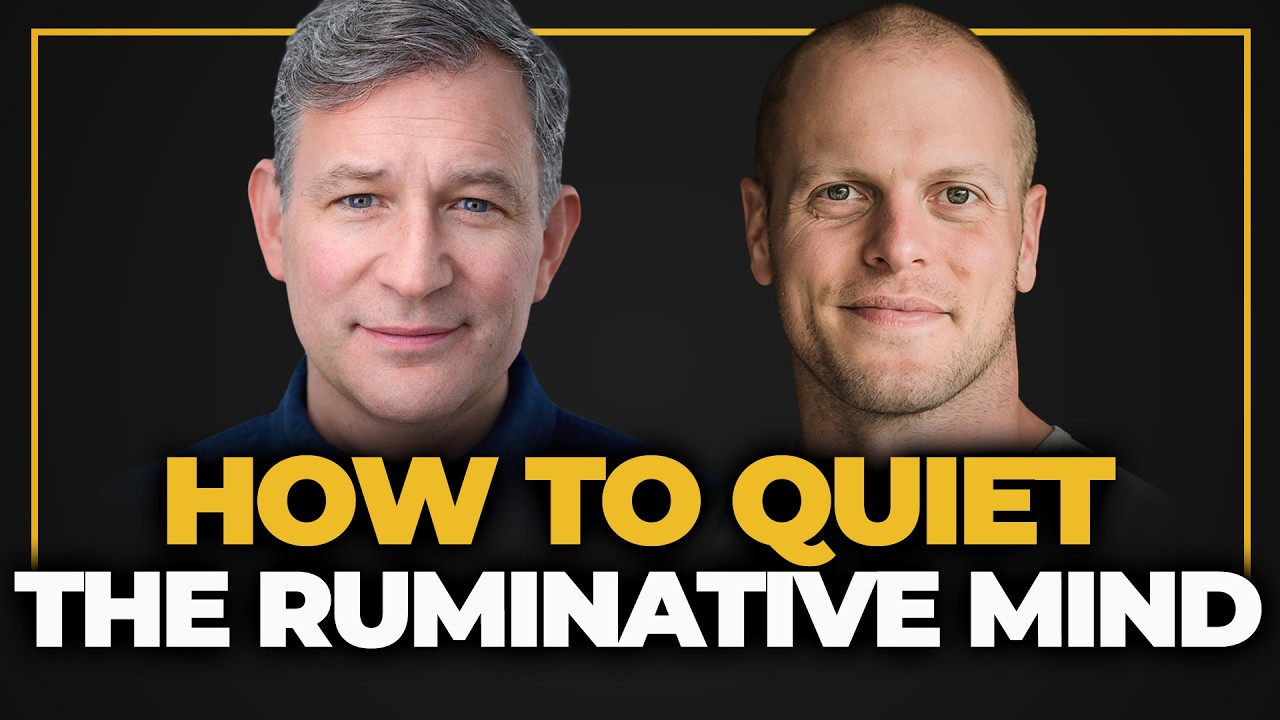
How to Quiet the Ruminative Mind and Avoid The Traps of Self-Help — Tim Ferriss
 86 min
NYT Bestselling Author on Writing 200+ Children's Books — Tish Rabe
Found this useful? Build your knowledge library
Get AI-powered summaries of any YouTube video, podcast, or article in seconds. Save them to your personal pods and access them anytime.
Get Started Free