Key Moments
In conversation with Chris Christie
 All-In Podcast
Key Moments
Chris Christie discusses fiscal responsibility, foreign policy, and immigration.
Key Insights
Christie prioritizes fiscal responsibility, advocating for spending cuts and reforms to Social Security and Medicare.
He asserts Putin is primarily responsible for the Ukraine invasion but acknowledges US inaction as a contributing factor.
Christie supports a merit-based immigration system and a secure border, criticizing both parties for politicizing the issue.
He advocates for serious reform in the military budget through efficiency and zero-based budgeting.
Christie believes in holding public officials accountable, proposing stricter rules for the 'revolving door' phenomenon.
He suggests federal intervention in cities failing to address crime and addiction if the problem affects the entire country.
ADDRESSING THE NATIONAL DEBT AND ENTITLEMENTS
Former Governor Chris Christie identifies the US debt and deficit as primary concerns, drawing from his experience managing New Jersey's fiscal challenges. He emphasizes the need to reduce spending, refuse tax increases, and implement structural budget reforms. Christie is a proponent of tackling entitlement reform, suggesting raising the retirement age for younger generations and means-testing Social Security and Medicare eligibility. He argues that ignoring these issues will lead to a crisis and that leaders must be willing to sacrifice popularity for long-term fiscal health.
FOREIGN POLICY AND THE WAR IN UKRAINE
Christie views Vladimir Putin as principally responsible for the invasion of Ukraine, though he believes US inaction and mixed signals from various administrations played a role in emboldening Russia. Reflecting on past foreign policy decisions, he acknowledges the Iraq War was entered into based on misleading information about WMDs. Regarding Ukraine's NATO aspirations, Christie believes admission is a foregone conclusion and a consequence Putin must face. He criticizes Biden's approach as too hesitant and advocates for more aggressive, timely military aid to Ukraine to ensure their victory against Russian aggression.
MILITARY SPENDING AND DEFENSE BUDGET REFORM
Christie expresses concern over the efficiency and effectiveness of the U.S. defense budget, particularly in light of the nearly $877 billion annual spend. He advocates for rigorous examination of the Pentagon's expenditures, drawing parallels to his successful implementation of zero-based budgeting as governor. While not advocating for immediate cuts, he insists on reallocating funds to critical areas like ammunition, submarine capacity, and air force modernization, rather than waste. This approach aims to ensure the military is both strong and fiscally responsible, demanding accountability from leadership on spending.
IMMIGRATION POLICY AND BORDER SECURITY
Christie critiques both political parties for weaponizing immigration to serve their agendas. He supports a merit-based system, contrasting it with other countries' successful models, and stresses the necessity of a secure border, especially due to the fentanyl crisis. He believes presidential leadership willing to sacrifice popularity is crucial for resolving this polarized issue. Christie contends that current border policies, particularly Biden's rhetoric, have created a crisis, exacerbating issues like crime and the overwhelming of social services in sanctuary cities.
CRIMINAL JUSTICE REFORM AND INCARCERATION RATES
Drawing on his experience as a prosecutor and governor, Christie supports criminal justice reform that balances public safety with fairness. He highlights New Jersey's bipartisan reforms, which included amending bail laws to consider community dangerousness and implementing drug treatment programs within secure facilities. Christie notes that these reforms led to reduced recidivism and prison closures without a spike in violent crime. He criticizes extreme approaches from both sides—mandatory minimums and complete decriminalization—advocating for a measured, evidence-based strategy.
GOVERNMENT INTEGRITY AND THE REVOLVING DOOR
Christie addresses concerns about corruption and influence peddling within government, particularly the 'revolving door' between public service and private industry, especially in the defense sector. He advocates for stricter measures, such as longer bans on officials working for contractors they previously oversaw, to prevent financial motivations from compromising government decisions. Christie emphasizes the importance of selecting competent officials and implementing transparent budgeting processes like zero-based budgeting to combat waste and ensure accountability across all government agencies.
FEDERALISM AND THE ROLE OF THE FEDERAL GOVERNMENT
Christie asserts that while states and local entities should primarily manage their affairs, federal intervention becomes necessary when systemic failures at the state or local level begin to impact the entire nation. He points to escalating crime and addiction crises in cities like San Francisco and Los Angeles as examples where federal resources may be required if local authorities are unwilling or unable to address the problems effectively. His proposed solution involves federal prosecutors taking over cases if local ones fail to act, emphasizing this is a last resort measure.
ASSESSMENT OF DONALD TRUMP AND POLITICAL PROSECUTIONS
Christie offers a critical perspective on Donald Trump, believing he would have been willing to overturn an election if given the chance, and that the presidency has corrupted him. He questions the timing and nature of some prosecutions against Trump, suggesting concerns about political motivation, especially regarding state-level indictments. However, he firmly believes Trump should not be imprisoned due to his age, advocating instead for consideration of sentence commutation if convicted. Christie also discusses the 'RussiaGate' investigation, viewing it as a baseless distraction that likely contributed to Trump's behavior.
Mentioned in This Episode
●Companies
●Organizations
●Books
●Drugs & Medications
●Concepts
●People Referenced
Chris Christie's Governance and Policy Principles
Practical takeaways from this episode
Do This
Avoid This
Common Questions
Chris Christie believes it's imperative to reduce spending, especially by evaluating programs ramped up during COVID-19 to bring them back to pre-pandemic levels. He also suggests looking at education funding and increasing efficiency at the Pentagon, while avoiding cuts to core military spending at this time.
Topics
Mentioned in this video
Mentioned in the context of increasing the national debt and being 'completely uninterested' in Putin's moves on Ukraine.
Discussed in relation to increasing the national debt, his stance on Social Security, Ukraine policy, and family business dealings.
North Korean leader, mentioned in the context of Putin meeting with him to discuss geopolitical alliances.
Special Counsel investigating Trump, whose indictments are discussed. Christie views the January 6th case as 'aggressive' due to the challenge of proving Trump's state of mind.
Former general, cited for optimistic predictions about the Ukrainian counter-offensive and later mentioned in connection to classified documents.
Discussed in relation to increasing the national debt, his foreign policy, legal issues, and overall character. Also mentions his past relationship with Christie.
National Security Advisor, mentioned in the context of Victoria Nuland seeking approval for the new Ukrainian government.
Mayor of New York City, complaining about the strain from migrants and his inability to find a solution.
Mentioned as the Democratic nominee in 2016, whom Christie viewed Trump as a 'better choice' than.
Ukrainian President, mentioned regarding Trump's alleged attempt to extort him for military aid and his clear stance on not needing American troops.
Former First Lady, whose stylist was reportedly paid a large sum from a Trump-related organization, questioned as political strategy.
Former Ukrainian prosecutor investigating Burisma, who Joe Biden admitted to getting fired, leading to questions about the protection of Hunter Biden.
Mentioned as a presidential candidate who was also on the podcast and whose foreign policy is later criticized as 'ill-informed and naive.'
Former US Secretary of State, brought up as a contrast to Jared Kushner, highlighting his extensive foreign policy experience.
The current presidential candidate being interviewed, discussed throughout the podcast regarding his policies, political history, and campaign.
Former President of Iraq, mentioned in the context of the Iraq War and the WMD issue.
Former Deputy Secretary of State, mentioned in relation to a leaked phone call discussing the formation of a new Ukrainian government.
Former Trump campaign official, mentioned for reportedly receiving a large payment for a short speech on January 6th from a Trump-related organization.
Mentioned as a past presidential candidate Christie would have competed against if he had run in 2012.
Joe Biden's son, whose appointment to the board of Burisma and business dealings are discussed as a source of corruption for political influence.
Former US President, mentioned for his early interactions with Putin and for allowing some US inaction that contributed to signals to Putin.
NATO Secretary General, mentioned for his statement at the Vilnius Summit regarding Ukraine's future in NATO.
Former general, also cited for optimistic predictions regarding the Ukrainian counter-offensive.
Former US President, cited for his leadership on immigration and Social Security, making deals despite not loving them.
Florida Governor and presidential candidate, his proposal for a 'full-scale invasion of Mexico' to combat cartels is criticized.
Mentioned as a candidate who would seek to de-escalate the Ukraine war.
Former democratically elected Ukrainian president, whose government was violently overthrown.
Manhattan District Attorney, his prosecution of Trump for a 'seven-year-old payment to a porn star' is deemed 'useless and purely political.'
Former Supreme Court Justice, whose agreement with Clarence Thomas on a Department of Justice overreach is highlighted regarding the Bridgegate case.
US Attorney General, discussed regarding his initial analysis on Trump's incitement on January 6th and subsequent appointment of Jack Smith.
US Attorney and Special Counsel who investigated Hunter Biden; his actions are discussed in relation to potential indictments for gun charges and foreign lobbying.
Senate Minority Leader, grouped with other 'neocon Republican' establishment figures who advocate for more hawkish Ukraine policy.
Russian President, held responsible for the invasion of Ukraine and discussed as someone aiming to reassemble the Soviet Union.
Former US Attorney General under Obama, criticized for politicizing the Department of Justice by being a 'wingman' AG.
District Attorney of Fulton County, Georgia; her indictment of Trump is criticized as unnecessary because Jack Smith already brought federal charges for similar acts.
Supreme Court Justice, whose agreement with Ruth Bader Ginsburg on a Department of Justice overreach is highlighted regarding the Bridgegate case.
Presidential candidate, mentioned in polling data for New Hampshire, and later discussed as a moderate Republican candidate who could potentially appeal to a different voter base.
Billionaire investor and philanthropist, accused of funding liberal prosecutors to intentionally cause failure in cities.
FBI Director, whom Christie nominated for the position and with whom he would communicate policy changes on monitoring social media.
Financier who perpetrated a massive Ponzi scheme; his case is cited as an example where a death sentence in federal prison might be appropriate, unlike for Trump.
Trump's son-in-law, criticized for receiving $2 billion from the Saudis after leaving office despite a mixed business record, suggesting 'grift'.
The US Department of Defense, discussed in terms of needing increased efficiency and effectiveness in its spending rather than budget cuts.
Civil rights organization, noted for giving Christie's criminal justice reform in New Jersey an 'A plus'.
An American think tank, mentioned as the audience for Joe Biden's acknowledgment of getting Shokin fired.
The North Atlantic Treaty Organization, discussed in the context of Ukraine's potential admission and the implications of its expansion.
US federal agency for drug law enforcement, whose efforts are indirectly discussed regarding the fentanyl crisis.
US intelligence agency, mentioned in the analogy of separating its functions from the FBI to prevent problems like those leading to 9/11.
A news publication, also cited for its reporting on staggering Ukrainian losses.
US federal law enforcement agency, discussed regarding its monitoring of social media, potential overreach, and appropriate roles.
Neo-fascist organization, members of which received multi-decade sentences for seditious conspiracy related to January 6th.
Far-right anti-government militia group, members of which received multi-decade sentences for seditious conspiracy related to January 6th.
Mentioned as a potential future military concern, similar to Ukraine.
Its criminal justice reform is criticized for leading to a spike in violent crime, contrasting with New Jersey's success.
Central to a discussion on foreign policy, military aid, and its potential admission into NATO.
A key early primary state where Chris Christie is polling in second place, crucial to his presidential campaign strategy.
Geographic area mentioned in predictions of the Ukrainian counter-offensive where they would cut off the land bridge to Crimea.
Discussed as an authoritarian power whose expansionism is a concern and who supplies precursor chemicals to Mexico for fentanyl.
Mentioned in the context of Ukraine's counter-offensive, specifically the land bridge to Crimea.
Used as an example of a sanctuary city facing crisis due to immigration, and its decline in safety described.
Chris Christie's former state governorship, used as an example for fiscal management and criminal justice reform strategies.
Unidentified Flying Objects, mentioned as a trivial topic that debate moderators prioritized over serious issues.
Cities that limit cooperation with federal immigration authorities, criticized for contributing to the border crisis and local strain.
Another major weapons manufacturer, also mentioned in the context of the revolving door between the Pentagon and defense contractors.
A Ukrainian natural gas company where Hunter Biden was appointed to the board, raising questions of Joe Biden's influence.
A major weapons manufacturer, mentioned in the context of the revolving door between Pentagon officials and defense contractors.
More from All-In Podcast
View all 398 summaries 81 min
SpaceX IPO, Iran War Fallout, Quantum Bitcoin Hack, The Space Opportunity
 81 min
Anthropic's Generational Run, OpenAI Panics, AI Moats, Meta Loses Major Lawsuits
 38 min
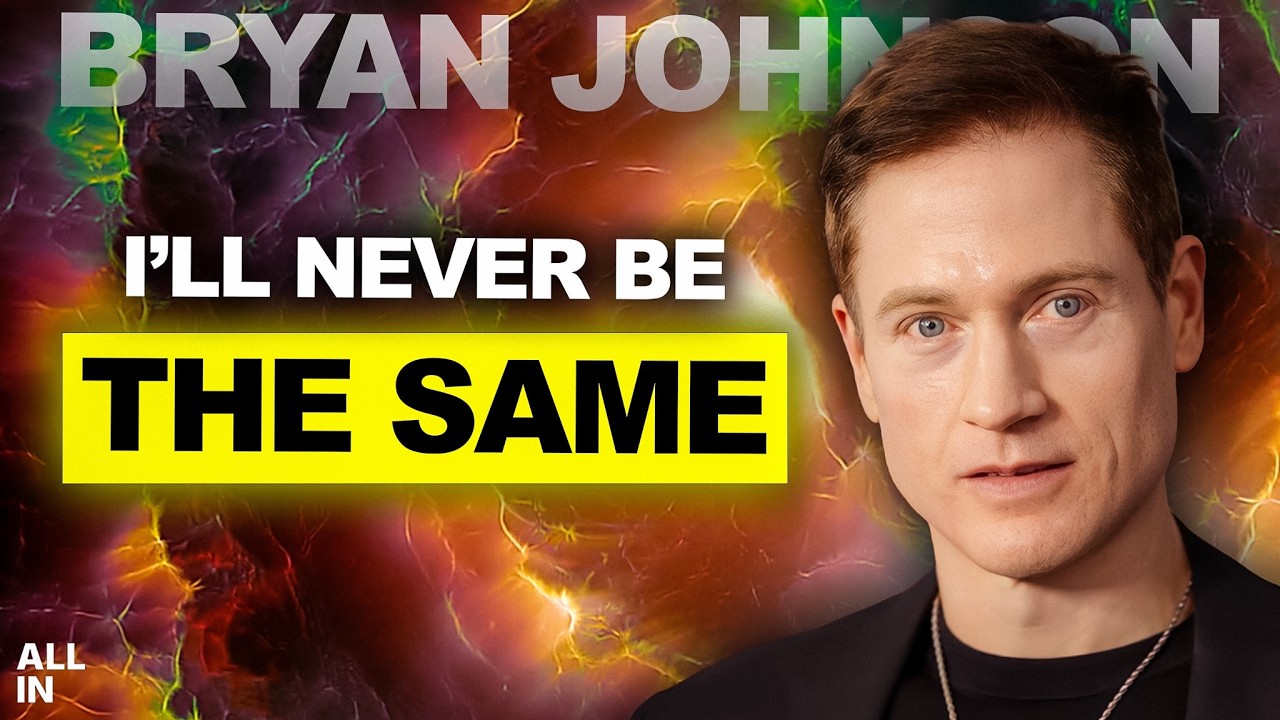
Bryan Johnson: I Just Took the Most Powerful Dose of DMT in the World... Here's What It Was Like
 78 min
How Matt Mahan Thinks He Can Save California
Found this useful? Build your knowledge library
Get AI-powered summaries of any YouTube video, podcast, or article in seconds. Save them to your personal pods and access them anytime.
Get Started Free