Key Moments
Dr. Ayana Elizabeth Johnson on How to Catalyze Change with Awe and Wonder | The Tim Ferriss Show
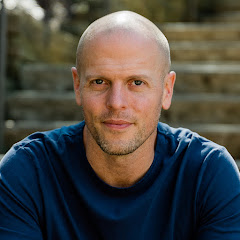 Tim Ferriss
Key Moments
Dr. Ayana Elizabeth Johnson discusses catalysis of climate action through awe, wonder, and solutions, not fear.
Key Insights
Climate action can be effectively catalyzed by focusing on solutions, awe, and wonder, rather than fear or anxiety.
Individuals can find their unique role in climate solutions by identifying their skills, passions, and what brings them joy.
Systemic change, rather than solely individual behavior modification, is crucial for addressing climate change.
The language and framing of climate issues significantly impact public engagement and motivation.
Protecting democratic processes, including voting rights and campaign finance reform, is essential for effective climate policy.
Experiencing nature directly, whether through diving or observing ecological changes, can foster a deeper connection and urgency for conservation.
THE POWER OF AWE AND WONDER IN CLIMATE ACTION
Dr. Ayana Elizabeth Johnson advocates for a shift in communicating climate change, moving away from fear-based messaging towards one that inspires awe and wonder. She argues that while natural disasters and ecological loss can be stark wake-up calls, they are not as motivating long-term as focusing on positive solutions. Her own journey into marine biology began with experiencing the wonder of coral reefs and sea urchins, illustrating the profound impact of direct, positive engagement with nature. This perspective suggests that by highlighting the beauty and interconnectedness of ecosystems, and the potential for positive futures, we can foster a more sustainable and hopeful approach to addressing the climate crisis.
FINDING YOUR UNIQUE CONTRIBUTION TO CLIMATE SOLUTIONS
Johnson emphasizes the importance of individuals finding their specific role in climate action through a 'Venn diagram' approach: identifying what they are good at, what part of the climate transformation they want to work on, and what brings them joy. This framework encourages a personalized, energized approach to contribution, moving beyond a one-size-fits-all model of volunteering or activism. By leveraging existing skills and passions within their spheres of influence—whether through their company, community, or personal networks—individuals can create more impactful change. The goal is not to do everything, but to do what you do best in service of the larger transformation.
SYSTEMIC CHANGE AND THE ROLE OF POLICY
While individual actions are acknowledged, Johnson stresses the critical need for systemic change, particularly through robust policy. She points out that many crucial decisions, like energy sources or waste management in one's living space, are beyond individual control. This underscores the necessity of government intervention and large-scale policy shifts to facilitate cleaner energy transitions, sustainable practices, and resilient infrastructure. Her work on the 'Blue New Deal' and advocacy for federal climate policy highlight the belief that policy changes are essential for creating the infrastructure and incentives needed for widespread environmental progress.
THE STRATEGIC IMPORTANCE OF LANGUAGE AND FRAMING
The conversation delves into how language shapes perception and action regarding climate change. Johnson notes the power of reframing issues, such as using 'green transition' or 'transformation' instead of potentially polarizing terms. She also highlights the brilliant, albeit manipulative, tactic of shifting responsibility for environmental impact to individuals (e.g., 'carbon footprint'). Her co-created podcast, 'How to Save a Planet,' intentionally uses humor to make complex and sometimes grim topics more accessible and engaging, recognizing that laughter can open minds and foster community, making climate media more palatable and effective.
PROTECTING DEMOCRACY FOR CLIMATE ACTION
A significant portion of the discussion focuses on the vital link between a healthy democracy and effective climate policy. Johnson argues that the majority of Americans are concerned about climate change, but structural issues like gerrymandering, voter suppression, and corporate influence in elections hinder progress. She champions initiatives like protecting voting rights and campaign finance reform, emphasizing that empowering citizens to elect representatives who prioritize climate action is fundamental. Organizations like the Environmental Voter Project are highlighted for their work in mobilizing environmentally conscious voters, demonstrating that safeguarding the electoral process is a critical step in achieving climate goals.
MINIMUM EFFECTIVE DOSE AND POSITIVE REINFORCEMENT
Johnson advocates for finding the 'minimum effective dose' of action, suggesting small, accessible steps that don't require drastic sacrifices to foster engagement. She uses the example of avoiding shrimp, explaining the significant environmental and ethical issues associated with its production and sourcing. This approach aims to initiate a thought process about consumption and its impacts, serving as a 'gateway drug' to broader environmental awareness. The emphasis is on positive reinforcement and engaging in actions that bring joy, rather than solely focusing on sacrifice, to encourage sustained participation in climate solutions.
Mentioned in This Episode
●Supplements
●Software & Apps
●Companies
●Organizations
●Books
●Drugs & Medications
●People Referenced
Common Questions
Dr. Ayana Elizabeth Johnson is a marine biologist, policy expert, and writer. She co-founded Urban Ocean Lab and co-created the 'How to Save a Planet' podcast. Currently, she is writing a new book tentatively titled 'What if We Get It Right?' and taking a step back from public engagements to focus on this project and gather her energy as an introvert.
Topics
Mentioned in this video
A publication where Dr. Johnson publishes widely.
A publication where Dr. Johnson publishes widely.
A publication where Dr. Johnson publishes widely.
An academic institution where Dr. Johnson taught as an adjunct professor.
An organization that identifies and mobilizes already registered environmentalists who don't vote, aiming to increase their participation in elections.
A think tank for coastal cities, co-founded by Dr. Ayana Elizabeth Johnson.
An organization founded based on the climate anthology 'All We Can Save'.
An organization where Dr. Johnson previously served as Executive Director.
A governmental agency where Dr. Johnson previously developed policy.
A governmental agency where Dr. Johnson previously developed policy.
An academic institution where Dr. Johnson earned her BA in environmental science and public policy.
A publication where Dr. Johnson's op-ed, 'Why our secret weapon against the climate crisis could be humor', was published.
An academic institution where Dr. Johnson earned her PhD in marine biology.
An organization mentioned as an example of entities with significant power to influence elections through funding, which hinders climate policy.
A proposed government initiative to put Americans to work restoring and protecting ecosystems and building the physical transition to a green economy.
An organization that focuses on supporting local political candidates with strong climate platforms.
An organization founded by Bren Smith that trains people to become ocean farmers, supported by Dr. Ayana Elizabeth Johnson.
An organization providing a fellowship to Dr. Johnson to collaborate with artists to visualize themes for her upcoming book.
A supplement many people are deficient in, produced from sun exposure, and important for immune support, gut health, and energy.
An all-in-one nutritional insurance with 75 vitamins, minerals, whole-food-sourced ingredients, probiotics, prebiotics, digestive enzymes, and adaptogens, recommended by Tim Ferriss as his go-to supplement.
A philosophy, likely referring to the book 'Essentialism: The Disciplined Pursuit of Less' by Greg McKeown, which Dr. Johnson is trying to adhere to for focus.
The new version of the book 'Drawdown', available online for free, praised for its clear graphic design.
A book by Tim Ferriss, where he first publicly recommended Athletic Greens AG1.
A best-selling climate anthology co-edited by Dr. Ayana Elizabeth Johnson, featuring essays by women leading on climate work, aiming to show diverse ways to participate in climate solutions.
A roadmap co-authored by Dr. Ayana Elizabeth Johnson for including the ocean in climate policy.
A book mentioned by Tim Ferriss that ranks climate solutions, which he read to find areas where his strengths and enthusiasm could overlap with high-impact interventions.
A textbook that Tim Ferriss read extensively during his elementary school years, fueling his early interest in marine biology.
Dr. Johnson's cousin who co-founded an improv comedy group, serving as an idol for her storytelling.
A friend of Tim Ferriss from whom he first learned about Pique Tea crystals.
A friend of Tim Ferriss from whom he first learned about Pique Tea crystals.
A marine biologist, policy expert, writer, Brooklyn native, co-founder of Urban Ocean Lab, and co-creator of the podcast 'How to Save a Planet'. She co-edited 'All We Can Save' and co-authored 'The Blue New Deal'.
Director of the film 'Don't Look Up', a comedy writer known for 'Vice' and 'Saturday Night Live'.
Actor starring in the film 'Don't Look Up'.
Actress starring in the film 'Don't Look Up', playing the president.
Actress starring in the film 'Don't Look Up'.
Co-editor of the book 'All We Can Save' with Dr. Ayana Elizabeth Johnson.
A friend of Tim Ferriss who stopped giving speaking engagements because repeating the same material led to calcification and inflexibility in his thinking.
Co-creator of the 'How to Save a Planet' podcast. Tim Ferriss appreciates his work and mentions a previous interview with him.
Dr. Johnson's cousin who is a professional poet, actor, and writer, and co-founded an improv comedy group, serving as an idol for her storytelling.
An investor and entrepreneur who got Tim Ferriss interested in market-driven climate technologies.
The inspiration for Quint, the shark hunter in 'Jaws', whom Tim Ferriss met as a child. He held the record for the largest great white shark caught on rod and reel.
A fisherman turned ocean farmer, founder of GreenWave, whose story about kelp farming was highlighted as a riveting example of climate solutions and entrepreneurship.
Actor starring in the film 'Don't Look Up'.
Interviewed by Tim Ferriss, he exemplifies how a few dozen or hundred calls can influence lawmakers, as he confirms politicians pay attention to constituent feedback.
A satire film directed by Adam McKay, starring Leonardo DiCaprio and Jennifer Lawrence, described as a parable about ignoring an impending comet (metaphor for climate change). Praised for using humor to spark conversation on climate.
A Spotify/Gimlet podcast on climate solutions, co-created by Dr. Ayana Elizabeth Johnson, which Tim Ferriss began listening to and became 'hooked' on.
A film whose character Quint was inspired by Frank Mundus, a shark hunter Tim Ferriss met.
A list recognizing emerging leaders, on which Dr. Johnson was named in 2021.
A magazine that named Dr. Johnson as one of 27 women leading the charge to protect our environment.
A magazine that called Dr. Johnson 'the climate leader we need'.
A dystopian film recommended by Tim Ferriss as a preview of potential consequences of microplastics and declining fertility.
A company offering fermented Pu'er tea crystals, which the host consumes daily for gut health, polyphenols, and probiotics. Their products are triple-toxin screened for heavy metals, pesticides, and toxic mold.
An art and architecture school where Dr. Johnson's father was a student.
An e-commerce platform that Helium 10 helps entrepreneurs manage businesses on. Also mentioned regarding activists within the company and its carbon footprint.
A carbon removal company mentioned by Tim Ferriss as a promising intervention in ocean-based solutions.
A podcast platform where 'How to Save a Planet' is hosted, and where Tim Ferriss discovered the podcast.
An e-commerce platform that Helium 10 helps entrepreneurs manage businesses on.
An investment company where Dr. Johnson's friend, Boris, an executive, launched a sustainable investing fund after being inspired to take action on climate.
An investment firm mentioned by Tim Ferriss as an example of companies offering 'climate-friendly' investment options, using the term 'green transition'.
An outdoor clothing company that created the 'Action Works' website for skill-based volunteering in environmental causes.
An electric vehicle company mentioned as an example of early-stage R&D funded by the government.
A company that popularized and leveraged the term 'carbon footprint' to shift responsibility to individuals, a 'brilliant' but problematic linguistic jiu-jitsu.
A carbon removal company mentioned by Tim Ferriss as a promising intervention.
A Supreme Court case that allowed corporations to fund elections, significantly weakening democracy and negatively impacting climate policy by enabling fossil fuel company influence.
A bill that passed with some climate measures, part of federal climate policy efforts.
A legislative plan with significant measures for energy transition and supporting electric cars, part of federal climate policy efforts.
The location where Dr. Johnson studied abroad, focusing on the ecology, economics, and policy of fisheries management.
The location of one of Dr. Johnson's childhood family vacations where she first saw a coral reef and developed her passion for marine biology.
Where Dr. Johnson's father was born and grew up in Kingston before moving to New York.
A town near the Hamptons where Tim Ferriss grew up and developed an early interest in marine biology.
Where Dr. Johnson's father moved from Jamaica and started potentially the first Black-owned architecture firm. Also, Dr. Johnson's hometown, a coastal city.
A famous park in NYC where Dr. Johnson's parents would meet while dating.
More from Tim Ferriss
View all 690 summaries 184 min
Daredevil Michelle Khare — How to Become a YouTube Superstar
 81 min
Q&A with Tim — The Upcoming AI Tsunami and Building Offline Advantage
 91 min
The Random Show, Couch Edition! — Supplements, Breathing and Balance Training, and Much More!
 76 min
How to Quiet the Ruminative Mind and Avoid The Traps of Self-Help — Tim Ferriss
Found this useful? Build your knowledge library
Get AI-powered summaries of any YouTube video, podcast, or article in seconds. Save them to your personal pods and access them anytime.
Get Started Free