Key Moments
An Ethnopharmacologist on Hallucinogens, Sex-Crazed Cicadas, and More | Dennis McKenna
 Tim Ferriss
Key Moments
Ethnopharmacologist Dennis McKenna on psychedelics, plant knowledge, consciousness, and the future of research.
Key Insights
Psychedelic experiences are a complex interplay of pharmacology, set, setting, and individual biochemistry.
Indigenous knowledge systems represent a vast, scientifically valuable repository of information on psychoactive substances and medicinal plants.
The human brain's receptors for psychoactive compounds likely evolved to interact with naturally occurring endogenous ligands.
Nature employs psychoactive compounds for complex ecological interactions, as seen in the 'sex-crazed cicada' example.
Psychedelics can temporarily alter perception and consciousness, potentially aiding in therapeutic outcomes by enabling a shift in reference frames.
Sustainable use of psychoactive plants requires responsible practices, community consensus, and exploration of alternatives like cultivation or synthetics.
THE SYNERGY OF "VEGETABLE TELEVISION"
Dennis McKenna and his brother Terence discovered an intriguing effect by smoking banisteriopsis caapi bark while on psilocybin mushrooms. This combination, dubbed "vegetable television," produced a pleasant, controllable efflorescence of visions that could be repeated by taking additional hits. This empirical discovery highlights the accidental yet potent synergies that can arise from experimenting with plant compounds, a practice deeply embedded in traditional ethnopharmacology.
AYAHUASCA'S COMPLEX PHARMACOPEIA
Contrary to popular belief, ayahuasca is not a simple two-plant mixture but part of an extensive pharmacopeia where numerous admixture plants are used. These plants may be psychedelic on their own or alter the ayahuasca experience. Indigenous practitioners act as scientists, empirically discovering these combinations, though not all experiments are successful. McKenna emphasizes that much about ayahuasca botany, chemistry, and pharmacology remains unexplored, with numerous research opportunities yet to be pursued.
THE MYSTERIES OF NULL EXPERIENCES AND BIOCHEMICAL INDIVIDUALITY
McKenna and Tim Ferriss discuss the perplexing phenomenon of having zero effect from psychedelics, even at high doses. This suggests that experience is a dynamic interplay of pharmacology, pharmacogenetics, state (set and setting), and biochemical individuality. Factors like receptor density or enzyme activity can influence responsiveness, though studying these effects is challenging due to the anecdotal nature of most observations.
NATURE'S CHEMICAL SIGNALING AND EVOLUTIONARY ORIGINS
The existence of cannabinoid and other receptors in the human brain is explained by their interaction with endogenous ligands, naturally produced compounds with similar structures. This principle extends to neurotransmitters like DMT, which is found endogenously and shares evolutionary origins with plant and fungal signaling molecules. Plants and fungi use these compounds for signal transduction, modulating their interactions with the environment and other organisms, a process that predates complex animal nervous systems.
PSYCHEDELICS, LANGUAGE, AND THE CONSTRUCTION OF REALITY
Psychedelics, particularly mushrooms, are linked to language and meaning-making. The concept of "mushrooms of language" suggests that these substances facilitate a more fluid expression of poetry and thought. Synesthesia, a common psychedelic effect, can involve associating sounds with visual forms or vice versa. McKenna posits that consciousness and our constructed reality are deeply intertwined with language and that psychedelics can temporarily disable the brain's filtering mechanisms (like the default mode network), allowing for new perspectives and insights by opening the 'reducing valve.'
ESPD55: A FORUM FOR ETHNOPHARMACOLOGICAL EXPLORATION
The Ethno-Pharmacologic Search for Psychoactive Drugs (ESPD) conferences aim to revisit the groundbreaking 1967 event. ESPD55, a follow-up to ESPD50, explores obscure and cutting-edge topics in ethnopharmacology, including psychedelics in marine sponges, the ethnobotany of Chinese medicine, psychoactive fauna, and the destigmatization of coca. These events foster interdisciplinary dialogue and highlight the ongoing quest for knowledge in the field.
NATURE'S STRATEGIES: CYCLING CICADAS AND FUNGAL MANIPULATION
McKenna shares the fascinating example of the fungus Masospora, which infects cicadas, creating "sex-crazed zombies" to spread its spores. This illustrates nature's complex strategies for propagation, where organisms manipulate others using chemical compounds. Similarly, Cordyceps fungi control insect behavior for spore dispersal. This phenomenon suggests that psilocybin's effect on humans might be a form of symbiosis, where humans inadvertently serve the fungi's reproductive agenda by cultivating and spreading it.
SUSTAINABILITY AND THE FUTURE OF PSYCHOACTIVE PLANT USE
The increasing global interest in psychedelics raises concerns about over-harvesting endangered species like peyote and iboga. McKenna advocates for responsible practices, community consensus, and exploring alternatives such as cultivation or synthetic compounds (e.g., pharmahuasca), clarifying they are distinct from the traditional plant medicines. He also supports bringing the medicine to the people by developing legal export and use centers, benefiting indigenous communities and reducing cultural disruption.
THE CHALLENGES AND DYNAMICS OF THE PSYCHEDELIC COMMUNITY
Despite the potential for profound personal transformation, the psychedelic community often suffers from infighting and opportunism, mirroring dynamics seen in other utopian or egalitarian movements. McKenna likens this to "monkeys squabbling," driven by basic desires for power, resources, and social status, rather than automatic enlightenment. He stresses that psychedelics can offer insights into one's own shortcomings but do not inherently cure negative traits like sociopathy.
CO-EVOLUTIONARY PARTNERS: PSYCHEDELICS AND HUMANITY
McKenna views psychedelics as co-evolutionary partners that have nudged human development for millennia, helping us navigate the space between apes and angels. While acknowledging the challenges and potential for misuse, he believes these substances, if approached with respect and sincerity, can facilitate moral and ethical growth. The long-term perspective is crucial, as these biological processes unfold over vast stretches of time, offering enduring lessons for humanity's survival and evolution.
THE BIOGNOSIS PROJECT: PRESERVING KNOWLEDGE AND HABITAT
The Biognosis project aims to preserve Amazonian traditional medicine knowledge through documentaries and digitize the herbarium in Iquitos, Peru. This ambitious initiative includes creating high-resolution scans of plant specimens, forming an accessible online database, and developing a virtual reality 'Visionary Rainforest.' The goal is to make this invaluable resource available globally, slow the degradation of the Amazon, and foster appreciation for plant biodiversity and indigenous wisdom.
CHOOSING LIFE'S ALLIES: MUSHROOMS AND CANNABIS
When asked to choose two psychoactive allies for life, McKenna selects mushrooms for their profound effects and cannabis for its stress reduction, aid in sleep, and insightfulness. He views cannabis as a benevolent, feminine medicine. Despite potential heart concerns, he finds it beneficial for writing and general well-being. He also notes the increasing potency and potential psychedelic effects of modern cannabis strains.
Mentioned in This Episode
●Supplements
●Products
●Software & Apps
●Companies
●Organizations
●Books
●Drugs & Medications
●Concepts
●People Referenced
Common Questions
'Vegetable television' is a term coined by Dennis McKenna and his brother to describe the efflorescence of closed-eye visions experienced when smoking Banisteriopsis caapi bark shavings in combination with psilocybin mushrooms. This combination allowed for a controlled, gentle rise and fall of visions, offering a unique and pleasant psychedelic experience.
Topics
Mentioned in this video
Where Dennis McKenna conducted his doctoral research focusing on ayahuasca and ukuhe.
A Brazilian religious group that uses ayahuasca as part of their practices.
A non-profit incorporated by Dennis McKenna in 2019, currently working on several projects including an upcoming conference.
An organization facing critical issues with peyote supply due to poaching and constrained distribution, advocating for its protection.
Potential platform for the Biognosis project's documentary series on Amazonian traditional medicine.
An organization that Dennis McKenna is a founding board member of, which has funded significant science in psychedelics.
An organization founded by Edgar Mitchell, focused on consciousness research and paranormal phenomena.
Sponsored the original 'Ethnopharmacologic Search for Psychoactive Drugs' (ESPD) conference in 1967.
Where Dennis McKenna taught courses on ethnopharmacology and plants and human affairs from 2000 to 2017.
Two representatives from ICERS are speaking at ESPD55 about the unintended consequences of ayahuasca tourism.
A mutual friend of Tim Ferriss and Dennis McKenna, an ethnobotanist who has studied Amazonian poisons extensively.
Astronaut on Apollo 14, known for hitting golf balls on the moon.
Speaker at ESPD55, will discuss his work on cultural keystone species.
Guest on the Tim Ferriss Show, an ethnopharmacologist with over 40 years of research in Amazonian plant hallucinogens, co-founder of the Hefter Research Institute, and brother of Terence McKenna.
A noted ethnobotanist and author, a long-time advocate for coca as a medicine and food, participating in the ESPD55 conference.
A well-known mycologist and advocate for mushrooms, mentioned as a speaker at ESPD55.
Philosopher who wrote about the 'reducing valve' metaphor for how the brain filters reality.
Author of the graphic novel 'Bicycle Day' about Albert Hofmann's discovery of LSD.
Host of The Tim Ferriss Show podcast.
Pioneer in research on psilocybin and mystical experiences, known for using the term 'personally meaningful experiences' to avoid alarming people.
Dennis McKenna's younger brother, a well-known ethnobotanist, philosopher, and psychonaut.
Author of 'The Mushrooms of Language,' an essay discussing how language becomes more fluid in a mushroom state.
Editor of the book 'Hallucinogens and Culture,' which contains Henry Munn's essay.
Figure in the documentary 'Brain Man' who claims to experience synesthesia.
The first person to synthesize LSD-25, who had numerous spontaneous mystical experiences in nature before his discovery.
Author of 'The Mind of a Mnemonist,' a case study on vast memory and synesthesia.
Astronaut on Apollo 14 who had a famous 'savi kalpa samadhi' or mystical experience in space, later founding the Institute of Noetic Sciences.
A psychoactive substance; some individuals are insensitive to DMT but sensitive to 5-MeO-DMT, highlighting biochemical individuality.
A psychedelic discussed for its potential as a treatment for dyslexia and its relationship to language and consciousness; first synthesized by Albert Hofmann.
A stimulant compound found in the plant khat, also produced by the Masospora fungus.
A synthetic alternative to ayahuasca, which McKenna states is fine but not the same as natural ayahuasca, due to the complete experience starting with taste and purging.
The psychoactive compound found in 'magic mushrooms,' used for end-of-life therapy, and known to produce mystical experiences. Also found in species like Masospora that infect cicadas.
Compounds that inhibit monoamine oxidase, found in Banisteriopsis caapi, important for ayahuasca's psychoactive effects.
The psychoactive compound found in peyote and San Pedro cactus.
A powerful psychoactive substance, can be smoked for intense experiences, and is an endogenous ligand found in the human brain. Vaping with Banisteriopsis tincture allows for more controlled experiences.
A harmful drug explicitly differentiated from the beneficial plant coca.
Endogenous cannabinoid peptides found in the brain that bind to cannabinoid receptors.
A compound found in pepper that can increase the bioavailability of certain substances, relevant to Amazonian poison admixtures.
An amino acid that is a precursor to DMT, found in many plants, animals, and fungi.
Location of the university herbarium in the Amazon that the Biognosis project aims to digitize, containing over 100,000 specimens.
The country where Zoroastrians had chemically induced otherworldly experiences, a topic at ESPD55.
The region where the Biognosis project aims to document and preserve traditional medicine and plant knowledge.
A practice in many Amazonian tribes involving ingesting or applying plants, often alongside ayahuasca, to understand and integrate them as allies.
An ancient Iranian religion; its chemically induced otherworldly experiences are a unique topic at ESPD55.
A traditional medical system whose history of psychoactive plants and fungi is a topic at ESPD55.
A long-term project co-founded by Dennis McKenna focused on slowing the degradation and depletion of natural habitats, recovering indigenous knowledge, and digitizing an Amazonian herbarium.
Dennis McKenna's book chronicling his life experiences, adventures, and misadventures with his brother Terence McKenna.
A book published around 1970 that includes Henry Munn's essay 'The Mushrooms of Language.'
A case study by A.R. Luria about a person who regularly experiences synesthesia and has a vast memory.
A graphic novel by Brian Blomerth about Albert Hofmann's discovery of LSD, for which Dennis McKenna wrote the foreword.
More from Tim Ferriss
View all 689 summaries 81 min
Q&A with Tim — The Upcoming AI Tsunami and Building Offline Advantage
 91 min
The Random Show, Couch Edition! — Supplements, Breathing and Balance Training, and Much More!
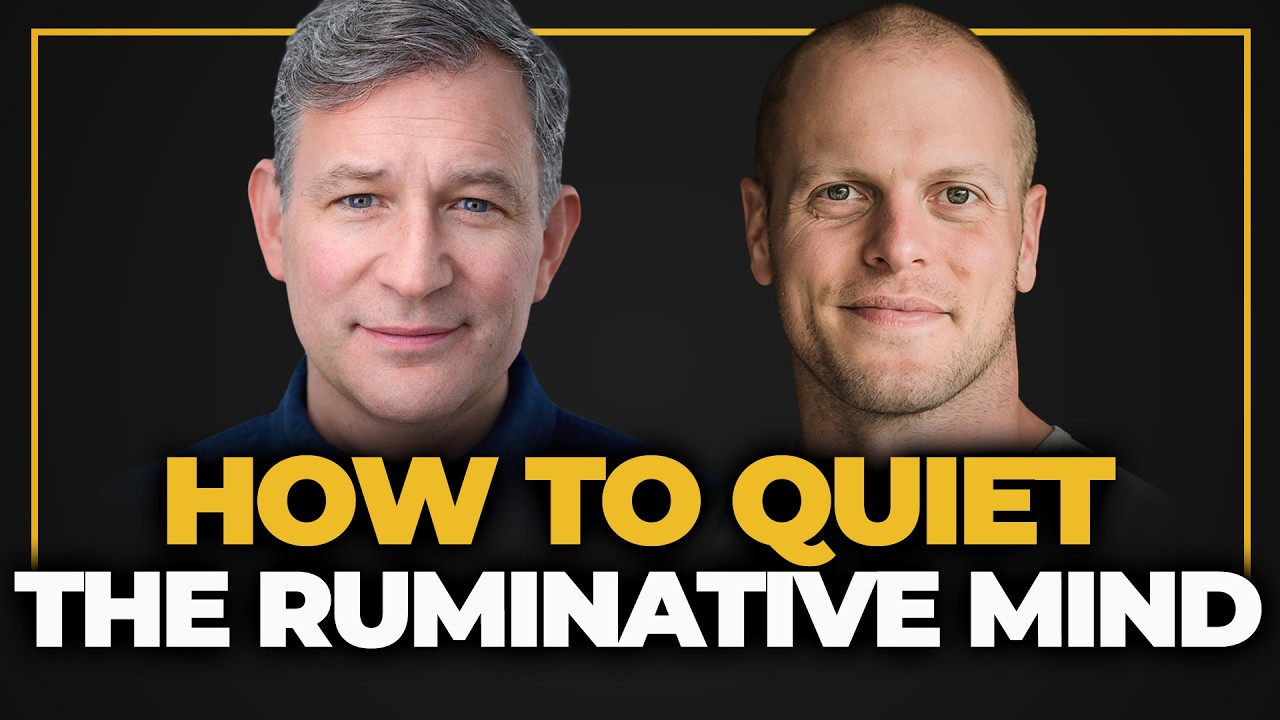 76 min
How to Quiet the Ruminative Mind and Avoid The Traps of Self-Help — Tim Ferriss
 86 min
NYT Bestselling Author on Writing 200+ Children's Books — Tish Rabe
Found this useful? Build your knowledge library
Get AI-powered summaries of any YouTube video, podcast, or article in seconds. Save them to your personal pods and access them anytime.
Get Started Free