Key Moments
A Postmortem on My Response to Covid (Episode #335)
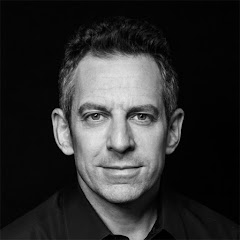 Sam Harris
Key Moments
Sam Harris discusses his Covid-19 response, defending his views against misinterpretations and explaining his trust in expert consensus during uncertain times.
Key Insights
Sam Harris addresses public criticism and misrepresentations of his COVID-19 pandemic views, often stemming from sensationalized social media clips.
He contrasts his approach to COVID-19 with his contrarian stances on topics like jihadism and police violence, emphasizing COVID-19's nature as a public health crisis with evolving data.
Harris justifies deferring to expert consensus on COVID-19 due to the pandemic's uncertainty and the need for collective action, unlike more static topics.
He refutes notions of personal "sunk cost" or ego driving his COVID-19 stance, stating he's not an expert and consistently recommended following expert consensus.
Harris critically examines the interpretation of his views on vaccine mandates, distinguishing between government mandates and private business requirements, and defends free speech principles.
He reflects on aspects he might have handled differently, such as earlier focus on the virus's origins and greater acknowledgment of diverse pandemic experiences and economic impacts.
ADDRESSING MISREPRESENTATIONS AND CRITICISM
Sam Harris begins by acknowledging the persistent criticism and distorted portrayals of his views on the COVID-19 pandemic, largely fueled by out-of-context social media clips. He explains his discomfort stems from a perceived "doppelganger" misrepresenting his positions, compelling him to clarify his actual stance. Harris notes that while he generally avoids social media, these distorted clips have reached him, often from audiences hostile to his views. He clarifies that the podcast hosts themselves are not usually the source of these misrepresentations, but rather members of their audience who edit clips maliciously.
EXPERT CONSENSUS VS. PERSONAL CONTRARIANISM
Harris distinguishes his approach to COVID-19 from his past willingness to challenge prevailing narratives on topics like jihadism or police violence. He argues that COVID-19 was a unique public health emergency characterized by immense uncertainty and evolving data, unlike the more static nature of other issues. In such uncertain, rapidly changing situations, Harris felt it was most responsible to defer to the consensus of qualified experts, given the need for collective action and the lack of definitive information in the pandemic's early stages.
THE ROLE OF UNCERTAINTY AND EVOLVING SCIENCE
A central theme is the dynamic nature of the COVID-19 pandemic, which Harris likens to a "moving target." He explains that initial responses, such as stringent hygiene measures for fomite transmission, were rational given the limited knowledge but became irrational as more information emerged. This constant evolution of scientific understanding meant no definitive stance was permanently correct. Harris emphasizes that his deference to expert consensus was driven by this uncertainty and the need for public health measures that required collective adherence, such as lockdowns and social distancing.
REBUTTING CLAIMS OF EGO AND SUNK COSTS
Harris directly addresses the accusation that his perceived stance on COVID-19 is a result of ego or sunk costs. He asserts this is a hallucination, arguing he has spoken about COVID-19 very little compared to critics like Brett Weinstein or Joe Rogan, who have extensively discussed the topic. Harris reiterates that he is not an expert in virology or epidemiology, has never claimed to be, and consistently advised people to follow the mainstream expert consensus. He views his critics as the ones invested in a narrative around COVID-19, not himself.
VACCINE MANDATES, BUSINESS FREEDOM, AND FREE SPEECH
Harris clarifies his nuanced position on vaccine mandates, explaining he supported private businesses' right to require vaccination for their employees, aligning with his free-market principles. He distinguishes this from a government mandate, seeing it as a liberty of business owners to set employment conditions. He also addresses free speech concerns, arguing that private platforms are not bound by the First Amendment and can set their own content moderation policies. He criticizes the idea that platforms are obligated to host all speech, irrespective of its nature or potential harm.
REFLECTION ON PANDEMIC EXPERIENCES AND INSTITUTIONAL TRUST
Looking back, Harris suggests he might have given more attention to the diverse and unequal experiences of people during the pandemic, particularly those whose livelihoods were devastated. He also reflects on the importance of the virus's origins, admitting he initially downplayed it but later recognized the value of investigating early for evidence preservation. He advocates for bolstering public trust in institutions and refining information ecosystems to combat misinformation, likening the pandemic response to navigating a flight during uncertain weather, where trusting established systems and expert guidance is crucial.
ASSESSING VACCINE EFFICACY AND MISINFORMATION IMPACT
Harris presents data suggesting COVID-19 vaccines significantly reduced hospitalizations and deaths in the US, estimating millions of lives saved. He contrasts this with the estimated 300,000 deaths attributed to vaccine hesitancy, highlighting the severe consequences of politicizing public health. He acknowledges the initial messaging about vaccines preventing transmission evolved, especially with Omicron, but maintains that early claims were valid based on available data. He dismisses unfounded claims about Ivermectin and hydroxychloroquine and addresses concerns about myocarditis, stating it's generally mild and manageable, emphasizing the overall benefit-risk ratio still favors vaccination.
THE ANALOGY OF AIR TRAVEL AND INSTITUTIONAL RELIANCE
To illustrate his point about trusting institutions and expertise, Harris uses an analogy of commercial air travel. He points out that while flying involves inherent risks and imperfections (counterfeit parts, pilot error), the system's redundancy and the reliance on competent professionals make it remarkably safe. He argues that during the pandemic, like on an airplane, a certain level of trust in experts and established procedures is necessary for normal life to function. He contrasts this with individuals who obsess over every potential risk, leading to paralysis and distrust, which he argues is counterproductive in a crisis.
CONTRASTING THEORIES AND THE RISK OF MISINFORMATION
Harris differentiates between various interpretations of COVID-19's impact and response. He juxtaposes official data, like the CDC's reported death toll, with fringe theories that drastically minimize or exaggerate risks. He highlights that while acknowledging official data might have margins of error, accepting numbers wildly divergent from established figures suggests a fundamental break from shared reality. He criticizes the cult-like fixation on individual health and self-sufficiency as a strategy against pandemics, referencing historical events like the 1918 flu to show that individual fitness doesn't guarantee safety from novel pathogens.
THE HAZARD OF CONTROVERSIAL ORIGINS AND GENETIC RESEARCH
Harris discusses the debate around the origins of COVID-19, expressing his initial view that the lab leak versus wet market origin was less critical than the immediate development of vaccines. However, he acknowledges that evidence can vanish, and a prompt investigation is crucial, citing Alina Chan's perspective. He also expresses deep concern about research involving dangerous pathogens, referencing his podcast with Rob Reid that seemed to influence US government policy to suspend certain risky research programs aimed at identifying and characterizing novel viruses, deeming them potentially recipe for bio-weaponization.
Mentioned in This Episode
●Supplements
●Products
●Software & Apps
●Companies
●Organizations
●Drugs & Medications
●Concepts
●People Referenced
COVID-19 Statistics and Vaccine Impact in the US
Data extracted from this episode
| Metric | Estimated Number/Figure | Notes |
|---|---|---|
| Total US Deaths from COVID-19 | Approximately 1.1 million | Based on CDC data; accepted as reasonably accurate by the speaker. |
| Deaths of people under 65 in the US | Approx. 250,000 (25% of total) | Majority were over 50; some included fit and healthy individuals. |
| Lives saved by COVID-19 vaccines in the US | Around 3 million | Model suggests this many more deaths could have occurred without vaccines. |
| Unnecessary deaths due to vaccine hesitancy in the US | Around 300,000 | Primarily in the over-65 cohort or those with comorbidities. |
| Deaths directly attributed to COVID-19 vaccines in the US | As few as 2 (expert estimate) | Speaker acknowledges this could be higher, proposing up to 2,000 or 20,000 as possibilities, but still significantly lower than COVID-19 deaths. |
| Reduction in risk of hospitalization/death for vaccinated vs. unvaccinated adults | Approx. 10-fold | Up to 20-fold for those over 65. |
| Effectiveness of Ivermectin/Hydroxychloroquine as COVID-19 prophylaxis | No | Response from Johns Hopkins expert. |
| Risk of myocarditis from mRNA vaccines | Low, generally no long-term clinically significant consequence | Risk can be mitigated by spacing doses; different from other forms of myocarditis. |
Common Questions
Sam Harris feels compelled to correct the record due to widespread misrepresentations of his views, often stemming from clipped and maliciously edited content shared on social media, which have led to personal and professional damage.
Topics
Mentioned in this video
Mentioned in the context of potential blackmail material and the development of mRNA vaccines.
One of the vaccine manufacturers mentioned, with its vaccine noted for having potential complications.
Mentioned in the context of potential systemic failures and the need for whistleblowers, using an analogy of airplane safety.
Sam Harris mentions leaving Patreon due to their demonetization of users for political opinions, explaining his move to a self-owned platform.
Mentioned as a platform where content is demonetized and where misinformation about vaccines is spread. Also, Brett Weinstein's potential demonetization is discussed.
One of the vaccine manufacturers mentioned, with its vaccine noted for having potential complications.
Mentioned alongside Boeing regarding systemic failures and the role of whistleblowers within the aviation industry.
Referenced as the platform where clips of the podcast host's opinions are shared, often leading to misrepresentations. Also mentioned in the context of Elon Musk's acquisition and changes to the platform regarding content moderation.
A friend of the host who is perceived to believe Harris has rationalized his COVID-19 positions. Harris discusses a clip from Rogan's podcast and his own podcast appearances discussing COVID-19.
Mentioned as a guest on Sam Harris's podcast alongside Renee Diresta, whose presence was questioned by Brett Weinstein. Harris clarifies their invitation to the podcast.
Mentioned in relation to a tweet suggesting 'compromat' (compromising material) was the reason for Sam Harris's COVID-19 views.
His positions during the pandemic are mentioned as being defended by the host's hypothetical interpretation of his critics' views.
His murder is cited as an instance where Sam Harris questioned the prevailing narrative, again contrasting with his COVID-19 response.
Mentioned as a 'confabulator' whose views on vaccines contributed to public fear.
A figure who has criticized Sam Harris's COVID-19 stance, with Harris detailing perceived inaccuracies in Weinstein's criticisms and his own summaries of Weinstein's views on mRNA vaccines and ivermectin.
Host of the Impact Theory podcast, who engaged in a discussion with Sam Harris about bodily autonomy and vaccine mandates.
Mentioned as a guest on Sam Harris's podcast, whose presence with Harris and Michael Schellenberger was questioned by Brett Weinstein. Harris clarifies their connection via Eric Weinstein and Tristan Harris.
Criticized for making a video reacting to a clip of Sam Harris, amplifying misrepresentations without fully checking the context.
Mentioned for his initial downplaying of COVID-19 severity and his business interests (electric cars, rockets) potentially influencing his perspective.
Mentioned as the person who introduced Sam Harris to Renee Diresta and also organized a conference where they reconnected.
The host of the podcast, discussing his responses and views on the COVID-19 pandemic and related controversies.
Mentioned as an example of someone whose discourse (about Muslims and luggage screening) could contribute to the breakdown of trust in institutions, making normal life impossible.
Collaborated with Sam Harris on podcast episodes about the dangers of studying dangerous pathogens, influencing US government thinking.
Mentioned as the person who introduced Renee Diresta to Sam Harris via Eric Weinstein.
Mentioned as a 'confabulator' whose views on vaccines contributed to public fear, and also as someone who should not be given a platform once a plane (pandemic) is already in the air.
Used as an example of someone whose speech (specifically lies about Sandy Hook) warranted censorship and demonetization, contrasting with the broader debate on silencing dissenting COVID-19 voices.
A guest on Sam Harris's podcast who pointed out the importance of immediate testing of potential evidence for virus origins.
Mentioned as a treatment that many were willing to receive, despite less testing than vaccines, questioning why they were hesitant about vaccines.
Discussed extensively regarding their efficacy, safety, perceived risks, and role in public health policy. Contrasted with other vaccine technologies and discussed in relation to natural immunity and side effects like myocarditis.
Used as an example of a deadly disease eradicated through widespread vaccination, illustrating the potential public health imperative for mandatory vaccination in severe pandemic scenarios.
Its potential role in the COVID-19 pandemic and any subsequent cover-ups are mentioned as important areas for investigation.
Mentioned in the context of potential security risks and conspiracy theories about airlines not screening luggage for individuals from such camps.
Sam Harris mentions he was placed on their hate watch page for his views on Islam.
Mentioned in relation to potentially changing its thinking on dangerous pathogen research, influenced by podcast episodes.
Cited as a country that implemented stricter and longer lockdowns compared to the US.
Mentioned as having suspended the 'Deep Vision' program, which involved researching mammalian viruses.
The Centers for Disease Control and Prevention, cited for its data on US COVID-19 deaths.
Its emergence in late 2021/early 2022 eroded the assumption that vaccines prevented transmission.
Mentioned as a more dangerous variant of COVID-19 that was ascendant when the assumption that vaccines reduced transmission was still valid.
Discussed in the context of Sam Harris's past criticisms of the mainstream narrative, contrasting with his pandemic response.
Mentioned as part of the 'cult of self-sufficiency' and individual health focus that the host argues is a delusion and insufficient for pandemic preparedness.
Mentioned as part of the 'cult of self-sufficiency' and individual health focus that the host argues is a delusion and insufficient for pandemic preparedness.
Mentioned as part of the 'cult of self-sufficiency' and individual health focus that the host argues is a delusion and insufficient for pandemic preparedness.
Mentioned as a controversial treatment promoted by some (like Brett Weinstein) as nearly perfectly effective, in contrast to the host's skepticism and the expert consensus which found it not effective as a COVID-19 prophylactic.
Used as an example of a real failure within the aviation system, demonstrating that systems are not perfect but are generally judged 'good enough'.
Mentioned in comparison to the 'cult of self-sufficiency' around health and fitness, with the host acknowledging ownership but cautioning against obsession.
More from Sam Harris
View all 292 summaries 34 min
Is Effective Altruism Blind to the Biggest Problems? – Sam Harris & Will MacAskill
 21 min
What Is Technology Doing to Us?
 42 min
Is the Iran War Already Failing?
 90 min
FULL EPISODE: The Politics of Pragmatism and the Future of California (Ep. 464)
Found this useful? Build your knowledge library
Get AI-powered summaries of any YouTube video, podcast, or article in seconds. Save them to your personal pods and access them anytime.
Get Started Free