Key Moments
#97 – Peter Hotez, M.D., Ph.D.: COVID-19: transmissibility, vaccines, risk reduction, and treatment
 Peter Attia MD
Key Moments
COVID-19: Understanding the virus, its spread, and potential treatments like convalescent serum.
Key Insights
COVID-19 is caused by SARS-CoV-2, the third major coronavirus pandemic of the 21st century.
The virus is highly transmissible and affects certain groups (elderly, those with comorbidities, healthcare workers) more severely.
Delayed testing and response have exacerbated the spread in the US.
Convalescent serum, containing antibodies from recovered patients, is a promising near-term treatment and prophylactic.
Vaccine development faces challenges due to potential immune enhancement issues with coronaviruses.
Understanding the ACE2 receptor's role and various transmission routes (droplet, fecal-oral, airborne) is crucial.
NOMENCLATURE AND VIRAL HISTORY
The discussion clarifies that COVID-19 is the disease and SARS-CoV-2 is the virus responsible. This marks the third significant coronavirus pandemic in the 21st century, following SARS in 2003 and MERS in 2012. Previously considered minor pathogens, coronaviruses now represent serious global health threats, necessitating a prioritized focus on developing vaccines and understanding their behavior.
TRANSMISSIBILITY AND VULNERABILITY
Unlike SARS-CoV-1, SARS-CoV-2 exhibits high transmissibility due to a unique characteristic: many infected individuals, including younger demographics, show mild or no symptoms. This allows for widespread shedding of the virus. However, severe disease primarily affects individuals over 70, those with underlying conditions like diabetes or hypertension, and notably, healthcare workers, who experience higher rates of serious illness for reasons yet to be fully understood.
THE CRITICAL ROLE OF TESTING AND DELAYED RESPONSE
The United States' delayed response in diagnostic testing has been a significant detriment, allowing SARS-CoV-2 to circulate undetected for extended periods. This lack of early detection has led to a more widespread epidemic than might have been preventable. Prompt testing and intervention are crucial in controlling outbreaks, as demonstrated by the stark differences in outcomes between cities that acted quickly and those that did not.
CONVALESCENT SERUM AS A PROMISING INTERVENTION
With antiviral drugs likely some time away and vaccine development facing hurdles, convalescent serum emerges as a promising near-term solution. This involves collecting antibodies from recovered patients and administering them to those who are ill or at high risk. While requiring blood banks and careful standardization, it offers a potential treatment and prophylactic measure, especially for healthcare workers and first responders, to keep them on the job.
CHALLENGES IN VACCINE DEVELOPMENT
Developing a vaccine for SARS-CoV-2 presents significant technical and historical challenges. Past attempts with other coronaviruses have shown a phenomenon called immune enhancement, where vaccines can potentially worsen disease. While research is exploring strategies like using specific viral components (e.g., the receptor-binding domain) to mitigate this risk, the extensive safety and efficacy testing required means a vaccine is unlikely to be available within 12-18 months.
UNDERSTANDING VIRAL MECHANISMS AND PATHOLOGY
The virus enters cells primarily through the ACE2 receptor, which is found not only in the lungs but also in the intestinal tract and endothelial cells. This broad distribution may explain the diverse pathologies observed, including acute myocardial injury. The modes of transmission are multifaceted, including droplet, contact, potential fecal-oral, and possibly airborne routes, underscoring the complexity of containing the virus.
ASSESSING TRANSMISSIBILITY AND MORTALITY RATES
SARS-CoV-2 has a basic reproductive number (R0) estimated between 2.24 and 3.58, making it significantly more transmissible than seasonal flu. The case fatality rate ranges from 0.6% to 3.4%, which is substantially higher than influenza, particularly in older populations where it can reach 10-20%. This elevated mortality rate, especially in vulnerable settings like nursing homes, highlights the virus's devastating potential.
GEOGRAPHICAL CONCERNS AND SUPPLY CHAIN BOTTLENECKS
Currently, any urban area in the US is considered vulnerable, with hotspots identified in Seattle, New Rochelle, and New York City. The increasing number of tests is expected to reveal new foci of infection. Concerns are also rising about potential bottlenecks in healthcare capacity, including ventilators, ICU beds, and essential personnel, necessitating proactive planning and resource allocation.
SENSITIVITY TO MODEL ASSUMPTIONS AND PUBLIC HEALTH STRATEGIES
Epidemiological models provide valuable insights but are highly sensitive to their underlying assumptions. While some projections suggest a significant portion of the global population could be infected, even modest adjustments to model parameters could alter these outcomes. This emphasizes that public health strategies, encompassing federal, state, and individual actions, still hold considerable power in shaping the pandemic's trajectory.
PROTECTING VULNERABLE POPULATIONS AND INFORMED DECISION-MAKING
Protecting older individuals, especially those in congregate settings like nursing homes, is paramount. This involves difficult decisions regarding social contact versus virus exposure. While experts can guide on infectious disease epidemiology, complex ethical and psychological considerations require broader input from mental health professionals and policymakers to develop comprehensive guidance for vulnerable populations.
MONITORING KEY DATA AND FUTURE OUTLOOK
Close monitoring of incidence and prevalence data, along with the emergence of new community transmission, is critical for understanding the pandemic's spread. Following early vaccine trials, particularly those initiated during active transmission, will provide crucial insights. The goal is to track whether the US is heading towards an 'Italian path' of severe outbreak or a more controlled 'Singapore path'.
THE IMPORTANCE OF SCIENTIFIC COMMUNICATION AND ADVOCACY
Engaging the public with accurate scientific information is vital, especially in combating misinformation and the anti-vaccine movement. Physicians and scientists have a responsibility to communicate effectively with diverse audiences. This includes being transparent about evolving knowledge, acknowledging uncertainty, and using platforms to advocate for evidence-based public health measures and interventions, thereby fostering informed public response.
Mentioned in This Episode
●Software & Apps
●Companies
●Organizations
●Books
●Drugs & Medications
●Concepts
●People Referenced
Common Questions
COVID-19 is the official name for the disease caused by the SARS-CoV-2 virus. Similar to how AIDS is the disease and HIV is the virus, SARS-CoV-2 is the specific virus responsible for the illness known as COVID-19.
Topics
Mentioned in this video
The disease caused by the SARS-CoV-2 virus, officially designated by the World Health Organization.
Mentioned as an analogy to explain the difference between a disease (AIDS) and its causative virus (HIV).
The causative virus for COVID-19, identified as SARS coronavirus 2. It shows similarities to the original SARS virus.
A coronavirus that emerged in 2012, it is mentioned as the second major coronavirus pandemic of the 21st century.
ARDS, a severe lung condition that is a component of severe COVID-19, discussed in relation to heart injury and inflammatory components.
A company involved in diagnostic testing for COVID-19, mentioned as part of the ramp-up of testing capabilities in the US.
A company involved in diagnostic testing for COVID-19, mentioned as part of the ramp-up of testing capabilities in the US.
A company involved in diagnostic testing for COVID-19, mentioned as part of the ramp-up of testing capabilities in the US.
The National Institutes of Health, which funded Dr. Hotez's work on a receptor binding domain vaccine for coronaviruses.
A medical journal that published a study on the survival of SARS-CoV-2 on various surfaces (fomites).
Institution where Dr. Peter Hotez serves as Dean and Professor. It is also home to the Texas Children's Center for Vaccine Development.
A laboratory that had the SARS-CoV-2 virus and partnered with Dr. Hotez's team for preclinical vaccine studies.
The NBA, whose season was suspended due to the pandemic, cited as an example of necessary sacrifices made in the US.
A center at Baylor College of Medicine where Dr. Hotez is the director, focused on developing vaccines.
Hospital associated with Baylor College of Medicine, where Dr. Hotez holds an endowed chair in Tropical Pediatrics and which houses the Center for Vaccine Development.
An institution that conducted early trials of the RSV vaccine, which later showed concerning side effects.
Institution where researchers found that using only the receptor binding domain of the spike protein could potentially yield a safe coronavirus vaccine.
The Centers for Disease Control and Prevention, mentioned in the context of federal and state authorities needing time to coordinate responses to new pathogens.
Senator with whom Dr. Hotez has worked on issues such as countering the anti-vaccine movement.
A renowned vaccine scientist, pediatrician, and expert on coronavirus outbreaks. He is the Dean of the National School of Tropical Medicine at Baylor College of Medicine.
A colleague of Dr. Hotez who believes the gastrointestinal route might be a significant mode of transmission for SARS-CoV-2.
A colleague of Dr. Hotez who proposed the idea of using convalescent serum for treating COVID-19. He is a professor at Johns Hopkins.
An individual commenting on the limited hospital capacity and potential need for emergency measures like tent city hospitals.
An epidemiologist whose projections suggest a significant portion of the global population could be infected by SARS-CoV-2 within two years. His models are discussed.
Mentioned as a contrast to SARS-CoV-2 due to its much lower reproductive number, making widespread transmission less likely unless in close contact with infected individuals.
Medications that were considered as potential treatments in the context of the ACE2 receptor's role in SARS infection.
Used as an example of a highly transmissible disease, with an R0 value significantly higher than SARS-CoV-2.
A virus for which an early vaccine trial in the 1960s showed immune enhancement, a phenomenon that raises concerns for coronavirus vaccine development.
Mentioned as a comparison to the potential gastrointestinal transmission of SARS-CoV-2, particularly in the context of cruise ship outbreaks similar to norovirus outbreaks.
A virus for which the drug Remdesivir was developed. It is mentioned in the context of comparing transmission rates with SARS-CoV-2.
The receptor that SARS-CoV-2 uses to gain access to cells, particularly in the lungs and intestinal tract. Its role and implications for pathology are discussed.
A preprint server where Chinese researchers published their data on SARS-CoV-2, allowing Hotez's team to identify similarities to SARS-CoV-1.
Peter Atia's website and the URL for subscribing to his membership program.
A preprint server where Chinese researchers published their data on SARS-CoV-2, allowing Hotez's team to identify similarities to SARS-CoV-1.
A platform where reports from China on COVID-19 patients' conditions, including acute myocardial injury, were available for review.
The location of one of the first US community transmissions of COVID-19, which tragically impacted a nursing home.
A city in the US identified as having early community transmission of COVID-19.
The city in China where SARS-CoV-2 is believed to have emerged. It experienced a severe outbreak and significant healthcare system strain.
A major urban center in the US experiencing an uptick in COVID-19 cases, considered vulnerable due to its population density.
A city in Westchester County, NY, identified as an early epicenter of COVID-19 community transmission in the US.
More from Peter Attia MD
View all 333 summaries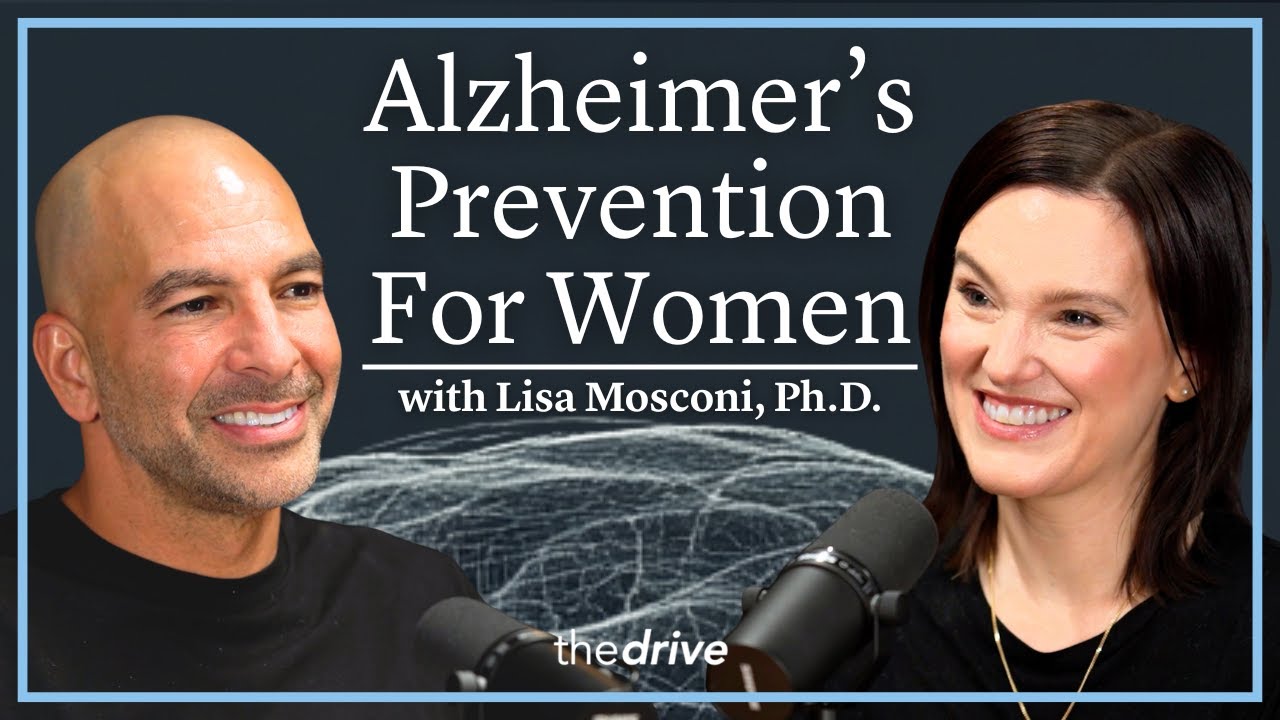 135 min
381‒Alzheimer’s disease in women: how hormonal transitions impact the brain, new therapies, & more
 9 min
9 minIs Industrial Processing the Real Problem With Seed Oils? | Layne Norton, Ph.D.
 13 min
Cooking with Lard vs Seed Oils | Layne Norton, Ph.D.
 146 min
380 ‒ The seed oil debate: are they uniquely harmful relative to other dietary fats?
Found this useful? Build your knowledge library
Get AI-powered summaries of any YouTube video, podcast, or article in seconds. Save them to your personal pods and access them anytime.
Get Started Free