Key Moments
#54–Kevin Sayer, CEO of Dexcom: Continuous glucose monitors–impact of food, sleep, & stress
 Peter Attia MD
Want to know something specific about what's covered?
We've already dissected every moment. Ask and we will deliver (with timestamps).
Key Moments
Dexcom CEO discusses CGM tech, its impact on diabetes management, and future innovations.
Key Insights
Continuous Glucose Monitors (CGMs) like Dexcom's offer profound insights into glucose levels, aiding behavioral change for diabetes management.
CGM technology has advanced significantly, with newer models offering improved accuracy, user-friendliness, and integration capabilities.
The US healthcare system presents unique challenges for CGM adoption, including insurance coverage hurdles and regulatory complexities.
Dexcom is exploring partnerships and collaborations to expand CGM use beyond type 1 diabetes, into type 2 diabetes, pre-diabetes, and even wellness applications.
Future CGM development focuses on miniaturization, enhanced data analysis, automated insulin delivery integration, and broader clinical applications.
Real-time feedback from CGMs drives significant behavioral changes in diet and lifestyle, more effectively than delayed metrics like A1C.
THE EVOLUTION AND IMPACT OF CGM TECHNOLOGY
The discussion highlights the significant evolution of Continuous Glucose Monitors (CGMs), particularly Dexcom's G6, emphasizing its impact on diabetes management. Unlike traditional finger-prick glucose meters, CGMs provide real-time data and trend information, offering individuals unprecedented insight into how food, sleep, and stress affect their glucose levels. This continuous feedback loop is crucial for driving behavioral changes, empowering users to make more informed decisions about their health and well-being. The technology itself has advanced through improved sensor accuracy, new membrane technologies, and sophisticated algorithms, making the user experience more seamless and less invasive.
DEXCOM'S JOURNEY AND TECHNOLOGICAL ADVANCEMENTS
Kevin Sayer shares his personal journey into the diabetes technology space, starting with his early involvement in insulin pump development and the initial stages of CGM. His leadership at Dexcom has been marked by a commitment to technological innovation, including the development of models like the G4 and G5, culminating in the highly accurate G6. A key focus has been on improving the user experience, such as an automated insertion process that minimizes discomfort and engineer-driven algorithm improvements leading to enhanced accuracy. This dedication to performance and accuracy remains Dexcom's core principle, even as they explore miniaturization and cost reduction.
NAVIGATING THE US HEALTHCARE SYSTEM AND INSURANCE BARRIERS
The conversation delves into the complexities of the US healthcare system and its impact on CGM accessibility. While Medicare and CMS approval in 2017 was a significant step, obtaining insurance coverage for CGMs, especially for type 2 diabetes patients using intensive insulin, remains a challenge. Payers can be hesitant due to cost concerns, sometimes imposing strict documentation requirements. Dexcom actively works with a dedicated team to navigate these reimbursement landscapes, negotiating terms and demonstrating the economic benefits of CGM technology, such as preventing hospitalizations and reducing long-term complications. The classification of CGM as durable medical equipment also leads to seasonal purchasing patterns due to deductibles.
EXPANDING HORIZONS: BEYOND TYPE 1 DIABETES
Dexcom's vision extends beyond type 1 diabetes to encompass a broader range of conditions. The company is actively developing solutions for type 2 diabetes, recognizing the vast population that could benefit from continuous glucose monitoring, even those not requiring insulin. Partnerships, such as the one with Verily, aim to co-develop future products that are smaller, more convenient, and potentially less costly. Discussions also touched upon the potential for CGM in pre-diabetes and general wellness, where real-time feedback could drive healthier lifestyle choices and improve metabolic health metrics beyond just weight.
THE FUTURE OF GLUCOSE MONITORING AND ARTIFICIAL PANCREAS TECHNOLOGY
Looking ahead, Dexcom is focused on developing sophisticated algorithms that can provide more advanced decision support for users, moving towards a more automated insulin delivery system. This includes integrating CGM data with insulin pumps and exploring applications for those on multiple daily injections. There's also interest in expanding CGM use into hospital settings, particularly ICUs, to improve patient outcomes and reduce the burden of frequent finger-pricks. The company is also exploring new applications, such as gestational diabetes and even predictive analytics for health and wellness, leveraging the rich data generated by CGMs.
THE POWER OF REAL-TIME DATA AND BEHAVIORAL CHANGE
A central theme is the profound impact of real-time feedback provided by CGMs. Unlike delayed metrics like A1C, continuous data allows individuals to immediately see the consequences of their choices, fostering significant behavioral shifts, particularly in diet. This immediate correlation between actions and physiological response is a powerful motivator for adopting healthier habits. Even for individuals without diabetes, the insights gained from a CGM can fundamentally alter their understanding of food and its impact on their bodies. This personalizes health management and empowers proactive lifestyle adjustments, underscoring the device's value beyond just disease management.
Mentioned in This Episode
●Products
●Software & Apps
●Companies
●Organizations
●Books
●Drugs & Medications
●Concepts
●People Referenced
Common Questions
Peter Attia and Kevin Sayer met on an airplane about three years prior to the interview. Their conversation began when Sayer noticed Attia looking at watch sites and commented on his choice, leading to an hour-long discussion about watches before realizing their shared professional interest in continuous glucose monitors.
Topics
Mentioned in this video
A weight loss program app that could potentially integrate with CGM data to provide more personalized dietary guidance based on individual glucose responses.
The US regulatory body that approves medical devices like Dexcom's CGM, and has been progressive with Dexcom's innovations in areas like phone connectivity and data sharing.
A US national health insurance program that approved the use of CGM for intensive insulin-using type 2 diabetes patients in January 2017.
A prominent medical journal that published a paper in 2001 or 2002 that significantly influenced glucose and insulin management in the ICU.
A specific brand of point-of-care glucose meter that Peter Attia prefers for its accuracy.
A wearable device that can display Dexcom CGM data via an app, and Dexcom is developing direct-to-watch transmitter communication for enhanced convenience.
A company that develops, manufactures, and markets continuous glucose monitoring (CGM) systems for diabetes management. Kevin Sayer is its CEO.
The current model of Dexcom's continuous glucose monitor, praised for its improved accuracy, automated insertion, and user-friendly design, eliminating the need for finger-stick calibrations.
A Google (now Alphabet) life sciences research organization that partnered with Dexcom in 2015 to co-develop future CGM products, focusing on miniaturization, size, and convenience.
A company founded by Al Mann, acquired by Medtronic, known for designing insulin pumps and early glucose sensors.
A medical device company that acquired the insulin pump company where Kevin Sayer previously worked and also developed an early continuous glucose monitor.
A competitor to Dexcom in the CGM market, notably with its Libre product. Mentioned in comparison to Dexcom's technology.
The parent company of Verily, which initially had a healthcare group that analyzed technologies for future product impact and disease states for better care models.
A company within Verily developing treatments and apps for type 2 diabetes, combining diabetes knowledge with Google technology, currently in pilot phases with various payers.
A partner with Dexcom, developing an insulin pump that integrates with Dexcom's sensor to automatically shut off insulin delivery when glucose goes too low and turn it back on.
An insurance company with whom Dexcom is doing a lot of work on type 2 diabetes and future pre-diabetes models.
A company with whom Dexcom had a joint venture years ago to explore CGM use in hospitals, which ultimately did not work out due to strict FDA requirements at the time.
Host of The Drive podcast and an early adopter and advocate for continuous glucose monitoring (CGM) for optimizing health, even without a diabetes diagnosis.
An endocrinologist mentioned by Peter Attia as introducing him to Dexcom CGM technology.
Former CEO of Dexcom and a dear friend and associate of Kevin Sayer from MiniMed, who invited Sayer to join Dexcom's board.
More from Peter Attia MD
View all 346 summaries 122 min
410 ‒ The biology of pregnancy: physiologic adaptation, childbirth, and long-term maternal health
 156 min
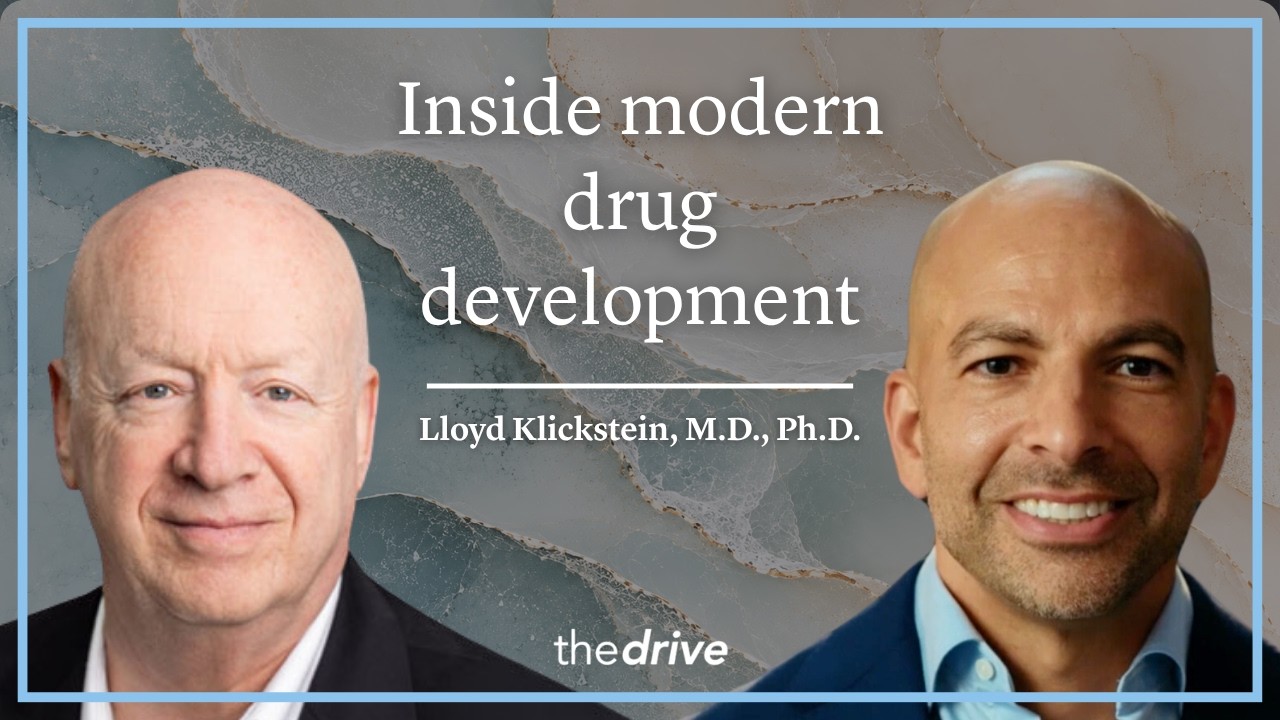
409 ‒ Inside modern drug development: the science, economics, and regulatory hurdles
 140 min
407 ‒ Preventing cardiovascular and Alzheimer’s disease: lowering LDL early, APOE4, and more
 77 min
Blood pressure: how to measure, manage, and treat high blood pressure (AMA #48 rebroadcast)
Ask anything from this episode.
Save it, chat with it, and connect it to Claude or ChatGPT. Get cited answers from the actual content — and build your own knowledge base of every podcast and video you care about.
Get Started Free