Key Moments
248 ‒ OUTLIVE book: A behind-the-scenes look into the writing of this book, motivation & main themes
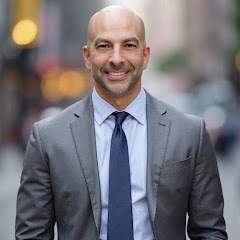 Peter Attia MD
Want to know something specific about what's covered?
We've already dissected every moment. Ask and we will deliver (with timestamps).
Key Moments
Peter Attia discusses the creation of his longevity book "Outlive" with co-author Bill Gifford.
Key Insights
The book's title "Outlive: The Science and Art of Longevity" reflects a deliberate order, emphasizing science first in human longevity studies, acknowledging the inherent art in application.
The cover art, a complex collaboration, ultimately symbolizes passage and targets, representing key themes like archery and personalized journeys.
Co-author Bill Gifford was crucial in refining the book's narrative and accessibility, transforming a technical manuscript into a compelling read for a general audience.
The book's structure, divided into three parts, moves from establishing frameworks (Medicine 3.0) to understanding disease mechanisms (the "Four Horsemen") and finally to practical application.
The writing process was arduous, involving significant revisions, a near-death experience for Peter's voice, and a publisher change, but resulted in a more refined and impactful final product.
The audio version includes an "alternative ending" not present in the print version, offering a director's cut for listeners, reflecting the collaborative and evolving nature of the project.
THE EVOLUTION OF A TITLE AND COVER
The book "Outlive: The Science and Art of Longevity" evolved from earlier working titles like "The Longevity Manifesto" and "The Long Game." The chosen title, "Outlive," is presented as active and evocative, suggesting a life beyond expectations. The subtitle "The Science and Art of Longevity" intentionally places "science" first, acknowledging that while human longevity study is partly art, the scientific foundation is paramount. The cover art itself underwent numerous iterations, a collaborative process involving artist Rodrigo Corral, ultimately settling on a design that is both elegant and symbolic, representing passage, keyholes, and targets, with subtle nods to archery metaphors.
THE CRUCIAL ROLE OF CO-AUTHORSHIP
Bill Gifford's involvement was pivotal in transforming Peter Attia's initial, highly technical manuscript into an accessible and engaging book. Gifford, an experienced writer in health and science, brought a reader-centric perspective, helping to smooth out the narrative and introduce storytelling elements. This collaboration addressed early publisher feedback that the original draft was too technical and lacked a compelling narrative, a challenge Attia, a naturally deep-diving thinker, embraced with Gifford's guidance.
STRUCTURE AND CORE THEMES OF "OUTLIVE"
The book is structured into three main parts. Part 1 lays the groundwork, introducing concepts like Medicine 3.0 and the essential "frameworks" needed to address health and longevity. Part 2 delves into the scientific underpinnings, focusing on "the Four Horsemen"—major age-related diseases (metabolic disorders, atherosclerosis, heart disease, and Alzheimer's)—to emphasize understanding the "opponent." Part 3 provides actionable strategies and tactics, although the emphasis is on the overarching strategy rather than rigid, prescriptive tactics that might quickly become outdated.
THE ARDUOUS WRITING AND EDITING PROCESS
The six-year writing journey was fraught with challenges, including Attia's severe laryngitis, a near-death experience for his voice. The manuscript underwent massive revisions, with Attia initially embedding excessive technical details that his co-author and editor worked to pare down. A significant pivot occurred when the project was dropped by its original publisher and later revived, leading to a more refined, less technical, and more narrative-driven final version. The process demanded intense focus, with late-stage edits and proofreading, highlighting the dedication required to achieve the book's final quality.
NAVIGATING TECHNICALITY AND THE READER EXPERIENCE
While Peter Attia's podcast often dives into highly technical scientific details, "Outlive" aims for broader accessibility. The book strikes a balance, providing depth without overwhelming the lay reader. The authors intentionally focused on clear objectives and strategies over constantly changing tactics, ensuring the book's relevance over time. The development of frameworks, like Medicine 3.0, serves as a timeless scaffold for new information. The exercise chapters, initially overly detailed, were re-envisioned to include supplemental videos, enhancing the reader's understanding without bogging down the text.
THE AUDIOBOOK AND FINAL REFLECTIONS
Attia's decision to narrate the audiobook, despite initial reservations about his reading ability and the significant time commitment, was driven by listener expectations, a desire for accuracy in technical terms, and a personal wish for a lasting auditory record for his family. The narration process included coaching and an unexpected re-recording of the first day due to technical issues, inadvertently serving as practice. An "alternative ending" was incorporated into the audiobook as a director's cut, a compromise that satisfied Attia's creative vision while respecting the print version's integrity.
FAVORITE CHAPTERS AND CONTRIBUTIONS
Both Attia and Gifford identify the "Four Horsemen" chapters as significant achievements, requiring extensive research and consolidation of complex information. Gifford particularly favors the final chapter for its substantial evolution from its initial concept. Attia highlights the atherosclerosis chapter for its potential to save lives and the exercise chapters for their intricate development, culminating in concepts like the "centenarian decathlon." Numerous individuals, including researcher Bob Kaplan, fact-checker Vin Miller, and editor Diana, provided critical support, making the book a comprehensive and meticulously reviewed work.
Mentioned in This Episode
●Tools
●Companies
●Organizations
●Books
●Concepts
●People Referenced
Common Questions
Dr. Attia developed severe laryngitis and a pharyngeal abscess, which impacted his vocal cords. He learned that whispering was detrimental and was advised to either not speak or speak normally at the lowest possible volume. This experience also led to an unexpected parenting hack, as his children became quieter in response to his silence.
Topics
Mentioned in this video
A research guru for the book project who did the heaviest lifting in terms of research, finding citations, and fact-checking, and organizing endnotes.
An analyst who performed independent scientific fact-checking for the book, separate from Bob Kaplan's research.
The producer/director for Peter Attia's audiobook, who coached him on reading techniques and helped transform his reading performance.
Co-author of 'Outlive', who has a background in journalism and scientific/medical writing, and was brought onto the project for his narrative skills.
A revered book designer who was instrumental in creating the elegant and evocative cover art for 'Outlive', proposing 30 different designs.
The host of the podcast and primary author of 'Outlive', who experienced severe laryngitis while recording the audiobook and learned valuable lessons during the writing process.
An entertainment executive who encouraged Peter Attia to revisit and publish his book after it was initially dropped by a publisher, setting the project back on track.
An author who advised Peter Attia to read his book aloud during the editing process, a piece of advice Peter initially didn't follow but later realized its value.
A renowned author mentioned as an example of a writer whose voice would be invaluable to future generations if his audiobooks existed.
Music producer who advised Peter Attia on audiobook recording, sharing his experience of setting up a studio.
A major 'horseman' of chronic disease that the book delves into, with Dr. Attia having strong views on its mistreatment and prevention.
A key area discussed in the book, advocating an aggressive posture for early detection due to the dramatically better outcomes when cancer is treated locally.
One of the 'Horsemen' diseases discussed, for which effective treatments are currently lacking but there's hope for better prevention data and clarity on things that reduce risk like exercise and sleep.
A neurodegenerative movement disorder mentioned alongside Alzheimer's where effective treatments are currently limited.
A framework presented in the book for health that focuses on proactive prevention and delaying the onset of disease, rather than just treating existing conditions.
The fundamental biological process that the book and the authors are fascinated by, exploring its mechanisms and how to delay its negative effects.
A cancer screening tool discussed in the context of individual versus population-level recommendations, with Dr. Attia advocating for frequent screenings based on individual risk-reward.
More from Peter Attia MD
View all 336 summaries 121 min
397 - Endometriosis and adenomyosis: diagnosis, fertility, reproductive aging, & emerging treatments
 51 min
396 – Breast cancer screening: understanding risk, deciding when to start, and more
 105 min
395 – Brain lipidology: understanding APOE, cholesterol homeostasis, Alzheimer’s disease, & more
 135 min
381‒Alzheimer’s disease in women: how hormonal transitions impact the brain, new therapies, & more
Ask anything from this episode.
Save it, chat with it, and connect it to Claude or ChatGPT. Get cited answers from the actual content — and build your own knowledge base of every podcast and video you care about.
Get Started Free