Key Moments
#187 - The Warburg Effect: Otto Warburg’s Cancer Metabolism Theory with Sam Apple
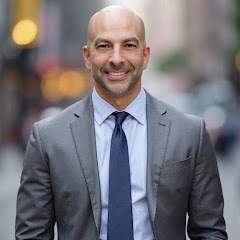 Peter Attia MD
Key Moments
Otto Warburg's cancer metabolism theory, life under Nazis, and the modern revival of his research.
Key Insights
Otto Warburg, a Nobel laureate, proposed that cancer cells primarily ferment glucose aerobically, a theory now known as the Warburg Effect.
Despite being Jewish and gay, Warburg survived Nazi Germany due to his scientific importance, though he faced significant persecution.
Warburg's hypothesis centered on defective mitochondria causing the shift to fermentation, a view debated and later challenged by modern research.
The discovery of oncogenes in the 1970s shifted focus away from metabolism, but recent research has revived interest in Warburg's work.
Modern interpretations suggest that while the Warburg Effect is real, it may serve to provide building blocks for cell growth rather than being solely due to mitochondrial defects.
Factors like hyperinsulinemia and fructose metabolism are now seen as potentially significant drivers of certain cancers, linking nutrition and the Warburg Effect.
Warburg's life and work highlight the complex interplay between science, personal identity, and historical events, particularly the Nazi era.
Even though Warburg's initial hypothesis is debated, his meticulous observation of cancer cell metabolism and the subsequent research have profoundly influenced cancer biology.
THE SCIENTIST AND HIS ORIGINS
Sam Apple introduces Otto Warburg, a Nobel Prize-winning scientist whose life and work are central to the book "Ravenous." Warburg, born into a prominent Jewish family in late 19th-century Germany, was influenced by his physicist father and surrounded by scientific titans like Einstein and Planck. Initially rebelling against physics, he pursued biology and physiology through a physicist's lens, focusing on energy. His childhood and early exposure to Germany's scientific prowess shaped his ambition to make groundbreaking discoveries.
WARBURG'S SEMINAL THEORY: THE WARBURG EFFECT
The core of Warburg's research, particularly post-World War I, focused on cancer metabolism. He observed that cancer cells, unlike normal cells, ferment glucose to lactic acid even in the presence of oxygen, a phenomenon dubbed the Warburg Effect. This aerobic glycolysis was considered paradoxical because it is far less energy-efficient than oxidative phosphorylation. Warburg's initial hypothesis was that this metabolic shift was a consequence of damaged mitochondria within cancer cells.
CHALLENGES AND SURVIVAL AMIDST NAZI GERMANY
Warburg's life was fraught with challenges, notably being Jewish and homosexual in Nazi Germany. Despite his vulnerability, his scientific importance, particularly his Nobel Prize and research into cellular respiration, allowed him to survive. He resisted Nazi ideology, refused to conform to their demands, and continued his work at his institute. His survival is attributed to a combination of his controversial value to the Nazi regime and his own defiance.
SCIENTIFIC DEBATES AND THE LONG ECLIPSE
Warburg's hypothesis of defective mitochondria as the sole cause of the Warburg Effect faced scientific scrutiny, notably from researchers like Sydney in the 1950s who found evidence of normal respiration. The rise of molecular biology and the discovery of oncogenes in the 1970s further shifted the focus away from metabolism, relegating Warburg's work to a historical footnote for decades. His tools, like manometers, were even discarded.
THE RENAISSANCE OF CANCER METABOLISM
In the late 1990s and early 2000s, a revival of interest in cancer metabolism began, spearheaded by labs studying signaling pathways like PI3K and AKT. These researchers, including Craig Thompson and others, rediscovered the Warburg Effect and began exploring it with modern techniques. While not fully endorsing Warburg's original mitochondrial defect hypothesis, they confirmed the significance of altered glucose metabolism in cancer.
MODERN INTERPRETATIONS AND NUTRITIONAL LINKS
Current research posits that the Warburg Effect might primarily serve to provide metabolic intermediates for rapid cell growth and proliferation, essential for cancer cells building new cellular components. This perspective also links cancer to nutritional factors. The correlation between obesity, hyperinsulinemia, and cancer is increasingly recognized, suggesting that elevated insulin levels, and possibly fructose metabolism independent of insulin, play significant roles in driving cancer development and progression.
WARBURG'S LEGACY AND FUTURE DIRECTIONS
Otto Warburg's insistence on the metabolic nature of cancer, though debated in its specifics, has proven prescient. While his original hypothesis about mitochondrial defects is not universally accepted, his discovery of aerobic glycolysis remains fundamental. The ongoing research into cancer metabolism, the role of nutrients like fructose, and factors like hyperinsulinemia highlight the enduring relevance of Warburg's work and offer potential new avenues for cancer prevention and treatment strategies.
Mentioned in This Episode
●Organizations
●Books
●Concepts
●People Referenced
Common Questions
Sam Apple was initially influenced by Gary Taubes' work on metabolism but had not considered cancer a metabolic disease. He became curious when realizing cancer, obesity, and diabetes clustered together and grew more common since the 19th century. Discovering Otto Warburg's 1923 research on cancer cell metabolism provided a central character to tell this story.
Topics
Mentioned in this video
Institution where Sam Apple completed his MFA program in creative non-fiction.
A scientific journal where Warburg and Weinhouse published a back-and-forth debate on the nature of cancer metabolism in 1956.
Newspaper that ran an article in 1936 discussing Otto Warburg's precarious situation in Nazi Germany.
A pinnacle German science institute that offered Otto Warburg his own wing before World War I.
University where Sam Apple teaches science writing and creative writing.
Publication where Sam Apple's article, which led to his book, was published in 2016.
The successor to the Kaiser Wilhelm Society, envisioned as Germany's 'Oxford'.
An American research institute that inspired the model for the Kaiser Wilhelm Society, focusing on supporting brilliant scientists.
Physician and writer noted for her beautiful writing without formal training.
A titan of German science who was a regular visitor at the Warburg household.
Author whose work influenced Sam Apple's initial interest in metabolism.
Scientist who discovered that microbes could ferment without oxygen, heavily idolized by Warburg.
Otto Warburg's cousin who believed the Nazi phenomenon would be short-lived.
Co-recipient of the Nobel Prize in 1989 for the discovery of the cellular origin of retroviral oncogenes.
German scientist who discovered that cancer cells ferment glucose even in the presence of oxygen, known as the Warburg Effect.
Physician and author, whose writing is described as 'unimaginably good' and a source of both admiration and frustration for other writers.
Otto Warburg's father, a prominent physicist at the University of Berlin, admired by Albert Einstein.
A titan of German science who was a regular visitor at the Warburg household.
Dictator of Nazi Germany, who saw similarities between his actions and Robert Koch's scientific method, and was personally involved in Warburg's fate.
Nazi propaganda minister, whose diary recorded discussions about cancer research with Hitler just hours before Operation Barbarossa, implying Warburg's case.
Co-author of the 2009 Science paper that acknowledged the Warburg effect but offered a different explanation for cancer metabolism; student of Craig Thompson.
A 'Warburgian' scientist who believes Warburg's original hypothesis about defective mitochondria being primary cause of cancer is correct.
Author of 'Ravenous: Otto Warburg, the Nazis, and the Search for the Cancer-Diet Connection' and science writing professor at Johns Hopkins.
German scientist who figured out bacteriology and infectious diseases, admired by Warburg.
Author of 'Silent Spring,' who cited Warburg as the first cancer scientist in her influential book on environmental policy and cancer.
Head of the SS, whose daily planner shows a meeting about Warburg in 1941, indicating his direct involvement.
Writer famously known for his essay 'Politics and the English Language' which discusses clarity and concise thinking in writing.
Scientist who aligns with Thompson and Cantley's view that defective mitochondria are not the ultimate problem in cancer, but rather the need for building blocks for growth.
Physician and writer admired for his beautiful writing despite not having formal writing training.
German scientist who discovered the causal relationship between microorganisms and infectious diseases, a hero to Hitler and Warburg.
A high-ranking Nazi official involved in the euthanasia program, who met with Warburg in 1941.
Physicist who loved Emil Warburg's father and later wrote a letter convincing Otto Warburg to leave World War I.
Scientist who developed gas weapons during World War I, known to Warburg, who chose to go to the battlefield instead of working with Haber.
A scientist who publicly challenged Warburg's interpretation of the Warburg Effect in 1956, stating that mitochondria were not necessarily damaged.
Co-recipient of the Nobel Prize in 1989 for the discovery of the cellular origin of retroviral oncogenes.
Co-author of the 2009 Science paper on cancer metabolism and known for discovering PI3-kinase. His lab's recent work shows fructose driving certain cancers independently of insulin.
Now President of Memorial Sloan Kettering, his lab independently rediscovered cancer metabolism in the late 90s, focusing on AKT.
His lab at Johns Hopkins also contributed to the revival of cancer metabolism research by tracing signaling pathways back to metabolic enzymes.
Scientist whose work, along with Cantley's, has shown that fructose can drive certain cancers independently of insulin's effects.
A byproduct of fermentation, which Warburg discovered was abundantly produced by cancer cells.
A disease caused by niacin deficiency, which was solved after Warburg's discovery of nicotinic acid as a key component of NAD+.
Genes that, in mutated form, cause cancer, discovered in the mid-1970s and became the primary focus of cancer research, overshadowing Warburg's work.
A pathway which, when mutated, can make cells take advantage of hyperinsulinemia.
Elevated insulin levels, identified as a significant factor in cancer epidemiology, possibly driving both obesity and cancer cell proliferation.
The seesaw-like relationship between respiration and fermentation, where one goes down as the other goes up, influencing Warburg's understanding.
Hugely influential book by Rachel Carson that changed American environmental policy, mentioning Otto Warburg as the first cancer scientist.
Sam Apple's book explores the life and science of Otto Warburg, his theory of cancer metabolism, his experience in Nazi Germany, and modern implications for cancer prevention.
More from Peter Attia MD
View all 333 summaries 135 min
381‒Alzheimer’s disease in women: how hormonal transitions impact the brain, new therapies, & more
 9 min
9 minIs Industrial Processing the Real Problem With Seed Oils? | Layne Norton, Ph.D.
 13 min
Cooking with Lard vs Seed Oils | Layne Norton, Ph.D.
 146 min
380 ‒ The seed oil debate: are they uniquely harmful relative to other dietary fats?
Found this useful? Build your knowledge library
Get AI-powered summaries of any YouTube video, podcast, or article in seconds. Save them to your personal pods and access them anytime.
Get Started Free