Key Moments
167 - Gary Taubes: Bad science and challenging the conventional wisdom of obesity
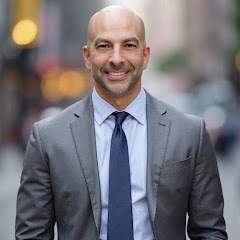 Peter Attia MD
Want to know something specific about what's covered?
We've already dissected every moment. Ask and we will deliver (with timestamps).
Key Moments
Gary Taubes discusses his journey from physics to investigative science journalism, uncovering "pathological science" in various fields.
Key Insights
Skepticism and critical thinking, honed from his early experiences and boxing, are foundational to Taubes's journalistic approach.
Pathological science is characterized by premature public commitment to results, inadequate background analysis, and selective interpretation of evidence.
The W and Z boson discovery and cold fusion served as early case studies in how scientific bias and groupthink can mislead research.
Epidemiology as a field struggles with establishing causation due to the impossibility of rigorous randomization and the ubiquity of confounding variables.
The conventional wisdom in nutrition, particularly the low-fat and energy balance hypotheses, is deeply flawed and the result of insufficient scientific rigor and historical misinterpretations.
Addressing complex public health issues like obesity requires questioning deeply ingrained paradigms and fostering unbiased, interdisciplinary research teams.
A FOUNDATION IN PHYSICS AND EARLY SKEPTICISM
Gary Taubes, initially an astrophysics major at Harvard, developed a healthy skepticism for scientific claims from his early academic experiences. A C-minus in quantum physics led him to applied physics, and later, a master's in aerospace engineering at Stanford. His realization that a career as an astronaut was impractical, coupled with an aversion to blind authority, steered him towards investigative journalism. This innate skepticism, perhaps rooted in sibling rivalry and early journalistic assignments like investigating the Shroud of Turin, became a guiding principle throughout his career, preparing him for the challenges of dissecting complex scientific narratives.
LESSONS FROM THE GOLDEN GLOVES: RISK AND COGNITIVE BIAS
Taubes's boxing career, though brief and ending with a knockout in the Golden Gloves, profoundly influenced his understanding of risk and personal bias. He recounts how, despite a friend's death in the ring and his own severe concussion, he mentally blocked out the danger. This experience highlighted the human tendency to underestimate risk, particularly in youth, and how personal belief systems can override objective evidence. This insight later proved invaluable when dissecting scientific controversies where researchers, despite red flags, clung to their initial hypotheses due to cognitive biases and the inherent human difficulty in admitting error.
THE INTERPLAY OF REPORTING AND CRITIQUE IN LEARNING TO WRITE
Taubes's journey to becoming a gifted science writer was forged through rigorous critique. After initial writing courses where he learned little from a "nice" instructor, a fiction editor from The Atlantic relentlessly hammered his writing, instilling a deep appreciation for precision and clarity. At Discover magazine, a system of reporters gathering information and experienced writers refining the prose further honed his craft. He likens the process to Calvin Trillin's 'vomit out' first draft, followed by iterative rewriting until the text reads as if an objective, discerning reader would have enjoyed it, emphasizing that good science writing transcends mere scientific facts to tell a compelling story.
UNCOVERING PATHOLOGICAL SCIENCE: THE W AND Z BOSON DISCOVERY
Taubes's first book, "Nobel Dreams," chronicled Carlo Rubbia's controversial W and Z boson discovery at CERN. Initially intending to document a great scientific breakthrough, Taubes quickly observed discrepancies between Rubbia's claims and the experimental data. He identified what he later termed "pathological science": a phenomenon where scientists, driven by ambition and a public commitment to a premature result, selectively interpret evidence, ignore confounding factors (background noise), and suppress dissenting voices. This experience highlighted the critical importance of rigorous background analysis and the dangers of prioritizing discovery over meticulous verification in scientific pursuit.
THE COLD FUSION DEBACLE: A CASE STUDY IN SCIENTIFIC ERROR
The cold fusion controversy of 1989 provided Taubes a powerful case study for his second book, "Bad Science." The immediate global attempt to replicate Stanley Pons and Martin Fleischmann's claims of infinite free energy exposed numerous instances of "pathological science." Laboratories, eager for breakthrough, often lacked the expertise in calorimetry or physics to understand their equipment's flaws, leading to false positives. Taubes discovered that the phenomenon became widespread not out of fraud, but from scientists inadvertently fooling themselves by failing to account for background noise and clinging to preconceptions, despite overwhelming evidence of non-reproducibility from more rigorous experiments.
FROM ENERGY BALANCE TO HORMONAL REGULATION IN OBESITY
Taubes's investigation into obesity research revealed a deeply entrenched paradigm: the energy balance hypothesis (obesity is caused by eating too much). He traced its origins to flawed early 20th-century studies and the misinterpretation of animal experiments, particularly by John Brobeck, who assumed hyperphagia caused obesity rather than being a response to a deeper metabolic dysregulation. This 'eating too much' hypothesis overshadowed competing ideas, like those of Julius Bauer and Hetherington and Ranson, who proposed obesity as a hormonal regulatory disorder of fat accumulation, driven by factors like insulin and fuel partitioning, a concept largely ignored for decades by the dominant psychological and psychiatric approaches to weight management.
THE PITFALLS OF EPIDEMIOLOGY IN PUBLIC HEALTH
Taubes’s foray into public health, driven by a fascination with the "bad science" he saw in electromagnetic fields and cancer, led him to critically examine epidemiology. He argues that unlike physics, epidemiology often lacks the ability to conduct rigorous randomized controlled trials—a critical limitation especially in chronic disease. This absence forces reliance on observational associations, which are then often mistakenly interpreted as causal without adequately controlling for confounding variables like socioeconomic status. He contends that many epidemiological findings are false positives, stemming from an inability to adequately account for the "background noise" and biases inherent in complex human populations.
THE SALT AND FAT DEBATES: UNVEILING DOGMA IN NUTRITION
Taubes's deep dive into nutrition began with a seemingly innocuous assignment on the DASH diet, which unexpectedly exposed a "vitriolic controversy" over salt and blood pressure. He found that the widespread low-salt dietary recommendations were based on weak randomized controlled evidence and flawed epidemiology. This led him to the dietary fat controversy, where he encountered similar issues: a dogma advocating low-fat diets, again based on uncompelling evidence and further perpetuated by influential, yet arguably "bad," scientists. These investigations, culminating in his influential New York Times Magazine article and subsequent books, highlighted how scientific consensus can form on shaky ground within nutrition.
CHALLENGING THE LOW-FAT DOGMA AND THE RISE OF CARBOHYDRATE-INSULIN MODEL
Taubes's research ultimately led him to challenge the long-held belief that dietary fat causes heart disease and that obesity is solely a matter of calorie imbalance. He discovered a historical counter-hypothesis: that chronic diseases and obesity are driven by the carbohydrate content of the diet, particularly through its impact on insulin. This 'carbohydrate-insulin model' posits that excessive carbohydrate consumption leads to hyperinsulinemia, signaling fat tissue to store energy and inhibiting its release, thereby promoting fat accumulation and subsequent hunger. This alternative view, rooted in overlooked pre-WWII European research and physiological psychology, gained personal resonance when Taubes experimented with a low-carbohydrate diet himself, experiencing significant weight loss.
OBESE MICE AND THE INSULIN CONNECTION: A NEW INTERPRETATION
The ob/ob and db/db mice at Jackson Laboratories provide further evidence for Taubes’s carbohydrate-insulin model. While traditionally interpreted through the lens of a missing satiety hormone (leptin) leading to overeating, Taubes highlights that these animals are also profoundly hyperinsulinemic from an early age. The lesioning of the ventromedial hypothalamus (VMH) similarly causes hyperinsulinemia, leading to fat hoarding and a resulting "starvation state" at the cellular level, driving hyperphagia as a compensation for inaccessible fuel. This reinterpretation suggests that the primary issue is dysregulated fat accumulation, with overeating and sedentary behavior being consequences, not causes.
THE STALEMATE IN OBESITY RESEARCH: BIAS AND METHODOLOGY
Taubes acknowledges the current stalemate in obesity research, where deeply ingrained biases and flawed methodologies hinder genuine progress. He notes that researchers often interpret results to confirm their existing belief systems, whether supporting the energy balance model or the carbohydrate-insulin model. The inherent complexity and "messiness" of biology, with its numerous unknown unknowns and experimental control challenges, exacerbate this problem. He challenges the field to critically evaluate experimental design, particularly regarding measurement techniques like doubly labeled water versus indirect calorimetry, which can yield divergent results and perpetuate conflicting interpretations.
THE PATH FORWARD: REJECTING PARADIGMS AND FUNDING UNBIASED INQUIRY
For meaningful progress in addressing the obesity and diabetes epidemics, Taubes advocates for a radical shift in scientific approach. He argues that the conventional wisdom has demonstrably failed, necessitating a questioning of fundamental assumptions. He envisions a scenario where unbiased, interdisciplinary teams, free from the preconceptions of current obesity researchers or nutritionists, are assembled to rigorously test competing hypotheses. Despite personal frustrations with the slow pace of change, Taubes recognizes significant progress: low-carbohydrate/ketogenic diets, once deemed deadly, are now widely accepted and recommended for type 2 diabetes and are being extensively studied for various other conditions. This shift, even if incomplete, represents a liberation of intervention that empowers individuals to improve their health.
Mentioned in This Episode
●Products
●Software & Apps
●Companies
●Organizations
●Books
●Drugs & Medications
●Studies Cited
●Concepts
●People Referenced
Common Questions
Gary Taubes studied physics, initially astrophysics, at Harvard, then pursued a master's in aerospace at Stanford with astronaut aspirations. He switched to journalism after realizing a military hierarchy was unsuitable for him, inspired by investigative journalism books like 'All the President's Men'.
Topics
Mentioned in this video
A physicist whose 'first principle of science'—'you must not fool yourself'—is highly valued by Gary Taubes as a standard for good science.
A science journalist and friend of Gary, whose writing is described as 'painfully beautiful'.
A Nobel laureate chemist who coined the term 'pathological science' in a 1957 talk, a concept that heavily influenced Gary Taubes.
The New Yorker writer who coined the term 'the vomit out' for a first draft, a writing philosophy Gary adopted.
Principal investigator at Johns Hopkins, interviewed by Gary about the DASH diet research.
A graduate student who, with Homer W. Smith, pioneered the first animal model of obesity by creating hypothalamic lesions in rats, initially having an alternative interpretation to Brobeck.
Author of 'The Ghost Map,' a book Gary found extraordinary for its blend of scientific storytelling and broader societal implications.
A researcher at Yale cited as a significant critic of epidemiology, alongside Gary Taubes.
A physician from the University of Michigan who, in 1930, performed early experiments that he interpreted as refuting hormonal theories of obesity, instead concluding it was caused by overeating.
A researcher who, similar to Gary Taubes, believes that the carbohydrate-insulin model explains obesity.
A writer who suggested high-fructose corn syrup was a cause of the obesity epidemic.
Conducted one of the early clinical trials at Duke comparing the Atkins diet to a low-fat diet.
Co-author of a recent Science article that could be seen as a refutation of the carbohydrate-insulin model of obesity.
Introduced Gary to Kevin Hall, believing they shared similar perspectives on obesity problems.
A contemporary researcher whose contribution to critiquing epidemiology has 'dwarfed' that of Feinstein and Taubes.
A physician known for advocating low-fat diets; Gary jokes he'd have been proud of Gary's own low-fat diet adherence at one point.
A controversial Harvard physicist and Nobel laureate whose research on W and Z bosons was the focus of Gary's first book, 'Nobel Dreams'. Gary describes him as ambitious and prone to prematurely claiming discoveries.
A renowned science writer who commented on Gary's extensive research for 'Bad Science'.
Leading neuroanatomist of his era who, with Albert Hetherington, pioneered the first animal model of obesity and offered an alternative, hormonal interpretation of obesity, which was later overlooked.
Conducted parabiosis experiments at Jackson Laboratory that were foundational to the discovery of leptin.
The director of the NIH, mentioned by Gary as a key figure whose attention is needed to shift research funding priorities regarding obesity and diabetes.
A chemist from Southampton University, UK, who, with Stanley Pons, controversially claimed to have achieved cold fusion.
Philosopher who published 'Novum Organum' 401 years ago, marking the beginning of the scientific method.
A researcher Gary consulted regarding the differing diabetic outcomes in specific mouse strains, who attributed it to 'background dependence'.
A physicist famous for the quote 'not even wrong,' which Gary Taubes uses to describe the energy balance hypothesis of obesity.
A chemist from the University of Utah who, with Martin Fleischmann, controversially claimed to have achieved cold fusion.
A researcher from NIH, initially seen as an outsider physicist, co-authored a Science article on the carbohydrate-insulin model; his work and interpretation of data have become a point of contention with Gary.
Gary compares a 'grand old man of the field' he interviewed about salt and fat controversies to Walter Matthau.
An Austrian endocrinologist and pioneer in the field, who critiqued the early energy balance hypothesis of obesity.
An old colleague of Gary Taubes with whom he debates the 'quack' label often applied to those challenging conventional scientific wisdom.
A neuroanatomist who pioneered experiments in the 1930s on hypothalamic lesions in rats, interpreting induced obesity as 'hyperphagic obesity' due to overeating, influenced by Newburgh's work.
Credited with identifying leptin as a hormone missing in obese mice, though his interpretation of its primary role is debated by Gary Taubes.
A topic of public health debate, concerning their potential link to cancer, which Gary investigated after 'Bad Science'.
Fundamental particles whose discovery at CERN by Carlo Rubbia's UA1 collaboration was the subject of Gary Taubes's first book, 'Nobel Dreams'.
Genre of books Gary read growing up, which inspired his initial interest in astrophysics and a desire to become an astronaut.
A term coined by Irving Langmuir, describing the science of things that aren't so, which Gary Taubes has extensively studied throughout his career.
The scientific field Gary moved into studying, initially finding its rigor lacking compared to physics.
Dietary Approaches to Stop Hypertension, a dietary approach Gary initially wrote about, leading him into the 'salt and blood pressure' controversy.
A hormone identified by Jeffrey Friedman, often interpreted as a satiety hormone, but whose role in obesity is seen differently by Gary Taubes as related to hyperinsulinemia.
A sweetener that became pervasive in the US diet around the time the obesity epidemic began, suggested as a potential cause.
The field Gary transitioned into after realizing a career as an astronaut was unsuitable, aiming for investigative journalism.
A highly precise tool for measuring energy expenditure through indirect calorimetry, considered a 'gold standard' in research.
Gary's initial academic major, influenced by science fiction and a sibling rivalry, before switching to applied physics.
The alternative hypothesis proposed by Gary Taubes, suggesting that weight gain is driven by carbohydrates through their effect on insulin.
An alternative method to indirect calorimetry for estimating energy expenditure in a free-living environment, criticized for potential inaccuracy in carbohydrate-restricted individuals.
A low-carbohydrate, high-fat diet that Gary experimented with, losing 25 pounds in six weeks, and which was shown in clinical trials to be effective for weight loss and improving heart disease risk factors.
Where Gary pursued a master's degree in aerospace, still with aspirations of becoming an astronaut.
Magazine where Gary published an article on the powerline cancer connection.
Location of Eric Westman's first clinical trial on the Atkins diet.
One of two job offers Gary received out of journalism school, which he didn't take due to smoking restrictions.
Where the ob/ob mouse and other mutant strains manifesting obesity were discovered and studied, leading to leptin research.
Currently recommends low-carb/high-fat diets for Type 2 diabetes, indicating a significant shift from 20 years ago when such diets were considered 'deadly'.
An administrator from NIH mentioned to Gary about the unexpected rise in obesity despite low-fat diet recommendations.
The institution where Stanley Pons worked when he claimed the discovery of cold fusion.
The institution where Martin Fleischmann worked when he claimed the discovery of cold fusion.
Where Gary interviewed an economist who recommended the Atkins diet, citing its effectiveness for his collaborator's father and for himself.
Researchers from here studied the Shroud of Turin, concluding its making was inexplicable by their equipment.
The journal that published the DASH diet paper Gary was writing about, prompting his deeper investigation into nutrition controversies.
A competing group mentioned in the context of cold fusion, adding to the rush to publish.
An organization whose former president refused to speak to Gary about the DASH diet and whose dietary recommendations were contrasted with the Atkins diet.
Gary Taubes's alma mater for undergraduate studies, where he majored in physics and later took night writing courses.
The European Center for Nuclear Research in Geneva, where Carlo Rubbia's UA1 collaboration worked on detecting W and Z bosons.
Institution where Larry Appel, a principal investigator of the DASH diet research, worked.
A journal where Gary published a controversial piece on epidemiology, known for its critical stance.
The publication for which Gary wrote an article asking what caused the obesity epidemic, which led to his book 'Good Calories, Bad Calories'.
The largest obesity research center in the US, where Gary lectured on the 'Why We Get Fat' hypothesis.
An extraordinary book by Steven Levy about the 1854 London cholera epidemic, which Gary found deeply impactful.
Gary's book detailing the cold fusion controversy as a case study in how scientific mistakes are made and perpetuated.
Gary's first book, which documented the discovery process of W and Z bosons at CERN and critically examined Carlo Rubbia's scientific practices.
One of two job offers Gary received out of journalism school, which he didn't take due to not wanting to move to Dallas.
A book by Jim Gleick that Gary greatly admires for its thoughtful writing.
Gary Taubes's book that challenges conventional wisdom on diet, saturated fat, and the causes of obesity.
Horace Freeland Judson's book about the molecular biology revolution.
A text by Francis Bacon, considered the beginning of the scientific method, which Gary read to understand scientific rigor.
A book title that Gary uses to illustrate the common, brain-centric interpretation of leptin's role in controlling hunger and obesity.
More from Peter Attia MD
View all 347 summaries 125 min
412 ‒ The evolving science of cancer: emerging approaches to prevention and early detection, & more
 122 min
410 ‒ The biology of pregnancy: physiologic adaptation, childbirth, and long-term maternal health
 156 min
409 ‒ Inside modern drug development: the science, economics, and regulatory hurdles
 140 min
407 ‒ Preventing cardiovascular and Alzheimer’s disease: lowering LDL early, APOE4, and more
Ask anything from this episode.
Save it, chat with it, and connect it to Claude or ChatGPT. Get cited answers from the actual content — and build your own knowledge base of every podcast and video you care about.
Get Started Free