Key Moments
#158-Brian Deer: A tale of scientific fraud—Andrew Wakefield & the belief that vaccines cause autism
 Peter Attia MD
Want to know something specific about what's covered?
We've already dissected every moment. Ask and we will deliver (with timestamps).
Key Moments
Investigative journalist Brian Deer exposes Andrew Wakefield's scientific fraud linking vaccines to autism.
Key Insights
Andrew Wakefield's research linking MMR vaccine to autism was fraudulent, lacking scientific rigor and fabricated data.
Wakefield's initial hypothesis about measles causing Crohn's disease was poorly conceived and resistant to contradictory evidence.
A lawyer, Richard Barr, hired Wakefield to build a case against the MMR vaccine, despite Wakefield's lack of expertise in autism or vaccines.
The 1998 Lancet paper was based on a pre-selected group of children whose medical records were misrepresented and manipulated.
John O'Leary's lab, paid with public funds, produced fraudulent PCR results, likely due to contamination or deliberate falsification.
The failure to conduct strain-specific sequencing meant the origin of the alleged measles virus could not be determined, a critical flaw in the research.
THE ORIGINS OF A FALSE THEORY
Journalist Brian Deer details the complex story behind Andrew Wakefield's infamous 1998 Lancet paper, which erroneously linked the MMR vaccine to autism. Deer explains that Wakefield, initially a surgeon, developed a fixation on finding specific infectious agents causing diseases, starting with Crohn's disease. His initial hypothesis, that measles virus caused Crohn's, was based on cherry-picked data and a resistance to scientific validation, setting the stage for further deceptions.
THE HIRE OF A DOCTOR WITHOUT PATIENTS
The narrative shifts to lawyer Richard Barr, who sought an expert to support his government-contracted mission to prove vaccines caused developmental issues, specifically autism. Unable to find a credible expert, Barr hired Andrew Wakefield, who had no background in autism or vaccines but had a flawed theory linking measles to bowel disease. This alliance marked the beginning of a concerted effort to construct a case against the MMR vaccine.
THE LANGET PAPER: A CASE STUDY IN DECEPTION
The centerpiece of the controversy, a 1998 Lancet paper, is examined. Deer highlights its flaws: a small sample size of 12 children, recruited from parents already alleging vaccine injury, and significant misrepresentations of their medical histories and diagnoses. The procedures these children endured, including invasive tests, were conducted without ethical approval, and the paper's findings were later revealed to be fabricated to align with Wakefield's predetermined conclusion.
THE ROLE OF JOHN O'LEARY'S LABORATORY
Central to the alleged evidence was the work done in John O'Leary's laboratory, funded by taxpayer money. Despite Wakefield's initial hypothesis about finding measles virus, O'Leary's lab used PCR technology, which, when analyzed rigorously, revealed contamination or deliberate falsification. The critical failure to perform strain-specific sequencing meant the origin of any detected virus could not be definitively determined, undermining the entire premise.
FAILURES IN SCIENTIFIC RIGOR AND OVERSIGHT
Deer emphasizes the profound lack of scientific integrity, noting Wakefield's insistence on confirming his hypothesis rather than seeking to disprove it. The process lacked essential scientific safeguards, such as proper controls and sequencing, leading to a 'fact-free zone' where data was manipulated. The funding agency's review of Wakefield's grant application was superficial, and the medical establishment's initial inaction allowed the fraud to persist.
THE REVERBERATIONS OF FRAUDULENT SCIENCE
The consequences of Wakefield's fraudulent research have been far-reaching, fueling the anti-vaccine movement for decades. These false claims have caused immense anxiety for parents who vaccinated their children, leading them to question their decisions and contributing to vaccine hesitancy. The manipulation of scientific data, driven by personal gain and ideological motives, continues to pose a significant threat to public health, as seen in the ongoing challenges surrounding vaccine acceptance.
Mentioned in This Episode
●Products
●Software & Apps
●Companies
●Organizations
●Books
●Concepts
●People Referenced
Common Questions
Initially, Brian Deer tried to portray Wakefield as misguided but not initially fraudulent. However, even early in his career, some colleagues, like Professor Tom McDonald, suspected his work was fraudulent due to unusual results and inappropriate controls.
Topics
Mentioned in this video
A former physician and surgeon, central figure in the MMR vaccine controversy, whose fraudulent 1998 Lancet paper falsely linked vaccines to autism.
A professor in London and dean of research who even in the 1990s believed Wakefield's work was fraudulent.
A very famous scientist at Stanford who mentored Peter Attia on writing a scientific proposal, emphasizing rigor and falsification.
An Irish professor working in New York who was hired by Wakefield to 'find' measles virus in children's bowel tissues using PCR, central to the alleged fraud.
A famous scientist known for emphasizing the principle of not fooling oneself in scientific inquiry, cited by Peter Attia.
A woman whose child experienced neurological illness after an MMR shot, leading her to campaign against vaccines and collaborate with Richard Barr and Andrew Wakefield.
Awarded the Nobel Prize in the 1980s for inventing the PCR technology.
Wakefield's own scientific researcher, who froze tissue samples but couldn't find measles virus, later leaving science disillusioned.
An obscure lawyer who contracted Andrew Wakefield to find evidence linking the MMR vaccine to developmental issues, specifically autism, to support a lawsuit.
Mentioned by Brian Deer as discussing PCR cycles and setting a threshold of 35 cycles for meaningful results.
Britain's top PCR technology expert, hired by the pharmaceutical industry, who uncovered deliberate data manipulation in O'Leary's lab.
Bernard Seltz's wife, who also put up money to fund Wakefield's lawsuit against Brian Deer.
His trial is mentioned as being shorter than the medical board hearing that investigated Wakefield's misconduct.
A New York financier who funded Wakefield's lawsuit against Brian Deer and the British Medical Journal in Texas.
A London medical school where Andrew Wakefield worked and conducted his discredited research on Crohn's disease and later the MMR vaccine.
The Canadian hospital where Andrew Wakefield studied in the late 1980s, observing early attempts at whole bowel transplants.
The US public health agency, whose alleged 'whistleblower' narrative was used by Wakefield to falsely accuse CDC researchers of fraud.
A prominent medical research charity that initially funded Wakefield, though its role and status were different in the late 1980s.
The journal where Wakefield first published his 1993 paper claiming to find measles virus using immunohistochemistry.
A highly prestigious medical journal that published Wakefield's fraudulent 1998 paper linking MMR to autism, and later retracted it.
Mentioned as the institution that first characterized autism through a case series of 11 children, and also the publisher of Brian Deer's book.
A maternity hospital in Dublin where John O'Leary conducted his PCR research for Wakefield.
A British government agency that provided funding for Wakefield's research based on a grant application that pre-supposed the link between MMR and autism.
A highly prestigious medical journal that published an article in 2011 characterizing anti-vaccinationists.
A national UK television network that produced a documentary based on Brian Deer's investigation, leading to Wakefield's lawsuit against them.
A medical journal that published a series of Brian Deer's reports on Wakefield's fraud, which led to another lawsuit from Wakefield.
A two-volume encyclopedia of viruses from which Wakefield learned about measles virus presence in the gut during acute infection.
Brian Deer's book detailing the extensive fraud committed by Andrew Wakefield, based on years of investigation and access to sealed documents.
More from Peter Attia MD
View all 337 summaries 118 min
Building strength and muscle mass: optimize training & nutrition for longevity (AMA #71 rebroadcast)
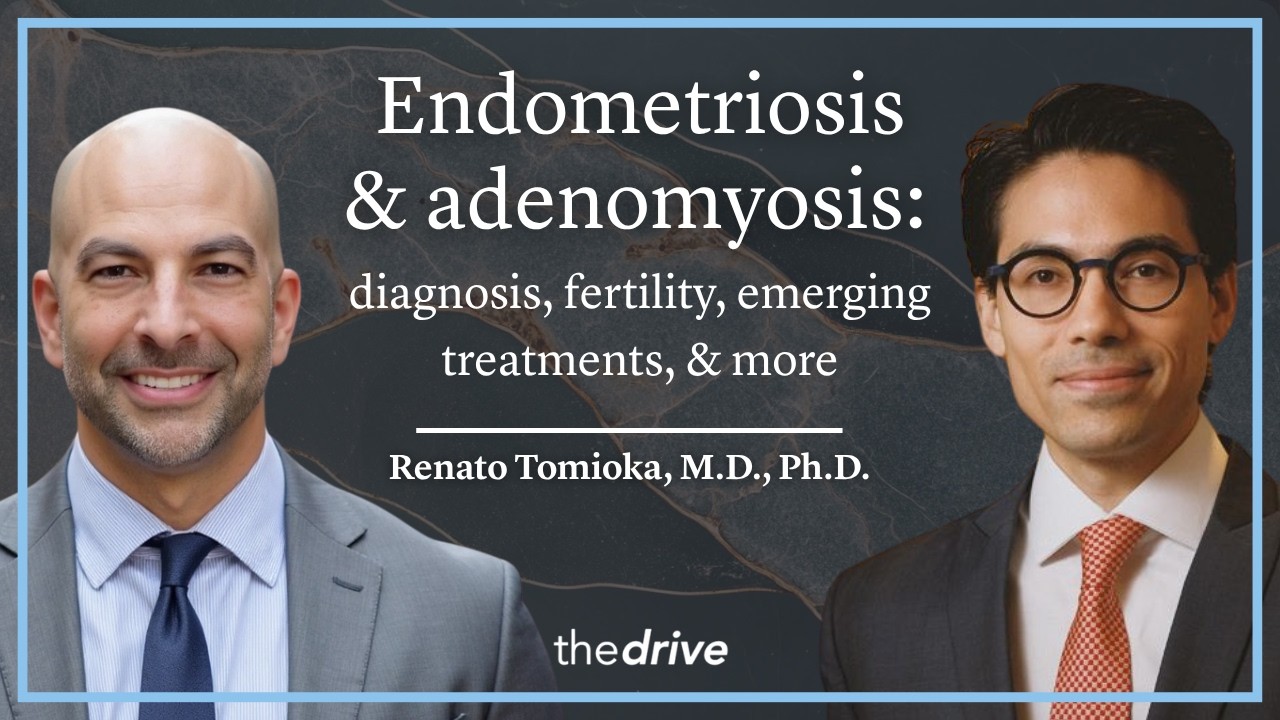 121 min
397 - Endometriosis and adenomyosis: diagnosis, fertility, reproductive aging, & emerging treatments
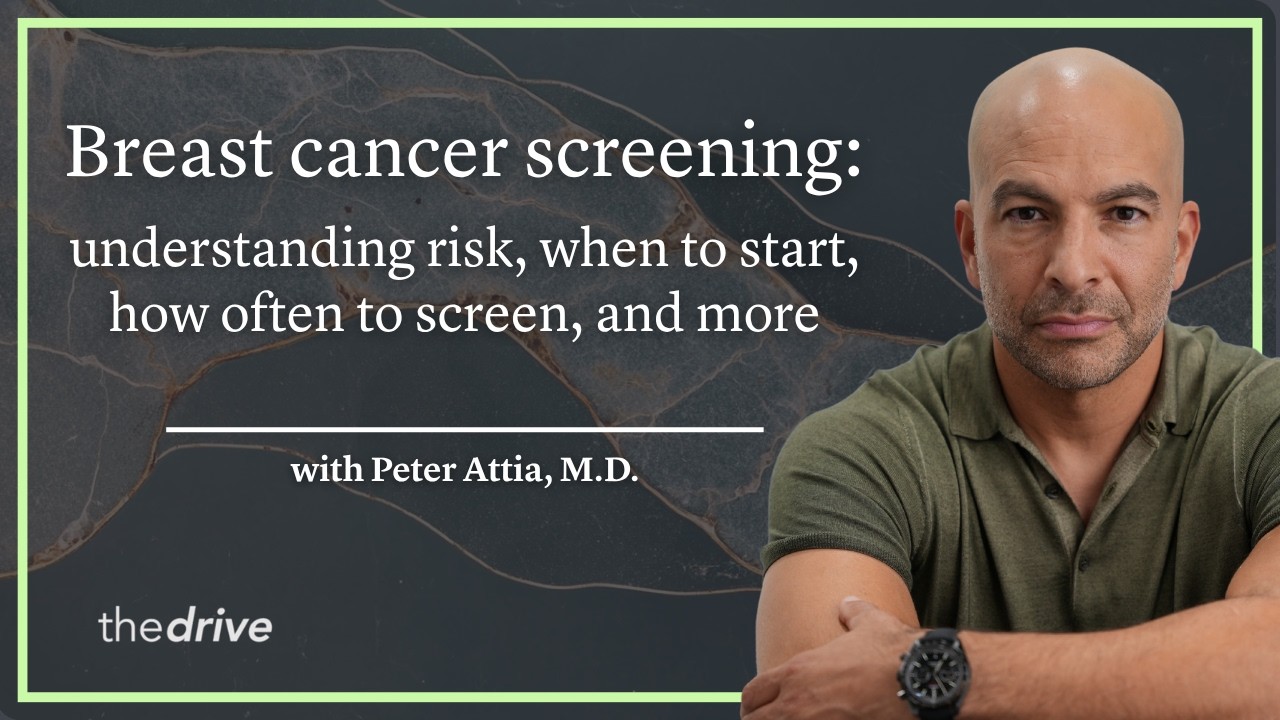 51 min
396 – Breast cancer screening: understanding risk, deciding when to start, and more
 105 min
395 – Brain lipidology: understanding APOE, cholesterol homeostasis, Alzheimer’s disease, & more
Ask anything from this episode.
Save it, chat with it, and connect it to Claude or ChatGPT. Get cited answers from the actual content — and build your own knowledge base of every podcast and video you care about.
Get Started Free