Key Moments
#135 - BJ Miller, M.D.: How understanding death leads to a better life
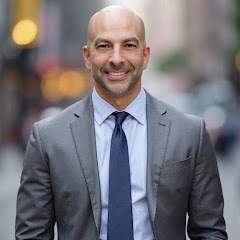 Peter Attia MD
Key Moments
Understanding death improves life. Dr. Miller shares his journey and insights on palliative care, loss, and embracing mortality.
Key Insights
A near-fatal accident profoundly reshaped BJ Miller's perspective on life and led him to palliative care.
Palliative care focuses on improving quality of life for those with serious illness, not just end-of-life care.
Accepting mortality can be liberating, reducing fear and regrets, and enhancing appreciation for life.
The medical system often prioritizes acute conditions over holistic care for chronic illness and the dying process.
Psychedelics show promise in treating end-of-life anxieties and reframing one's relationship with death.
Cultural and physiological wiring makes death a difficult topic, but confronting it is crucial for a full life.
TRANSFORMATIVE ACCIDENT AND THE PATH TO PALLIATIVE CARE
BJ Miller's life took a dramatic turn after a near-fatal electrical accident in college, resulting in the loss of both legs and an arm. This profound brush with death, initially a seemingly catastrophic event, ultimately reoriented his perspective and forged his path toward palliative care. The intense and foreign environment of the burn unit, while brutal, fostered a sense of vulnerability and trust, allowing him to submit to the care he received. This personal experience deeply informed his later understanding of life, loss, and the human condition, moving him to help others navigate similar profound challenges.
THE JOURNEY THROUGH GRIEF AND SELF-DISCOVERY
Miller's recovery involved a complex process of grief, initially delayed by a conscious effort to embody a stoic, 'get back on the horse' mentality. A pivotal moment arrived when a nurse encouraged him to express his emotions, leading to a cathartic release of tears that felt both painful and liberating. This marked the beginning of a gradual journey toward accepting his new reality, moving beyond the initial denial and embarrassment. He recognized that true healing involved integrating his experiences rather than trying to overcome or forget them, a perspective shaped by his mother's lifelong disability and his own challenging recovery.
ART, MEANING, AND THE PIVOT TO MEDICINE
After his accident, Miller initially pursued art history, seeking to understand human endeavors and meaning-making, particularly how people cope with pain and the uncontrollable. This exploration of human creativity and resilience provided a unique lens through which he later approached medicine. He realized that studying art had prepared him to delve into the 'why' of human existence, a crucial element often missing in a purely technical medical education. This realization, coupled with a desire to leverage his experiences rather than hide them, led him to consider medicine as a field where his unique perspective could be an advantage.
THE DISILLUSIONMENT AND REDISCOVERY OF MEDICINE
While pursuing medicine, Miller experienced disillusionment, particularly with the mechanical approach of rehabilitation. His sister's suicide during medical school further intensified this crisis, leading him to consider leaving the profession. However, an elective in palliative care during his internship at the Medical College of Wisconsin ignited a new passion. Witnessing a physician engage with a patient about end-of-life care with profound humanism and directness shifted his entire perspective, showing him a path centered on presence, empathy, and addressing suffering rather than just disease.
UNDERSTANDING PALLIATIVE CARE VS. HOSPICE
Miller clarifies the distinction between palliative care and hospice. Palliative care is defined as the interdisciplinary pursuit of quality of life for individuals with serious illnesses, focusing on emotional, physical, and spiritual well-being, irrespective of prognosis. Hospice care, conversely, is a subset of palliative care specifically reserved for the end of life, typically in the final months. This crucial distinction is often misunderstood, leading many to avoid palliative care, fearing it implies imminent death, thus prolonging suffering unnecessarily when support could be sought earlier.
THE HUMAN STRUGGLE WITH MORTALITY AND ITS LIBERATING POTENTIAL
Miller posits that humanity's deep-seated denial of death stems from physiological wiring to avoid threats, coupled with the existential predicament of knowing one's own mortality. Medical advancements and societal anti-aging narratives further complicate this relationship. However, confronting death, he argues, can be profoundly liberating. By accepting the inevitability of death, individuals can reduce fear and regrets, leading to a more meaningful and appreciative engagement with life. This acceptance doesn't mean abandoning life but rather enhancing its preciousness by acknowledging its finite nature.
FINDING MEANING: LESSONS FROM THE DYING
Interactions with patients nearing death reveal that common regrets often revolve around wishing for more love, less fear, and greater self-acceptance, rather than material achievements. Many patients realize that by grappling with mortality earlier, they might have made different, more life-affirming decisions. The ultimate freedom found in facing death is the realization that failure, in life's grand scheme, is inevitable; this understanding alleviates the pressure to be perfect and encourages a more authentic and purposeful engagement with the time remaining, turning death into a catalyst for living fully.
THE ROLE OF PSYCHEDELICS AND THE FUTURE OF CARE
Research into psychedelics like psilocybin and MDMA shows remarkable potential in transforming end-of-life anxieties. These substances, when used in guided sessions, can help individuals lose their fear of death, find a sense of meaning and connection, and reframe their relationship with mortality. Miller is also excited by the growing interdisciplinary collaboration outside traditional medicine, involving architects, artists, and death doulas. This shift towards a more holistic, person-centered approach, recognizing that death transcends medicalization, is seen as a crucial evolution in how society cares for its members.
ADDRESSING SUFFERING AND LOVING LIFE FULLY
Miller draws a critical distinction between the fear of dying (which can be alleviated with medical support) and the fear of being dead (an existential unknown). He emphasizes that a meaningful life is not the absence of suffering but the capacity to grow through it. While hastened death can be a valid choice for some, for many, the more profound meaning lies in being more than their pain, allowing their bodies to complete their course while adapting and growing. This perspective highlights that embracing life fully, even with its pain, is ultimately more meaningful than seeking numbness.
REALIGNING HEALTHCARE WITH THE HUMAN CONDITION
The current healthcare system's focus on acute conditions and disease, rather than the person, represents a design flaw. Miller advocates for reframing healthcare's mission to encompass palliative care principles, thereby centering the individual's social, emotional, and spiritual lives alongside their physical health. This shift requires reimagining medical education to integrate discussions on mortality and suffering from day one. Ultimately, addressing death and suffering requires a societal effort that transcends medicine, fostering a culture where life and death are understood as integral parts of the human experience.
Mentioned in This Episode
●Companies
●Organizations
●Drugs & Medications
●Concepts
●People Referenced
Common Questions
BJ Miller's life changed after Thanksgiving in 1990 at Princeton University when he climbed a commuter train. He was electrocuted, leading to the loss of both legs below the knee and one arm below the elbow. This transformative event reshaped his perspective on life, ambition, and career path.
Topics
Mentioned in this video
A viral disease that caused disability in BJ Miller's mother, influencing his perspective on disability and kinship with the disabled community.
BJ Miller's major at Princeton, which he chose after his accident, seeing it as a way to understand human creativity and meaning-making.
The medical specialty BJ Miller initially intended to pursue, focusing on rehabilitation, which he later found too mechanical and disconnected from personal transformation.
A rare and aggressive cancer, typically associated with asbestos exposure in older individuals, that Randy Sloan was diagnosed with at a young age.
One of the first states to legalize physician-assisted suicide, now referred to as aid in dying.
A state that has legalized aid in dying.
A state that legalized aid in dying in 2016.
A state that has legalized aid in dying.
A district that has legalized aid in dying.
The burn unit in Livingston, New Jersey, where BJ Miller was treated after his accident.
A Santa Barbara-based organization that fulfills end-of-life wishes for adults, which BJ Miller is involved with.
The university where BJ Miller was an undergraduate and sustained his life-altering injury.
The institution where BJ Miller completed an internship and stumbled upon an elective in palliative care, which transformed his career path.
Mentioned as an entity that could redefine healthcare's mission to focus on the person rather than just disease, drawing parallels to palliative care's goals.
A hospice house in San Francisco where Randy Sloan spent his final days, supported by BJ Miller and his team.
The medical school BJ Miller attended, where he developed a more formal understanding of mental health and began questioning his career path.
A nurse who worked in the burn unit and helped BJ Miller begin his emotional grieving process after his accident.
An oncologist at the Medical College of Wisconsin who built an early palliative care program and demonstrated a human-centered approach to discussing end-of-life wishes.
Guest and hospice and palliative care specialist, sharing his personal journey with disability and his professional insights into end-of-life care.
A young motorcycle mechanic who modified a bike for BJ Miller and later became his palliative care patient after being diagnosed with mesothelioma.
A psychedelic substance currently being researched for its therapeutic value in end-of-life care, particularly for anxiety and fear of death.
A psychedelic substance being researched for its significant positive impact on end-of-life anxieties, fear of death, and feelings of meaninglessness in terminally ill patients.
A substance showing new therapeutic values in end-of-life care, related to psychedelics being studied for their impact on anxieties and fears of death.
More from Peter Attia MD
View all 333 summaries 135 min
381‒Alzheimer’s disease in women: how hormonal transitions impact the brain, new therapies, & more
 9 min
9 minIs Industrial Processing the Real Problem With Seed Oils? | Layne Norton, Ph.D.
 13 min
Cooking with Lard vs Seed Oils | Layne Norton, Ph.D.
 146 min
380 ‒ The seed oil debate: are they uniquely harmful relative to other dietary fats?
Found this useful? Build your knowledge library
Get AI-powered summaries of any YouTube video, podcast, or article in seconds. Save them to your personal pods and access them anytime.
Get Started Free