Key Moments
Walter Isaacson on CRISPR, Jennifer Doudna, Gene Editing, and More! | The Tim Ferriss Show
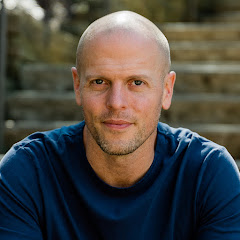 Tim Ferriss
Key Moments
Walter Isaacson discusses CRISPR gene editing, Jennifer Doudna, and the future of humanity.
Key Insights
CRISPR is a powerful gene-editing tool derived from bacteria, enabling precise DNA modification.
Jennifer Doudna's curiosity and dedication were key to developing CRISPR into a usable technology.
Gene editing offers immense potential for curing diseases, but raises ethical concerns about 'designer babies' and exacerbating social inequalities.
The three great revolutions are based on the atom, the bit, and the gene, with the latter being the current frontier.
Scientific competition can drive innovation, but cooperation and public domain sharing are also vital, especially in crises like pandemics.
Understanding basic science and its ethical implications is crucial for public discourse and responsible technological advancement.
THE ORIGINS OF GENE EDITING HEROISM
Walter Isaacson's conversation with Tim Ferriss delves into the profound implications of CRISPR gene editing, a revolutionary technology. Isaacson introduces the concept through the lens of Jennifer Doudna, the protagonist of his book, 'The Code Breaker.' He contrasts the wonder of scientific discovery with the potential for misuse, referencing historical marvels like Prometheus's fire and the temptation of the forbidden fruit as metaphors for humanity's engagement with powerful new tools. The discussion frames gene editing as a pivotal moment in the ongoing narrative of human innovation and ethical consideration.
FROM BACTERIA TO BIOTECH: THE POWER OF CRISPR
CRISPR, a natural defense mechanism found in bacteria, has been transformed into a precise gene-editing tool by scientists like Jennifer Doudna and Emmanuelle Charpentier. This technology, earned them a Nobel Prize, allows for the targeted modification of DNA. Its potential applications range from curing genetic diseases like sickle cell anemia to developing diagnostics and therapeutics for viral infections like COVID-19. The accessibility and relative simplicity of CRISPR technology are highlighted, emphasizing its significant impact on biological research and medicine.
INSPIRATION AND THE DOUBLE HELIX
The inspiration behind scientific pursuit is explored, with Isaacson recounting his own childhood fascination with James Watson's 'The Double Helix.' This early exposure to the discovery of DNA's structure ignited a passion for understanding life's fundamental mechanisms. Similarly, Jennifer Doudna, as a child in Hawaii, was inspired by the same book to become a scientist, overcoming initial discouragement from a guidance counselor. This highlights how foundational scientific narratives and persistent curiosity can shape future innovators.
ETHICAL DILEMMAS AND THE 'DESIGNER BABY' DEBATE
A significant portion of the discussion centers on the ethical quandaries posed by gene editing. Isaacson raises concerns about the creation of 'designer babies,' where parents might select genetic traits for their children beyond disease prevention, such as enhanced intelligence or physical attributes. This raises profound questions about social equity, as such technologies could become accessible only to the wealthy, potentially creating a genetic divide and impacting human diversity. The specter of misuse, including the creation of bio-weapons, is also a sobering consideration.
SCIENCE AS NOBLE ENDEAVOR: CURIOSITY AND COMPETITION
Isaacson emphasizes that scientific progress, exemplified by Jennifer Doudna, is often driven by profound curiosity and a belief in science as a noble endeavor. He contrasts this with a sole focus on immediate application or profit. While competition, as seen between Doudna and Feng Zhang in the race to demonstrate CRISPR's efficacy in human cells, can accelerate discovery, Isaacson also points to instances where scientists have chosen to make their findings public for the greater good, particularly during the COVID-19 pandemic. This dual nature of competition and cooperation shapes scientific advancement.
THE THREE GREAT REVOLUTIONS AND LITERACY
The conversation frames human innovation through three major revolutions: the atomic age, the digital (bit) age, and the current gene (molecule) age. Isaacson argues that understanding the 'molecule as the new microchip' is becoming as critical as digital literacy was in the previous era. He stresses the importance of public understanding and engagement in conversations about biotechnology, not necessarily to become a scientist, but to be informed participants in shaping the rules and ethical frameworks for these powerful technologies.
NAVIGATING THE FUTURE: GUIDELINES AND OPEN-MINDEDNESS
Enforcing guidelines for gene editing technology is recognized as a significant challenge due to its relative accessibility. However, Isaacson suggests that societies must establish norms, laws, and social shame to deter misuse, much like with other challenging technologies. He advocates for an open-minded approach, avoiding knee-jerk reactions to gene editing or GMOs, and instead focusing on understanding. The goal is to harness the immense potential of gene editing to alleviate suffering while vigilantly guarding against its potential for harm, fostering a hopeful yet cautious approach to humanity's engineered future.
Mentioned in This Episode
●Products
●Software & Apps
●Companies
●Organizations
●Books
●Drugs & Medications
●Studies Cited
●Concepts
●People Referenced
Common Questions
CRISPR is a gene editing technology that acts like molecular scissors to precisely cut and modify DNA. It's based on a natural defense mechanism found in bacteria used to fight viruses, adapted by scientists like Jennifer Doudna to edit genes in various organisms, including humans.
Topics
Mentioned in this video
A 1968 book by James Watson, recounting the discovery of the structure of DNA. This book was a significant inspiration for both Walter Isaacson and Jennifer Doudna to pursue science.
A book by John M. Barry about the 1918 Spanish flu pandemic. Isaacson draws parallels between historical pandemic responses and those during COVID-19 after reading Barry's work.
A 1651 book by Thomas Hobbes that is considered one of the most influential works of political philosophy, particularly in relation to social contract theory. Mentioned in the context of enforcing guidelines for gene editing technology.
The current President of Russia. He alluded to the potential of creating 'super soldiers' with enhanced abilities, highlighting concerns about the military applications of genetic technology.
The host of the podcast, interviewing Walter Isaacson. He shares his personal experiences with sponsors and topics discussed, and poses questions to his guest.
The dictator of Nazi Germany. Jennifer Doudna had a nightmare where she met Hitler, symbolizing the fear that CRISPR technology could be misused for nefarious purposes, akin to eugenics.
A Swiss chemist who first synthesized LSD (lysergic acid diethylamide), psilocybin, and other psychedelic compounds. He was recognized as one of the 'greatest living geniuses' in 2007.
A biohacker whom Tim Ferriss mentions as someone who attempted to use CRISPR to suppress myostatin and increase muscle mass, illustrating citizen science and potential athletic applications.
Co-founder of Apple Inc., known for his ability to blend art and technology. Isaacson notes that Jobs, like Doudna, did not distinguish between these fields, contributing to his innovative approach.
An English chemist and X-ray crystallographer whose work was central to the understanding of the molecular structures of DNA, RNA, viruses, coal, and graphite. Her data was used by Watson and Crick in their discovery of the DNA double helix.
An American molecular biologist, geneticist, and zoologist. Watson, along with Francis Crick, discovered the DNA double helix structure, inspiring both Isaacson and Jennifer Doudna in their scientific pursuits.
An American inventor and entrepreneur who was one of the founders of Fairchild Semiconductor and Intel Corporation. He played a key role in the development of the integrated circuit, mentioned in relation to technological advancement and collaboration.
A professor of history, former CEO of the Aspen Institute, and author, who is a guest on the podcast for the second time to discuss his new book. He is known for biographies of prominent figures like Leonardo da Vinci, Steve Jobs, Einstein, Benjamin Franklin, and Kissinger.
An artist and inventor whose meticulousness and curiosity are compared to Jennifer Doudna's scientific approach. Isaacson notes Da Vinci's unfinished works and his inquiries into natural phenomena.
A jazz musician Isaacson considered writing a biography about but ultimately decided against due to an inability to 'crack his code' and understand his inner life.
An English mathematician and writer, chiefly known for her work on Charles Babbage's proposed mechanical general-purpose computer, the Analytical Engine. She is credited with creating the first algorithm intended to be carried out by such a machine, leading to her description as the first computer programmer. Isaacson considered a biography on her but found insufficient material.
A Nobel Prize-winning biochemist and one of the inventors of CRISPR gene editing technology. She is the central figure of Isaacson's new book, 'The Code Breaker,' and her journey from a curious child in Hawaii to a leading scientist is detailed.
An American chemist, biochemist, molecular biologist, and Nobel laureate who was awarded the Nobel Prize in Chemistry and the Nobel Peace Prize. He was a competitor to Watson and Crick in the race to discover the structure of DNA.
The first person successfully cured of sickle cell anemia using CRISPR gene editing technology.
A British computer scientist best known as the inventor of the World Wide Web. He was ranked among the 'greatest living geniuses' in 2007, alongside Albert Hofmann.
A breed of beef cattle known for extreme muscle hypertrophy (double muscling), achieved through selective breeding. This is used as an example of how genetic traits can be enhanced, similar to potential CRISPR applications.
A brand of low-carb, high-protein, zero-sugar cereal that Tim Ferriss eats daily and discusses as a sponsor. It's noted for being gluten-free, grain-free, keto-friendly, soy-free, and GMO-free.
A prestigious research university where Fong Zhang is affiliated through the Broad Institute, a joint initiative with MIT.
A major biomedical and health research institute affiliated with MIT and Harvard University, where Fong Zhang conducts his research on CRISPR.
A non-profit organization for public dialogue and bipartisan discourse. Walter Isaacson previously worked there and encountered Jennifer Doudna there, sparking his interest in her story.
Massachusetts Institute of Technology, a leading research university where Fong Zhang works and where significant advancements in CRISPR technology have been made.
The podcast hosted by Tim Ferriss, featuring interviews with world-class performers and thinkers. This episode features Walter Isaacson as a guest.
A book by Tim Ferriss that offers advice on lifestyle design and productivity. He mentions his website '4hourworkweek.com' for listeners to sign up for his 'Five Bullet Friday' email.
A multinational semiconductor manufacturer that developed early microchip technology. Mentioned as an example of innovation and collaboration leading to widely adopted technologies.
A company offering smart mattress covers that regulate temperature for better sleep. Tim Ferriss endorses the Pod Pro Cover, highlighting its cooling and heating capabilities and biometric tracking.
A Titan in Greek mythology known for his intelligence and for tricking the gods to give fire to humans. The act of editing human genes is compared to Prometheus stealing fire, symbolizing a transgression or a powerful, potentially dangerous, advancement.
A gene that inhibits muscle growth. Suppressing or blocking myostatin can lead to increased muscle mass, an area of interest for both natural genetic enhancement and potential CRISPR applications in athletes.
Technological processes that can be used to add, delete, or alter genetic material. CRISPR is the primary gene editing technology discussed, with its potential benefits and risks explored.
More from Tim Ferriss
View all 690 summaries 184 min
Daredevil Michelle Khare — How to Become a YouTube Superstar
 81 min
Q&A with Tim — The Upcoming AI Tsunami and Building Offline Advantage
 91 min
The Random Show, Couch Edition! — Supplements, Breathing and Balance Training, and Much More!
 76 min
How to Quiet the Ruminative Mind and Avoid The Traps of Self-Help — Tim Ferriss
Found this useful? Build your knowledge library
Get AI-powered summaries of any YouTube video, podcast, or article in seconds. Save them to your personal pods and access them anytime.
Get Started Free