Key Moments
Tools of Titans with Josh Waitzkin | The Tim Ferriss Show (Podcast)
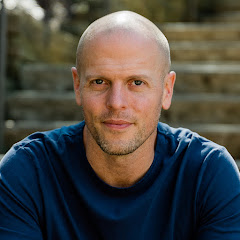 Tim Ferriss
Key Moments
Josh Waitzkin shares learning strategies: depth over breadth, embracing your unique 'funk', and mastering transitions.
Key Insights
Cultivate 'empty space' for creativity and insight by minimizing distractions.
Learn the 'macro from the micro' by focusing intensely on small, fundamental elements.
Embrace your 'funk' and eccentricities as they are integral to world-class performance.
Master transitions and endings, as they define the quality of what follows.
Lateral thinking and thematic thinking involve transferring lessons across different domains.
Reframe challenges, such as bad weather, as opportunities for growth and enjoyment.
THE POWER OF EMPTY SPACE
Josh Waitzkin emphasizes the importance of cultivating 'empty space' as a deliberate lifestyle choice for fostering creativity. This involves minimizing unnecessary input, distractions, and meetings to maximize output and allow for novel connections to form. By creating slack, individuals can approach problems with fresh perspectives and generate original ideas. This principle is exemplified by his own practice of social media abstinence and avoidance of superfluous interactions.
LEARNING THE MACRO FROM THE MICRO
A core learning strategy Waitzkin employs is 'learning the macro from the micro.' This involves focusing intensely on a very small aspect of a discipline, such as a specific endgame in chess or a single submission in Brazilian jiu-jitsu, to internalize profound, overarching principles. This depth-over-breadth approach forces a deep understanding of fundamental concepts like opposition, zugzwang, or the mechanics of a submission, yielding insights applicable across various situations and levels of complexity.
EMBRACING ECCENTRICITY AND UNIQUENESS
Waitzkin advocates for embracing one's 'funk'—unique eccentricities and individual differences. He posits that genius and brilliance often coexist with what might be perceived as madness or eccentricity. For those striving for world-class performance, understanding and embracing these unique traits is crucial. Rather than suppressing them, these individual characteristics should be built upon, forming the foundation for distinct and powerful approaches to any field.
MASTERING TRANSITIONS AND ENDINGS
The subtle art of transitions, particularly endings, is highlighted through Billi Kid's analogy of the last three turns of a ski run. Waitzkin explains that how one concludes an activity—be it a workout, a writing session, or a workday—profoundly impacts what follows. Ending with precision and quality, even in ostensibly low-challenge situations like the end of a ski run or a training session, internalizes good habits and ensures a strong starting point for the next engagement, promoting continuous improvement.
LATERAL AND THEMATIC THINKING
Waitzkin stresses the significance of lateral and thematic thinking – the ability to transfer learning and principles from one domain to another – as a critical life skill. He illustrates this with his personal philosophy of 'go around,' which evolved from a physical strategy for his son Jack to overcome obstacles into a broader metaphorical approach for problem-solving. This practice encourages cross-disciplinary insights and creative dialogue by connecting seemingly disparate ideas and experiences.
REFRAMING CHALLENGES AND CONDITIONS
A key takeaway is the power of reframing challenges, such as adverse weather conditions, into opportunities. By developing a language that frames rain or storms not as 'bad' but as 'beautiful' or enjoyable, Waitzkin teaches his son, Jack, to cultivate an internal locus of control. This approach allows for consistent engagement and enjoyment regardless of external circumstances, fostering resilience and a proactive mindset that seeks value even in less-than-ideal situations.
THE STRATEGY OF TRANSPARENT SHARING
Waitzkin and Ferris discuss the rationale behind openly sharing detailed strategies, inspired by Marcelo Garcia's approach. The core belief is that true competition is not zero-sum; transparency can lead to reciprocal learning. By revealing one's methods, 90% of potential competitors are either discouraged by the detail or fail to replicate success because it's not tailored to them. The remaining 10% who succeed often share their improved methods, leading to collective advancement and karmic benefits.
ALIGNING INTENSITY WITH RECOVERY
The ability to intensely focus and perform, exemplified by Marcelo Garcia's pre-fight demeanor, is linked to a deep capacity for recovery and 'turning off.' Waitzkin suggests that training oneself for stress and recovery undulations throughout the day is crucial. This controlled oscillation between high intensity and deep relaxation allows for sustained peak performance, as the ability to switch off enables a more powerful switch-on when required, preventing burnout and maximizing effectiveness.
Mentioned in This Episode
●Supplements
●Software & Apps
●Companies
●Organizations
●Books
●People Referenced
Learning & Performance Strategies
Practical takeaways from this episode
Do This
Avoid This
Common Questions
Josh Waitzkin emphasizes learning the 'macro from the micro,' which means focusing on a small, fundamental aspect of a field to internalize powerful, universal principles. He also stresses cultivating 'empty space' for creativity and beginning with the end game in learning.
Topics
Mentioned in this video
Mentioned as someone who introduced the speaker to chaga.
Chess prodigy, martial artist, and learning strategist who is the focus of the podcast episode and the basis for 'Searching for Bobby Fischer'.
Five-time world champion in Brazilian Jiu-Jitsu, known for his unique training and transparency. Josh Waitzkin co-owns an academy with him.
Josh Waitzkin's first chess teacher who taught him the principle of learning from endgames.
A legendary music producer mentioned as another individual who minimizes input to maximize output, similar to Josh Waitzkin.
A former Olympic ski racer who emphasized the importance of the last three turns of a ski run for internalizing good form.
Mentioned as a guest on a previous Tim Ferriss Show episode about Acro Yoga.
More from Tim Ferriss
View all 690 summaries 184 min
Daredevil Michelle Khare — How to Become a YouTube Superstar
 81 min
Q&A with Tim — The Upcoming AI Tsunami and Building Offline Advantage
 91 min
The Random Show, Couch Edition! — Supplements, Breathing and Balance Training, and Much More!
 76 min
How to Quiet the Ruminative Mind and Avoid The Traps of Self-Help — Tim Ferriss
Found this useful? Build your knowledge library
Get AI-powered summaries of any YouTube video, podcast, or article in seconds. Save them to your personal pods and access them anytime.
Get Started Free