Key Moments
Tom Brands: Iowa Wrestling | Lex Fridman Podcast #245
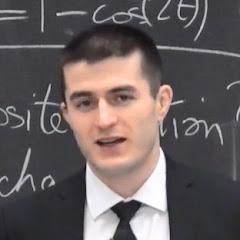 Lex Fridman
Want to know something specific about what's covered?
We've already dissected every moment. Ask and we will deliver (with timestamps).
Key Moments
Tom Brands discusses wrestling, motivation, mental toughness, discipline, and the Iowa wrestling culture.
Key Insights
The primary motivator for Tom Brands is the 'hatred of losing' rather than the love of winning.
Mental toughness is developed through pushing athletes beyond their perceived limits and repetition.
Discipline, repetition, and embracing what you hate in training are crucial for improvement.
Iowa wrestling emphasizes a strong culture of accountability, direct communication, and problem-solving.
Weight cutting requires discipline and hydration; it's a painful but manageable part of wrestling.
Family, including coaches, parents, and staff, plays a vital role in the Iowa wrestling program.
THE DRIVING FORCE: HATERED OF LOSING
Tom Brands emphasizes that his primary motivation in wrestling, both as an athlete and coach, stems from a deep-seated "hatred of losing." He recounts his experience after winning an Olympic gold medal, driving a modest car and mowing his lawn, highlighting his focus on the competitive drive rather than fanfare. This intense aversion to defeat fuels his rigorous training and that of his athletes, pushing them to exceed expectations and relentlessly pursue improvement, making every repetition and drill a battle against potential failure.
CULTIVATING MENTAL TOUGHNESS
Mental toughness, a hallmark of Iowa wrestling, is cultivated by placing athletes in challenging situations where they are pushed to their physical and mental limits. Brands explains that this involves experiencing discomfort and doubt, then persevering through it, which breaks down mental barriers. This process is often linked to physical exhaustion and the understanding that these grueling sessions are essential for growth, even if the full 'why' isn't immediately apparent to the athlete. It's about building resilience through adversity, proving to oneself what is possible.
THE POWER OF REPETITION AND DISCIPLINE
Brands strongly advocates for the power of repetition and discipline in achieving mastery in wrestling. He notes that what athletes often hate doing in training—repetitive drills, difficult conditioning—are precisely the elements that lead to elite performance. This requires an internal drive, a willingness to go beyond what the coach prescribes. He highlights the importance of disciplined practice, hitting, driving, and finishing techniques thousands of times, not just to perfect technique but to build the mental fortitude to execute under pressure, seeing this dedication as rare and invaluable.
THE IOWA WRESTLING PHILOSOPHY
The culture at the University of Iowa is built on direct communication, accountability, and problem-solving. Brands stresses that coaches must be direct, avoiding wasted time and addressing issues head-on, whether with athletes or parents. This involves encouraging athletes to be comfortable communicating their needs, including taking rest days, and fostering an environment where problems are identified and solved collaboratively. This philosophy extends to the entire staff, emphasizing unity and a shared commitment to program success, aiming to be a unifying force rather than divisive.
NAVIGATING OVERTRAINING AND BURNOUT
Brands views burnout and peaking as largely matters of the mind. While overtraining is possible, particularly with distractions and a lack of focus, he emphasizes peaking as a mental state. Athletes and coaches must learn to read the signs and ensure they are ready for competition. He stresses the irrelevance of the clock in the wrestling room, advocating for complete immersion without distractions. This mental approach, combined with proper recovery, is key to avoiding burnout and achieving peak performance when it matters most, turning candle's end into light.
THE DISCIPLINE OF WEIGHT CUTTING
Weight cutting is presented as a demanding but crucial aspect of wrestling, requiring significant discipline. Brands outlines that success in weight management involves enduring periods of discomfort, hunger, and dehydration. However, he notes that once a certain threshold is crossed, particularly after breaking a sweat, energy depletion can lessen. Modern approaches, aided by science and better communication, help athletes manage this process, emphasizing that it's a necessary part of the wrestling lifestyle and a test of commitment that prepares them for competition.
BELIEVING IN THE DREAM AND UNITING THE TEAM
Brands shares a childhood memory of fighting for his dream of being an Olympic champion after being ridiculed, illustrating the importance of unwavering belief against doubters. This personal experience reinforces his approach to building a unified wrestling program where belief in success is paramount. He speaks about the necessity of a cohesive staff and a team culture that rejects negativity and internal conflicts. This unified front is vital for fostering the confidence needed to compete at the highest level and to overcome external pressures and doubts from rivals.
THE STRATEGY OF COMPETITION AND ADVERSITY
Brands distinguishes between being tough inside the rules and being a 'rough' or 'angry' wrestler outside them. He emphasizes sportsmanship, noting that flagrant misconduct can lead to severe penalties. While passion is evident in his coaching, he clarifies that it's not about aggression but about dedication to the sport and the program that instills a formidable reputation. He sees this as intimidation to opponents who may not possess the same level of commitment or organizational strength, highlighting that Iowa's program is a significant threat due to its resolve.
SPIRITUAL STRENGTH AND FAMILY VALUES
Brands finds strength and guidance in his faith, turning over uncontrollable aspects of life to a higher power to maintain focus and avoid emotional distress. He views wrestling not as a personal ego trip but as a platform to help young men become the best versions of themselves, supported by a strong moral compass. The role of family is paramount, encompassing not only the wrestlers' immediate families but also the coaching staff, their partners, and the administrative support. This inclusive 'family' creates a strong, cohesive unit, fostering accountability and shared success.
THE FUTURE OF IOWA WRESTLING
With a new facility and growing momentum, the future of Iowa wrestling is bright, fueled by a talented young team and a catalyst like Spencer Lee. Brands emphasizes the need to remain focused amidst the buzz, consistently improving without becoming complacent. He draws parallels to the legendary Dan Gable, whose athletes often improved without fully realizing it until moments of execution. This approach ensures sustained growth, turning potential into realized success through continuous work and self-awareness.
Mentioned in This Episode
●Organizations
●People Referenced
Common Questions
Tom Brands' primary motivation stems from a deep hatred of losing rather than just a love of winning. This intense aversion to defeat drives his rigorous training and mindset.
Topics
Mentioned in this video
Tom Brands' alma mater and the institution where he coaches the wrestling team. They are known for their strong wrestling program.
Rival university to the University of Iowa, often competing against them in wrestling matches.
One of the major wrestling programs that consistently contends for national titles.
A dominant wrestling program known for its success in winning national titles.
A university where Tom Brands coached wrestling for a period.
Another prominent wrestling program that competes for national championships.
The collegiate athletic association that governs many sports in the United States, including wrestling, and sets rules for sportsmanship and competition.
A six-time world and Olympic champion in wrestling, whose 1991 match against Brands was a significant learning experience.
Mentioned in the context of training drills, contrasting his recommended reps with Brands' extra effort.
Olympic champion, world champion, three-time NCAA wrestling champion, and head coach of the University of Iowa wrestling team. Known for his intensity, focus, and mental toughness.
Former boss and athletic director mentioned for his effectiveness and direct communication style.
Mentioned as a successor to Fred Mims as athletic director, also highly effective.
An athletic director at the University of Iowa, described as a problem-solver and better than her predecessors.
Tom Brands' identical twin brother, also a renowned wrestler and coach. They have a deeply competitive and supportive relationship.
Mentioned as a boxer who used the fear of losing to motivate his aggressive fighting style.
A wrestler who secured an ankle lace against Brandon Sorenson.
The strength coach for the Iowa wrestling team, part of the unified staff.
Manager for the Iowa wrestling team.
Manager for the Iowa wrestling program.
Athletic Director for the University of Iowa, who provides significant support to the wrestling program.
A wrestler for Iowa who was rolled up in an ankle lace by James Green.
A wrestler on the current Iowa team who has been there for a year.
A member of the current Iowa wrestling team with a year of experience.
Roman Emperor and Stoic philosopher, quoted at the end of the podcast with a sentiment about the art of living being like wrestling. His book 'Meditations' likely influenced this.
A key wrestler at the University of Iowa, considered a catalyst for the team's current buzz and future success.
More from Lex Fridman
View all 553 summaries 193 min
Khabib Nurmagomedov: Dagestan, MMA, UFC, Islam, Conor, Fedor & Football | Lex Fridman Podcast #500
 227 min
Gary Gallagher: American Civil War, Slavery, Lincoln, Grant & Lee | Lex Fridman Podcast #499
 232 min
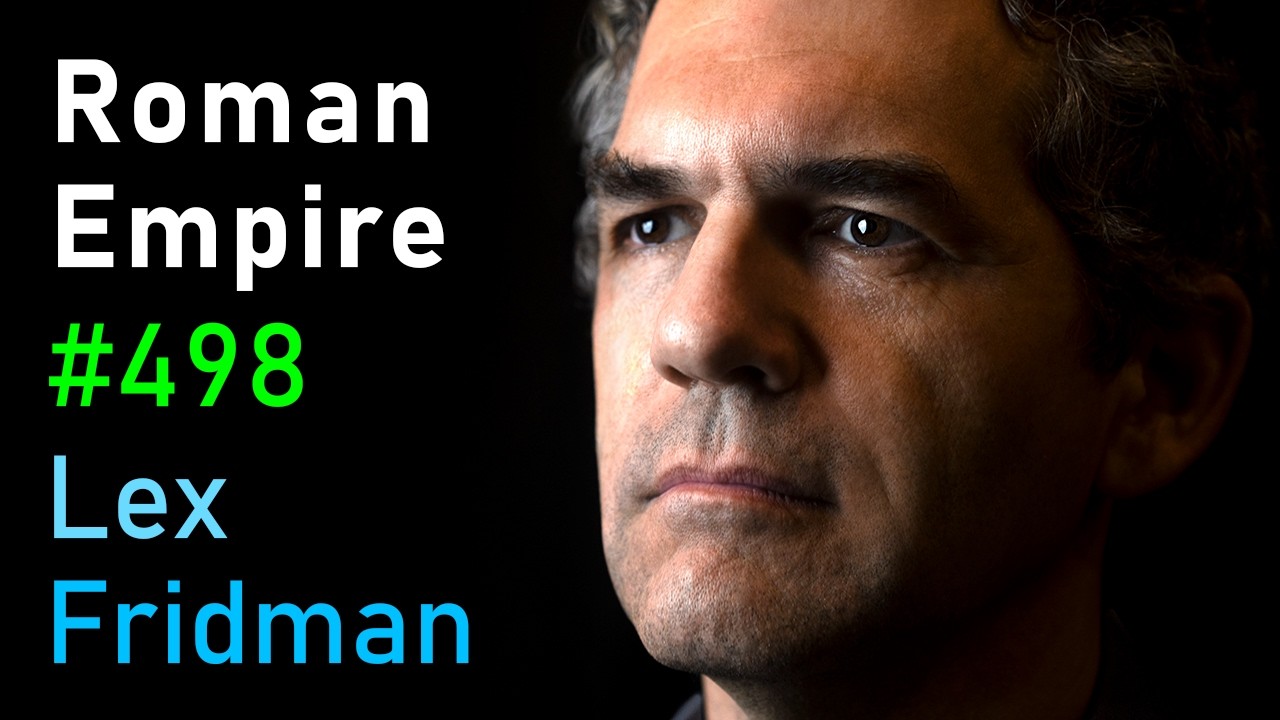
The Rise and Fall of the Roman Empire and the Byzantine Empire | Lex Fridman Podcast #498
 174 min
Biggest Mysteries in Physics: Antimatter, Dark Energy & ToE - Don Lincoln | Lex Fridman Podcast #497
Ask anything from this episode.
Save it, chat with it, and connect it to Claude or ChatGPT. Get cited answers from the actual content — and build your own knowledge base of every podcast and video you care about.
Get Started Free