Key Moments
Tim Ferriss and Matt Mullenweg Get Personal in Antarctica
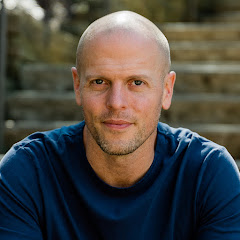 Tim Ferriss
Want to know something specific about what's covered?
We've already dissected every moment. Ask and we will deliver (with timestamps).
Key Moments
Tim Ferriss and Matt Mullenweg discuss life, work, and self-reflection from Antarctica.
Key Insights
Antarctica's unique environment, with 24-hour daylight and lack of circadian rhythm cues, profoundly affects perception of time.
Matt Mullenweg's company Automattic thrives on a distributed, asynchronous communication model using an internal blogging platform.
Experiencing a total solar eclipse in Antarctica was a profound, almost spiritual event, highlighting cosmic insignificance and awe.
Grief is a deeply personal process, and resources like 'On Grief and Grieving' can offer insights into its non-linear nature.
The finite nature of life and the universe can be a source of liberation and motivation, rather than despair.
Bucket list items often include unique travel experiences and contributing to a lasting legacy, whether through open-source work or personal relationships.
ANTARCTICA'S TIMELESS REALITY
The unique environment of Antarctica, characterized by 24-hour daylight and the absence of natural light cycles, creates a profound sense of timelessness. This lack of external cues for day and night disrupts normal circadian rhythms, making it difficult to gauge time and distinguish between days. Matt Mullenweg describes the experience as disorienting yet fascinating, leading to a feeling of having lived multiple lifetimes within a short period. This surreal environment also highlights the vastness of the cosmos and humanity's relative insignificance.
AUTOMATTIC'S DISTRIBUTED WORKFLOW
Matt Mullenweg, CEO of Automattic, discusses the company's highly distributed and asynchronous work model. With nearly 2,000 employees across 92 countries, where the majority's first language isn't English, communication relies heavily on an internal blogging platform called P2. This system replaces email, with all communications archived and searchable, fostering transparency and efficient information flow. This approach has been a core part of Automattic's culture since its inception, predating the widespread adoption of remote work.
THE AWE OF TOTAL SOLAR ECLIPSE
The co-hosts recount the profound experience of witnessing a total solar eclipse in Antarctica, a rare event visible on the continent. Described as stunning and surreal, the eclipse evoked a deep sense of cosmic insignificance and touched something ancient within them. The experience was difficult to put into words, leaving participants euphoric and awestruck by the celestial phenomenon and its impact on the horizon and visibility of stars. Historically, eclipses have played significant roles in shaping human events and perceptions.
NAVIGATING GRIEF AND FINDING MEANING
The conversation touches upon personal loss, specifically Matt Mullenweg's father's passing, and the process of grief. Mullenweg found solace in Elizabeth Kubler-Ross's book 'On Grief and Grieving,' learning that grief is non-linear and uniquely personal. The discussion emphasizes the importance of facing mortality, with tools like the 'weCroak' app and countdown timers serving as reminders of life's finitude. This contemplation of death, akin to Stoic philosophy, can paradoxically lead to a richer appreciation of life and a clearer focus on what truly matters personal legacy and connections.
EXISTENTIAL REFLECTIONS AND LIBERATION
The discussion delves into existential considerations, particularly the idea that the finite nature of Earth and life within it can be a source of liberation. Realizing that even human self-destruction is ultimately insignificant on a cosmic timescale can free individuals from the burden of perceived futility. This perspective, explored in the book 'Four Thousand Weeks,' suggests that accepting cosmic insignificance can inspire awe and focus on meaningful pursuits rather than being debilitating. The dialogue contrasts a tendency towards seeing humans as self-interested with a belief in inherent goodness and the power of shared purpose.
BUCKET LIST ASPIRATIONS AND LEGACY
The pair explore their bucket lists, revealing desires for unique travel experiences like seeing the Aurora Borealis and revisiting scuba diving. A significant theme emerges around legacy and contributing to something larger than oneself. Mullenweg expresses a strong desire to 'democratize publishing and the web' and encourages more open-source contributions. The conversation also touches on the idea of having children, a decision that Mullenweg has consciously chosen against to focus his energy on his mission. He emphasizes the importance of continuous learning and sharing, a drive he sees as fundamental to his life's work.
INTENTIONS, ACTIONS, AND PHILOSOPHICAL DISAGREEMENTS
A philosophical debate arises regarding the relative importance of intentions versus actions. Mullenweg argues that intentions hold more weight due to the deliberate choice involved, while acknowledging that actions have tangible outcomes. Ferriss leans towards actions, believing that even actions with less-than-virtuous intentions can still result in positive outcomes. This difference highlights varying cultural and philosophical perspectives on morality, emphasizing the complexity of human motivation and its impact on individual and societal development.
GRATITUDE AND THE HUMAN CONNECTION
The conversation concludes with expressions of gratitude for shared experiences, particularly the time spent together in Antarctica. Both express appreciation for the human capacity for innovation, citing the rapid development of COVID-19 vaccines as a source of hope. Mullenweg also conveys deep gratitude for his partner, highlighting the value of differences and shared core values in a relationship. The overall sentiment underscores the importance of human connection, vulnerability, and ongoing learning, even in the face of life's profound uncertainties.
Mentioned in This Episode
●Products
●Software & Apps
●Companies
●Organizations
●Books
●Drugs & Medications
●Concepts
●People Referenced
Common Questions
They were sitting in a shell tent on top of miles of ice in Antarctica, which surprisingly had good acoustics, described as being like inside a spherical curtain to deaden echoes.
Topics
Mentioned in this video
An Indian Jesuit priest and psychotherapist, cited by Tim Ferriss regarding the idea that some people are 'not truly living' and need to 'wake up.'
An acclaimed music producer, with whom Tim Ferriss recorded a podcast episode in a sauna at over 200 degrees Fahrenheit.
Entrepreneur and CEO of SpaceX, mentioned in the context of billionaires exploring space and a wish for someone similar to explore the ocean.
Author of 'Of Wolves and Men,' cited for his observations of natural phenomena that challenge conventional scientific understanding.
Psychiatrist who developed the five stages of grief. Her co-authored book 'On Grief and Grieving' helped Matt Mullenweg understand the personal and non-linear nature of grief.
Author of 'Consciousness: A Brief Guide to the Fundamental Mystery of the Mind,' recommended by Tim Ferriss, which explores theories of consciousness.
Famous ethnobotanist and co-founder of the Amazon Conservation Team, one of Richard Evans Schultes' proteges.
An author and business consultant known for his work on company performance. Tim Ferriss references his method of rating days (e.g., -2 to +2) to assess emotional tone.
Director of the documentary 'Fantastic Fungi,' which explores the world of fungi and mycelium networks.
The host of the Tim Ferriss Show, author, and investor. He deconstructs world-class performers and shares lessons, habits, and tools. Known for his "Four Hour Work Week" book.
Neuroscientist and former guest on Tim Ferriss's podcast, with whom Tim got certified in scuba diving.
Co-founder of the open-source publishing platform WordPress and CEO of Automattic. He is a good friend of Tim Ferriss and known for his work in making the web more open.
A friend of Tim Ferriss, known for his phrase 'true fact'.
Canadian-American cognitive psychologist and author known for his book 'The Better Angels of Our Nature,' which argues for a more optimistic view of human nature than Hobbesian, aligning with Matt Mullenweg's perspective.
English philosopher, whose 'Hobbesian' view of human nature (nasty, brutish, and short) aligns with Tim Ferriss's more dystopian perspective.
Entrepreneur and founder of Amazon/Blue Origin, mentioned in the context of billionaires exploring space and a wish for someone similar to explore the ocean.
Author of the essay 'The Tail End,' which had a significant impact on Tim Ferriss and encouraged him to spend more time with loved ones.
A Harvard ethnobotanist, whose protégé Mark Plotkin is.
Previous podcast guest with Tim Ferriss, mentioned in the context of penguins in Antarctica.
Neuroscientist and author of 'Sum: Forty Tales from the Afterlives,' recommended by Tim Ferriss for its short, humorous, and thought-provoking hypothetical afterlives.
Film director and deep-sea explorer, mentioned as a potential 'Elon Musk of the ocean' for his efforts in ocean exploration.
A global media company, recognized Matt Mullenweg for his leadership.
National Public Radio, which runs the StoryCorps project.
A specialized public high school in Houston, Texas, where Matt Mullenweg studied jazz saxophone.
A free online encyclopedia, portions of which Matt Mullenweg downloaded for offline use in Antarctica due to lack of internet access.
A monthly magazine of popular culture, fashion, and current affairs. Recognized Matt Mullenweg for his leadership.
A student society at Trinity College Dublin, recognized Matt Mullenweg for his leadership.
A non-profit organization focused on conservation, which Tim Ferriss has contributed to, co-founded by Mark Plotkin.
An online publisher of technology industry news, recognized Matt Mullenweg for his leadership.
An automated investing platform (robo-advisor) that manages billions in assets. It helps clients diversify portfolios, minimize fees, lower taxes, and offers an 'Autopilot' service for excess cash.
A smart home gym system that uses patented digital weight technology to deliver up to 200 pounds of resistance. It senses strength and adjusts weight automatically, providing real-time feedback on form.
A business magazine, recognized Matt Mullenweg for his leadership.
Social media platform that Matt Mullenweg finds himself inadvertently scrolling through despite having removed social apps from his phone.
Social media platform that Matt Mullenweg finds himself inadvertently scrolling through despite having removed social apps from his phone.
The company founded by Matt Mullenweg behind WordPress.com, WooCommerce, Tumblr, WP VIP, Day One, and Pocket Casts. It operates as a distributed company with thousands of employees globally.
A company specializing in sleep technology, particularly the Pod Pro Cover which offers dynamic cooling and heating with biometric tracking to optimize sleep temperature. Tim Ferriss mentions being a satisfied user.
A company that clones cats, dogs, and horses, mentioned in the context of ethical considerations of cloning pets.
An investment and research company run by Matt Mullenweg.
A brand of plastic bottles, one of which Tim Ferriss uses for urine in Antarctica due to waste disposal rules.
A portable recorder used by Tim Ferriss for podcasting, part of his mobile recording studio.
Rechargeable batteries used by Tim Ferriss for his podcast recording equipment.
Higher-quality handheld microphones, specifically used by Matt Mullenweg for voice recording in this podcast episode.
A microphone that attaches to an iPhone via a Lightning port, used by Tim Ferriss as a backup audio capture device.
A smart mattress cover by Eight Sleep that provides dynamic cooling and heating, as well as biometric tracking, to maintain an ideal sleep temperature for users and their partners.
A deck of questions used by Tim Ferriss and Matt Mullenweg to prompt deep conversations, recommended by a mutual friend, Connie Yang.
Common handheld microphones that Tim Ferriss usually uses for voice recording.
A smartphone used by Tim Ferriss with an external microphone as a backup audio recorder for his podcast.
A popular podcasting app also owned by Automattic.
A monthly American magazine, published in print and online editions, that focuses on how emerging technologies affect culture, the economy, and politics. Recognized Matt Mullenweg for his leadership.
A fitness app, mentioned by Matt Mullenweg as one of the apps he has on his phone for self-improvement.
An NPR project and app that provides questions and frameworks for recording oral histories of Americans, recommended by Matt Mullenweg for Tim's conversations with his parents.
A serologic blood test used to diagnose Lyme disease, mentioned by Tim Ferriss in the context of his own diagnosis.
An e-commerce plugin built on top of WordPress, facilitating online sales. Matt Mullenweg states it processes billions in transactions annually.
Tim Ferriss's free weekly newsletter, which shares interesting findings, articles, books, gadgets, and tricks.
An open-source publishing platform that powers over one-third of all websites on the web, with over 50,000 plugins and themes. Matt Mullenweg is its co-founder.
A microblogging and social networking platform, part of Automattic's portfolio.
A meditation and sleep app, mentioned by Matt Mullenweg as one of the apps he has on his phone for self-improvement.
A Chrome extension that customizes new tab screens, allowing users to add features like countdowns. Matt Mullenweg uses it for a memento mori countdown.
Matt Mullenweg's personal website.
A Bhutanese-inspired app that sends five daily notifications reminding users of their mortality, offering a quote to foster contemplation about death.
A hosted version of the WordPress platform, managed by Automattic, where users can easily create and host their websites.
The use of psychedelic substances for therapeutic purposes, which Tim Ferriss supports on the non-profit research side.
An ancient Greek school of philosophy, referenced for its philosophy on contemplating mortality (memento mori) to better cope with death and help others.
A book by Tim Ferriss, which included a shortened version of 'The Tail End' essay due to its impact on him.
An essay by Tim Urban that powerfully illustrates the finite nature of time, especially with loved ones, inspiring Tim Ferriss to make intentional changes in his life.
A dictionary for the game Scrabble, also downloaded by Matt Mullenweg for offline use.
A book by David Eagleman consisting of short, hypothetical stories about various forms of the afterlife, recommended by Tim Ferriss as a fascinating and humorous read.
An American multinational business magazine, recognized Matt Mullenweg for his leadership.
A book by Tim Ferriss, referenced in a lighthearted self-deprecating comment about his own eating habits.
A science fiction novel and film that depicts a virtual reality world where characters can be 'zeroed out,' used as an example related to the concept of reincarnation.
A book by Annaka Harris that explores four theories of consciousness and delves into questions of pre-life and afterlife, recommended by Tim Ferriss.
A book co-authored by Elizabeth Kübler-Ross, which Matt Mullenweg found very helpful in understanding the personal and non-linear process of grief, including the concept of pre-grieving.
A popular book by Tim Ferriss, which is humorously 'punched' by the author of '4000 Weeks'. Tim emphasizes the 'filling the void' chapter as its most important aspect.
A book by Barry Lopez, which discusses observed phenomena of wolves tracking caribou over long distances, seemingly impossible through conventional means.
A book by Oliver Burkeman that explores human lifespan and critiques modern time management and productivity obsession. Tim Ferriss found its 'cosmic insignificance therapy' concept liberating.
The continent where Tim Ferriss and Matt Mullenweg are recording this podcast, known for its extreme cold, dryness, 24-hour daylight, and lack of wildlife in certain regions.
The country where Ernest Hoost was born.
Matt Mullenweg's hometown in Texas, where he attended the High School for the Performing and Visual Arts and studied jazz saxophone.
A U.S. state mentioned as a place where ethical assisted euthanasia is legal.
A country where an anthropologist observed 'another way of knowing' among tribes with seemingly precognitive abilities.
A city in Palestine, where Tim Ferriss received a tour from an Arab Christian, leading to a discussion about religious perspectives on actions versus intentions.
A town in Wyoming where Matt Mullenweg currently splits his time.
The specific location in Antarctica where Tim Ferriss and Matt Mullenweg are camping and recorded the podcast.
A documentary film by Louie Schwartzberg that explores the world of fungi, including mycelium networks and their communication.
A viral video during COVID-19 lockdown showing a coyote and a badger hunting together, validating a previously considered 'myth' in Native American traditions.
A public radio program, mentioned for its episode on the 'wood wide web' and inter-tree communication.
A weekly business magazine, recognized Matt Mullenweg for his leadership.
More from Tim Ferriss
View all 698 summaries 100 min
Inside The AI Race: DeepMind, OpenAI, Anthropic, China, and The Race to Superintelligence
 108 min
The Path from The Soviet Union to Building Multi-Billion Dollar Companies — Max Levchin
 127 min
Reimagining Biotech with Jake Becraft of Strand Therapeutics — Tim’s Founder Kitchen
 132 min
Reversing Type 2 Diabetes and Rowing 2,750 Miles — Sami Inkinen of Virta Health
Ask anything from this episode.
Save it, chat with it, and connect it to Claude or ChatGPT. Get cited answers from the actual content — and build your own knowledge base of every podcast and video you care about.
Get Started Free