Key Moments
Thinking Differently About Addiction and Mental Health — Dr. Nora Volkow
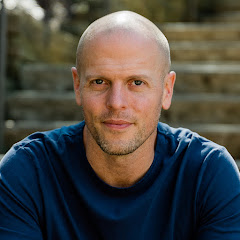 Tim Ferriss
Key Moments
Dr. Nora Volkow discusses addiction, mental health, scientific progress, and novel treatments like psychedelics, TMS, and ultrasound.
Key Insights
Addiction is a complex brain disorder often co-occurring with mental health issues, requiring integrated treatment.
Scientific progress requires challenging established ideas and embracing innovative, even unconventional, approaches with perseverance.
Psychedelics show promise for treating depression, PTSD, and substance use disorders, but rigorous research is needed.
Neuromodulation techniques like TMS and low-intensity ultrasound offer non-invasive or minimally invasive ways to treat addiction and mental illness.
Environmental factors, particularly early childhood experiences and social determinants of health, play a crucial role in addiction.
The 'war on drugs' has been ineffective and contributed to structural racism; a shift towards evidence-based, compassionate approaches is necessary.
EARLY LIFE AND SCIENTIFIC INSPIRATION
Dr. Nora Volkow's early life in Mexico City was shaped by a unique family history, including being the granddaughter of Leon Trotsky. Her father, a scientist, fostered her deep fascination with the human body and anatomy, encouraging a scientific path. Despite a childhood ambition to dissect a cadaver at home, which was thwarted by her mother, this early exposure to science and the human form laid the groundwork for her future career. Her family's history also instilled a strong sense of social responsibility and a deep intolerance for injustice, principles that would later guide her professional choices.
CHALLENGING CONVENTIONS IN SCIENCE
Volkow's scientific journey involved confronting established beliefs. Early in her career at the University of Texas, she pioneered the use of imaging technologies to study drug abuse, specifically investigating the neurotoxic effects of cocaine. Her findings, documenting strokes in cocaine abusers, were initially dismissed by the scientific community, which lacked evidence to support cocaine's vascular damage. Undeterred, she persevered, faced grant rejections, and endured a three-year delay before her seminal paper was published, illustrating the difficulty of introducing groundbreaking research that challenges the status quo.
THE POWER OF PERSEVERANCE AND MENTORSHIP
Volkow emphasizes perseverance as a critical trait for scientists, drawing from her own experiences of facing rejection. She advocates for an encouraging mentorship style, pushing young scientists to think creatively and explore unconventional explanations for their data. She believes in creating an environment where individuals feel empowered to share novel ideas without fear of judgment. This approach, combined with her personal resilience, has been instrumental in her own career and in fostering the next generation of researchers.
PERSONAL ENCOUNTERS WITH ADDICTION'S GRIP
Volkow's understanding of addiction is deeply personal, shaped by the loss of family members and friends to substance use. Her own experience with Demerol after a severe car accident provided profound insight into the allure and power of opioids, highlighting how easily one can fall into a state of chemical euphoria. This firsthand knowledge underscores her empathy and drives her dedication to finding effective treatments and prevention strategies for substance use disorders.
THE OVERDOSE CRISIS AND THE FAILURE OF THE WAR ON DRUGS
The current overdose crisis in the US is described as severe, exacerbated by the proliferation of potent synthetic opioids like fentanyl. Fentanyl's low manufacturing cost, high potency, and ease of concealment have made it a dominant force, appearing in illicit drugs, counterfeit pills, and even mixed with other substances. Volkow criticizes the 'war on drugs' as an ineffective policy that has perpetuated structural racism and criminalized individuals without reducing drug use or its harms. She argues for a paradigm shift away from punitive measures towards evidence-based, scientific approaches.
THE PROMISE AND POTENTIAL OF PSYCHEDELIC THERAPY
Emerging research into psychedelic-assisted therapy shows significant promise for mental health conditions like depression and PTSD, as well as substance use disorders. Studies on psilocybin for depression in terminally ill patients and for nicotine and alcohol dependence have yielded intriguing results, often showing effect sizes larger than existing medications. However, Volkow stresses the preliminary nature of this data, emphasizing the need for larger trials to determine optimal dosages, administration methods, and to thoroughly assess risks like suicidality. She advocates for rigorous scientific investigation before widespread clinical adoption.
NOVEL NEUROMODULATION TECHNIQUES FOR BRAIN DISORDERS
Advanced neuromodulation technologies are offering new hope for treating addiction and other neurological and psychiatric disorders. Transcranial Magnetic Stimulation (TMS) uses magnetic currents to modulate brain activity non-invasively. Deep Brain Stimulation (DBS) involves surgically implanted electrodes. More excitingly, low-intensity focused ultrasound shows potential for precisely targeting brain regions like the nucleus accumbens with minimal or no tissue damage, offering durable effects with brief sessions. These technologies represent a significant leap forward in our ability to modify brain circuits implicated in addiction and mental illness.
EXPLORING MECHANISMS AND FUTURE CURES
The underlying mechanisms of addiction, shared across various substances, involve long-term potentiation in reward circuits and a weakening of other reward pathways, leading to compulsive behavior and loss of self-regulation. Volkow is intrigued by the potential for treatments that target this core neuroplasticity. The possibility of modifying these ingrained neural patterns raises the prospect of not just treating addiction but potentially 'curing' it, a concept previously unimaginable. The ability of certain brain insults, like strokes in the insula, to spontaneously resolve addiction offers a glimpse into this future possibility.
ADDRESSING COMORBIDITY AND SOCIAL DETERMINANTS
Volkow highlights the critical intersection of addiction with other psychiatric disorders, particularly anxiety, depression, and suicidality. Effective treatment necessitates addressing these co-occurring conditions. Furthermore, she underscores the profound impact of environmental factors, especially during childhood, and social determinants of health, such as economic inequality and trauma. Ensuring equitable access to novel treatments like psychedelic therapy is paramount to prevent exacerbating existing disparities and to ensure these advancements benefit all segments of society.
Mentioned in This Episode
●Software & Apps
●Organizations
●Books
●Drugs & Medications
●Concepts
●People Referenced
Navigating Addiction and Mental Health: Key Insights
Practical takeaways from this episode
Do This
Avoid This
Common Questions
Dr. Volkow's personal life has been deeply affected by addiction, with family members including an uncle and aunt dying from alcohol-related issues and an aunt from an alcohol and Percocet overdose. A close friend also died from a fentanyl overdose, fueling her dedication to understanding and combating addiction.
Topics
Mentioned in this video
A brand name for meperidine, an opioid analgesic that Dr. Volkow experienced firsthand after a car accident, providing her with a profound understanding of its powerful allure and potential for dependence.
A dissociative anesthetic drug also used for its antidepressant properties. While not a classical psychedelic, its successful use in treating depression opened doors for research into other novel therapeutics like psychedelics and showed value in chronic pain.
The brand name for naloxone, an opioid overdose antidote. It is effective against fentanyl but does not work against xylazine, a veterinary anesthetic increasingly mixed with fentanyl.
A highly potent synthetic opioid that has dramatically escalated the overdose crisis due to its ease of manufacture, low cost, and ability to be mixed with other drugs, leading to widespread accidental overdoses.
A psychedelic compound found in 'magic mushrooms,' showing significant potential in early research for treating depression, PTSD, and substance use disorders like nicotine and alcohol dependence.
A class of drugs, including psilocybin and LSD, that are showing promise in treating various mental health conditions and substance use disorders, sparking renewed research interest.
An invasive procedure involving surgically implanted electrodes to modulate brain activity, used in research for treating addiction, depression, and other neurological disorders.
A brain region implicated in addiction. Strokes in the insula have been observed to spontaneously 'cure' addiction in some individuals, suggesting its critical role and potential for targeted intervention.
A non-invasive technology that uses magnetic pulses to modulate brain activity, approved for treating depression and being explored for its potential in addiction treatment.
A research institution where studies on psilocybin for depression and nicotine addiction are being conducted, highlighting its pioneering role in psychedelic research.
The Food and Drug Administration, which approves medications for clinical use. Researchers in psychedelic therapy must collect data that satisfies the FDA's requirements for approval.
A pharmacologist and physician who mentored Dr. Volkow as a medical student, introducing her to quantitative analysis and challenging her to think outside the box in research.
Dr. Volkow's paternal grandfather, a Russian revolutionary whose political history and persecution significantly influenced her family's life and her father's views.
More from Tim Ferriss
View all 689 summaries 81 min
Q&A with Tim — The Upcoming AI Tsunami and Building Offline Advantage
 91 min
The Random Show, Couch Edition! — Supplements, Breathing and Balance Training, and Much More!
 76 min
How to Quiet the Ruminative Mind and Avoid The Traps of Self-Help — Tim Ferriss
 86 min
NYT Bestselling Author on Writing 200+ Children's Books — Tish Rabe
Found this useful? Build your knowledge library
Get AI-powered summaries of any YouTube video, podcast, or article in seconds. Save them to your personal pods and access them anytime.
Get Started Free