Key Moments
The Fall of Afghanistan: A Conversation with Peter Bergen (Episode #258)
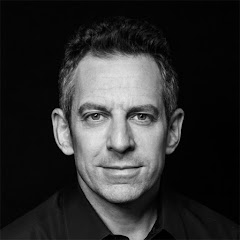 Sam Harris
Key Moments
US withdrawal from Afghanistan was a chaotic betrayal, weakening global standing and empowering rivals.
Key Insights
The US withdrawal from Afghanistan was poorly executed, leading to a humanitarian crisis and a blow to American credibility.
A neo-isolationist consensus is emerging on both the far-left and far-right, questioning the legitimacy of US involvement abroad.
The Afghan army's collapse was due to a loss of morale after US and NATO troop withdrawal, not solely a lack of will to fight.
The Taliban's resurgence is a significant victory for global jihadism, potentially inspiring further radicalization.
The Taliban maintains a close relationship with Al-Qaeda, raising security concerns reminiscent of the pre-9/11 era.
The protracted conflict in Afghanistan, spanning over four decades, has fostered a culture of survival and shifting allegiances among Afghans.
THE CATASTROPHIC WITHDRAWAL FROM AFGHANISTAN
The podcast episode, recorded shortly after the Taliban's rapid takeover of Afghanistan, critically examines the chaotic US withdrawal. Host Sam Harris and guest Peter Bergen highlight the lack of preparation, foresight, and consultation with allies, as well as the failure to evacuate Afghan allies and US citizens. This mismanagement is seen as a profound betrayal of obligations, a gift to global jihadists, and a demonstration of American decline, signaling to adversaries like China and Russia that the US is no longer a competent superpower. The shambolic exit is viewed as damaging to US interests and its ability to assure protection to future allies.
THE EMERGENCE OF NEO-ISOLATIONISM
A significant concern discussed is the growing 'neo-isolationist' consensus across the political spectrum in America. On the right, this manifests as a denigration of Afghans and the belief that nation-building is futile, coupled with resistance to refugees. On the left, it involves critiquing American power while hesitating to judge the Taliban's treatment of women. Both sides, despite different rationales, often agree that the US has no business acting as the world's police and that past interventions were illegitimate or failed projects, fueled by a contaminated information space and a loss of trust in institutions.
THE COLLAPSE OF THE AFGHAN ARMY AND GOVERNMENT
Contrary to the narrative of a weak Afghan army, Peter Bergen points out that over 66,000 Afghan soldiers and police died fighting the Taliban. The collapse, he argues, was primarily due to a catastrophic loss of morale triggered by the withdrawal of US and NATO support systems, such as close air support and medevacs. While acknowledging the army's leadership issues, the rapid disintegration was predictable once the US and its allies completely disengaged, unlike troop presences in South Korea or Western Europe which have been maintained for longer periods for specific purposes.
ETHICAL OBLIGATIONS AND BIDEN'S MESSAGING
Both Harris and Bergen express strong agreement that the execution of the withdrawal was a disaster, regardless of the decision to leave. They emphasize the ethical obligation to evacuate American citizens and tens of thousands of Afghans who aided US forces. The messaging from the White House, which suggested the swift collapse was somehow a sign of strategic foresight or that a better exit was impossible, is heavily criticized. The inability to even guarantee safe passage to the Kabul airport for those needing to leave underscores the profound mismanagement.
THE RETURN OF GLOBAL JIHADISM AND TALIBAN-AL-QAEDA TIES
The resurgence of the Taliban is viewed with alarm for its implications for global jihadism. Bergen notes that according to UN reports, Al-Qaeda remains closely aligned with the Taliban and is present in numerous Afghan provinces. The Taliban's declaration of an 'Emirate' and their leader's title, 'Commander of the Faithful,' echo the claims of ISIS's leader. This victory is expected to galvanize foreign fighters and inspire individuals to radicalize domestically, similar to the effect of ISIS's former caliphate, as the Taliban are currently perceived as the 'winning side'.
THE LEGITIMACY OF THE INITIAL INTERVENTION AND AFGHAN REALITIES
The initial US intervention in Afghanistan post-9/11 is deemed one of the most legitimate wars in recent history, supported by Congress, NATO's Article 5, and a UN resolution. However, the long-term project faced significant challenges rooted in Afghan realities. Decades of conflict have created a populace focused on survival, leading to pragmatic allegiances with whoever holds power. Corruption within the Afghan government and security forces was rampant, and norms in rural Pashtun areas, from which the Taliban primarily hail, differ significantly from urban or non-Pashtun populations, complicating Western-style nation-building efforts.
THE TALIBAN'S OPERATIONAL ADVANTAGES AND IDEOLOGY
The Taliban possess asymmetrical advantages in morale and commitment, fighting for their conception of paradise, while Afghan forces often struggled with pay and support. The Taliban also benefits financially from the opium trade and can offer consistent pay to its fighters, transforming what may be ideological commitment for some into a job for others. Their operational framework is compared to an insurgent group rather than solely a volunteer terrorist organization. The Taliban's interpretation of Sharia law, which they would apply to governance and societal norms, presents deeply concerning caveats for issues like women's rights and media freedom.
THE FUTURE OF AFGHANISTAN AND INTERNATIONAL SECURITY
Despite the Taliban's current perceived victory, Bergen cautions that groups promoting global jihadism often create 'antibodies,' leading to their eventual downfall. However, in the immediate aftermath, the implications for international security are significant. The failure to adequately prepare for the withdrawal has damaged global perceptions of American competence and resolve. The return of the Taliban to power, with their ties to Al-Qaeda, raises concerns about Afghanistan once again becoming a safe haven for international terrorist organizations, potentially drawing the world into future conflicts.
Mentioned in This Episode
●Companies
●Organizations
●Books
●Concepts
●People Referenced
Common Questions
The Afghan army's collapse was due to a severe blow to morale once US and NATO support, including medevac and close air support, was withdrawn. Despite significant casualties, the lack of continued backing made their fight unsustainable against the Taliban.
Topics
Mentioned in this video
The group that has taken control of Afghanistan, discussed in the context of their resurgence, governance, and relationship with Al-Qaeda.
An institution where Peter Bergen has held positions.
An extremist group discussed in contrast to Al-Qaeda and the Taliban, particularly regarding ideological differences and conflict.
An organization recommended for donations to support Afghans in need of refugee status.
The media outlet for which Ben Anderson worked and produced a documentary on the Afghan forces.
Peter Bergen's affiliation as a vice president.
Peter Bergen's affiliation as a national security analyst.
Mentioned in relation to the myth of funding Al-Qaeda.
Passed a resolution after 9/11 legitimizing the US response and also issued a report on Al-Qaeda's presence in Afghanistan.
An institution where Peter Bergen has held positions.
A terrorist organization closely aligned with the Taliban, discussed in relation to 9/11 and its resurgence.
An alliance whose trust in the US is questioned after the withdrawal from Afghanistan.
Guest on the podcast, author of 'The Rise and Fall of Osama bin Laden', and an expert on terrorism and Afghanistan.
Peter Bergen's affiliation as a professor.
A famous correspondent mentioned as having accompanied Peter Bergen to Afghanistan in the early 1990s.
Host of the Making Sense podcast, discussing the fall of Afghanistan and other topics.
Mentioned as the head of the International Rescue Committee, previously on the podcast.
Co-producer of the 2012 documentary 'This is What Winning Looks Like'.
Northern Alliance leader assassinated before 9/11, his son leads the current resistance effort.
Former leader of ISIS, mentioned for his claim as 'Commander of the Faithful', similar to the Taliban leader's claim.
Subject of Peter Bergen's book, discussed in relation to Al-Qaeda's leadership, religious convictions, and death.
Former leader of the Taliban, mentioned in relation to his relationship with Osama bin Laden.
Journalist for Vice and co-producer of the 2012 documentary 'This is What Winning Looks Like'.
The sole member of Congress who voted against the authorization for the use of military force post-9/11.
Where Osama bin Laden spent years hiding before his death.
Mentioned as a geopolitical rival that may be emboldened by the US withdrawal from Afghanistan.
The central topic of the discussion, focusing on its fall to the Taliban and the US withdrawal.
A NATO ally whose political disposition prevented its troops from engaging in combat roles in Afghanistan.
The fall of Saigon is used as a point of comparison for the images emerging from the Afghanistan withdrawal.
Mentioned as a geopolitical rival that may be emboldened by the US withdrawal from Afghanistan.
An ally whose security may be impacted by the perception of US weakening due to the Afghanistan withdrawal.
Refers to the 'political Taliban' who engaged in negotiations with the US.
A NATO ally that was among the first to signal a loss of confidence by deciding to close its embassy in Afghanistan.
The geographical territory declared by ISIS, which, upon its disappearance, reduced the number of people drawn to the cause.
The legal and moral code that the Taliban intends to implement, with significant caveats regarding its interpretation.
The dominant ethnic group in the Taliban, making up roughly 40% of Afghanistan's population, primarily from the south and east.
More from Sam Harris
View all 292 summaries 34 min
Is Effective Altruism Blind to the Biggest Problems? – Sam Harris & Will MacAskill
 21 min
What Is Technology Doing to Us?
 42 min
Is the Iran War Already Failing?
 90 min
FULL EPISODE: The Politics of Pragmatism and the Future of California (Ep. 464)
Found this useful? Build your knowledge library
Get AI-powered summaries of any YouTube video, podcast, or article in seconds. Save them to your personal pods and access them anytime.
Get Started Free