Key Moments
The Bright Line Between Good and Evil (Episode #340)
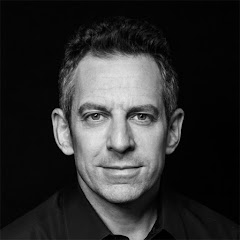 Sam Harris
Key Moments
Sam Harris discusses the Gaza war, antisemitism, and jihadism, critiquing moral confusion and religious fanaticism.
Key Insights
The global reaction to the Gaza conflict reveals widespread moral confusion and a disturbing rise in antisemitism.
Jihadism is rooted in specific Islamic doctrines regarding martyrdom and holy war, not solely in political grievances.
The term 'Islamophobia' was created to stifle criticism of Islam and hinder discussion of jihadist ideology.
Secular liberals often fail to grasp the influence of religious beliefs on the actions of extremist groups like Hamas.
Antisemitism persists globally, often targeting Jews more than Muslims, despite popular narratives.
The conflict's complexity is obscured by propaganda, with historical context often used as a distraction from the core issue of jihadism.
THE GLOBAL MORAL CONFUSION SURROUNDING GAZA
Sam Harris begins by addressing the ongoing war in Gaza, expressing concern over potential Israeli missteps and the extensive civilian casualties. He notes the widespread global reaction, particularly from the left, which he argues prematurely sided with Hamas, failing to morally distinguish between Hamas's atrocities and Israel's defensive actions. This collective inability to perform 'moral arithmetic' is highlighted as a significant problem for open societies.
THE DOCTRINAL ROOTS OF JIHADISM
Harris distinguishes between typical political grievances and the ideological underpinnings of jihadism. He asserts that groups like Hamas are motivated by sincerely held Islamic doctrines, specifically those concerning martyrdom and holy war (jihad). These beliefs, he explains, enable adherents to commit horrific acts against civilians while believing they are acting piously, viewing worldly life as secondary to achieving paradise.
DECONSTRUCTING 'ISLAMOPHOBIA' AND RADICAL IDEOLOGY
The concept of 'Islamophobia,' Harris argues, was strategically created by Iranian theocrats to prevent legitimate criticism of Islamic doctrine and its political manifestations. He contends that this term is now used to silence discourse on jihadism, creating a double standard where criticism of Islam is conflated with bigotry, unlike criticism of Christianity. This, he suggests, fosters a dangerous environment where the true nature of jihadist ideology is ignored.
THE FAILURE OF SECULAR LIBERALISM TO GRASP RELIGIOUS FANATICISM
Secular liberals, Harris observes, often assume that people everywhere share universal desires for peace and prosperity, attributing extremist behavior to oppression or external factors. This perspective, he claims, leads them to discount the profound influence of religious beliefs on groups like Hamas and ISIS. Such analyses fail to recognize that jihadist violence is often a direct consequence of deeply held religious convictions, not merely a reaction to political or economic conditions.
THE RENEWED THREAT OF GLOBAL ANTISEMITISM
Harris discusses the alarming resurgence of antisemitism, noting that it predates and extends beyond the current conflict. He points out that despite narratives focusing on islamophobia, FBI statistics show Jews are disproportionately targeted with hate crimes in the US. The recent outpouring of antisemitic sentiment, including chants like 'gas the Jews,' is presented as a critical indicator of a new, dangerous era that challenges his prior optimism about antisemitism being a thing of the past in the West.
THE BRIGHT LINE BETWEEN CIVILIZATION AND SAVAGERY
The core ethical distinction, Harris posits, lies in the use of human shields. While Hamas deliberately places its infrastructure and fighters among civilians, even preventing their evacuation, Israel expends significant effort to avoid civilian casualties. This asymmetry, he argues, highlights the vast moral gulf between Hamas's deliberate use of civilians as shields and Israel's difficult efforts to wage a just war, underscoring that the blame for Palestinian suffering lies with Hamas.
THE GLOBAL SYMPATHY FOR JIHADISM
Harris expresses concern over the widespread sympathy for jihadist ideologies, even among those not actively participating in violence. He points to large demonstrations supporting Hamas as evidence of this sympathy. He insists that for a tolerable future, the majority of Muslims must actively disavow jihadism and unite with non-Muslims to combat it, transforming the doctrine into something benign and ceasing support for fanatical actions.
THE INTRACTABILITY OF JIHADIST IDEOLOGY
The core problem of jihadism, Harris reiterates, is not reducible to historical context, political grievances, or territorial disputes. He argues that jihadist ideology is a potent, self-contained force with genocidal intentions. Concessions to this ideology are futile, as it views worldly life as secondary to achieving paradise through violence. He emphasizes that this is a global war requiring not just material action but a sustained war of ideas against the fundamentalist underpinnings of jihad.
REJECTING THE FALSE EQUIVALENCY IN THE ISRAEL-PALESTINE CONFLICT
Harris critiques the tendency to create false equivalencies between the actions of Israel and its adversaries. He highlights that while some Jewish settlers may engage in criminal acts, the global problem of religious fanaticism is overwhelmingly linked to jihadism. The lack of comparable threats from Jewish fanatics targeting Muslims on the scale seen with jihadism is presented as evidence of this stark moral difference. He urges an understanding of the conflict that keeps the problem of jihadism in clear view.
THE CULTURAL IMPLICATIONS OF THE OCTOBER 7TH ATTACKS
Analyzing a specific audio recording from the October 7th attacks, Harris reveals a Hamas fighter detailing his ecstatic killing of Jews to his family, who respond with pride. This, he argues, offers a window into a culture that glorifies martyrdom and Jew-hatred, contrasting sharply with potential reactions in Western societies. He suggests this cultural context, fostered in part by educational systems, contributes to widespread support for jihadist actions, even among those not directly involved.
BEHIND THE IDEAS: THE TRUE CAUSE OF MISERY
Ultimately, Harris asserts that the suffering in Gaza and across the Muslim world is primarily caused by jihadist organizations like Hamas, rather than external factors like colonialism or Israeli policies. These groups, he contends, have turned the areas they control into extensions of their death cults. He stresses that a rational government focused on its citizens' welfare could have created a better reality for Palestinians. The failure to recognize this centers on a misunderstanding of the core ideology driving these conflicts.
THE NECESSITY OF COMBATING JIHADISM DIRECTLY
The war against Hamas and jihadism is presented as an existential necessity for Israel and a long-term threat to the West. Harris advocates for a multi-faceted approach, including covert operations, economic pressure, and informational warfare, all aimed at destroying jihadist organizations. Crucially, he emphasizes the need to kill committed jihadists, asserting that political compromise or negotiation with such ideologically driven adversaries is impossible. This is framed as a protracted, fundamental struggle.
Mentioned in This Episode
●Software & Apps
●Organizations
●Books
●Concepts
●People Referenced
Common Questions
The speaker argues that while Israel must retaliate against Hamas, the ground invasion of Gaza might be a strategic mistake. He suggests alternative approaches like a siege to minimize civilian casualties and propaganda victories, focusing on the underlying ideology of jihadism rather than just political grievances.
Topics
Mentioned in this video
Allied with Iran, a factor in geopolitical considerations.
Mentioned as a potential conflict with the US, differentiated from jihadism due to the possibility of rational negotiation.
The region invaded by Israel, where collateral damage has swayed global opinion and where Hamas has built extensive tunnel networks.
Mentioned as a country suffering from continuous jihadist atrocities.
Mentioned as the location of a current war, one of several global problems that differ from jihadism in their potential for negotiation.
Accused of playing a cynical game with the plight of the Palestinians for the last 50 years.
Allied with Russia and a potential source of conflict with the US and its allies.
A continent where jihadist atrocities occur continuously.
A country where jihadist atrocities occur continuously and where the Pakistani Taliban carried out a school massacre.
Mentioned in the context of no longer being able to open Jewish schools due to security concerns related to fanaticism.
Mentioned in the context of the US withdrawal being perceived as a victory by jihadists.
The country that retaliated against Hamas, with its actions and responses being a central point of discussion regarding strategy and international perception.
A book by David Wyman detailing the extent of anti-Semitism in America during the Holocaust.
A book co-authored by Sam Harris and Majid Naas, discussing thinking on Islam and tolerance.
Mentioned alongside the Quran as a source for doctrines that directly support jihadist violence.
Cited as containing verses that urge Muslims to wage Jihad, with its violent passages potentially superseding more benign ones.
Mentioned in the context of asking questions and conspiracy theories.
Used as a point of comparison to emphasize that the Hamas member's call was not an isolated act of abnormality, but indicative of a wider culture.
Criticized for his handling of anti-Semitism on Twitter and for his stance on suing the Anti-Defamation League.
Co-author with Sam Harris of the book 'Islam and the Future of Tolerance'.
Mentioned in the context of 'free speech' and asking questions, with a critique of discussions around COVID-19 being engineered not to infect Ashkenazi Jews.
Criticized for platforming Kanye West, whose anti-Semitic views are highlighted.
Authored an article in the New York Times suggesting humanitarian corridors and safe zones for civilians in Gaza.
Author of 'The Abandonment of the Jews,' cited for detailing the widespread anti-Semitism in America during the Holocaust.
Mentioned for his anti-Semitic statements, which Lex Fridman is criticized for platforming.
Mentioned as a jihadist organization that should be destroyed and made to understand that their sought-after martyrdom will be granted.
Mentioned as someone who might agree that 'Islamophobia' sounds like a term created by fascists and used by cowards.
Mentioned as heading a commission on Islamophobia in America.
A jihadist organization that the speaker believes must be destroyed.
A jihadist organization that the speaker believes must be destroyed.
Struggles to get along with the Pakistani Taliban.
Criticized for routinely condemning Israel while failing to condemn Hamas for its atrocities on October 7th.
The Pakistani group responsible for the terrorist attacks in Mumbai depicted in the film 'Hotel Mumbai'.
A feminist organization criticized for supporting Hamas and accusing Israelis of genocide, without acknowledging Hamas's treatment of women.
Mentioned in the context of its failures contributing to Israel's vulnerability.
Responsible for a school massacre in 2014 where 145 people, including 132 children, were murdered.
Characterized as a death cult and the principal cause of misery and dysfunction in Gaza and the Muslim world, eager to martyr Palestinians for killing Jews.
Published an article by Brett Stevens recommending a different approach for Israel in Gaza.
Elon Musk is mentioned as threatening to sue the ADL, which the speaker views critically.
Collaborates with Hamas across the Sunni-Shia divide.
The Israel Defense Forces, which could potentially starve Hamas in their tunnels with a different approach.
A jihadist organization whose ideology and actions are discussed as a global threat.
One of the main branches of Islam, with a deep schism existing between Sunni and Shia jihadists.
Compared to Islam and Judaism as a missionary faith, noting that criticism of its doctrines is common and not confused with bigotry.
Criticized for supporting Hamas, despite Hamas's severe persecution of LGBTQ+ individuals.
Described as holy war against apostates and unbelievers, a core tenet of the ideology that fuels violence and is supported by passages in the Quran and Hadith.
A term allegedly invented by Iranian theocrats in the 1970s to prevent criticism of Islam and cast secularism as bigotry.
One of the main branches of Islam, with a deep schism existing between Sunni and Shia jihadists.
More from Sam Harris
View all 292 summaries 34 min
Is Effective Altruism Blind to the Biggest Problems? – Sam Harris & Will MacAskill
 21 min
What Is Technology Doing to Us?
 42 min
Is the Iran War Already Failing?
 90 min
FULL EPISODE: The Politics of Pragmatism and the Future of California (Ep. 464)
Found this useful? Build your knowledge library
Get AI-powered summaries of any YouTube video, podcast, or article in seconds. Save them to your personal pods and access them anytime.
Get Started Free