Key Moments
Susan Cain on Transforming Pain, Building Your Emotional Resilience, Exploring Sufi Wisdom, and More
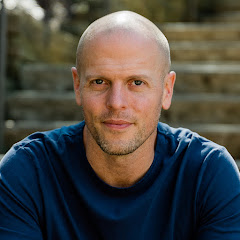 Tim Ferriss
Key Moments
Susan Cain explores how embracing sorrow and longing enriches life and fosters creativity and resilience.
Key Insights
Bittersweetness is the simultaneous experience of joy and sorrow, light and dark, a fundamental aspect of being alive.
Embracing sorrow and longing is crucial for creativity, connection, and emotional resilience, not a sign of depression.
Music, particularly in minor keys, can evoke deep emotional responses by expressing the inherent lack of resolution in life.
Mystical traditions offer a framework for understanding and navigating the 'longing' for a more beautiful or complete existence.
Inherited grief from ancestors can impact individuals, but awareness and empathy can help in processing these ancestral wounds.
Actively seeking beauty, creating sanctuary, and practicing empathy through 'captions' can help integrate difficult emotions.
THE ESSENCE OF BITTERSWEETNESS
Susan Cain introduces the concept of bittersweetness as the acceptance and inhabitation of life's simultaneous presence of joy and sorrow, light and dark. Drawing parallels with expressions like 'days of honey, days of onions,' she emphasizes that this state includes a deep awareness of impermanence and presents a curiously piercing joy at the beauty of things. Cain posits that individuals are either naturally drawn to this frame of mind or arrive at it through life experiences, highlighting that it's a fertile ground for creativity, awe, and spirituality.
MUSIC AND THE EMOTIONAL LANDSCAPE
The conversation delves into the profound emotional impact of music, particularly minor key compositions. Cain argues that the lack of resolution in minor keys mirrors the inherent complexities and unresolved aspects of human existence, leading to feelings of uplift and connection rather than mere sadness. She notes that people often listen to sad songs more than happy ones, finding solace and a sense of sublime connection. This exploration extends to diverse musical traditions, like Turkish and Persian music, which utilize unique tuning systems to evoke a wider range of emotions.
LONGING AS A CREATIVE IMPULSE
Cain reframes 'longing' not as a passive state of helplessness but as an active impulse to reach for something more. This yearning, whether for a divine connection, a perfect world, or a lost beloved, is identified as a fundamental human drive and a potent source of creative energy. She suggests that the awareness of the gap between the current reality and a desired, more beautiful world fuels the creative impulse. This is exemplified by artists like Leonard Cohen, whose work embodies the transformation of pain into beauty.
EXPLORING MYSTICAL TRADITIONS AND SUFISM
The discussion touches upon mystical traditions, including Sufism, which offer frameworks for understanding deep emotional states. Cain highlights Sufi teacher Llewellyn Vaughan-Lee's perspective that heartache is often mistaken for depression, when it is, in fact, a longing for the 'beloved of the soul.' This sentiment is echoed in Rumi's poetry, where grief draws one toward union and longing is the return message. These traditions provide language for experiences often overlooked by contemporary psychology, which tends to pathologize melancholy as mere depression.
INHERITED GRIEF AND ANCESTRAL WOUNDS
A significant portion of the conversation focuses on inherited grief, exploring how individuals can carry emotional burdens from their ancestors, particularly those who endured immense loss, such as Holocaust survivors. Cain shares personal experiences of recognizing these deeper griefs and discusses research on epigenetic modifications that suggest trauma can be passed down. She emphasizes that understanding these ancestral narratives, coupled with the idea that 'their story is not my story,' can be empowering, allowing for empathy and healing.
TOOLS FOR CULTIVATING EMOTIONAL RESILIENCE
To cultivate emotional resilience and navigate difficult feelings, Cain suggests practical approaches. These include consciously immersing oneself in beauty through art, creating sanctuary spaces for reflection, and practicing empathy by considering 'what are people's captions'—understanding the hidden experiences of others. She also advocates for expanding emotional vocabulary and normalizing the expression of a full range of emotions, even in professional settings. The act of transforming one's own pain into beauty, on any scale, is presented as a profoundly healing mechanism.
Mentioned in This Episode
●Software & Apps
●Organizations
●Books
●Drugs & Medications
●Concepts
●People Referenced
Common Questions
Susan Cain's thesis for 'Bittersweet' stems from a lifelong fascination with minor-key music, which she found elicited joy and uplift rather than sadness. An incident 25 years ago, when friends questioned her listening to 'funeral music,' sparked a deep quest to understand the power of bittersweetness as a way of transforming pain into beauty.
Topics
Mentioned in this video
Susan Cain's newest book, which explores the idea that sorrow and longing are essential to a full human experience and can lead to wholeness.
A book of the Hebrew Bible represented in some music, described as a love song that embodies the longing for the beloved, often a metaphor for the divine.
Susan Cain's highly successful book, an eight-year New York Times bestseller translated into 40 languages, which explores the strengths of introverts.
A book of quotes from various artists, beautifully made, gifted by Susan Cain to Tim Ferriss, featuring profound insights like Mark Rothko's quote on religious experience.
A satirical epistolary novel by C. S. Lewis, mentioned by Tim Ferriss as part of Lewis's work he has read.
Tim Ferriss's first book, which prompted Susan Cain to observe his shift from focusing on success to a more open and vulnerable exploration of pain and transformation.
Homer's epic poem, where the hero Odysseus is depicted weeping with homesickness, illustrating the ancient Greek concept of pothos as a driving force.
Sufi teacher whose videos Susan Cain found, known for his gentle demeanor and teachings on how longing and heartache are fundamental to Sufism and can be a path to the divine.
Psychologist at Berkeley who researched the vagus nerve's role in responding to the distress of other beings, linking it to our capacity for empathy.
British business magnate, mentioned as an influencer ranked above Susan Cain on LinkedIn.
Co-author of a study on how people describe their work emotions, finding they often mislabel sadness as frustration or anxiety as anger.
British writer and theologian, known for his concept of 'inconsolable longing' and the idea that human thirst for something beyond this world points to a divine reality.
King of the ancient Greek kingdom of Macedon, mentioned as someone seized by 'pothos' when contemplating conquests, an example of this active longing.
American businesswoman and philanthropist, mentioned as an influencer ranked above Susan Cain on LinkedIn.
Naturalist known for his theory of evolution, but also described as a gentle and melancholic soul who observed a visceral response to distress in both animals and humans, linking to the vagus nerve.
American abstract painter, quoted as saying that people weeping in front of his paintings are having the same religious experience he did while creating them.
Author and speaker who partners with Susan Cain to curate the Next Big Idea Book Club.
Skillful bereavement counselor at the New York Open Center who identified Susan Cain as carrying a deeper, ancestral grief, sparking her research into inherited trauma.
Organizational psychologist and author who partners with Susan Cain to curate the Next Big Idea Book Club.
German painter, whose quote 'Art is the highest form of hope' is featured in a book of artist quotes.
Co-founder of Microsoft, who named Susan Cain's TED Talk as one of his all-time favorites.
Author, journalist, and speaker who partners with Susan Cain to curate the Next Big Idea Book Club.
Japanese organizing consultant and author, whose method of thanking belongings is presented as an example of sensitivity to ephemera, a core Japanese concept.
Singer-songwriter deeply loved by Susan Cain for his music and life philosophy, which embodies the bittersweet tradition of finding beauty in brokenness.
Singer-songwriter whose song 'After All' describes overcoming mysterious depression by exploring family history and inherited grief, a process of excavating and understanding.
An Israeli musician and producer, discovered by Susan Cain, known for collaborating with artists worldwide and creating stirring music like 'Bo'ee Tishk'i Li' (Here Comes My Bride), which blends Hebrew and Amharic.
Astrophysicist and author, quoted for her insight that 'life is the obstacles; there is no underlying path,' encouraging acceptance of challenges as the path itself.
Co-author of a study on how people describe their work emotions, finding they often mislabel sadness as frustration or anxiety as anger.
Researcher who first discovered epigenetic traditions in Holocaust survivors and advocates for reframing inherited vulnerabilities. Also a leading figure in MDMA-assisted psychotherapy for veterans.
A Japanese aesthetic term for the pathos of things, or an empathy toward things, a sensitivity to ephemera, representing the awareness of impermanence and a gentle sadness at their passing. Discussed in the context of cherry blossom festivals.
A major bundle of nerves in the body, ancient in evolution, controlling fundamental functions like breathing and digestion, also shown to react viscerally to the sorrow of others, forming a bodily foundation for empathy.
A therapeutic approach using MDMA, particularly effective for veterans with treatment-resistant PTSD, showing staggering success rates in clinical studies.
A Portuguese word describing a deep emotional state of melancholic longing for a person or thing that is absent, a distant place, or past experiences.
Mystical branch of Islam focused on direct experience of the divine, which Susan Cain explored. Its teachers, like Llewellyn Vaughan-Lee, emphasize that longing and heartache carry people closer to the divine.
An ancient Greek word meaning the longing for that which is beautiful and unattainable, understood as an active rather than passive state, exemplified by Odysseus's homesickness.
Mystical side of Judaism, where the idea is that creation was one vessel of divine light that shattered, and the goal is to discover and pick up the divine light shards around us.
Japanese indigenous religion, highlighted in the context of mono no aware and the practice of appreciating and thanking objects, as inspired by Marie Kondo's methods.
Medieval poets and composers who, influenced by Crusaders bringing Sufi metaphors from the East, applied the concept of divine love to serenading maidens, illustrating how the impulse for human love and divine love are linked.
A dissociative anesthetic with emerging interest for its effects on neurogenesis and potential in mental health treatment, though with 'not great interest' from Tim Ferriss compared to other compounds.
A psychedelic compound found in certain mushrooms, showing significant interest for its effects on neurogenesis and its role in rewriting narratives in the mind, particularly in therapeutic contexts.
Hospital that produced a viral video for caregivers to teach empathy, showing hospital corridors with captions revealing patients' and visitors' emotional experiences.
Science magazine that published an article about fearful memories being passed down to mouse descendants, supporting the concept of epigenetic inheritance of trauma.
A book club curated by Susan Cain, Malcolm Gladwell, Adam Grant, and Daniel Pink, which donates all proceeds to children's literacy programs.
Respected scientific journal that also published research on epigenetic modifications, mentioning how environmental factors can influence biology more rapidly across generations.
A magical cafe in New York City, owned by Czech people, where Susan Cain wrote 'Quiet' and found a creative sanctuary, though it no longer exists.
A holistic learning and wellness center where Susan Cain attended a bereavement seminar and met Simcha Raphael.
More from Tim Ferriss
View all 689 summaries 81 min
Q&A with Tim — The Upcoming AI Tsunami and Building Offline Advantage
 91 min
The Random Show, Couch Edition! — Supplements, Breathing and Balance Training, and Much More!
 76 min
How to Quiet the Ruminative Mind and Avoid The Traps of Self-Help — Tim Ferriss
 86 min
NYT Bestselling Author on Writing 200+ Children's Books — Tish Rabe
Found this useful? Build your knowledge library
Get AI-powered summaries of any YouTube video, podcast, or article in seconds. Save them to your personal pods and access them anytime.
Get Started Free