Key Moments
Superconductor Breakthrough -- What's Up With That?
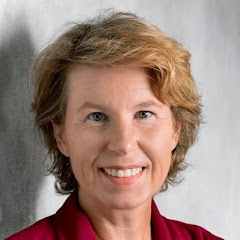 Sabine Hossenfelder
Want to know something specific about what's covered?
We've already dissected every moment. Ask and we will deliver (with timestamps).
Key Moments
New superconductor claims face skepticism; Earth's water origin, past landscapes, and academic freedom are discussed.
Key Insights
A new potential room-temperature superconductor, lutetium hydride, shows promise but faces significant scientific skepticism due to past retractions and data analysis concerns.
New astronomical observations in the Orion constellation offer clues to Earth's water origin, suggesting it may be inherited from the interstellar medium, though Earth's ratio differs.
A highly detailed geoscientific model reconstructs Earth's landscape evolution over 100 million years, crucial for understanding carbon cycle feedback loops and predicting climate change impacts.
Academic freedom has declined globally in the last decade, with notable regressions in populous nations like China, India, and the US, impacting research, teaching, and dissemination of information.
Meta-lens technology has advanced to enable the first moon image from an 8-cm aperture meta-lens, promising smaller, lighter, and cheaper optics for future telescopes.
Artificial coral reefs are being deployed off Miami to mitigate storm surge damage and restore marine ecosystems, addressing coastal vulnerability and coral die-off.
A new international 'Origins Federation' brings together diverse scientific disciplines to investigate the emergence of life in the universe and the potential for extraterrestrial life.
Project Greensand in Denmark represents a novel carbon capture and storage initiative, being the first to store CO2 from another country, albeit with energy costs.
The sponsor, Nautilus, is highlighted as a high-quality literary science magazine covering diverse topics and offering a discount to viewers.
CONTROVERSIAL SUPERCONDUCTOR CLAIMS
A team led by Ranga Dias at the University of Rochester claims to have achieved room-temperature superconductivity in lutetium hydride under 10 kilobars of pressure. This purported breakthrough is met with significant skepticism due to Dias's prior retractions and questions surrounding the data analysis in the new paper. The process involved doping lutetium with nitrogen and hydrogen under pressure, resulting in color changes indicative of a phase transition, though the sharp drop in resistance to zero observed in the published data is disputed after noise subtraction.
UNRAVELING EARTH'S WATER ORIGINS
Astronomers studying a young solar system in the Orion constellation have found clues about the origin of Earth's water. By observing water vapor in a system heated by an accretion burst, they measured a semi-heavy water to normal water ratio of about 2 parts in a thousand. This ratio is comparable to the interstellar medium, suggesting nascent planetary systems inherit water directly. While this doesn't fully explain Earth's water abundance, it implies water is likely common across the galaxy.
A DETAILED MODEL OF EARTH'S PAST
Geoscientists have developed the most detailed computer model to date of Earth's landscape evolution over the last 100 million years. This simulation, precise to within ten kilometers globally, tracks tectonic plate movement, mountain formation, river systems, and sediment flow. Understanding these past dynamic interactions is crucial for predicting how Earth's systems will respond to ongoing climate change, particularly the complex feedback loops within the carbon cycle.
THE EROSION OF ACADEMIC FREEDOM
A global report indicates a significant decline in academic freedom over the past decade across 22 countries. While nations like Czechia rank highly, many populous regions, including China, India, and the United States, have seen worrying decreases. In the US, this decline is attributed to state-level actions targeting academic authority, such as banning certain topics and threatening tenure, even under the current administration. Global trends suggest an increasing restriction on research, teaching, and information dissemination.
ADVANCEMENTS IN META-LENS TECHNOLOGY
Electrical engineers have captured the first image of the moon using a telescope equipped with a meta-lens. Meta-lenses, composed of nanostructures, offer a lighter and potentially cheaper alternative to traditional glass lenses. The team successfully created an 8-cm aperture meta-lens by etching silicon patterns, large enough to image the moon, albeit blurrily. This development paves the way for smaller, more portable optical devices.
PROTECTING COASTLINES WITH ARTIFICIAL REEFS
Researchers in Miami are deploying artificial concrete reef structures to protect the coastline from storm surges and sea-level rise. Sunk off the coast of North Miami Beach, these structures are designed to absorb storm energy and will be seeded with corals to restore marine life. This initiative aims to mitigate hurricane damage and combat the significant die-off of natural corals caused by environmental factors.
THE ORIGINS FEDERATION FOR LIFE'S MYSTERIES
An international consortium, the 'Origins Federation,' has been established by leading scientists, including Nobel laureates, to investigate the emergence of life in the universe. This multi-disciplinary effort draws from fields like astronomy, synthetic biology, and paleoecology. With the growing discovery of exoplanets, the federation aims to answer fundamental questions about whether life exists elsewhere and how it originated, marking a more serious scientific engagement with astrobiology.
CARBON CAPTURE AND STORAGE INNOVATION
Denmark's Project Greensand marks a new frontier in carbon capture and storage (CCS) by being the first to store liquefied carbon dioxide imported from another country (Belgium). This initiative, part of a global push for net-zero targets, injects CO2 into a depleted North Sea oil field. While aiming to store significant amounts by 2030, the process itself consumes considerable energy for capture, transport, and storage.
SPONSOR SPOTLIGHT: NAUTILUS MAGAZINE
The video highlights Nautilus, a literary science magazine praised for its in-depth coverage across various scientific disciplines. The speaker endorses Nautilus for its high-quality writing and its role in important scientific conversations, noting contributions from renowned scientists and authors. A special 15% discount is offered to viewers through a provided link. The magazine provides diverse membership options, access to content, and exclusive benefits.
Mentioned in This Episode
●Supplements
●Products
●Software & Apps
●Tools
●Companies
●Organizations
●Books
●Concepts
●People Referenced
Common Questions
Room-temperature superconductivity is the holy grail of condensed matter physics, allowing electricity to be transported without loss. This would dramatically improve the efficiency of power grids and electronic devices, potentially making technologies like magnetic levitation commonplace.
Topics
Mentioned in this video
An element whose presence was unexpectedly suggested by spectral analysis in the superconductor research, despite not being mentioned in the preparation.
The compound created by squishing lutetium between diamonds and bathing it in hydrogen and nitrogen gas, claimed to be superconducting.
An isotope of hydrogen used to create 'semi-heavy water' when it replaces a hydrogen atom, studied to understand Earth's water origin.
Mentioned in relation to a paper about money and happiness, and his purchase of Twitter.
A Swiss astronomer and Nobel Prize winner who will contribute to the Origins Federation project.
Two Nobel Prize winners are among the scientists establishing the Origins Federation.
Secretary General of the Chinese Communist Party, whose leadership has seen a worsening of academic freedom in China.
Lead author of the University of Rochester team claiming a room-temperature superconductor breakthrough.
Former US president whose term saw changes impacting academic freedom, with continued decline observed even after his successor.
Current US president, under whom academic freedom indicators have continued to fall, attributed to state-level actions targeting academic authority.
A Nobel Prize winner from Harvard contributing to the Origins Federation, whose lab studies the transition from chemical to biological evolution.
A literary giant who published his first nonfiction piece in Nautilus.
An institute in Gothenburg, Sweden, that coordinates the Academic Freedom Index, surveying academic freedom in countries worldwide.
A new multi-disciplinary research consortium established by international scientists to understand the emergence of life in the universe.
The research institution building artificial coral reefs to protect Miami from storms.
A scientific journal where the superconductor breakthrough paper was published, and a previous paper by Dias was retracted.
One of the founding institutions of the Origins Federation.
Institution where Ranga Dias and his team are based, who announced a potential superconductor breakthrough.
One of the founding institutions of the Origins Federation, which will host its inaugural conference.
A country where academic freedom has diminished, linked to austerity measures under President Lopez Obrador.
A university where many of the electrical engineers involved in the meta-lens telescope project are based.
One of the founding institutions of the Origins Federation.
A nation previously having high academic freedom, which has declined due to state-level actions and policies under both Donald Trump and Joe Biden.
One of the three most populous nations where academic freedom has declined, with worsening conditions after Xi Jinping's leadership.
A constellation used by astronomers as a proxy for observing the past of our own solar system to study the origin of water.
The country with the lowest academic freedom score in the latest Academic Freedom Index report.
The country that received the best academic freedom score in the latest Academic Freedom Index report.
The coastal area off which artificial coral reefs were sunk to protect the city.
A country from which carbon dioxide is being stored in Denmark as part of Project Greensand.
A populous nation where academic freedom declined significantly after Narendra Modi became prime minister, now classified as an electoral autocracy.
Social media platform purchased by Elon Musk. Mentioned in the context of his wealth and happiness.
A literary science magazine that the speaker prefers for reading and is sponsoring the channel.
An Australian streetwear company that partnered with Nautilus to promote ocean science.
More from Sabine Hossenfelder
View all 65 summaries 7 min
7 minBreakthrough In Data Storage Could Store Your Photos for 10000 Years
 7 min
7 minThe Simulation Hypothesis Gets Scientific Backing
 7 min
7 minSurprise! Milky Way Might Not Have a Black Hole After All
 7 min
7 minThe First Moon Landing Wasn’t Apollo — And We Just Found It
Ask anything from this episode.
Save it, chat with it, and connect it to Claude or ChatGPT. Get cited answers from the actual content — and build your own knowledge base of every podcast and video you care about.
Get Started Free