Key Moments
Simon Coronel, World Champion of Magic, Quitting the Day Job and More! | The Tim Ferriss Podcast
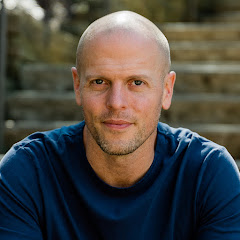 Tim Ferriss
Key Moments
World Champion magician Simon Coronel discusses his unconventional path, “Glitches in Reality” show, and the 2022 FISM win.
Key Insights
Neurodivergence can influence one's career and personal life, sometimes leading to unique strengths and challenges in fields like magic and product design.
Pursuing a passion later in life (like magic at 18) can provide a distinct advantage by offering a fresh perspective and empathy for the audience's experience.
The journey to mastery often involves unexpected detours, failures, and the necessity of finding alternative paths when direct ones prove difficult.
"Radical earlyness" and a commitment to continuous iteration and testing are crucial for refining performance and creative endeavors.
Competitions, even when not directly leading to career success, can serve as invaluable deadlines and motivators for personal growth and skill development.
Finding a supportive team and complementing one's weaknesses with others' strengths is essential for sustained creative and professional success.
A Unique Introduction to Magic
Simon Coronel, classified by the U.S. government as an "Alien of Extraordinary Ability" for his magic, discovered his passion at 18, an unusually late age for most magicians. This late start, he believes, became an advantage, allowing him to retain a profound empathy for the audience's perception of wonder. His initial encounter with magic was at Melbourne University's magic society, where witnessing a card trick profoundly broke his reality and sparked a lifelong fascination with the art of illusion, driven by a pure desire for understanding.
From Management Consulting to Full-Time Magician
After university, Simon spent five years in management consulting at Accenture. While grateful for the experience and the people he met, this environment played to his weaknesses, particularly those related to his neurodivergence and executive function challenges. He found the constant social interaction and organizational demands exhausting. Despite the corporate job, he continued to pursue magic as a secret passion, stockpiling savings and taking inspiration trips to places like The Magic Castle, driven by a fear of regret and a growing desire to fully commit to his craft.
The Decision to Go Pro and its Challenges
Simon's decision to leave Accenture was an epiphany, spurred by an article on end-of-life regrets and the realization that he would never feel "ready." He embraced the philosophy that if there was no right time, sooner was better. His transition to a full-time magic career, however, proved financially challenging, with his income often falling below the poverty line for a decade. He learned that artistic ability alone doesn't guarantee financial success; business skills like networking, client management, and negotiation, which were not his strengths, were equally crucial.
The Magic Castle: A Mecca of Illusion
The Magic Castle in Hollywood, described as a unique hybrid of a magicians' country club and a public entertainment venue, played a significant role in Simon's journey. It's a place where magicians gather, network, and workshop ideas, while also presenting those illusions to the general public. Simon emphasized its historical importance, particularly its association with Dai Vernon, a legendary magician who revolutionized magic with his theory of "naturalness." The Castle became a critical incubator of talent, attracting magicians worldwide and solidifying Hollywood's status as a magic hub.
The FISM World Championships: A Decade-Long Narrative Arc
Simon's journey through the FISM World Championships, often called the "Olympics of magic," marked significant milestones. He first competed in 2009, tying for third, an achievement he never expected. In 2012, under immense pressure and with a routine he had to hastily re-conceptualize, he won the "most original close-up act" award. This performance, though "janky," planted the seed for an idea he couldn't shake: preserving the transient moment of wonder in a tangible object. This idea became central to his future championship success.
The 2022 FISM Grand Prix: A Triumphant Return
After a hiatus from competitions to focus on product design, Simon, now a "hobbyist amateur magician," decided to compete in FISM 2022 to close the 10-year arc of his unfinished routine. He spent months intensely workshopping and refining his act, even enduring grueling public practice sessions where failure was a common, yet necessary, part of the process. His dedication led to him winning the North American championships and eventually the FISM Grand Prix. The climax involved a spontaneous stage invasion by hundreds of amazed spectators, a testament to the illusion's profound impact.
The Catharsis of Victory and Imposter Syndrome's Demise
Winning the FISM Grand Prix was a deeply emotional and cathartic experience. Simon, not typically a crier, found himself unable to control his tears on stage, a moment he chose not to hide as an act of authentic expression. The victory not only validated a decade of relentless effort but also, for the first time in his adult life, shattered his imposter syndrome. Despite the initial burnout and an unexpected period of "existential depression," the achievement allowed him to finally pause, regroup, and savor a peaceful coffee with his friend, devoid of professional pressure.
Philosophy on Mentalism and Ethical Deception
Simon holds strong reservations about mentalism, defining it as magic that creates the illusion of psychic or psychological abilities. While acknowledging some mentalists are friends, he finds it ethically uncomfortable because, unlike traditional magic where he can reveal that an illusion was created through skill, mentalism's claims are entirely false. He believes it fundamentally misrepresents the performer's abilities, making it impossible to build genuine relationships based on truth. He distinguishes this from his own practice, where he can openly discuss sleight of hand and misdirection without destroying the wonder.
Learning Magic as an Adult: A Guided Journey
For adults interested in learning magic, Simon stresses that there's no single easy path. He advocates for personalized guidance, ideally from a good teacher who can adapt to individual needs and motivations. He counters the common misconception that natural talent or dexterity is a prerequisite, emphasizing that persistence and enjoying the process are key. His beginner courses focused on quick gratification and, uniquely, encouraged students to develop their own presentational style, making each performance distinctly theirs. He also highlighted the unique satisfaction of using common, "found objects" for magic.
Jigsaw Puzzles: A New Creative Frontier
Simon's pivot to jigsaw puzzle design was another unexpected turn, born from his disillusionment with the business side of magic. Leveraging his engineering, geometry, and programming background, he applied principles of geometric vanishes to create the "magic puzzle." The Kickstarter launch of these puzzles coincided with the 2020 pandemic lockdown, leading to a "success disaster" and becoming the most backed puzzle of all time. This venture revealed that his diverse skills in experience design could translate across fields, bringing him happiness and scalable income outside of live performance.
The Future of "Glitches in Reality"
Regarding his show, "Glitches in Reality," Simon approaches its future with a "beginner's mind" and no fixed plan, a lesson learned from past experiences. His primary goal is to fully realize the show's artistic vision, which has been a decade in the making. With the help of an exceptional director like Chad Rabinovitz and a supportive team, he aims to bring the show to its complete conceptual fulfillment, seeing it as the culmination of another significant creative arc. Whether it scales or not remains an open question, but the internal satisfaction of completing the vision is paramount.
Mentioned in This Episode
●Products
●Software & Apps
●Companies
●Organizations
●Books
●People Referenced
Common Questions
Simon Coronel's 'radical earlyness' policy involves arriving at least an hour or two early to appointments, finding a nearby cafe with Wi-Fi, and using that time to work, read, or relax. This strategy helps him reliably be on time and reduces stress, also proving productive by minimizing home distractions.
Topics
Mentioned in this video
Creator of the 'Peanuts' comic strip, referenced by Tim Ferriss with the character Charlie Brown, to illustrate a quick shift from exuberance to disappointment after a competition result.
A South Korean magician who won the Stage Grand Prix at FISM 2012, captivating the audience with a transcendent performance.
A magician and famous debunker of frauds and charlatans, known for providing a service by exposing manipulative figures.
The family whose vision helped establish and maintain The Magic Castle, offering Dai Vernon a deal to live and stay there.
Author of 'Hiding the Elephant', a magic history book recommended by Simon Coronel.
Host of The Tim Ferriss Show, who tried all coffee brewing methods for his book 'The 4-Hour Chef' and concluded Aeropress was his favorite. He met Simon Coronel at The Magic Castle.
A friend of Tim Ferriss and Simon Coronel, who guided them at The Magic Castle and accurately described Simon's 'what is an egg' approach to deep understanding.
World Champion of Magic, legally classified as an alien of extraordinary ability by the US government. Discoverd magic at 18, worked in management consulting, now a jigsaw puzzle designer, and won the World Championship of Magic in 2022 at FISM.
A famous escape artist and magician, whose death anniversary coincided with a fire at The Magic Castle.
A highly influential magician, often compared to Einstein in physics, who revolutionized magic with his theory of naturalness. He lived and hung out at The Magic Castle for decades, making it a Mecca for magicians.
A blind card mechanic and subject of the documentary 'Dealt', known for his incredible skill.
Entrepreneur and author, mentioned by Simon Coronel for his saying that 'ideas and execution is so different', in the context of bringing an idea to life.
A Korean-American entrepreneur and writer, famous for creating an iconic streetwear brand.
A private club for magicians and a public entertainment venue in Hollywood, known for its unique atmosphere and significance in magic history. Simon Coronel is a regular performer there.
Where Simon Coronel began his first year of university in 1999 and discovered magic.
Legally classified Simon Coronel as an alien of extraordinary ability.
Regarded as the Olympics of magic, where Simon Coronel was crowned the World Champion of Magic in 2022. It hosts a major competition every three years to showcase global magic talent.
A cult classic sitcom with a magician character (Gob Bluth) that accurately parodies the magic industry, likely due to show writers being Magic Castle members.
A documentary about James Randi, magician and debunker.
A documentary about Richard Turner, a blind card mechanic, recommended by Tim Ferriss.
An animated sci-fi sitcom, referenced playfully by Simon Coronel to explain FISM's role in the magic world.
A fictional character from a spy thriller series, used as an analogy for Simon Coronel's friends acting as 'special agents' who are capable and motivated to deal with inevitable problems during a performance.
A hit TV show where Simon Coronel has appeared twice.
A sports drama film, referenced by Simon Coronel to describe his initial goal in a magic competition to simply compete and not embarrass himself.
A reality television series, mentioned as a platform where Simon Coronel's friend Dom performed and Simon acted as his 'special agent'.
A magician character in 'Arrested Development' who is an 'awful magician parody character' but is accurate in its portrayal of the magic industry.
More from Tim Ferriss
View all 689 summaries 81 min
Q&A with Tim — The Upcoming AI Tsunami and Building Offline Advantage
 91 min
The Random Show, Couch Edition! — Supplements, Breathing and Balance Training, and Much More!
 76 min
How to Quiet the Ruminative Mind and Avoid The Traps of Self-Help — Tim Ferriss
 86 min
NYT Bestselling Author on Writing 200+ Children's Books — Tish Rabe
Found this useful? Build your knowledge library
Get AI-powered summaries of any YouTube video, podcast, or article in seconds. Save them to your personal pods and access them anytime.
Get Started Free