Key Moments
Sebastian Junger Interview (Full Episode) | The Tim Ferriss Show (Podcast)
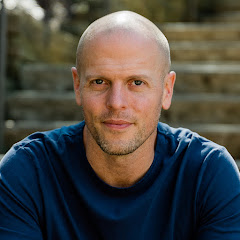 Tim Ferriss
Key Moments
Sebastian Junger discusses human nature, tribalism, warriorhood, and the search for belonging.
Key Insights
Humans evolved in tribal, egalitarian societies that fostered strong cohesion through shared hardship and purpose.
Modern society's isolation and lack of shared struggle can paradoxically lead to increased rates of PTSD and alienation.
Meaningful risk-taking, group affiliation (like in sports or military units), and shared adversity are crucial for psychological well-being.
Societies need to reintegrate traditional 'rites of passage' and communal ceremonies to foster belonging and address modern malaise.
Journalism's primary role is to report truth, not necessarily to improve society, and this distinction is often blurred.
The strength of community and shared purpose, even in the face of danger or hardship, can buffer individuals from psychological demons.
THE EVOLUTIONARY ROOTS OF COHESION
Sebastian Junger posits that humans evolved in small, egalitarian tribal groups where shared hardship and a common purpose were paramount for survival. This environment fostered intense group cohesion, a sense of belonging, and a clear identity. He contrasts this with modern society's isolation, highlighting how the removal of consistent, moderate crisis has led to a disconnect from these deeply ingrained evolutionary needs. This lack of communal challenge and shared objective leaves individuals, particularly young men, struggling to find meaning and belonging.
THE SEDUCTION OF THE FRONTIER AND THE APPEAL OF TRIBAL LIFE
Junger explores historical accounts, like Benjamin Franklin's observations, where settlers on the American frontier often abandoned European colonial society to live with Native American tribes. He argues this wasn't about escaping brutality, but about embracing a more egalitarian, less stifling way of life. These societies, though perceived as 'savage' by colonists, offered a profound sense of equality, voluntary leadership, and genuine community that was deeply appealing, leading many captives to refuse repatriation.
WARFARE AS AN ACCELERANT OF HUMAN CONNECTION
Paradoxically, Junger notes that the extreme violence and danger of war can foster an intense, almost unparalleled sense of human connection and community. During events like the London Blitz, despite immense casualties, psychiatric distress decreased because people were forced into close, supportive collective living. This shared adversity created a powerful 'us' mentality, buffering individuals from psychological distress and providing a profound sense of purpose and belonging that is often lost in peacetime.
THE CRISIS OF MODERN ALIENATION AND PTSD
Junger argues that high rates of PTSD and alienation in modern Western societies, especially among veterans and returning Peace Corps volunteers, are not solely reactions to trauma but a profound difficulty in readjusting from intensely cohesive group life to modern isolation. The sense of purpose and camaraderie found in military platoons or remote village life is absent back home. He suggests that the modern societal structure, with its emphasis on individual apartments and lack of constant shared challenge, creates a void that can be detrimental to psychological well-being.
RECALIBRATING MASCULINITY AND THE ROLE OF RITES OF PASSAGE
The conversation touches on the innate male capacity for physical action and aggression. Junger suggests that without constructive outlets, like those provided by traditional tribal societies or even intense sports, this energy can manifest negatively. He advocates for the reintroduction of communal ceremonies and shared challenges, akin to rites of passage, that allow men (and women) to demonstrate prowess, forge bonds, and integrate into society in a healthy manner, distinguishing between the need for peacetime and wartime leadership roles.
THE JOURNALIST'S ROLE AND THE SEARCH FOR AUTHENTICITY
Junger discusses his writing process, emphasizing research-driven, journalistic integrity. He draws parallels between his lean writing style and influences like Hemingway, highlighting the importance of clarity and efficiency. He also reflects on the profound impact of witnessing extreme events, like the dismemberment of soldiers in Afghanistan, and the journalist's duty to confront and report the unvarnished truth, even when it's psychologically taxing. This encounter underscored the necessity of unflinching observation to truly understand war.
BRIDGING THE GAP: VETERANS AND COMMUNITY REINTEGRATION
Drawing inspiration from Native American traditions, Junger proposes 'Veteran Town Halls' as a means to help veterans reintegrate. These forums would allow veterans to recount their experiences to their communities, fostering understanding and demonstrating their service. He believes this cathartic process, combined with national service initiatives, could help bind a fractured society, heal veterans, and remind citizens of their shared responsibilities and the importance of collective purpose beyond individual concerns.
Mentioned in This Episode
●Companies
●Organizations
●Books
●Drugs & Medications
●Concepts
●People Referenced
Common Questions
Sebastian Junger got a job as a tree climber, which was dangerous work. After suffering a serious chainsaw injury, he reflected on the unnoticed deaths of working-class men in dangerous industries and decided to write about them, leading to 'The Perfect Storm.'
Topics
Mentioned in this video
A prestigious literary designation that Sebastian Junger achieved with his book 'The Perfect Storm'.
An award Sebastian Junger received for his journalistic work.
An ancient Greek philosophy that Sebastian Junger resonates with, identifying with its inspiring and reassuring way of ordering the universe.
A major tendon in the back of the ankle, which Sebastian Junger injured with a chainsaw.
Another prestigious award Sebastian Junger received for his journalistic endeavors.
A prestigious film award for which 'Restrepo' was nominated.
A Native American confederacy whose political structure, particularly their distinction between peacetime and wartime leaders, influenced the US Constitution.
Soldiers from the Vietnam War who experienced improved PTSD symptoms after 9/11, suggesting a communal crisis can offer psychological benefits.
A Native American tribe with whom Sebastian Junger lived and studied running traditions for his college thesis, and whose belief in Skinwalkers he discusses.
A Navajo belief in individuals, typically men, who transform into animals by wearing wolf hides, gaining their powers, and using them to harm their own people, representing the fear of internal threats to a community.
A brain network that psychedelics can disrupt, potentially mitigating self-focus and increasing feelings of unity.
A magazine Sebastian Junger was a contributing editor for and a special correspondent at ABC News.
The university in Connecticut where Sebastian Junger studied anthropology.
A former Boston newspaper where Sebastian Junger had his first published article about tugboats in Boston Harbor.
A literary magazine known for its interviews on the art of non-fiction, mentioned as a source for John McPhee's insights.
A terrorist organization that Sebastian Junger argues is less dangerous to the US than internal toxic political discourse.
The university where Tim Ferriss took a writing seminar with John McPhee focusing on structure.
A research institution where Tim Ferriss is involved with funding research on psychedelics for treatment-resistant depression and PTSD.
The government agency responsible for veterans' benefits, whose policy of self-diagnosis for PTSD claims is discussed as potentially leading to fraud and psychological detriment.
A fundamentalist Islamic movement in Afghanistan that Sebastian Junger covered while embedded with the Northern Alliance.
A military front in Afghanistan led by Ahmed Shah Massoud, fighting against the Taliban.
A brilliant English photographer and co-director of the documentary 'Restrepo' who was tragically killed in Libya.
An actress and comedian whose quote, 'Those who are offended easily should be offended more often,' is paraphrased by Tim Ferriss.
A writer admired by Sebastian Junger for her efficient and lean language.
Sebastian Junger's long-time literary agent and friend, who saw potential in his writing despite a lack of early income.
An American polymath who complained that settlers often chose to live with American Indian tribes over Christian colonial society.
A mutual friend of Tim Ferriss and Sebastian Junger, known for 'Searching for Bobby Fischer,' who has appeared on the podcast multiple times.
An intellectual father of American independence, whose biography Sebastian Junger was reading. He admired Greek Stoics and incorporated their ideas into American governance.
A Roman Stoic philosopher whose letters Sebastian Junger found inspiring and modern.
A writer briefly mentioned by Sebastian Junger as part of his literary influences.
A non-fiction writer highly admired by Sebastian Junger and Tim Ferriss due to his efficient, lean, and innovative style, and his use of visual structure.
A prolific writer mentioned humorously by Tim Ferriss in comparison to Sebastian Junger's output.
A writer admired by Sebastian Junger for his efficient and lean style, and author of 'At Play in the Fields of the Lord' and 'The Snow Leopard'.
A writer whose lean style Sebastian Junger admired and who inspired his own writing, also mentioned as an inspiration for Sebastian's travels to Spain.
A famous boxer whose trainer, Cus D'Amato, is quoted by Tim Ferriss about having a plan until getting punched in the face.
The leader of the Northern Alliance in Afghanistan, whom Sebastian Junger covered in 2000 while fighting the Taliban.
A Democratic representative from Massachusetts and former Marine lieutenant who helped Sebastian Junger organize veteran town halls.
A famous sociologist who found that during wartime in European countries, suicide and murder rates decreased due to increased communal life.
A friend of Tim Ferriss and podcast guest who also highly recommends 'Sapiens'.
The military leader during the American Revolution who formally gave up power to civilian government after the British surrender, an act Sebastian Junger suggests may have been inspired by Iroquois military thinking.
The guest on the podcast, an acclaimed author and journalist who extensively covers war, human nature, and societal issues.
A US Marine Corps general mentioned by a listener who spoke about post-traumatic growth.
An American civil rights leader cited by Sebastian Junger as the first person who comes to mind when he thinks of 'successful' due to his courageous societal transformation.
The author of 'Sapiens: A Brief History of Humankind,' a book highly recommended by Sebastian Junger.
A Native American leader during Pontiac's Rebellion, under whom white captives were adopted into tribal society and often chose not to return.
The dictator of Nazi Germany, whose birthday is on April 20, mentioned as a regrettable coincidence with Tim Hetherington's death date.
A writer Sebastian Junger would combine to create the 'ultimate writer'.
The former dictator of Libya, whose forces were responsible for the mortar attack that killed Tim Hetherington.
A country where Sebastian Junger extensively covered war, notably chronicling the deployment of a US platoon in the Korengal Valley for his film 'Restrepo'.
A country where Sebastian Junger went in 1994 to learn how to be a war reporter during its Civil War.
A location on the Navajo reservation where Sebastian Junger lived during his fieldwork for his college thesis.
A country where Tim Hetherington was killed by a mortar round while covering the Civil War during the Arab Spring.
The town where Sebastian Junger and Seth Moulton organized the first veteran town hall for open discussions.
The country invaded in 2003, at which time Sebastian Junger's friend, a psychologist, noted that PTSD would become a widely discussed topic.
The site of a mass shooting mentioned by Sebastian Junger as an example of modern-day 'Skinwalkers'.
The site of a mass shooting mentioned by Sebastian Junger as an example of modern-day 'Skinwalkers'.
The city where Sebastian Junger experienced a panic attack on the subway after returning from Afghanistan; also discussed in the context of communal responses to 9/11.
A harsh environment mentioned where humans have survived as hunter-gatherers, illustrating their adaptability to ongoing moderate crisis.
An online accounting software for small businesses, helping with invoicing, expense tracking, and client management. Mentioned as a sponsor and useful for contractors and fast-growing businesses.
A global creative platform connecting clients with freelance designers for various graphic design needs, including logos, websites, and book covers. Mentioned as a sponsor.
Sebastian Junger's latest book at the time of the recording, which explores human nature, tribal societies, and the challenges of military veterans returning home.
A book about chess prodigy Josh Waitzkin, mentioned by Tim Ferriss.
Sebastian Junger's first book, a number one New York Times bestseller, which he wrote after a chainsaw injury inspired him to write about dangerous working-class jobs.
A book by Yuval Noah Harari that Sebastian Junger credits with profoundly impacting his life and changing his perspective on everything.
Sebastian Junger's previous book, where he referenced a study on stress levels in Special Forces soldiers.
A novel by Peter Matthiessen, about a Native American in the South American jungle, which Sebastian Junger often gives as a gift.
A nature travelogue by Peter Matthiessen, mentioned in passing.
More from Tim Ferriss
View all 690 summaries 184 min
Daredevil Michelle Khare — How to Become a YouTube Superstar
 81 min
Q&A with Tim — The Upcoming AI Tsunami and Building Offline Advantage
 91 min
The Random Show, Couch Edition! — Supplements, Breathing and Balance Training, and Much More!
 76 min
How to Quiet the Ruminative Mind and Avoid The Traps of Self-Help — Tim Ferriss
Found this useful? Build your knowledge library
Get AI-powered summaries of any YouTube video, podcast, or article in seconds. Save them to your personal pods and access them anytime.
Get Started Free