Key Moments
Russ Roberts — The Decisions that Define Us
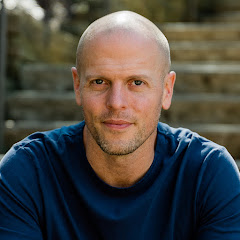 Tim Ferriss
Key Moments
Russ Roberts discusses "Wild Problems," exploring life decisions, the limitations of rationality, and the importance of attention, purpose, and meaning.
Key Insights
Quality time with loved ones requires quantity time; presence and sustained attention deepen relationships.
Rationality and cost-benefit analysis are insufficient for significant life decisions like marriage or having children.
The world is complex; experts and data can mislead due to the "pretense of knowledge," as highlighted by F.A. Hayek.
Life decisions often involve "wild problems" that are not easily solvable and require embracing uncertainty and a different kind of thinking.
Meaning and purpose in life stem from overarching senses of self and identity, not just day-to-day experiences or the pursuit of fun.
Embracing uncertainty and engaging in diverse experiences, rather than seeking perfect solutions, can lead to growth and unexpected discoveries.
THE IMPORTANCE OF ATTENTION AND QUANTITY OVER QUALITY TIME
Russ Roberts begins by reflecting on his father's choice to prioritize family, emphasizing that "quality time demanded quantity time." He contrasts this with the modern tendency towards distraction, urging listeners to pay attention to what truly matters. This perspective highlights that meaningful connections are built through sustained presence and shared experiences, not just occasional moments of focused interaction. Neglecting this can lead to missed opportunities for deep connection and a life less fully lived.
DEALING WITH 'WILD PROBLEMS' BEYOND RATIONALITY
Roberts introduces his book "Wild Problems," which addresses life's significant decisions, such as marriage or having children. He argues that these are not amenable to simple cost-benefit analysis or purely rational frameworks. Unlike quantifiable problems, these "wild problems" are complex, involve deep personal meaning, and cannot be solved with data alone. The book aims to help individuals navigate these inherently uncertain choices by developing different ways of thinking.
HAYEK, SCIENTISM, AND THE PREMISE OF KNOWLEDGE
Drawing on F.A. Hayek, Roberts discusses the "pretense of knowledge" and the dangers of "scientism," the illusion that scientific methods can provide complete understanding and control. Hayek argued that many complex systems, like economies, emerge organically from individual actions rather than top-down design. This insight cautions against over-reliance on experts and data for decisions, as our knowledge is inherently limited and the future is often unpredictable by design.
DARWIN'S LIST AND THE LIMITATIONS OF DECISION-MAKING TOOLS
The conversation explores historical examples, including Charles Darwin's pro-con list for marriage. Roberts points out that even brilliant minds struggle with applying purely rational methods to profoundly personal decisions. Darwin's list, despite its analytical attempt, failed to capture the essence of married life, highlighting that such crucial life choices often transcend measurable data and require a different form of wisdom. This emphasizes that standard analytical tools can be misleading for complex human experiences.
FINDING MEANING AND PURPOSE IN LIFE'S CHOICES
Roberts suggests that the sources of a deeply meaningful life go beyond daily enjoyment and are rooted in our overarching sense of self and purpose. Decisions about marriage, children, or career are profound because they shape who we are. He advocates for embracing the complexity and uncertainty inherent in these choices, rather than seeking a single "best" option, and finding satisfaction in the journey and the relationships forged along the way.
THE ROLE OF COMMITMENT, GROWTH, AND SPIRITUALITY
The discussion touches upon marriage as a commitment and a path to personal growth, moving beyond simplistic notions of convenience or romantic ideals. Roberts briefly touches on religion and prayer, not as devoid of doubt but as a source of life's texture and a connection to something larger than oneself. He shares personal experiences of transcendent moments, suggesting that these experiences, whether religious or secular, are crucial for a fully realized life, offering a sense of being alive and connected.
LEARNING FROM UNCERTAINTY AND DIVERSE EXPERIENCES
Roberts uses the example of Bill Belichick and his approach to player drafting to illustrate the value of embracing uncertainty and trying many things. In life, as in coaching, it's often more effective to increase the denominator of experiences rather than trying to perfectly predict individual outcomes. This strategy involves engaging in various pursuits, accepting that some will not work out, but that this process itself, by weeding out failures and revealing unexpected successes, is a more robust way to navigate life.
THE CONTEXT OF ISRAEL AND THE SEARCH FOR MEANING
Roberts explains his move to Israel to lead Shalem College, a liberal arts institution focused on foundational texts and critical thinking. He describes Israel as a place where life feels consequential, blending ancient spiritual significance with modern realities and political tensions. This environment, he suggests, contributes to a feeling of being alive and deeply engaged, reinforcing the book's themes of seeking meaning and purpose beyond mere personal comfort or rational calculation.
THE TALMUDIC WISDOM: 'NOT UP TO YOU TO FINISH THE WORK'
Referencing a Talmudic quote, Roberts discusses the idea that one is not free to desist from one's work, even if one cannot complete it. This perspective offers a framework for understanding purpose and contribution, suggesting that engaging in meaningful endeavors, even without an expectation of full completion, has inherent value. It counters notions of decision fatigue by framing life's tasks as opportunities for growth and participation in something larger than oneself.
PERSEVERANCE THROUGH DOUBT AND THE VALUE OF THE UNQUANTIFIABLE
Roberts addresses the struggle with prayer and spirituality, drawing parallels between experiencing transcendence in nature, human connection, or art. He suggests that even non-religious individuals can encounter these moments. These experiences, he implies, are akin to the insights gained from deeply engaging with one's work or commitments, reminding us that while life's biggest decisions may not be quantifiable, the pursuit of meaning and connection offers a rich, textured existence.
Mentioned in This Episode
●Software & Apps
●Companies
●Organizations
●Books
●Concepts
●People Referenced
Common Questions
Russ Roberts states that for his father, "quality time demanded quantity time." He explains that developing deep connections, whether in parenting or friendships, requires sustained interaction and shared experiences over time. Quality moments don't just happen on demand; they build on a foundation of consistent presence and attention, contrasting with modern impulses to prioritize 'efficiency' in relationships. This is crucial for truly cultivating a talent like being a father.
Topics
Mentioned in this video
Philosopher and author, whose YouTube video, 'You Are Going To Marry The Wrong Person,' is recommended for its perspective on relationship expectations.
A Scottish economist and philosopher, author of 'The Wealth of Nations'. Roberts quotes him on the 'man of system' who manipulates society like chess pieces, aligning with Hayek's views.
An American academic and psychologist known for her work on grit, mentioned as a past guest on EconTalk.
An Austrian-British economist and philosopher, known for his work on spontaneous order and criticism of central planning. Russ Roberts made rap videos about his ideas and often discusses his concept of 'scientism' and 'the pretense of knowledge'.
Musician, mentioned by Roberts to illustrate how religious observance (keeping the Jewish Sabbath) restricts certain leisure activities.
Founder of the People's Republic of China, mentioned as an example of a 'man of system' who attempts to design society.
An American economist, cited for his view that capitalism's profit and loss system encourages prudent risk-taking, aligning with the concept of 'skin in the game'.
A physicist and writer, an atheist, whose book describes the discomfort he feels experiencing transcendent moments in nature, supporting Roberts's view that such experiences are not exclusive to the religious.
A tech innovator and friend of Tim Ferriss, known for his ability to see things from different perspectives and stress-test assumptions.
An American author and financial journalist mentioned as a past guest on EconTalk.
An American lyrical poet, mentioned by Roberts as an example of a famous poet his father didn't aspire to be as grand as.
An American philosopher mentioned as a past guest on EconTalk.
A British economist whose ideas were contrasted in rap videos by Russ Roberts. He was an intellectual antagonist of F.A. Hayek in the 1930s.
President of Shalem College in Jerusalem, research fellow at Stanford University's Hoover Institution, and host of the EconTalk podcast. Author of 'Wild Problems: A Guide to the Decisions That Define Us'.
An essayist and risk analyst, author of 'Fooled by Randomness' and 'The Black Swan', frequently interviewed by Russ Roberts and influential on his thinking about risk and uncertainty.
Author mentioned by Russ Roberts in the context of reflections on mortality and cherishing loved ones.
Socialist philosopher mentioned as an example of a 'man of system' who attempts to design society.
An American novelist and non-fiction writer, quoted by Roberts on the difficulty of marriage and how it shifts focus from oneself.
A late professor known for his unconventional self-experimentation, who introduced Russ Roberts to Nassim Taleb.
Musician, mentioned alongside Paul McCartney to illustrate how religious observance restricts certain leisure activities.
An actress, mentioned for her performance in 'Next to Normal' as an example of someone conveying profound emotional vulnerability.
A writer and commentator mentioned as a past guest on EconTalk.
A renowned American poet, mentioned by Roberts as an example of a famous poet his father didn't aspire to be as grand as.
Naturalist and biologist, whose pro-con list for marriage is used as a historical example of how even brilliant individuals struggle with 'wild problems' that defy rational calculation.
A Danish scientist and mathematician, whose poem about flipping a coin to reveal true desires is cited when discussing decision-making.
Leader of the Bolshevik Revolution mentioned as an example of a 'man of system' who attempts to design society.
Coach of the New England Patriots, an economics major, whose unconventional draft strategy and player acquisition methods are used to illustrate life lessons about embracing uncertainty and trying many things.
National park in California, mentioned as a place with vivid stars, similar to the Negev desert, that evokes a sense of transcendence.
A desert region in southern Israel, mentioned as a place where one can experience profound spiritual or transcendent feelings due to its unique natural setting.
The city in Israel where Shalem College is located and where Russ Roberts moved to lead the institution. Described as a spiritual center for Abrahamic religions and a place of historical significance.
A park near Washington D.C., used to illustrate how past data (like high water marks) is not always a reliable predictor of future events.
A book by Russ Roberts discussing the ideas of Adam Smith and their relevance to personal life.
A book by Russ Roberts on economic themes.
F.A. Hayek's Nobel Prize acceptance speech, described as an accessible essay on the illusion of scientific certainty in complex systems, particularly economics.
An ancient Greek epic poem by Homer, from which the character Penelope is drawn to illustrate decision-making challenges.
A central text of Rabbinic Judaism, cited for the quote: 'It is not up to you to finish the work, but neither are you free to desist from it,' concerning one's obligations and purpose.
A book by Russ Roberts exploring economic principles.
A book by Russ Roberts on economic themes.
Nassim Nicholas Taleb's book that Tim Ferriss read, exploring the impact of highly improbable, unpredictable events.
Nassim Nicholas Taleb's book, which Roberts praises for deeply illuminating the economic principle that incentives (profit and loss) drive prudent decision-making, even for those not consciously calculating risk.
Russ Roberts's latest book, which explores how to approach major life decisions that cannot be solved with purely rational, data-driven analysis.
The university where Bill Belichick was an undergraduate economics major.
A football team in the National Football League, coached by Bill Belichick.
A conservative think tank at Stanford University, where Russ Roberts is a research fellow.
A college in Jerusalem where Russ Roberts serves as president, focused on a core curriculum including Greek philosophy, Jewish thought, the Quran, the New Testament, and Western history.
Former global financial services firm whose collapse marked a significant event in the 2008 financial crisis, mentioned as the context for Roberts's first in-person meeting with Nassim Taleb.
E-commerce platform described as an example of how technology improves day-to-day life by providing immediate answers and recommendations.
Platform where Russ Roberts's rap videos on Keynes and Hayek have garnered millions of views, helping to popularize complex economic ideas.
An award-winning weekly podcast hosted by Russ Roberts, featuring conversations on economics and related topics.
A book by Russ Roberts on economic themes.
A musical mentioned by Roberts as an example of a dramatic performance that evokes a transcendent experience through emotional vulnerability.
More from Tim Ferriss
View all 689 summaries 81 min
Q&A with Tim — The Upcoming AI Tsunami and Building Offline Advantage
 91 min
The Random Show, Couch Edition! — Supplements, Breathing and Balance Training, and Much More!
 76 min
How to Quiet the Ruminative Mind and Avoid The Traps of Self-Help — Tim Ferriss
 86 min
NYT Bestselling Author on Writing 200+ Children's Books — Tish Rabe
Found this useful? Build your knowledge library
Get AI-powered summaries of any YouTube video, podcast, or article in seconds. Save them to your personal pods and access them anytime.
Get Started Free