Key Moments
[Paper Club] Molmo + Pixmo + Whisper 3 Turbo - with Vibhu Sapra, Nathan Lambert, Amgadoz
 Latent Space Podcast
Key Moments
Momo+Pixmo: Open-source vision-language models outperform GPT-4V. Whisper 3 Turbo: Faster, efficient ASR.
Key Insights
Momo+Pixmo models offer a fully open-source alternative for vision-language tasks, outperforming proprietary models like GPT-4V in certain benchmarks.
The key innovation in Momo+Pixmo is the creation of high-quality, diverse training data from scratch, avoiding distillation from closed-source models.
Whisper 3 Turbo significantly improves speech-to-text transcription speed and efficiency through model pruning and continued pre-training, with minimal accuracy loss.
Whisper 3 Turbo's architecture focuses on optimizing the decoder, which accounts for most of the latency in autoregressive models.
Momo+Pixmo's data collection involved detailed voice descriptions from annotators, leading to richer, more robust image descriptions than written ones.
The "openness" of Momo+Pixmo is debated due to its reliance on OpenAI's CLIP for vision encoding, though Meta's OpenCLIP offers an alternative.
INTRODUCING MOMO+PIXMO: A NEW FRONTIER IN OPEN-SOURCE VISION-LANGUAGE MODELS
The Paper Club discussion begins with an introduction to Momo and Pixmo, developed by AI2. These models are highlighted as a significant advancement in open-source, open-weight vision-language models (VLMs). Unlike many existing open-weight models that rely on distilling knowledge from proprietary models like GPT-4V or Gemini, Momo+Pixmo are trained from scratch. This approach aims to address the community's gap in foundational knowledge for building VLMs independently, offering a fully open and transparent solution.
DATA GENERATION STRATEGY: THE POWER OF AUDIO DESCRIPTIONS
A core innovation lies in how Momo+Pixmo's training data was generated. Instead of relying on text-based image captions, annotators were prompted to describe images verbally in detail for 60-90 seconds, guided by specific questions. This audio-based approach, transcribed and processed, yields richer, more nuanced descriptions than typical written captions, capturing spatial relationships and finer details essential for robust VLM training.
ARCHITECTURAL APPROACH AND PERFORMANCE BENCHMARKS
Momo+Pixmo employs a joint training approach for its vision encoder and language model, avoiding the traditional method of freezing weights. The architecture involves a pre-processor, a vision encoder (based on CLIP, with a discussion about OpenAI's closed-source data vs. Meta's OpenCLIP), a connector for merging embeddings, and a decoder-only Transformer LLM. The models, particularly the larger ones, demonstrate performance on par with or exceeding GPT-4V and other proprietary models on various academic and user-preference benchmarks.
THE DIVERSE PIXMO DATASET AND ITS SUBSETS
The Pixmo dataset is a comprehensive collection designed for various VLM tasks. It includes subsets like 'Pixmo Ask Anything,' focusing on question-answering capabilities, and 'Pixmo Points,' which allows models to precisely indicate locations within an image. Other subsets cover charts, tables (requiring OCR), and even analog clocks, pushing the boundaries of what open-source VLMs can achieve. The data generation process involves multiple stages of transcription, LLM processing, and augmentation.
ASSESSING OPENNESS AND DATA CONSIDERATIONS
The "openness" of Momo+Pixmo is discussed, particularly the use of OpenAI's CLIP model, which is trained on proprietary data. While Meta's OpenCLIP offers an alternative, it is noted as being less performant or proof-of-concept. The reliance on closed-source components raises questions about true open-source AI, although the developers emphasize their commitment to releasing model weights, training code (where possible), and the dataset itself.
WHISPER 3 TURBO: FASTER AND MORE EFFICIENT SPEECH RECOGNITION
The discussion shifts to Whisper 3 Turbo, a new, faster, and more efficient version of OpenAI's ASR model. It achieves substantial improvements in speed and a reduction in model size primarily through model pruning (reducing decoder layers from 32 to 4) and continued pre-training on vast amounts of multilingual data. This optimization significantly reduces latency, making it more suitable for real-time transcription applications.
WHISPER TURBO'S ARCHITECTURE AND TRAINING STRATEGY
Whisper Turbo retains the core encoder-decoder Transformer architecture but drastically prunes the decoder layers. The motivation stems from the observation that the decoder contributes most to latency in autoregressive models. Continued pre-training on a massive multilingual dataset helps the pruned model regain its capabilities. This approach differs from knowledge distillation used in other optimized ASR models, and Whisper Turbo's multilingual nature is retained despite pruning.
REAL-TIME TRANSCRIPTION AND FINE-TUNING CAPABILITIES
The feasibility of real-time transcription with Whisper Turbo is addressed, suggesting that with appropriate hardware and chunk-based decoding strategies, near real-time performance is achievable. The model can be fine-tuned for specific tasks, although care must be taken, and its multilingual capabilities are a key advantage. Performance benchmarks indicate Whisper Turbo holds its own against other advanced ASR models, though user-specific benchmarking is recommended.
Mentioned in This Episode
●Products
●Software & Apps
●Books
●Concepts
●People Referenced
Common Questions
MOMO and PIXMO are open-source, open-weights vision-language models developed by AI2. They are significant because they are built from scratch, avoiding reliance on proprietary models for training data, and their performance rivals or surpasses leading proprietary models like GPT-4V.
Topics
Mentioned in this video
A multimodal model developed by OpenAI, trained on a massive dataset of images and text. Used as a vision encoder in some models, with its training data being proprietary.
A family of open-source language models developed by Meta. Mentioned in the context of fine-tuning for vision tasks and as a comparison point for chat performance.
A state-of-the-art automatic speech recognition (ASR) model from OpenAI, capable of transcription, translation, and speech detection. The discussion covers its architecture and the release of its Turbo version.
An earlier version of the Whisper model mentioned in the context of its training data and as a comparison point for Whisper Large V3 Turbo's performance.
A distilled version of Whisper, contrasted with Whisper Turbo. It uses knowledge distillation, is English-only, and has significantly less training data compared to Whisper Turbo.
A 7-billion parameter vision-language model based on OpenLLaMA. It outperforms GPT-4V and is positioned between GPT-4V and GPT-4 models in some rankings.
A large language model from OpenWeight, serving as the base for the MOMO-72B vision-language model.
A language model mentioned in the context of ELO rankings, appearing below Gemini and Claude 3.5 Sonnet.
Related to the MOMO project, PIXMO refers to the dataset and associated models, including subsets like PIXMO Ask Anything, PIXMO Points, and PIXMO Clocks, which are designed for diverse vision-language tasks.
A version of Google's Gemini model. The speaker notes that MOMO can outperform Gemini 1.5, particularly at smaller model sizes.
A 1-billion parameter vision-language model based on AI2's Omo language model. It performs on par with GPT-4V on academic benchmarks and user preference.
An open-source, open-weights vision-language model developed by AI2, designed to build models from scratch without relying on proprietary systems. It comes in various sizes and outperforms existing models on several benchmarks.
A proprietary vision-language model from OpenAI. MOMO models are benchmarked against GPT-4V, with larger MOMO models outperforming it.
A visual search engine by Google. Mentioned as a comparable application to the real-time image analysis capabilities demonstrated with MOMO on the Apple Vision Pro.
A new, more efficient version of Whisper that uses model pruning (reducing decoder layers from 32 to 4) and continued pre-training. It is smaller and faster with minimal accuracy loss.
A framework for using machine learning models on Apple Silicon hardware. The speaker noted they don't use Macs and therefore have no data points for MLX.
A family of multimodal models from Google. MOMO models are compared to Gemini, with claims that MOMO outperforms Gemini 1.5 Pro and Flash.
An open-source reimplementation of CLIP by Meta AI, demonstrating that CLIP's performance can be reproduced without proprietary data.
A vision-language model that MOMO is discussed in comparison to. LAVA is mentioned as starting to lag behind compared to MOMO's performance.
A model from Anthropic. The speaker states that MOMO models can outperform Claude 3.5, especially at smaller sizes and with high-quality data.
A large vision-language model based on Quwen 72B. It achieves top performance on academic benchmarks and ranks highly in human preference evaluations.
A multimodal model from OpenAI. It ranked highest in human preference evaluations for vision-language models, followed by MOMO-72B.
A multimodal model noted for its fusion models, positioned below Lava 1.5 in ELO rankings, with a suggestion for recreating its fusion approach.
A version of the Whisper ASR model with 32 layers in both encoder and decoder. It has been updated to Whisper Large V3 Turbo for improved efficiency.
A type of GPU mentioned as suitable hardware for running Whisper models in near real-time due to its processing capabilities.
A mixed-reality headset developed by Apple. The MOMO model was demonstrated running on the Apple Vision Pro for real-time image analysis and interaction.
More from Latent Space
View all 203 summaries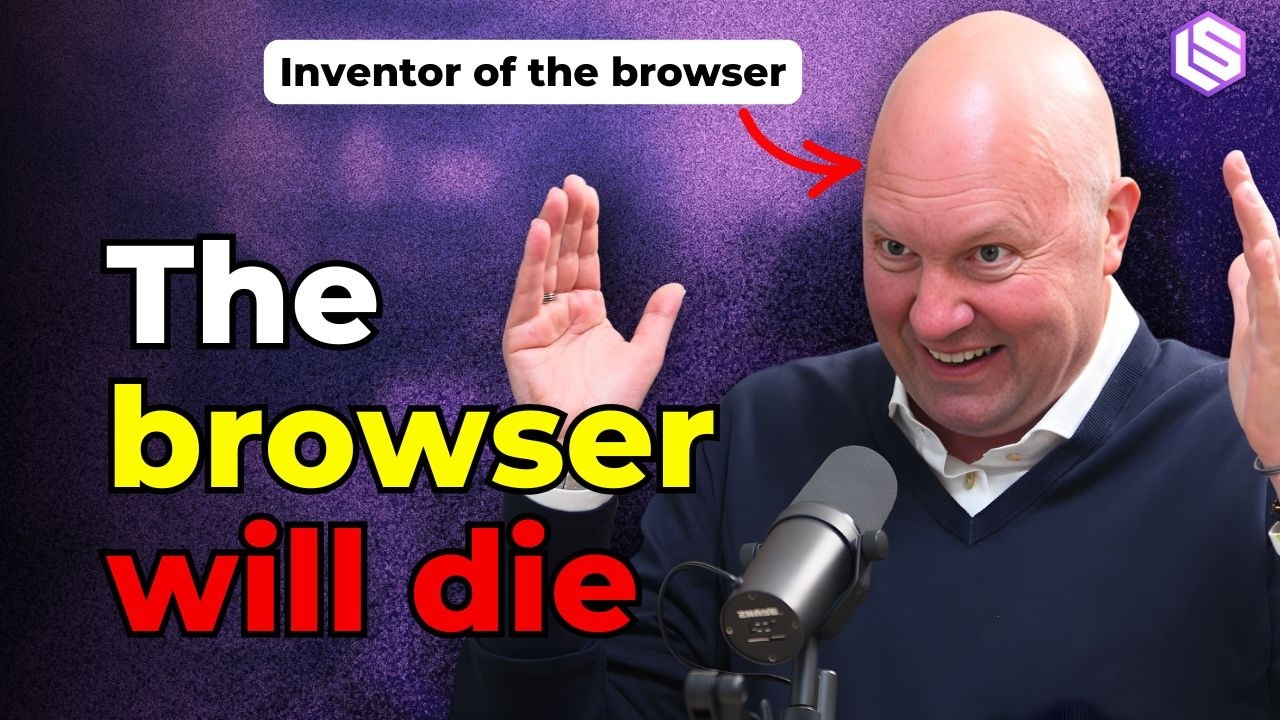 77 min
Marc Andreessen introspects on Death of the Browser, Pi + OpenClaw, and Why "This Time Is Different"
 67 min
Moonlake: Multimodal, Interactive, and Efficient World Models — with Fan-yun Sun and Chris Manning
 38 min
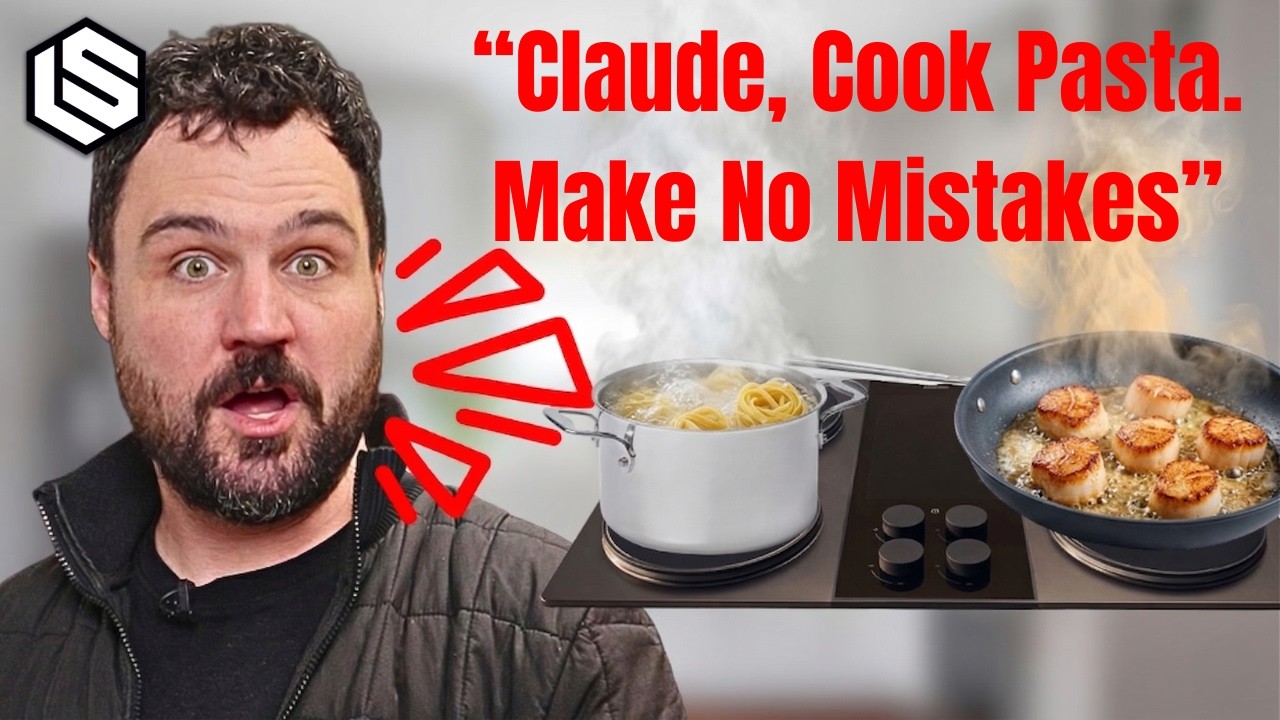
The Stove Guy: Sam D'Amico Shows New AI Cooking Features on America's Most Powerful Stove at Impulse
 55 min
Mistral: Voxtral TTS, Forge, Leanstral, & Mistral 4 — w/ Pavan Kumar Reddy & Guillaume Lample
Found this useful? Build your knowledge library
Get AI-powered summaries of any YouTube video, podcast, or article in seconds. Save them to your personal pods and access them anytime.
Get Started Free