Key Moments
Marc Randolph on Building Netflix, Negotiating with Amazon/Bezos, and More | The Tim Ferriss Show
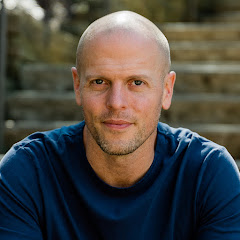 Tim Ferriss
Key Moments
Marc Randolph discusses Netflix's creation, iteration, and essential business lessons.
Key Insights
Embrace 'bad ideas' by testing them rapidly to learn from reality.
Leadership is learned through doing; taking responsibility with real consequences.
Communication is crucial, adapting style to situations from collaborative to urgent.
Focus on core strengths and aggressively prune distractions ('scrape barnacles').
Prioritize personal life and relationships through consistent habits, not just intentions.
The most valuable lessons often come from tough experiences and perceived failures.
EARLY LESSONS IN LEADERSHIP AND RESILIENCE
Marc Randolph's entrepreneurial journey began with formative experiences like a three-day survival challenge in Hartford, Connecticut, where he learned to panhandle and rely on his own resourcefulness. This stripped-down adversity taught him the humility and tenacity required for asking for support, a skill immediately transferable to seeking venture capital. Concurrently, his extensive involvement with the National Outdoor Leadership School (NOLS) provided invaluable practical leadership training. Through these wilderness expeditions, he learned to make decisions with real consequences, communicate effectively, adapt to challenging situations, and build resilience, essentially experiencing leadership by doing rather than just studying.
THE POWER OF SPLIT-TESTING AND ITERATION
Randolph emphasizes that "there's no such thing as a good idea" initially; all ideas are "bad ideas" until tested against reality. His early ventures, like candy arbitrage and selling seeds, honed his ability to rapidly iterate and split-test different approaches to maximize returns. This iterative mindset, rooted in direct marketing principles, became a cornerstone of his strategy. The core lesson is not to have brilliant ideas, but to build systems and cultures for testing numerous ideas quickly, cheaply, and easily to discover what actually works. This approach avoids getting stuck in the "ideal imaginary space" and instead forces engagement with practical outcomes.
THE BIRTH AND EVOLUTION OF NETFLIX
The genesis of Netflix involved brainstorming numerous unconventional ideas, from personalized shampoo to custom dog food, before landing on video rental by mail. Initially conceived around DVD technology, the business faced significant hurdles in its early days. The subscription model, which later became Netflix's hallmark, was not an initial prerequisite, as they focused on selling DVDs to generate revenue while the rental side struggled. This pivot was driven by the realization that competing in a crowded DVD sales market against giants like Amazon and Walmart was unsustainable, forcing a courageous bet on the complex, yet potentially dominant, rental model.
NAVIGATING CORPORATE DEALS AND COMPETITION
Randolph recounts a pivotal meeting with Jeff Bezos and Amazon, where Netflix was considered as a potential acquisition to jumpstart Amazon's video rental business. Despite the validation of such interest, the team decided against selling, realizing they were closer than they thought to solving the core problem of online movie delivery. Later, a desperate attempt to sell Netflix to Blockbuster, who had initially dismissed the online model, ended in rejection. This encounter, which occurred during a period of financial desperation for Netflix, highlighted Blockbuster's underestimation of customer dissatisfaction and their reliance on late fees, ultimately foreshadowing Blockbuster's demise and Netflix's triumph.
STRATEGIC FOCUS AND THE 'CANADA PRINCIPLE'
The "Canada Principle" illustrates the importance of intense strategic focus. Randolph realized that pursuing seemingly easy opportunities, like expanding into Canada for a quick revenue boost, would dilute efforts that could be better applied to strengthening the core business. This principle involves consciously choosing what *not* to do, even if opportunities appear attractive. It means "scraping off the barnacles" – identifying and removing features or diversions that add complexity without significant strategic value. True success, he argues, comes from identifying the few critical elements that matter most and allocating all resources to mastering them.
CULTURE, BALANCE, AND THE 'TUESDAY NIGHT DATE'
Randolph emphasizes that corporate culture is defined by actions, not just words. He implemented a strict "Tuesday Night Date" tradition with his wife, even during the most intense periods of building companies. This wasn't just about personal balance; it was a deliberate act to model a desired company culture that valued people and relationships. By leaving work at 5 PM every Tuesday, he demonstrated that crises could be resolved before then or handled by others, setting a precedent that allowed employees to also prioritize their personal lives. This discipline, while challenging, reinforced the idea that business success should not demand the sacrifice of fundamental personal connections and well-being.
FINDING PURPOSE AND EMBRACING ACTION
Randolph's 'moment of clarity' came not from discovering a new purpose, but from realizing how to leverage his decades of entrepreneurial experience for greater impact. He recognized that the skills and lessons learned from starting companies like Netflix could be applied to help others realize their own ideas, regardless of whether they were business ventures or personal aspirations. This realization led to his book, 'That Will Never Work,' and his podcast of the same name, where he provides encouragement and practical advice to aspiring entrepreneurs. His core message is simple: stop thinking, start doing, and take that swing.
Mentioned in This Episode
●Supplements
●Products
●Software & Apps
●Companies
●Organizations
●People Referenced
Common Questions
Marc Randolph's three-day survival experience on the streets of Hartford, Connecticut, taught him the humility and courage needed to ask for money, specifically panhandling. He found that sincere requests were most effective, and this experience made asking for venture capital feel less daunting, equipping him with a fundamental skill for entrepreneurship. His early attempts at panhandling also involved split testing different approaches, laying a groundwork for his future iterative business strategies.
Topics
Mentioned in this video
A mattress company that uses a quiz to match body type and sleep preferences to a perfect mattress. Tim Ferriss sleeps on their Midnight Luxe model.
A company that produces an all-in-one nutritional supplement. Tim Ferriss recommends it as nutritional insurance, containing 75 vitamins, minerals, and whole-food-sourced ingredients.
A company co-founded by Marc Randolph, which was sold to Google in 2019 for $2.6 billion.
Initially a book-selling company, Amazon's ambition to be the 'everything store' was a key factor for Netflix to pivot from DVD sales to rentals to avoid direct competition.
Co-founded by Marc Randolph, it began as a DVD-by-mail rental service and grew into a global streaming giant, overcoming initial skepticism and significant challenges.
The dominant video rental company at the time Netflix launched, with 9,000 stores. Netflix initially struggled to compete against them and later tried to sell to them.
The technology giant that acquired Looker Data Sciences in 2019.
A ride-sharing company used as an example of a startup that overcame initial financing rejections by expanding its market beyond initial assumptions (from Uber Black to UberX).
A lifestyle and home decor website that selected Helix Sleep as the number one best overall mattress pick of 2020.
An automated investment portfolio (robo-advisor) that helps diversify portfolios, minimize fees, and lower taxes, overseeing $20 billion in assets.
Richard Branson's multinational venture capitalist conglomerate.
A credit card company known for its sophisticated direct mail operations and analytical approach to split testing in its early days.
A social news aggregation, content rating, and discussion website, co-founded by Alexis Ohanian.
A company Tim Ferriss applied to in college but did not get the job.
A leadership school that uses the wilderness as a classroom, providing experiential learning for leadership skills. Marc Randolph was both a student and instructor.
An organization where Marc Randolph spent a month leading backcountry expeditions for adjudicated youth on the East Coast, separate from NOLS.
A magazine that selected Helix Sleep as the number one best overall mattress pick of 2020.
An environmental advocacy group for which Marc Randolph sits on the board.
A survival school mentioned by Tim Ferriss while recounting his research for one of his books.
A fictional character from the 'First Blood' series, mentioned by Tim Ferriss in a lighthearted comparison to wilderness survival skills.
Marc Randolph's co-founder at Netflix, who was initially going to fund the startup and go back to school.
Founder of Virgin Group, who invited Marc Randolph to Necker Island for a retreat.
An American writer and lecturer, developer of famous courses in self-improvement, salesmanship, corporate training, public speaking, and interpersonal skills. Warren Buffett's best investment was in his course on public speaking.
Co-founder of Reddit, who was once dismissed by a Yahoo executive as a "rounding error" in a meeting, a story shared by Tim Ferriss.
Co-founder and first CEO of Netflix, an entrepreneur with a career spanning over four decades who has founded or co-founded several successful startups.
Host of The Tim Ferriss Show, an investor, and author who interviews world-class performers and seeks to deconstruct their paths to success.
The CEO of Blockbuster who, according to Marc Randolph, laughed at Netflix's $50 million acquisition offer.
Founder of Amazon, who called Marc Randolph to inquire about potentially buying Netflix less than a year after its launch, seeing its potential in e-commerce.
An American business magnate and investor, cited by Tim Ferriss for his belief in the value of public speaking skills.
Television personality, who owned the corporate jet Netflix chartered to fly to Dallas for the Blockbuster meeting.
A technology that, due to its small, light, and thin form factor, sparked the idea for Netflix's video rental by mail concept, replacing VHS cassettes.
Uber's standard ride-sharing service, which was subsidized by Uber Black and led to exponential market expansion.
Uber's premium car service, which initially funded R&D and subsidized UberX, expanding the company's market exponentially.
The urban location where Marc Randolph survived for three days without money, food, or ID as part of a wilderness school exercise, an experience he never forgot.
Richard Branson's private island in the British West Indies, where Marc Randolph was invited to give a presentation and gained clarity on his life purpose.
More from Tim Ferriss
View all 690 summaries 184 min
Daredevil Michelle Khare — How to Become a YouTube Superstar
 81 min
Q&A with Tim — The Upcoming AI Tsunami and Building Offline Advantage
 91 min
The Random Show, Couch Edition! — Supplements, Breathing and Balance Training, and Much More!
 76 min
How to Quiet the Ruminative Mind and Avoid The Traps of Self-Help — Tim Ferriss
Found this useful? Build your knowledge library
Get AI-powered summaries of any YouTube video, podcast, or article in seconds. Save them to your personal pods and access them anytime.
Get Started Free