Key Moments
Making Sense of Existential Threat and Nuclear War
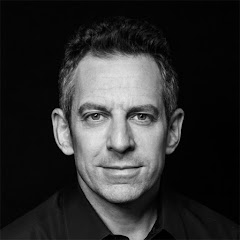 Sam Harris
Key Moments
Existential threats like nuclear war are largely ignored, despite their potential for annihilation.
Key Insights
Humanity possesses the unprecedented ability to self-annihilate through technologies like nuclear weapons, yet largely ignores this threat.
The 'Great Filter' hypothesis suggests that advanced civilizations often destroy themselves during a critical technological phase.
Nuclear weapons represent a potential 'black marble' in Bostrom's urn analogy, signifying knowledge that could lead to extinction.
Historical near-misses, like the Cuban Missile Crisis and Stanislav Petrov's decision, highlight the precariousness of nuclear stability.
Misinformation, aging infrastructure, and flawed human judgment pose persistent risks in nuclear deterrence systems.
Despite presidents' initial shock at war planning doctrines, the logic of nuclear strategy has proven difficult to alter.
THE EERIE SILENCE OF THE COSMOS AND THE GREAT FILTER
The Fermi Paradox questions the absence of observable advanced extraterrestrial civilizations despite the vastness of the universe. The 'Great Filter' hypothesis offers a disturbing explanation: civilizations may face an unavoidable technological hurdle that leads to their self-destruction. This compilation explores whether humanity is approaching such a filter, particularly through the development of nuclear weapons. The Drake Equation, while suggesting abundant life, indirectly highlights our potential isolation if a universal filter exists.
THE UNTHINKABLE REALITY OF NUCLEAR EXISTENTIAL THREAT
Sam Harris emphasizes the shocking human capacity for self-annihilation through nuclear war, a reality often ignored due to its terrifying nature. Jonathan Schell's 'The Fate of the Earth' is cited as a seminal work that grappled with this existential dread, highlighting humanity's peculiar failure to respond adequately to the threat. This collective denial, a form of self-protection, paradoxically undermines both self-interest and fellow feeling, leaving civilization in a state of precarious folly.
BÖSTROM'S URN: NAVIGATING TECHNOLOGICAL RISKS
Philosopher Nick Bostrom's 'vulnerable world hypothesis' uses the analogy of an urn filled with marbles representing technological knowledge. While most marbles ('white marbles') lead to benign advancements, 'black marbles' represent technologies so powerful they could lead to a civilization's eradication. Humanity's current strategy is to extract as many marbles as possible, hoping not to pull a black one, a process that cannot be undone. This highlights the inherent risks in scientific progression, where destructive capabilities often accompany creative potential.
TYPE 1 VULNERABILITIES: EMPOWERING INDIVIDUAL DESTRUCTION
Bostrom identifies 'Type 1' vulnerabilities where technology disproportionately empowers individuals to cause mass destruction. The ease of creating nuclear weapons, had it been simpler ('easy nukes'), could have led to widespread chaos and annihilation. Future advancements in biotechnology, such as designer viruses that can be easily synthesized and distributed, present similar risks. These developments could place devastating power into the hands of a few, making global stability exceptionally fragile.
NUCLEAR NEAR-MISSES AND THE PROBLEM OF COORDINATION
Historical events like the 1983 incident involving Stanislav Petrov, where a single individual averted potential nuclear war by questioning faulty data, underscore the role of human fallibility in maintaining global security. The Cuban Missile Crisis, though resolved, revealed that secret deals facilitated by leaders like Kennedy were crucial, and that the situation was far more perilous than publicly understood. These events, coupled with aging nuclear infrastructure and flawed decision-making protocols, demonstrate the fragile nature of deterrence.
THE LOGIC TRAP OF NUCLEAR STRATEGY
Fred Kaplan's work reveals how successive U.S. administrations grapple with the horrifying doctrines of nuclear war planning, often entering such discussions with intentions to reform. However, the underlying game-theoretic logic of nuclear deterrence, including first-strike capabilities and mutually assured destruction, proves incredibly difficult to dismantle. The constant threat of annihilation, particularly with systems on hair-trigger alert and reliant on outdated technology, persists despite widespread recognition of its absurdity and danger, creating a persistent global coordination problem.
Mentioned in This Episode
●Supplements
●Software & Apps
●Books
●Concepts
●People Referenced
Common Questions
The Fermi Paradox questions why, given the high probability of extraterrestrial civilizations, we see no evidence of them. This paradox is often addressed by the 'Great Filter' hypothesis, suggesting a technological hurdle that annihilates most civilizations, a concept highly relevant to understanding existential threats like nuclear war.
Topics
Mentioned in this video
U.S. Secretary of Defense during the Cuban Missile Crisis who advised against the secret missile removal deal with the Soviet Union.
U.S. National Security Advisor who advised President Kennedy during the Cuban Missile Crisis and opposed the secret deal with Khrushchev.
A Soviet Air Defence Forces lieutenant colonel who is credited with preventing a potential nuclear war in 1983 by correctly identifying a false warning of incoming US missiles.
Leader of the Soviet Union during the Cuban Missile Crisis who proposed a secret deal to remove missiles from Cuba in exchange for the removal of US missiles from Turkey.
Philosopher and author known for his work on existential risks and the future of humanity, including the vulnerable world hypothesis.
Author of 'The Fate of the Earth,' a seminal work exploring the existential threat of nuclear war.
Leader of Cuba during the Cuban Missile Crisis, whose agreement allowed the Soviet Union to deploy nuclear missiles on the island.
Journalist and author who has extensively covered nuclear weapons and national security, notably writing 'The Bomb'.
Physicist who posed the famous question 'Where is everybody?' regarding the apparent contradiction between the high probability of extraterrestrial civilizations and the lack of evidence for them.
The idea that at a certain level of technological development, the world becomes prone to destruction by default due to challenges in global coordination and preventing harm.
A doctrine of military strategy and national security policy in which a full-scale use of nuclear weapons by two or more opposing sides would cause the complete annihilation of both the attacker and the defender.
The use of living systems and organisms to develop or make products, which could lead to powerful and easily wielded destructive capabilities like designer viruses.
A probabilistic argument used to estimate the number of active, communicative extraterrestrial civilizations in the Milky Way galaxy.
A symbol of the Bulletin of the Atomic Scientists indicating how close humanity is to a global catastrophe, currently set at 100 seconds to midnight.
The apparent contradiction between the lack of evidence for extraterrestrial civilizations and various high estimates for their probability.
A book that profoundly impacted discussions on nuclear war and existential risk, urging readers to confront the unthinkable.
Fred Kaplan's book exploring the history and implications of nuclear weapons.
A sacred Hindu scripture quoted by Robert Oppenheimer after the Trinity test, reflecting on the immense destructive power unleashed.
More from Sam Harris
View all 292 summaries 34 min
Is Effective Altruism Blind to the Biggest Problems? – Sam Harris & Will MacAskill
 21 min
What Is Technology Doing to Us?
 42 min
Is the Iran War Already Failing?
 90 min
FULL EPISODE: The Politics of Pragmatism and the Future of California (Ep. 464)
Found this useful? Build your knowledge library
Get AI-powered summaries of any YouTube video, podcast, or article in seconds. Save them to your personal pods and access them anytime.
Get Started Free