Key Moments
Making Sense of Death
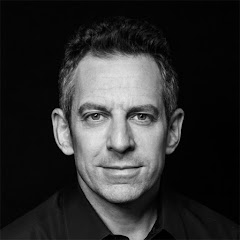 Sam Harris
Key Moments
Mindfulness of death enriches life, offering perspective, gratitude, and a call to presence against life's fleeting nature.
Key Insights
Awareness of death can paradoxically lead to a richer, more present, and grateful life.
Death itself is not an experience; the contemplation of it is what informs life.
The story one tells about the afterlife profoundly influences how one lives and dies.
Secular traditions are needed to navigate death and dying, focusing on relationships and interdependence.
Transcending basic needs, especially in the face of mortality, can lead to heightened states of meaning and transcendence.
Embracing uncertainty and adopting a spirit of exploration is key to navigating the human condition.
THE EVER-PRESENT HOURGLASS OF LIFE
The human condition is akin to a perpetually falling hourglass, where the future is unknown, and the present is a continuous flow. Sam Harris introduces the concept of making the awareness of death, often relegated to the background, a central focus. This deliberate contemplation, he argues, is not morbid but rather a pathway to living more fully, fostering presence, gratitude, and a deeper connection with ourselves and others. It shifts our perspective from denial or anxiety towards embracing the preciousness of each moment.
DEATH AS A CATALYST FOR LIVING
Contemplating death, it's argued, renders many of life's daily worries and distractions trivial. Activities that consume our attention, like searching for a font, can be seen in a new light when juxtaposed with the finite nature of life. The key insight is not the content of our activities but the quality of attention and the feelings associated with them. An honest acknowledgment of our mortality can bring moral and emotional clarity, reducing unproductive expenditures of energy, such as road rage, and fostering a resolve to embrace life's moments, however ordinary.
THE WISDOM OF DYING AND THE BEAUTY OF IMPERMANENCE
Frank Ostaseski, founder of the Zen Hospice Project, shares that a gentle reminder of death encourages us to loosen our grip on life, take ourselves less seriously, and approach others with greater kindness. He emphasizes that life's habits are powerful, and considering what habits one wishes to cultivate in light of approaching death is crucial. Death, rather than being an endpoint to fear, can reveal the inherent beauty in impermanence, much like the fleeting beauty of cherry blossoms, making life and love more vibrant and profound.
SECULAR RITUALS AND THE NEED FOR MEANING
The conversation highlights a deficit in secular frameworks for navigating death and dying. Many individuals, even atheists, often turn to religious figures for guidance due to the lack of established secular traditions around funerals and memorials. The need for rituals that evoke fundamental truths and foster connection, particularly a sense of interdependence, is paramount. These rituals can help individuals ease into the mystery of dying, focusing on relationships and their connection to reality, regardless of religious belief.
TRANSCENDENCE AMIDST MORTALITY
Scott Barry Kaufman explores Abraham Maslow's late-life revelations, particularly how facing his own mortality led to profound experiences of transcendence, challenging his hierarchical model. He reconciles the paradox that mortality salience can either lead to immediate survival concerns or, conversely, to heightened states of meaning and post-traumatic growth. This phenomenon, he suggests, is amplified when individuals transcend their incessant needs for esteem and connection, allowing for a broader, more accepting view of existence and humanity.
EMBRACING UNCERTAINTY AND THE EXPLORATORY LIFE
At the heart of much discussion is the fear of uncertainty. This fear can lead to psychological entropy, helplessness, and depression. Alternatively, one can embrace a life of exploration, where the unknown is exciting, and challenges are met with a pursuit of mastery. Fully engaging with life means recognizing these innate human tendencies and choosing exploration. The COVID-19 pandemic has served as a stark reminder of life's inherent uncertainties, underscoring the illusion of control and promoting a more open, curious approach to existence, recognizing that the only constant is uncertainty itself.
Mentioned in This Episode
●Supplements
●Organizations
●Books
●Concepts
●People Referenced
Common Questions
Being mindful of death can bring a sense of urgency and clarity to how we spend our attention, encouraging us to engage more fully with life, reduce suffering over trivial matters like road rage, and appreciate the preciousness of each moment.
Topics
Mentioned in this video
Mentioned as someone who consciously lived a year as if it were his last.
Spearheading psychedelic research at Johns Hopkins, focusing on psilocybin's effects on spirituality and well-being, particularly relating to anxiety about dying.
Philosopher whose writings on the nature of uncertainty are referenced.
Author and psychologist who wrote 'Transcend', exploring Maslow's concept of self-actualization and the impact of facing mortality.
Host of the Making Sense podcast, compiling conversations on death for this series.
Co-founder of Zen Hospice Project and author of 'The Five Invitations', discussing how to be mindful of death to enrich life.
Psychologist who experienced a heart attack late in life, which significantly impacted his views on self-actualization and mortality.
Book by Frank Ostaseki that explores how reflecting on death can lead to a richer life.
A book in the Old Testament that, along with the teachings of Socrates and the Buddha, is cited as an ancient source for contemplating death.
Book by Scott Barry Kaufman that delves into Maslow's theories, particularly self-actualization, and how facing mortality can lead to profound experiences.
More from Sam Harris
View all 292 summaries 34 min
Is Effective Altruism Blind to the Biggest Problems? – Sam Harris & Will MacAskill
 21 min
What Is Technology Doing to Us?
 42 min
Is the Iran War Already Failing?
 90 min
FULL EPISODE: The Politics of Pragmatism and the Future of California (Ep. 464)
Found this useful? Build your knowledge library
Get AI-powered summaries of any YouTube video, podcast, or article in seconds. Save them to your personal pods and access them anytime.
Get Started Free