Key Moments
Life & Work: A Conversation with George Saunders (Episode #372)
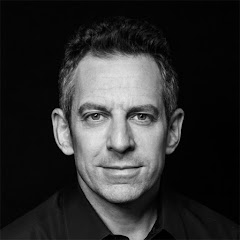 Sam Harris
Key Moments
George Saunders discusses Buddhism, kindness, writing as meditation, social media's impact, and the current political climate.
Key Insights
Writing can be a form of meditation, requiring sustained attention and filtering of genuine reactions.
Kindness is a powerful gateway concept that leads to deeper explorations of mindfulness and empathy.
The mind is malleable, and practices like meditation can train it towards greater kindness and well-being.
Social media and digital communication have negatively impacted our ability to connect and have fostered a more misanthropic outlook.
Economic inequality and the erosion of the American dream contribute significantly to current societal agitation and political division.
Fame and celebrity culture, particularly in the American context, can distort perceptions and influence political phenomena.
ENGAGEMENT WITH BUDDHISM AND THE PRACTICE OF KINDNESS
George Saunders describes himself as a "fellow traveler" with Buddhism, initially drawn to it through his wife's experience with Christian meditation. He found that meditation brought about concrete, positive changes in her, leading him to explore Tibetan Buddhist practices. Saunders highlights the profound realization that the mind is malleable and can be trained, a concept he relates to personal effort in physical fitness. He views kindness as a central tenet in Eastern traditions and a vital, often sidebarred, concept in the West. He notes that focusing on kindness can lead to greater alertness, mindfulness, and a better understanding of one's own projections and actions.
THE ROLE OF PSYCHEDELICS AND WRITING AS A PRACTICE
Saunders recounts a single, mild psychedelic experience in the 1980s that provided him with a crucial understanding of the mind's separateness from his perceived self. This experience offered a perspective shift, allowing him to see that his consciousness was not a fixed entity. He likens this insight to experiencing a high fever and recognizing that the disoriented state is not the true self. He also views writing as a form of meditation. His process involves moving beyond intellectual analysis to a state of alert awareness, reacting viscerally to the text, and filtering out constructed or overly analytical responses in favor of genuine ones. This iterative process of reading, reacting, and revising is central to his craft.
THE LABORIOUS ART OF REVISION AND EDITING
Saunders emphasizes that writing is often a demanding, iterative process, strongly contrasting with the idea of effortless creation. He likens his revision process to solving a Rubik's Cube, sometimes involving millions of choices, but ultimately guided by rereading and reacting to the text. He admits to being anxious and finds that this meticulous approach reduces anxiety by focusing on the immediate task of improving the writing. While some writers, like Christopher Hitchens, famously edited little, Saunders' experience involves extensive revision. He also acknowledges the collaborative nature of editing, valuing editors who can 'make a story better' and finding a deep satisfaction in the struggle to refine his work, often discovering more wisdom and wit on the page than he consciously possesses.
NAVIGATING DIGITAL COMMUNICATION AND THE BRAIN-DEAD MEGAPHONE
Saunders has largely extricated himself from social media, viewing it as a 'digital sewer' that can foster negativity and misanthropy. He explains his 'brain-dead megaphone' concept, which predates the full rise of social media, describing how the constant influx of impersonal communication, often with hidden agendas, overwhelms the brain's evolved capacity for meaningful interaction. This phenomenon, amplified by social media algorithms, distorts our perceptions and encourages superficial engagement. He argues that this digital environment fosters a focus on our worst selves, those who speak without reflection or revision, thereby altering our communication dynamics and potentially our character.
THE POLITICAL CLIMATE AND ECONOMIC REALITIES
Saunders attributes the current political turmoil to a dual cause: the pervasive influence of social media and its impact on communication, and significant economic inequality. He uses the metaphor of an oxygen-deprived society on the side of a mountain to describe widespread economic anxiety. He believes the erosion of the 'American dream'—the ability to have a dignified life through consistent work—is a major factor. This sense of precarity, combined with distorted digital communication, fuels the agitation felt across the political spectrum. He suggests that issues like the housing affordability and job security that were once accessible are now out of reach for many, creating a sense of panic and unfairness.
FAME, FICTION, AND THE CHALLENGE OF POLITICAL REPORTING
Saunders reflects on fame, noting David Foster Wallace's observation that a famous writer is akin to a local weatherman in terms of true influence. While he acknowledges the occasional moments of recognition, he finds that engaging in direct political reporting, like his coverage of Trump rallies for The New Yorker, proved difficult. He felt he was avoiding the necessary analytical work and leaving behind a cherished part of himself: the ability to remain generous and to explore characters non-judgmentally. He now prefers to focus on fiction, believing it allows him to delve deeper and potentially have a more lasting impact than political commentary, especially as he feels less pressure to 'weigh in' on every issue at this stage of his career.
SUBSTACK AND THE STORY CLUB AS A TEACHING TOOL
Saunders has found a new outlet for his engagement with writing and teaching through Substack and his 'Story Club.' This platform allows him to revisit and teach classic short stories, like those of Chekhov and Tolstoy, in the spirit of his book 'Swim in the Pond in the Rain.' He shares stories weekly, offering commentary and fostering a highly positive and rigorous online discussion in the comment section. This adjunct teaching practice keeps him engaged with new work, encourages deep writing, and provides a much-needed antidote to the negativity often found online. He values the space for its constructive dialogue and its positive impact on his mental health.
Mentioned in This Episode
●Software & Apps
●Organizations
●Books
●Drugs & Medications
●Concepts
●People Referenced
Common Questions
George Saunders is an award-winning author, known for works like 'Lincoln in the Bardo' and short stories published in The New Yorker. He's also a professor and has received prestigious fellowships, influencing discussions on writing, kindness, and societal issues.
Topics
Mentioned in this video
Mentioned as a writer whose works are discussed.
Russian short story writer whose work is featured and discussed in George Saunders' 'Story Club' on Substack.
Editor who significantly edited Raymond Carver's work, a topic discussed in relation to craft and authorial voice.
His rise and the phenomenon surrounding him are discussed in relation to fame and political discourse.
Author and creative writing professor whose works include 'Lincoln in the Bardo' and a commencement speech on kindness. Discusses his involvement with Buddhism, writing process, and views on society.
An influential writer whose work and iterative revision process were discussed as a model for George Saunders' own writing.
Mentioned in the context of exploring themes of life and work.
A teacher of George Saunders at Syracuse University, influential in his early writing development.
A meditation teacher whose son, Ming, had his book blurbed by George Saunders, leading to a discussion on Buddhism.
A Russian writer known for his meticulous editing process.
Mentioned as being on the right track regarding economic issues and the idea of the American dream.
Mentioned as a writer whose work explores themes relevant to life and work.
Whose quote about the fame of a writer being comparable to a local TV weatherman is cited by Saunders.
An essay by George Saunders that diagnosed societal issues related to attention and communication before the rise of social media.
A commencement speech by George Saunders published as a book, focusing on kindness.
A masterpiece by Raymond Carver that he later rewrote after it was published in a more pared-down version.
A short story collection by George Saunders that was a finalist for the National Book Award.
a novel by George Saunders that won the 2017 Man Booker Prize for Fiction and was a finalist for the Golden Man Booker.
A book by George Saunders where he analyzes Russian short stories through an essay format, serving as inspiration for his Substack 'Story Club'.
An award for excellence in the short story received by George Saunders.
A central theme in George Saunders' work and a gateway to understanding mindfulness and ethical behavior, emphasized in his commencement speech.
The specific type of meditation practice George Saunders and his wife engaged in for many years.
A fellowship received by George Saunders, recognizing his achievements.
George Saunders had one weekend experience with psychedelics in the 1980s that offered him a glimpse into the malleability of the mind.
Eastern philosophy and practice that George Saunders has engaged with through meditation, finding it deeply influential on his understanding of the mind and kindness.
More from Sam Harris
View all 292 summaries 34 min
Is Effective Altruism Blind to the Biggest Problems? – Sam Harris & Will MacAskill
 21 min
What Is Technology Doing to Us?
 42 min
Is the Iran War Already Failing?
 90 min
FULL EPISODE: The Politics of Pragmatism and the Future of California (Ep. 464)
Found this useful? Build your knowledge library
Get AI-powered summaries of any YouTube video, podcast, or article in seconds. Save them to your personal pods and access them anytime.
Get Started Free