Key Moments
Knowing The Mind: A Conversation with Steven Laureys (Episode: #227)
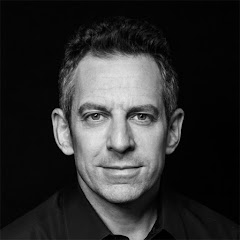 Sam Harris
Key Moments
Sam Harris and Steven Laureys discuss meditation, consciousness, and the scientific study of the mind.
Key Insights
Meditation can be approached dualistically (subject-object) or non-dualistically, with non-dual practice aiming to recognize the inherent unity of consciousness.
Sam Harris's personal journey into meditation began with a psychedelic experience at 18, leading him to Vipassanā and later, non-dual practices.
The primary motivation for meditation, beyond intellectual curiosity, is to alleviate suffering and live a better, happier life by understanding the nature of thought and self.
Introducing meditation into education, even at a young age, can foster emotional well-being, wisdom, and ethical development, complementing traditional knowledge acquisition.
Caregivers and medical professionals often lack training in self-care and emotional regulation, contributing to burnout and impacting their ability to provide compassionate care.
An awareness of death, while often avoided, can be a catalyst for gratitude and a deeper appreciation of the present moment, serving as a backstop against wasting time.
THE NEUROSCIENTIST'S PERSPECTIVE ON MEDITATION
Steven Laureys, a neuroscientist and neurologist specializing in the damaged brain, discusses his research focus on consciousness through studying coma patients, anesthesia, psychedelics, and hypnosis. He shares that while meditation is outside his usual scientific comfort zone, he prescribes it clinically and is writing a book on the topic, incorporating his personal experiences and scientific insights. This conversation is initiated by Laureys interviewing Harris for his book, exploring meditation's role.
SAM HARRIS'S JOURNEY INTO MEDITATION
Sam Harris recounts that his initial interest in meditation was sparked at age 18 by a transformative experience with MDMA. This experience revealed the possibility of altered states of consciousness and a life beyond his conditioning, initiating a path of self-inquiry. He was later introduced to Vipassanā (mindfulness) meditation through a book by Ram Dass, leading him to attend silent retreats and study with teachers like Joseph Goldstein. His practice eventually shifted towards non-dual traditions like Zogchen.
DUALISTIC VS. NON-DUALISTIC MEDITATION
Harris explains the common dualistic approach to meditation, where practitioners focus on an object (like the breath) from a perceived center of awareness in the head. This involves a sense of a 'meditator' and the 'object of meditation,' with distraction being the primary obstacle. Non-dual practices, in contrast, aim to deconstruct this subject-object illusion, recognizing that consciousness itself is an open field where phenomena appear without a central, observing self. The practice becomes a recognition of this inherent unity.
THE 'WHY' OF MEDITATION: SUFFERING AND HAPPINESS
The primary motivation for meditation, according to Harris, is to overcome suffering and enhance well-being. It offers a path to fundamentally understand and disengage from the processes that lead to psychological pain, such as rumination on the past and future. While ordinary happiness is transient and contingent on external factors, meditation promises a more stable foundation for contentment by altering one's relationship with thought and emotional reactivity, enabling quicker recovery from life's difficulties.
PERSONAL SUFFERING AND THE NEED FOR PRACTICE
Harris reflects on personal experiences of suffering, including the deaths of a best friend and father, and a difficult breakup. These ordinary yet profound losses, combined with an uncontrolled stream of thought, led to significant unhappiness. He highlights the illusion that achieving external goals will bring lasting happiness, emphasizing that true well-being arises from changing how one relates to their internal experience, particularly by stepping off the 'hamster wheel' of desiring and avoiding.
INTEGRATING WELL-BEING: EDUCATION AND SELF-CARE
Both Harris and Laureys advocate for integrating meditation and emotional intelligence into educational systems from an early age, viewing wisdom as crucial alongside knowledge. Laureys notes a significant gap in medical education regarding self-care for caregivers, leading to burnout and tragedy. Harris concurs, emphasizing that a doctor's compassion and presence are as vital as their technical expertise, suggesting a more holistic approach to training and personal development for those in healing professions.
MEDITATION AND THE RELATIONSHIP WITH DEATH
Contemplative practices traditionally prepare individuals for death by confronting the inevitability of mortality, which is often met with denial. Harris views meditation as a way to extract wisdom from this awareness, fostering gratitude for the present moment rather than morbid preoccupation. By accepting death as a reality, one can more fully appreciate life, focus attention on what truly matters, and cultivate deeper ethical intentions and compassion, finding rest in the present rather than pursuing elusive external satisfactions.
Mentioned in This Episode
●Organizations
●Books
●Drugs & Medications
●Concepts
●People Referenced
Common Questions
Non-dual meditation aims to dissolve the illusion of a separate self (subject) and the experienced world (object). Unlike mindfulness, which often focuses on observing the breath or thoughts as distinct objects, non-dual practice recognizes the inherent unity and openness of consciousness, where subject and object are not fundamentally separate.
Topics
Mentioned in this video
Spiritual teacher, formerly Richard Alpert, who influenced Steven Laureys' early meditation practice with his teachings.
The original name of Ram Dass, known for his early LSD experiments at Harvard with Timothy Leary.
Host of the Making Sense podcast, interviewing Steven Laureys about meditation.
A Belgian neuroscientist and neurologist, author, and researcher on consciousness, anesthesia, hypnosis, and meditation.
An anesthesiologist and pioneer in the use of hypnosis during surgery and in pain clinics.
Known for his early psychedelic research at Harvard and subsequent controversies. Mentioned in relation to Richard Alpert/Ram Dass.
A Burmese meditation master and teacher of Joseph Goldstein, who also influenced Steven Laureys.
A prominent Vipassana meditation teacher who was one of Steven Laureys' early instructors.
A form of mindfulness meditation that Steven Laureys initially practiced under Burmese Theravada influence.
A Tibetan Buddhist practice of meditation that Steven Laureys migrated to after practicing Vipassana.
A type of mantra meditation mentioned as a starting point for meditation practices.
More from Sam Harris
View all 293 summaries 119 min
Escaping an Anti-Human Future: A Conversation with Tristan Harris (Ep. 469) FULL EPISODE
 34 min
Is Effective Altruism Blind to the Biggest Problems? – Sam Harris & Will MacAskill
 21 min
What Is Technology Doing to Us?
 42 min
Is the Iran War Already Failing?
Found this useful? Build your knowledge library
Get AI-powered summaries of any YouTube video, podcast, or article in seconds. Save them to your personal pods and access them anytime.
Get Started Free