Key Moments
Jay McClelland: Neural Networks and the Emergence of Cognition | Lex Fridman Podcast #222
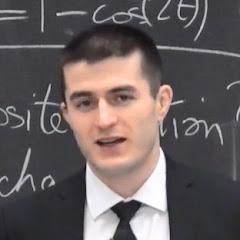 Lex Fridman
Key Moments
Jay McClelland discusses neural networks, cognition, evolution, and the emergence of mind from brain,
Key Insights
Neural networks offer a bridge between biology and the study of thought, challenging Cartesian dualism.
The emergence of complex cognition from biological systems is a mystery deeply intertwined with evolution.
Connectionism posits that knowledge resides in the connections between simple processing units, not in symbolic representations.
Dave Rumelhart's work on interactive models laid groundwork for parallel distributed processing in cognitive science.
Backpropagation, a key learning algorithm for neural networks, emerged from optimizing connection weights rather than biological mimicry.
Human cognition, including mathematical reasoning, involves a dynamic interplay between intuitive discovery and formal logic.
The expert blind spot and the nature of cultural constructions highlight challenges in understanding and teaching cognition.
Meaning is personally constructed, inspired by past efforts, and emerges from the unique fabric of individual experience and context.
Degeneration, particularly of cognitive abilities, is feared more than death, highlighting the value of mental flourishing.
The journey of scientific discovery often involves embracing the "road less taken" and challenging self-imposed labels.
FROM BIOLOGY TO MIND: OVERCOMING CARTESIAN DUALISM
Jay McClelland, a pivotal figure in neural networks and cognitive science, discusses the fundamental appeal of neural networks: their ability to link biology with the mysteries of thought. He contrasts this with early cognitive psychology, which often sidelined the study of the nervous system. McClelland recounts his early intuition that the mind, far from being separate from the physical body, is an emergent property of biological processes, challenging the Cartesian notion that thought requires a non-physical component. This perspective gained traction with the understanding of evolutionary continuity and the increasing recognition of complex cognitive abilities in non-human animals, suggesting a unified biological basis for cognition.
THE MYSTERY OF EMERGENCE: EVOLUTION AND DEVELOPMENT
The conversation delves into the profound mystery of how complex cognition emerges from simpler biological systems, drawing parallels with Darwin's struggle to comprehend evolution. McClelland highlights that evolution often occurs through punctuated equilibriums rather than slow, continuous change, a concept mirrored in developmental psychology with stage theories. The intricate process of embryological brain development, where complex neural pathways self-assemble from genetic blueprints, is presented as equally awe-inspiring to engineering-minded observers as the brain's interaction with the environment in learning. This highlights the incredible capacity of nature to generate robust, learning systems.
THE BIRTH OF CONNECTIONISM: BRIDGING THE GAP
McClelland recounts his intellectual journey, beginning with dissatisfaction with abstract cognitive models and finding a bridge in the work of James Anderson, who used linear algebra to model perception and memory with neural networks. This led to a pivotal realization: thinking about the mind in terms of neural networks could address fundamental questions about cognition. This period saw the emergence of pioneers like Steve Grossberg, Jeff Hinton, and the crucial collaboration with Dave Rumelhart. The conference on 'Parallel Models of Associative Memory' in the late 1970s and early 1980s solidified the budding field of connectionism, emphasizing parallel, distributed processing.
DAVE RUMELHART AND THE INTERACTIVE ACTIVATION MODEL
The conversation fondly remembers Dave Rumelhart, highlighting his Midwest upbringing and his transition from mathematical psychology to exploring cognition. Rumelhart's early work wrestled with building AI systems that could infer meaning, recognizing the limitations of classical symbolic AI. His seminal 'Interactive Model of Reading' proposed that all levels of interpretation are mutually influential, a concept later implemented in the 'Interactive Activation Model' developed with McClelland. This model, built from neuron-like units with weighted connections, demonstrated how top-down and bottom-up processing could interact to enable perception and understanding, convincingly showing the power of parallel distributed processing.
CONNECTIONISM VS. SYMBOLIC AI: KNOWLEDGE IN THE CONNECTIONS
The term 'connectionism' accurately describes the idea that knowledge is encoded in the connections between simple processing units, rather than in explicit symbolic representations. McClelland explains that units like 'time' in a model don't 'contain' the word 'time' intrinsically but gain meaning through their connections to letter-units representing 't', 'i', 'm', 'e'. This contrasts with symbolic AI's pursuit of explicit, propositional knowledge. While powerful, connectionist models often lack transparency, making it difficult to understand their reasoning, posing the enduring question of whether such systems can truly capture the depth of human understanding and abstract thought.
HINTON, BACKPROPAGATION, AND THE RISE OF DEEP LEARNING
Jay McClelland details the formation of the PDP Research Group with Jeff Hinton and Dave Rumelhart. He highlights Hinton's pivotal shift in thinking: focusing on adjusting connection weights to solve problems (optimization) rather than directly mimicking biological learning rules. This led to Rumelhart's generalization of gradient descent, forming the basis of backpropagation. McClelland also shares insights into Hinton's innovative thinking, including early ideas on transformers and recursive computation, and his intuitive, non-equation-heavy approach to explaining complex concepts. The synergy within this group, including figures like Francis Crick, was instrumental in advancing the field.
MATHEMATICAL COGNITION: INTUITION MEETS FORMALISM
McClelland discusses the nature of mathematics as the exploration of idealized worlds, emphasizing that its power lies in abstracting relationships that often prove applicable to the real world. He references Tristan Needham's critique of viewing mathematics solely as symbol manipulation, likening it to studying music without hearing it. The core of mathematical cognition, McClelland suggests, is the interplay between intuitive discovery and formal proof. Systems like AlphaZero, demonstrating novel strategies in games, and large language models generating creative text, offer hope that neural networks can capture this intuitive, discovery-driven aspect of intelligence.
THE EXPERT BLIND SPOT AND THE NATURE OF BELIEF
The conversation touches on the 'expert blind spot,' where self-evident knowledge to an expert becomes impossible to explain to a novice. This relates to the idea that much of our cognition, including our understanding of concepts like natural numbers, is a cultural construction rather than an innate endowment. McClelland argues that immersion in specific modes of thought, whether in linguistics or mathematics, can shape our intuitions, potentially leading us away from the 'natural' operation of the mind. This highlights how our deeply ingrained beliefs and ways of thinking are products of acculturation and may limit our introspection.
DEGENERATION OVER DEATH: THE FEAR OF MENTAL DECLINE
When asked about mortality, McClelland expresses a greater fear of degeneration, particularly cognitive decline, than of death itself. He draws a poignant parallel between his own work on semantic dementia and Dave Rumelhart's experience with a progressive neurological condition. The gradual loss of meaning and cognitive abilities, he explains, represents the fading of the mind's capacity to engage and flourish. This prospect highlights the profound value placed on mental acuity and the intricate dance of thought and experience that defines conscious life.
SCIENTIFIC LEGACY AND THE JOY OF COLLABORATION
McClelland hopes his legacy will reflect his ability to see and follow exciting, less obvious paths in science, fostering collaborative opportunities that crystallize partially formed thoughts into scientific progress. He emphasizes the importance of not succumbing to labels and of embracing the continuous process of learning and discovery. His own journey, from empirical experiments to theoretical contributions, serves as an example of pushing beyond perceived limitations. The joy of science, for him, lies in these moments of collective insight and advancement.
CREATING MEANING IN AN EMERGENT UNIVERSE
Ultimately, McClelland believes that meaning is not discovered but personally created. He views humanity as an emergent result of a natural, undirected process. Meaning arises from the synergistic combination of individual experience, context, and interaction with others. This personal creation of meaning, documented in stories and traditions, builds upon itself, propelling humanity forward. The universe, in this view, is a canvas where individuals and collective efforts construct rich narratives and pursue ever-expanding horizons, continuing the story through time and space.
Mentioned in This Episode
●Products
●Software & Apps
●Companies
●Organizations
●Books
●Drugs & Medications
●Concepts
●People Referenced
Common Questions
Jay McClelland finds the most beautiful aspect to be their ability to link biology with the mysteries of thought, providing a mechanistic theory for how the mind emerges from physical being, challenging the Cartesian view.
Topics
Mentioned in this video
A book written by David Rumelhart and Don Norman, which McClelland describes as exploring interesting questions about cognition in an abstract, non-biological way.
A seminal book co-written by Jay McClelland and David Rumelhart in the 1980s that explored ideas of neural networks, paving the way for many concepts in the machine learning revolution.
A book published in 1967, which Jay McClelland mentions marked the emergence of cognitive psychology as a field, initially viewing the study of the nervous system as peripheral to understanding the mind.
An AI research division of Google, mentioned as a key player in scaling AI computations for advanced intelligence.
Where Jay McClelland was a student in 1968 during the Vietnam War protests and a major student revolution, which led him to reflect on human behavior and psychology.
A journal that accepted McClelland's experimental work but advised him to remove his theoretical section, pushing him to further develop his theories.
A theoretical journal where McClelland later submitted his theoretical work, despite initial rejection, encouraging his continued development as a theorist.
Where Francis Crick was based when he became involved with the PDP research group.
An academic honor society for which Jay McClelland was nominated despite his grades, based on his deep interest in ideas.
Where Jay McClelland became an assistant professor in 1974 and where David Rumelhart was one of the first assistant professors in the psychology department.
Jay McClelland was a member of its National Advisory Mental Health Council around 2000. He describes a shift in policy towards a purely biological and pharmacological approach to mental illness, which he criticizes.
Where Jay McClelland is a cognitive scientist and where David Rumelhart studied mathematical psychology and later retired from his professorship.
A linguist whose PhD dissertation discovered that the intuitions of formally trained linguists about language meaning and grammar differed significantly from those of ordinary people.
American poet whose phrase 'road less taken' is invoked to describe McClelland's tendency to pursue less obvious and more exciting scientific paths.
Linguist who argued that a genetic fluke led to language, separating humans from other animals. McClelland contrasts this with a broader evolutionary perspective involving sociality.
An engineer and psychology professor who used linear algebra to create neural network models of perception, categorization, and memory, inspiring Jay McClelland.
A well-known figure in neural network circles, one of the postdoctoral scholars who joined Rumelhart's group.
Co-discoverer of DNA, who, while at the Salk Institute, heard about the PDP research group and joined, highlighting the interdisciplinary appeal of the early neural network movement.
Co-authored the Parallel Distributed Processing book and the backpropagation paper. Jay McClelland's long-time collaborator and friend, who later succumbed to semantic dementia. Regarded as a brilliant and driven scientist.
Naturalist and biologist who developed the theory of evolution by natural selection. McClelland mentions Darwin's initial fear of his own ideas about the complexity of the eye and unguided processes.
Author and cognitive scientist who used the analogy of sand dunes to illustrate how higher-level cognitive entities emerge from lower-level elements, being real but fluid.
Physicist who suffered from a degenerative motor system condition, contrasted with David Rumelhart's semantic dementia, both illustrating the profound impact of neurological conditions.
A psychologist and economist known for his work on judgment and decision-making, mentioned in the context of great collaborations in science.
A philosopher whose ideas about the body as a machine and thought as a divine intervention shaped early views on the mind-body problem, contrasted with the biological perspective of neural networks.
An Italian film director known for appreciating the role of 'magic' and trickery in creating illusions that move people, paralleled with the emergent nature of thought.
A professor in the electrical engineering department at Stanford who, with a collaborator named Hoff, invented the Delta Rule for gradient descent in a single layer of connection weights.
A logician from whom Jeff Hinton is a descendant, influencing Hinton's desire to understand reasoning itself and connect the boolean tradition with probabilistic, constraint satisfaction realms through the Boltzmann machine.
Criticized a narrow formal view of mathematics, likening studying it as symbol manipulation to studying music without hearing a note, emphasizing the intuitive aspect of mathematics.
A chip designer engineer whose unique way of thinking, like Feynman's, is transformative to be around, illustrating the magic of cross-disciplinary collaboration.
Philosopher who believed systematic thought was an essential, innate characteristic of the human mind, contrasted with the idea of it being a derived and acquired cultural trait.
A physicist known for his unique visual and intuitive thinking style, brought up as an example of a brilliant mind similar to Jeff Hinton in combining clarity with intuition.
Jay McClelland's collaborator who developed the Pyramids and Palm Trees test to assess conceptual grounding in patients with semantic dementia.
A biologist who, in the late 19th century, performed surgery to demonstrate the presence of a hippocampus in chimpanzees, supporting the continuity of species.
Co-authored 'Explorations in Cognition' with David Rumelhart, and as the senior figure, fostered a spirit of playful exploration of ideas in the early cognitive science community.
Preceded Euclid in developing formal mathematical systems, indicating an early historical presence of formal thought.
Known for his stage theory of child development, which observes profound, discrete transitions in cognitive abilities at different ages.
A researcher who had been writing about neural networks since the 1960s, recognized as an early thinker in the field.
An alternative algorithm based on the concept Jeff Hinton was pursuing concurrently with backpropagation, published in 1985, which turned out to be less effective at the time.
A type of deep learning system described as a set of collections of neuron-like units in layers, performing massively parallel computation for tasks like image classification, abstracting raw pixel input to categories.
A class of neural network architectures, an idea that Jeff Hinton essentially introduced in one of his 1981 papers, highlighting his foresight in the field.
A test developed by Carolyn Patterson to assess the loss of conceptual grounding in semantic dementia patients, using words or pictures to determine their ability to relate concepts.
A cellular automaton, mentioned as an example where very rich, complex, organism-like behavior emerges from simple rules, illustrating the magic of emergence.
A concept in evolutionary biology suggesting long periods of stasis punctuated by sudden changes, which McClelland relates to stages of mental abilities and cognitive development.
A field involving the use of mathematics to model mental processes, similar to cognitive modeling, focusing on deriving behavioral predictions from fundamental principles and equations rather than computer simulations.
An early paper by Jeff Hinton in 1981 that inspired him, Rumelhart, and McClelland throughout the 1980s and continues to ground McClelland's thinking about the semantic aspects of cognition.
An optimization mechanism for training neural networks, co-authored by David Rumelhart and Jeff Hinton. It involves backpropagating error signals through layers to adjust connection weights, initially called the generalized delta rule.
An algorithm invented by Bernie Widrow and a collaborator named Hoff for gradient descent in single-layer neural networks, extended by Rumelhart into the generalized delta rule (backpropagation).
An optimization concept familiar to engineers, where connection weights are adjusted to minimize error or 'loss' in a system, introduced by Jeff Hinton as a way to approach neural network learning.
A term used to describe ideas where knowledge in a system resides in the connections between units, rather than explicit symbols or a separate dictionary, leading to implicit, emergent properties like visual recognition.
A term for AI approaches from the 1960s that focused on formal logic, knowledge bases, and symbolic representation, which David Rumelhart recognized as not fully providing answers to questions about understanding and inference.
A model created by Rumelhart and McClelland that uses neuron-like processing units with connection weights to process pixel-level inputs, construct features, letters, and words, demonstrating interactive bi-directional processing.
An AI research and deployment company, mentioned as a key player in scaling AI computations for advanced intelligence, particularly in areas like large language models.
An AI research company mentioned as a place where the massive scale of computation is being played out to achieve superhuman intelligence, particularly with successes in games like Go and protein folding.
More from Lex Fridman
View all 547 summaries 146 min
Jensen Huang: NVIDIA - The $4 Trillion Company & the AI Revolution | Lex Fridman Podcast #494
 311 min
Jeff Kaplan: World of Warcraft, Overwatch, Blizzard, and Future of Gaming | Lex Fridman Podcast #493
 154 min
Rick Beato: Greatest Guitarists of All Time, History & Future of Music | Lex Fridman Podcast #492
 23 min
Khabib vs Lex: Training with Khabib | FULL EXCLUSIVE FOOTAGE
Found this useful? Build your knowledge library
Get AI-powered summaries of any YouTube video, podcast, or article in seconds. Save them to your personal pods and access them anytime.
Get Started Free