Key Moments
Jack Kornfield — How to Overcome Apathy and Find Beautiful Purpose
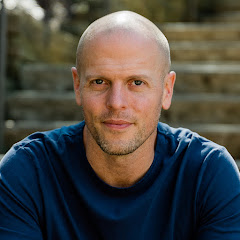 Tim Ferriss
Key Moments
Jack Kornfield discusses overcoming apathy and finding purpose through mindfulness, compassion, and acknowledging inner strength amidst life's challenges.
Key Insights
Anger, though difficult, can stem from hurt or fear and offers opportunities for understanding if approached with mindfulness.
Hypervigilance, often rooted in childhood trauma, can be soothed by compassion and acknowledging its protective role.
The practice of mindfulness, joy, and loving-kindness can transform one's inner state and outward interactions.
Healing and well-being are often communal, requiring connection and mutual support rather than isolation.
Embracing joy and living with a sense of adventure, even amidst suffering, is a moral choice that can inspire resilience.
Accepting uncertainty and embracing our inherent connection to all beings are key to navigating life's challenges.
UNDERSTANDING AND WORKING WITH ANGER
Jack Kornfield begins by addressing anger, noting that it's not inherently bad but rather a difficult emotion often arising from hurt or fear. He likens anger to a Rorschach test, suggesting that the line between good and evil is within each person. Drawing from Buddhist teachings, he emphasizes that the Buddha faced 'Mara' (representing inner obstacles) not by fighting, but by acknowledging and seeing 'Mara' for what it is. This approach creates spaciousness and freedom within. Kornfield shares personal experiences, including his time in a monastery where he confronted his own anger, and suggests that anger requires tolerance and mindfulness, rather than suppression or lashing out.
NAVIGATING RELATIONSHIPS AND EXPRESSING TRUTH
Transitioning from self-mastery to interpersonal dynamics, Kornfield highlights the challenge of applying spiritual practices in relationship. He recounts an experience where direct, 'contractor-like' communication, though initially anger-driven, proved effective in a specific situation. However, he offers a challenge: to express the underlying truth beneath anger, such as worry or hurt, rather than resorting to aggression. This involves finding a 'currency' or inner pause amidst conflict, similar to a bullfighter's stance. The goal is to express vulnerability and connect through genuine curiosity rather than blame, acknowledging that 'truth' can be subjective and complex.
HEALING FROM TRAUMA AND HYPERVIGILANCE
Kornfield discusses hypervigilance, often a response to childhood trauma, characterizing it as a learned behavior to ensure safety. He emphasizes bringing compassion to the frightened inner child who developed this vigilance. Practices suggested include visualizing that past self, offering comfort, and thanking the protective mechanism for its service. This approach honors the past survival strategy while reassuring the present self of safety. He also touches upon trauma work with combat veterans and healthcare professionals, underscoring the need for safe spaces to share deeply held, often unspeakable, experiences and the subsequent healing that occurs through witnessing and communal support.
THE ROLE OF GROUP THERAPY AND COMMUNITY IN HEALING
Addressing the current mental health crisis and the US's inadequate resources, Kornfield advocates for group therapy as a vital solution. He notes that many physical ailments stem from emotional and mental distress, highlighting a cultural deficiency in addressing these issues. He emphasizes that healing is rarely an individual endeavor; we need each other for comfort, shared grief, and the eventual arising of something more beautiful. This communal aspect is crucial for renewing the heart and soul, as seen in the example of veterans finding connection and love after shared retreats.
EMBRACING JOY AS A MORAL IMPERATIVE
Kornfield introduces the concept of joy as a 'moral obligation,' referencing the work of Archbishop Desmond Tutu and the Dalai Lama. Despite immense suffering, they choose joy, recognizing the danger of despair. He shares the poem 'A Brief for the Defense' by Jack Gilbert, which champions the 'stubbornness to accept our gladness' amidst life's harsh realities. Meditation and mindful practices are presented not as grim duties but as adventures to open the mind and heart, inviting a sense of wonder and well-being, and remembering the inviolable joy of the inner child.
THE MEANING OF PURPOSE AND DEATH
Kornfield encourages finding a 'beautiful purpose' for one's incarnation, suggesting it's not about isolating oneself but about expanding one's care outward. He shares a dialogue with Tim Ferriss about the nature of death, drawing on his experiences with out-of-body phenomena and past-life regressions. Kornfield posits that consciousness is not limited to the physical body, and death can be viewed as an experiment revealing a broader reality of light and connection. He concludes by emphasizing that an 'effective bodhisattva' lives with joy, adventure, and a deep sense of connection, learning from suffering and embodying love, as taught by figures like Thich Nhat Hanh and the advice of Atisha.
Mentioned in This Episode
●Products
●Software & Apps
●Organizations
●Books
●Drugs & Medications
●Concepts
●People Referenced
Common Questions
Jack Kornfield, drawing from his Buddhist monastic training and clinical psychology background, suggests that anger isn't inherently bad but often stems from hurt or fear. The initial step is awareness. Instead of lashing out or suppressing it, one should 'sit in the middle of it' and learn to tolerate the emotion, increasing one's window of tolerance. He also recommends exploring the underlying hurt or fear and expressing that instead of just the anger, which can transform conflict into genuine conversation.
Topics
Mentioned in this video
Meditation teacher and co-founder of the Insight Meditation Society with Jack Kornfield.
Cited for his quote on why people cling to hate and anger.
Potentially misattributed as the source of the 'if everyone's a jerk, you're the jerk' quote.
A colleague of Jack Kornfield who conducted retreats with returning vets from the Middle East to address trauma.
Zen master whose books profoundly impacted Tim Ferriss and whose teachings on presence (like washing dishes) and remaining calm amidst chaos are highlighted.
Jack Kornfield's teacher, who taught him about tolerating anger and the concept of 'not picking up the boulder'.
Referenced in the breath exchange example.
Cited for his quote 'What begins in anger ends in suffering'.
A colleague and friend of Jack Kornfield (also a poet laureate of Los Angeles) who worked with street gangs and prison inmates, and participated in veteran trauma retreats. Author of 'Always Running: La Vida Loca, Gang Life in L.A.'
Cited for his quote: 'It is no measure of health to be well adjusted to a profoundly sick society.'
A contemporary of Freud, with whom Jack Kornfield's therapist had worked, focusing on energy and the body's sexuality.
Potentially misattributed as the source of the 'if everyone's a jerk, you're the jerk' quote.
Referenced in the breath exchange example, and also cited for his quote: 'What uses freedom if it doesn't also include the freedom to make mistakes.'
The great French philosopher, cited for his quote: 'When you understand correctly, you must embrace joy as a moral obligation.'
Environmentalist who co-started the 'Council for All Beings' and 'Despair and Empowerment Work' practices with Joanna Macy.
Archbishop who recently died, participated in 'The Book of Joy' dialogue with the Dalai Lama, acknowledging suffering under apartheid but choosing happiness.
Guest on the podcast, trained Buddhist monk, meditation teacher, co-founder of Insight Meditation Society and Spirit Rock Center, holds a PhD in clinical psychology, author of several books on Buddhist psychology and mindfulness.
The great Russian author, mentioned for his reflection on good and evil while in the gulags.
Referenced as a contemporary of Wilhelm Reich.
Referenced in a thought experiment about the statistical likelihood of breathing a molecule from his last breath.
Referenced, along with historically 'bad' figures, in the breath exchange example, to emphasize interconnectedness.
A friend of Jack Kornfield, who lived 20 years in a wheelchair after a stroke, became 'pure love' by the end of his life, embracing vulnerability and gratitude.
Meditation teacher and co-founder of the Insight Meditation Society with Jack Kornfield.
Referenced, along with historically 'bad' figures, in the breath exchange example, to emphasize interconnectedness.
The current U.S. Surgeon General, who noted that over half of physical problems in hospitals and clinics have roots in emotional and mental health issues.
A friend, colleague, and mentor of Jack Kornfield, in her 90s, who has worked on nuclear disarmament, climate change, and world peace.
Anthropologist and philosopher cited for his quote: 'Despair is a failure of the imagination.'
A Costa Rican diplomat and UN representative for climate whose experience at Plum Village transformed her approach to international climate negotiations, leading to the Paris Climate Accord.
Master poet, author of 'A Brief for the Defense,' a poem about embracing joy amidst suffering.
Participated in 'The Book of Joy' dialogue with Desmond Tutu, acknowledging suffering due to the Chinese occupation of Tibet but choosing happiness. Also mentioned previously for sometimes getting angry.
The symbolic demon figure who attacked the Buddha under the tree of enlightenment with doubt, temptations, and weapons, to whom the Buddha responded with 'I see you'.
A worldwide mindfulness teacher training program, one of Jack Kornfield's current projects, which has trained 5,000 people in 70 countries.
A series of practices started by Joanna Macy and John Seed, where participants connect deeply with nature and speak for different parts of the natural world, fostering empowerment amidst despair.
A phrase coined by Joanna Macy to describe her practices that help people face despair related to global issues and find empowerment.
An international agreement on climate change that Christiana Figueres helped to organize after her transformative experience at Plum Village.
Mentioned as a way for Jack Kornfield to learn things and experience different states of consciousness.
Co-founded by Jack Kornfield in Barre, Massachusetts, along with Sharon Salzberg and Joseph Goldstein.
Where Jack Kornfield's father was a student and where he died at the medical center.
A place in southern France run by Thich Nhat Hanh, where Christiana Figueres went to find solace and a new perspective on climate change.
A meditation center in Woodacre, California, co-founded by Jack Kornfield.
One of Jack Kornfield's books.
One of Jack Kornfield's books, recommended for stories and instructions on joy, loving-kindness, and compassion practices.
One of Jack Kornfield's books.
Implied work as Alexander Solzhenitsyn was 'writing these brilliant things' while in the gulags.
A book Tim Ferriss read that inspired his reflection on 'happiness islands' and focusing on top relationships.
One of Jack Kornfield's books, translated into 22 languages.
One of Jack Kornfield's favorite book titles.
Jack Kornfield's most recent book.
A book and movie documenting the dialogue between Archbishop Desmond Tutu and the Dalai Lama about joy, acknowledging immense suffering but choosing happiness.
One of Jack Kornfield's books.
Tim Ferriss's book, during the writing of which he started practicing loving-kindness meditation daily.
Luis Rodriguez's major book, noted as being the 'most stolen book in high school libraries'.
Where Alexander Solzhenitsyn was sent.
Where Jack Kornfield trained as a Buddhist monk in monasteries.
Where Jack Kornfield trained as a Buddhist monk in monasteries.
Where Jack Kornfield trained as a Buddhist monk in monasteries.
Dusty plain where Russian astronauts landed and found joy in touching the earth after being in orbit.
Mentioned as a psychedelic compound with promising therapeutic uses, particularly in group therapy settings for treatment-resistant depression.
Mentioned as a psychedelic compound with promising therapeutic uses, particularly in group therapy settings for integration.
Mentioned as a psychedelic compound with promising therapeutic uses.
More from Tim Ferriss
View all 689 summaries 81 min
Q&A with Tim — The Upcoming AI Tsunami and Building Offline Advantage
 91 min
The Random Show, Couch Edition! — Supplements, Breathing and Balance Training, and Much More!
 76 min
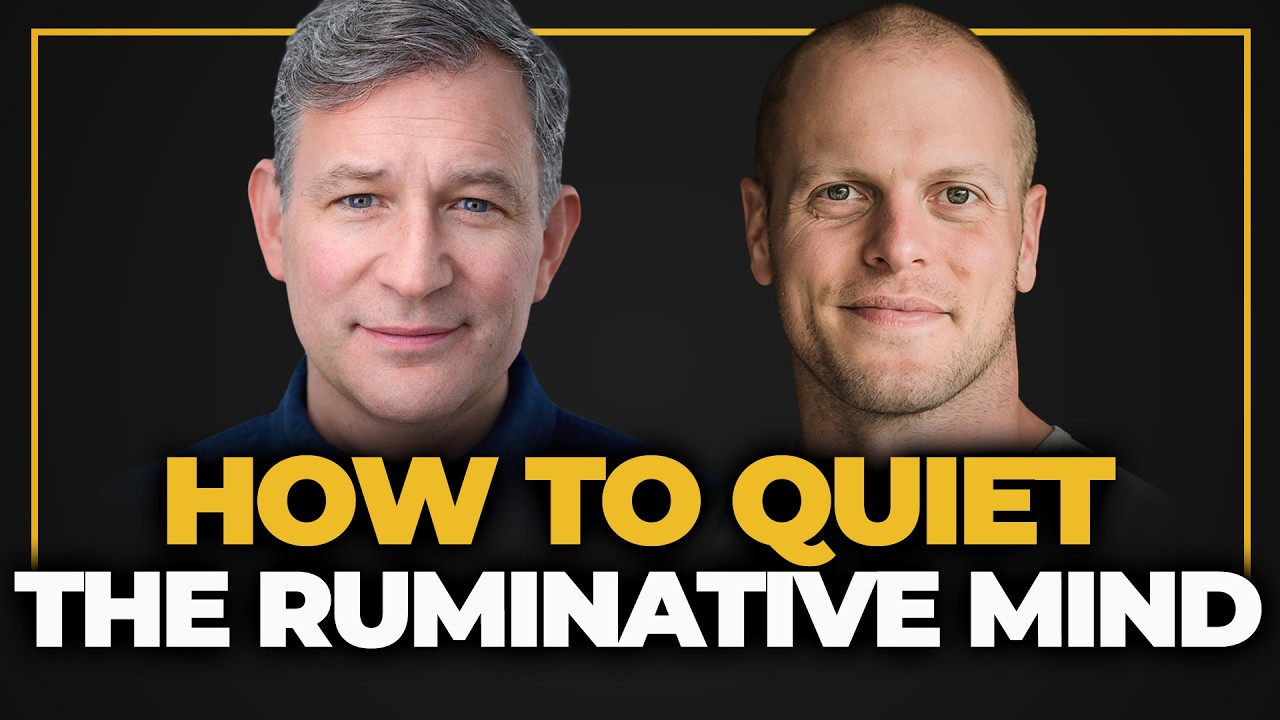
How to Quiet the Ruminative Mind and Avoid The Traps of Self-Help — Tim Ferriss
 86 min
NYT Bestselling Author on Writing 200+ Children's Books — Tish Rabe
Found this useful? Build your knowledge library
Get AI-powered summaries of any YouTube video, podcast, or article in seconds. Save them to your personal pods and access them anytime.
Get Started Free