Key Moments
Full Length Episode | #177 | February 28, 2022
 Deep Questions with Cal Newport
Key Moments
Cal Newport discusses ambition's pros and cons, offering a nuanced view, and answers listener questions on productivity, focus, diet, and career paths.
Key Insights
Ambition has significant downsides, including burnout and amplified comparison, but also compelling upsides like life affirmation and societal progress.
The tension between our evolved tribal instincts and modern large-scale society may explain the complex and often paradoxical nature of ambition.
Slow productivity ideals suggest minimizing complex systems, but these systems are crucial for taming work when outright simplification isn't possible.
Context switching during short work pauses should either stay within the immediate task's context or detach completely, avoiding the 'gray zone' of related but different tasks.
Dietary focus should prioritize whole foods and limit processed sugars/carbohydrates, with resources like Mark Sisson offering practical advice.
Temporary plans should be integrated into weekly planning rather than kept separate, simplifying management.
Balances are possible: PhDs can pursue athletic goals, and a passion-based career path can still be shaped by building career capital and intentional choices.
THE DUAL NATURE OF AMBITION
Cal Newport explores the complex nature of ambition, defining it as the drive for increasing impact. He acknowledges that while critics often highlight its potential to lead to burnout, amplified comparison, and neglecting other life aspects, ambition also fuels personal growth, societal advancement, and self-affirmation by providing purpose and a focus for energy. Newport suggests that the core of ambition's paradoxical effect might stem from an evolutionary mismatch between our ingrained tribal instincts for respect and leadership and the vastly larger scale of modern society.
AMBITION: A NOVELISTIC HUMAN CONDITION
Newport posits that ambition isn't easily categorized as purely good or bad, nor is it a simple cultural construct. Instead, he likens it to a 'novelistic' aspect of the human condition—complex, messy, tragic, and inspiring all at once. This perspective encourages embracing the inherent contradictions, where the pursuit of ambitious goals can simultaneously bring fulfillment and detract from other essential elements of a good life. He advocates for viewing ambition through this lens of nuanced human experience rather than a simplistic economic or philosophical framework.
PRODUCTIVITY SYSTEMS AND THE SLOW PRODUCTIVITY IDEAL
Addressing questions about ditching productivity systems, Newport argues that while an ideal 'slow productivity' scenario involves minimal need for complex capture and planning systems, most individuals still benefit greatly from them. These systems are crucial for managing and organizing tasks when complete simplification isn't feasible. Employing systems can help tame the influx of work, automate smaller tasks, and establish dedicated times for them, thereby freeing up mental space and aligning with slow productivity principles, even if the ultimate ideal isn't fully achieved.
STRATEGIES FOR MAINTAINING FOCUS AND ENERGY
When facing unavoidable work pauses, Newport advises against engaging in tasks that fall into a 'gray zone'—related but not immediately relevant work. Instead, he suggests either staying within the very immediate context of the current task or completely detaching to a highly unrelated activity. For managing fatigue, he emphasizes intentionality: acknowledge lower energy days or weeks and adjust plans accordingly, perhaps by working less or rescheduling, rather than succumbing to ad hoc distraction. This maintains control and prevents compounding exhaustion.
DIET, TRAINING, AND LIFE BALANCES
Newport shares his dietary approach, aligning with Mark Sisson's emphasis on whole foods, healthy fats, vegetables, and proteins, while minimizing simple sugars and refined carbohydrates. He also addresses the compatibility of intense athletic pursuits, like Ironmans, with demanding academic work such as a PhD, encouraging individuals to pursue both. Newport views academic programs as less consuming than often portrayed and suggests that physical activities can provide necessary balance and resilience against intellectual setbacks.
NAVIGATING CAREER PATHS AND DIGITAL HABITS
For those who committed to a career path based on passion but later shifted their philosophy, Newport stresses that the method of choosing a path is less critical than the subsequent actions. Building rare and valuable skills to generate career capital for control and leverage remains paramount. He also discusses digital habits, suggesting that while teenage social media use is concerning and may face future cultural shifts similar to smoking, the immediate concerns lie with unrestricted smartphone access and the consolidation of social media platforms, advocating for fragmentation and later adoption.
THE FUTURE OF DIGITAL TECHNOLOGY AND OPTIMISM
Contrasting his views with a more pessimistic outlook, Newport clarifies his optimism is focused on specific areas: reducing teenage social media access and preventing monopolistic platform dominance, leading to a fragmentation of digital tools. He doesn't foresee a complete escape from digital distraction but anticipates a future where ubiquitous social media for adolescents and singular platform pressures diminish. He also notes that proving harm from social media is complex and took decades for issues like smoking, requiring reliance on experience and intuition alongside evolving scientific understanding.
Mentioned in This Episode
●Supplements
●Products
●Software & Apps
●Companies
●Organizations
●Books
●Concepts
●People Referenced
Common Questions
Ambition can lead to burnout by increasing overload and high-arousal states. It can also amplify feelings of comparison and inadequacy, potentially leading to neglecting other important life areas. Furthermore, the hard nature of ambitious goals means success is not guaranteed.
Topics
Mentioned in this video
A book by Yuval Harari, mentioned as an example of content available on Blinkist.
A book by Mark Sisson advocating for a primal lifestyle, including diet (no grains/processed food) and exercise.
Tom Brady's book that contains a chapter on nutrition.
A productivity methodology mentioned in relation to Merlin Mann's early work.
Cal Newport's book, discussed in the context of choosing a career path based on career capital rather than passion.
A productivity mindset discussed as an ideal where complex capture systems might be unnecessary.
Cal Newport's book, referenced in the context of work overload and constant communication.
Author and proponent of the primal lifestyle, a default influence for Cal Newport's dietary approach.
Physicist whose ambition in developing relativity is highlighted as a benefit to society, despite personal costs.
Host of the Deep Questions podcast, discussing ambition, productivity, and life.
Productivity blogger and podcast host whose journey with 'Getting Things Done' illustrates the shift towards simplifying one's workload.
Athlete whose book 'TB12' includes a chapter on nutrition, referenced in a diet discussion.
Entrepreneur whose ambition is cited as an example of driving technological advancement, despite personal quirks.
Author mentioned as an aspiration for a writer.
Office whose reports on smoking's harm are compared to the difficulty in establishing social media's harm.
Religious figure mentioned in the context of theological ambition.
Author of 'Getting Things Done,' mentioned in the context of productivity systems.
A dietary approach discussed as 'keto-adjacent' by Mark Sisson, focusing on metabolic flexibility.
Substances that may help with anxiety and recovery, mentioned in the context of Athletic Greens.
A follow-up book by Yuval Harari, mentioned as an example of content available on Blinkist.
The field of Matt's bachelor's degree, which he later questioned in favor of career capital.
A company that relies on New Relic for software monitoring.
Platform where book sales charts are mentioned in relation to the speaker's writing success.
A sponsor offering summarized non-fiction books, presented as a tool for discovering books worth reading deeply.
Sponsor offering a software monitoring platform that combines multiple tools for engineering teams.
Social media platform mentioned as a past monopoly that is fragmenting.
A company mentioned as an example of an ambitious venture that could lead to neglecting other life aspects.
Social media platform mentioned as a past monopoly that is fragmenting.
A company that relies on New Relic for software monitoring.
Social media platform used by teenagers, with its role shifting towards cultural and entertainment consumption.
Social media platform mentioned as a past monopoly that is fragmenting.
A nutritional supplement promoted as daily support containing vitamins, minerals, and adaptogens.
Company that acquired Primal Kitchen.
Social media platform popular with young people, discussed in the context of cultural consumption rather than direct communication.
A company founded by Mark Sisson, specializing in salad dressings made with avocado oil.
A company that relies on New Relic for software monitoring.
Platform mentioned in the context of anti-ambition essays written by its users.
Messaging app used by teenagers for communication.
More from Cal Newport
View all 287 summaries 21 min
Can AI “Scheme”? (Nope.) | AI Reality Check
 31 min
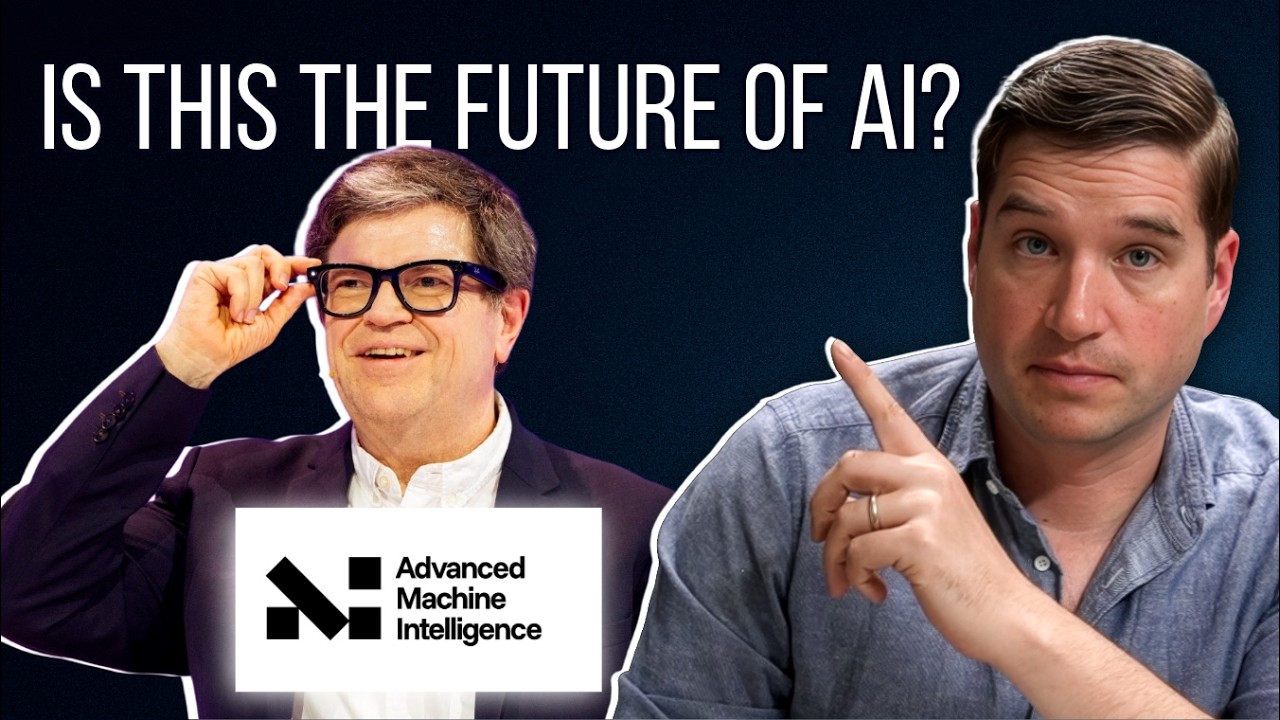
Are LLMs a Dead-End? (Investors Just Bet $1 Billion on “Yes”) | AI Reality Check | Cal Newport
 68 min
Why Is AI Making My Job *Worse*? | Cal Newport
 24 min
Did AI Just Become Sentient? (Not Quite...) | AI Reality Check
Found this useful? Build your knowledge library
Get AI-powered summaries of any YouTube video, podcast, or article in seconds. Save them to your personal pods and access them anytime.
Get Started Free